
Third-party lenses used to be the underdogs of the camera world. Today, they’re often the ones rewriting the rules of innovation.
The New Paradigm: Third-Party as Innovators
For much of modern photography’s history, third-party lenses existed in the shadow of Canon, Nikon, and Sony. They were considered “good enough” for hobbyists, but rarely trusted by professionals who depended on reliable autofocus, consistent sharpness, and durable build quality. The gap wasn’t just technical; it was cultural. A lens with a Canon L badge or Nikon’s gold ring conferred legitimacy, while Sigma and Tamron often felt like compromises. That perception kept third-party makers boxed into the role of imitators, supplying cheaper alternatives or filling small gaps the big brands ignored.
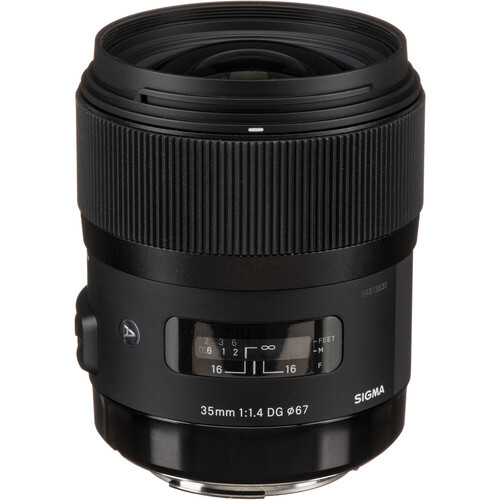
That narrative began to unravel when Sigma launched its Art series in 2012. Suddenly, photographers who had dismissed third-party glass started to notice lenses with stunning sharpness, elegant designs, and price tags that made first-party optics look bloated. The idea that a Sigma lens could outperform a Canon or Nikon was no longer absurd. With each new release, the company built credibility, and it wasn’t long before Tamron and others joined the push, showing that innovation was no longer the sole domain of the majors.
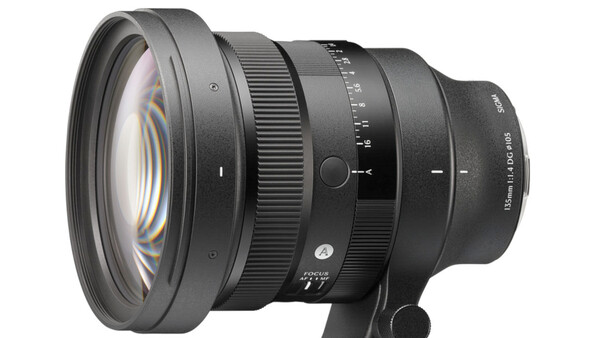
Now we’ve arrived at a very different era. Sigma’s announcement of the 135mm f/1.4 DG Art shows just how far things have come. This isn’t a budget knockoff or a safe alternative. It’s a world’s first, a piece of optical engineering so bold that none of the big brands tried it first. Instead of following Canon or Sony’s lead, Sigma is now dictating the rules of what is possible.
The History of Third-Party Stigma
It is hard to overstate how much of an uphill climb third-party brands faced in the past. Many photographers still remember the uneven autofocus of early Sigma zooms or the purple fringing that plagued Tamron telephotos. Those memories formed the basis of a long-lasting stereotype: you could save money, but you could not expect excellence. That perception was cemented by the marketing power of the majors, who positioned their glass as the only option for “serious” work.
But over time, cracks began to show in that logic. Photographers who actually tested Sigma’s newer lenses began to see results that rivaled, and sometimes exceeded, their first-party equivalents. Reviewers started to note the sharpness and microcontrast that were previously associated only with premium glass. Word of mouth began to shift the conversation, and slowly but surely, third-party manufacturers started to shed their reputations as second-class players.
By the mid-2010s, it was clear that the stigma was collapsing. Professionals were not only considering Sigma and Tamron—they were proudly using them, sometimes even preferring them over Canon or Nikon equivalents. The launch of halo lenses like the 105mm f/1.4 pushed this perception even further. Suddenly, owning a Sigma was not about saving money. It was about choosing daring design over conservative repetition.
Sigma’s Pattern of Audacious Halo Lenses
The pattern is unmistakable. Sigma has repeatedly released optics that no other company dared to make. The 105mm f/1.4 DG HSM Art became known as the “Bokeh Master,” not just because it delivered exquisite blur but because it showed what was possible when a company pursued optical ambition without fear of size or weight. It was heavy, impractical for many, and unforgettable for those who used it, me included.
Then came the 14mm f/1.4 DG DN Art, aimed directly at astrophotographers. For years, 14mm primes topped out at f/2.8, then f/1.8, and those who dreamed of faster options were told it was impossible. Sigma proved otherwise. That lens immediately became a cult classic among night sky shooters, a piece of gear that fundamentally expanded what they could capture.
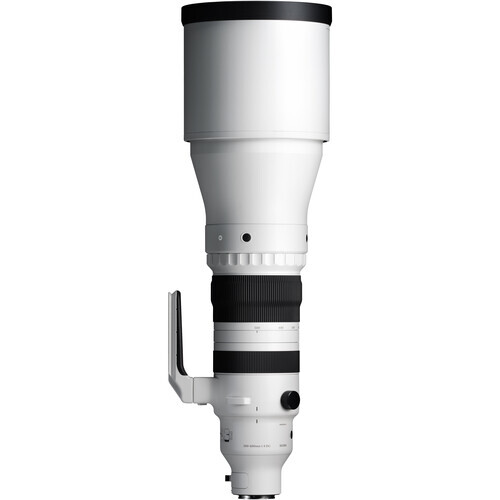
And who can forget the 300-600mm f/4 DG OS Sports, which replaces several super-telephoto primes at a price less than just one of them?
Now the 135mm f/1.4 DG Art joins that lineup of audacious halo products. Each of these lenses works like a halo car in the auto industry: a showpiece designed not for sales volume but for brand prestige. Even if only a fraction of photographers buy them, they send a clear message: Sigma is not afraid to go where others refuse.
How the 135mm f/1.4 Embodies That Strategy
The 135mm focal length is not a mainstream choice. It has always lived in the shadow of the 85mm, which is the traditional portrait length. Yet those who love it swear by its compression and subject separation. A good 135mm portrait has a dimensionality that can be hard to replicate with shorter focal lengths. The Canon EF 135mm f/2L was my first favorite lens. By pushing this lens to f/1.4, Sigma amplifies those qualities to extremes. The result is a portrait tool unlike anything else on the market.
The optical design backs up that ambition. With 17 elements in 13 groups, including four FLD and two aspherical elements, Sigma has built a system designed to tame aberrations while delivering edge-to-edge sharpness even at maximum aperture. The 13-blade diaphragm creates circular bokeh even in challenging compositions. And the dual High-response Linear Actuator motors provide the speed and accuracy needed for professional work.
These are not gimmicks. They are the hallmarks of a lens designed for those who demand excellence.
At 1,430 grams, the 135mm f/1.4 is not going to be mistaken for a lightweight. But Sigma is clear about its intentions: this lens is a statement piece. It is meant to be carried with purpose, not tucked in a casual bag. Its build quality, dust- and splash-resistant design, and premium materials make it a tool that will endure. In every sense, it embodies Sigma’s philosophy of optical extremes.
The Broader Market Context
The boldness of Sigma’s release is thrown into sharper relief when you consider the current state of the camera industry. Canon has effectively locked its RF mount, preventing Sigma, Tamron, and others from producing autofocus lenses for one of the most important ecosystems. For Canon shooters, this means innovation is filtered only through Canon’s priorities. Canon has pushed extremes for sure, but they are the only ones able to do so for the RF mount.
Nikon, meanwhile, has worked steadily to fill out the basics of its Z-mount lineup. It has released excellent primes and zooms, but it has not ventured into extremes as much as Sigma has. Sony, despite its strength in mirrorless development, has also stuck to conventional strategies: the a7 IV is versatile, its G Master primes are well regarded, but there is little in the way of audacity. None of the majors have released a 135mm f/1.4.
That leaves room for third-party makers to step in. Sigma and Tamron, in particular, have embraced the freedom to innovate. Where the majors see risk, they see opportunity. And because they are not locked into a single brand’s ecosystem, they can deliver their innovations to a wide range users, giving them a significant creative edge.
Why Third-Party Companies Are Now Often the Innovators
Sigma has proven that daring lenses can elevate a brand. The 105mm f/1.4, the 14mm f/1.4, the 300-600mm f/4, and now the 135mm f/1.4 are all examples of optics that change the conversation. They invite photographers to try something new, to see their subjects in ways that would have been impossible before. That is the essence of innovation: not just refining existing tools, but creating new ones that expand creative possibility.

As a result, the paradigm has shifted. The old idea of third-party as budget alternative is dead. Today, third-party is synonymous with risk-taking and imagination. The majors may still sell more units, but when it comes to pushing the boundaries of what lenses can be, Sigma is setting the pace.
Conclusion
The Sigma 135mm f/1.4 DG Art is more than a lens. It is proof of how far the industry has changed. Once dismissed as second-rate, third-party companies now lead the way in optical innovation. Sigma has stopped imitating and started dictating. With every bold release, it redefines not only its own brand but also the expectations of photographers everywhere. The question is no longer whether third-party lenses are “good enough.” The question is whether the majors can keep up.



Join the Fstoppers community for free
-
Post comments and join in the discussions
-
Browse the site ad-free
-
Share your work and get featured in the community
-
Compete in the photo contests for fun and prizes
8 Comments
Alex,
Thank you for a most enlightening and excellently written article!
What you say here really does summarize the state of the lens industry in 2025.
For years, I have been criticised here in the Fstoppers comments for my love of 3rd party lenses. Some folks have said that I prefer 3rd party lenses because they are cheaper than those made by Canon. That is not the case at all.
Truth is, Canon has refused to make the niche lenses that are so useful for the types of photography that I do. I don't buy Sigma and Laowa lenses because they are cheaper than Canon lenses. I buy Sigma and Laowa because they make the lenses I need, and Canon does not make the lenses I need.
If you need a wide angle lens that is also capable of true 1:1 macro magnification? Canon, Nikon, Sony, and OM Systems refuse to make anything close. So we have no choice but to buy the Laowa 15mm f4 Macro Shift lens.
Need a 10x zoom that goes up to at least 600mm? Canon, Nikon, Sony, and OM Systems don't make a supertelephoto zoom with this much range. So we must buy the Sigma 60-600mm because our major camera manufacturers refuse to make such a lens.
Need a Macro Probe lens for specialty work with insects and tiny reptiles like geckos? Canon, Nikon, Sony, and OM Systems refuse to meet your needs, so you must buy from AstrHori or Laowa.
Having and using Canon cameras has become tough, because Canon refuses to allow 3rd party lensmakers make autofocus lenses that are compatible with their mirrorless mount. So Canon prevents others from making the lenses we need, but Canon also refuses to make these lenses themselves. What a conundrum! If we do not like the mess and hassle of using adaptors, what are we to do?
Again, the love of 3rd party lenses is NOT about them being more affordable. It is about them being more innovative and niche-oriented.
No one should be criticised for their choices as we are all individuals who approach photography very differently from one another. Attacking someone for their choice of lenses is pointless. It won't affect those doing the attacking in the slightest what someone they are likely never to meet uses. I like certain third party lenses for their 'character' that you can't get with own brand lenses.
Canon are silly for not allowing autofocus third party lenses, especially all the niche lenses third parties make - maybe Canon just wants their users using 35/50/85mm doing portrait or wedding photography 😉. Still, their choice, their loss.
Sam Sims wrote:
"Canon are silly for not allowing autofocus third party lenses, especially all the niche lenses third parties make"
I agree. I think that they think they are going to sell more lenses and make higher profits because their customers will be "forced" to buy their lenses instead of the 3rd party ones. But when I can get great autofocus niche lenses for Sony and not for Canon, that just makes me buy a Sony (that I can actually get lenses for) instead of buying Canon lenses. And I think there are a lot of people like me, who will move to Sony instead of continuing on with Canon, solely because of their policy on 3rd party lenses.
Yes, I know that technically, Canon will allow a few 3rd party lenses to be made to autofocus on their mirrorless mount, but they are only licensed on a case-by-case basis, and at high cost to the 3rd party lensmaker, so very very few of these lenses are actually made, so it is kind of a moot point.
i have 105 1.4 and i love it! :)
They forgot to mention the ancient, but still effective Sigmonster: a Sigma 300-800mm f5.6 tele-zoom. I have one and still use it for bird photography with my D850.
Yes, I have a 300-800mm too. It was my primary, most-used lens from 2014 thru 2022.
But Alex did not forget to mention it. I believe that he intentionally did not mention the Sigmonster. Why? Because it is an old design that has been discontinued for years, and this article is about how the lens market will be moving forward. No point talking about old discontinued lenses in an article that is about the future of things.
I am also a buyer of Sigma lenses before Sony came out with the lenses.
When looking for a Telephoto lens and before Sony came out with one i got the 150-600mm but needed an adapter but when using with a 2x teleconverter the metadata was incorrect ah! so what it was great sharp and i got my feet wet with birding and tracking it even kept focus on a white pelican while tracking and it was on the other side of some tree limbs.
Also the monster size heavy 14mm f/1.8 that was on all the YouTube astro milky way sites, still have, but got the little small Sony as soon as it came out. Smaller is great.
There is now a 10mm f/2.8 AF and yes got it.
But one that not even Sony or any other will redo is the APS-C E 10-18mm (15-27mm) F4 AF OSS lens that used in Full Frame mode at 12 -18mm (18mm if you remove the rear light shield. I and other photographers used it before there were 12mm and worked great at f/4 on a Sony A7 model. Even when Sony came out with the FE 12-24mm F4 and 2.8 yes I got them BUT for astro MW capture of the arch the little lens is the go to for atop a panorama rig it is small and light weight no need to turn all your screws/bolts tighter than tight messing with finger tips. The bottom line is why those big bazooka 12-24mm's when Sony could have made a small 12mm for a full frame, yes the little 14mm f/1.8 is there already.
The cool thing with those ultra wide lenses is mainly you get a panorama view BUT with the upper and lower parts also. Yes things are far away but all in focus and no need to know the rule for where the sun is.
Sometimes you just want to capture more that others can not, like using the Voigtlander HELIAR-HYPER WIDE 10mm F5.6 back in 2016 way before the fast glass!
Edwin wrote:
" ..... the monster size heavy 14mm f/1.8 "
It's funny that you consider that lens to be so big and heavy! Haha!
Good thing you are not a wildlife photographer; the lenses we use on an everyday basis are much heavier and larger than that little 14mm, which is only 41 ounces.