

In the first article, we explored five cameras that had the right vision but arrived at the wrong time, from Sony's Mavica prototype to the Contax N Digital. These machines predicted the future of photography but couldn't convince the market they were right.
The pattern continues. History is full of cameras that were dismissed as gimmicks, failures, or curiosities, only to have their core ideas vindicated years later. Sometimes innovation isn't about being first. It's about having the market ready to listen. Here are five more cameras that were so far ahead of the curve that photographers needed years to understand what they were looking at.
6. Ricoh GXR (2009): Modular Madness
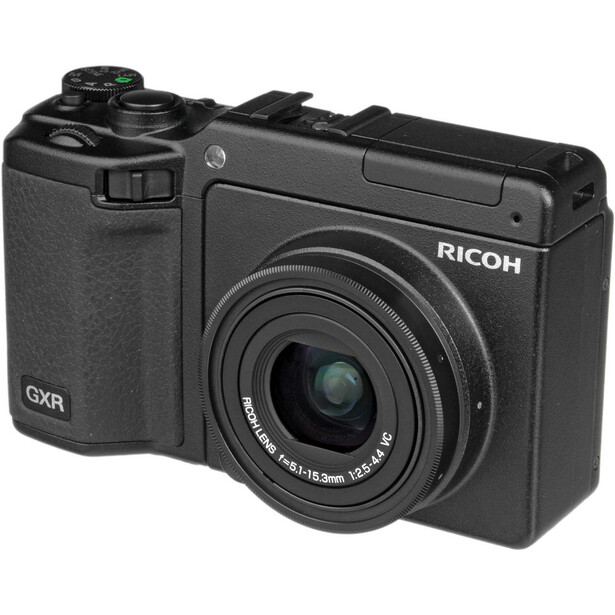
The Ricoh GXR was a camera system where you swapped entire lens-sensor modules instead of just lenses. The "camera body" was basically a screen, processor, and battery. The sensor traveled with the lens.
Ricoh was thinking about computational photography before it existed. Each module could have a sensor optimized for that specific lens. Want a high-resolution sensor for telephoto? Swap modules. Want a fast sensor for low light? Different module. It was the ultimate in flexibility and optimization.
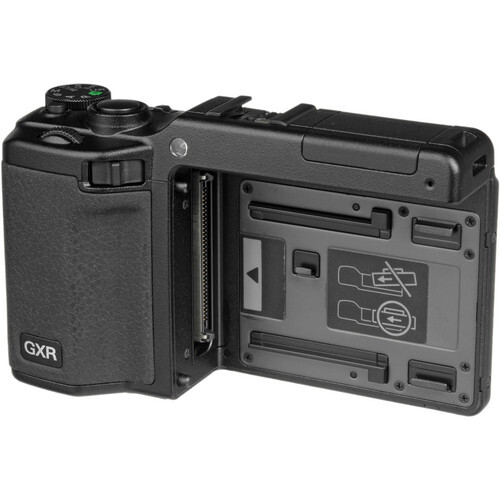
The GXR predicted the modular approach to photography that's finally emerging. Computational photography. The idea that the sensor and lens should be optimized together. Modern smartphones do exactly this: each lens has its own sensor tuned specifically for it. The Ricoh GXR was essentially a smartphone camera philosophy in DSLR form.
7. Sony RX1 (2012): The $2,800 Compact Nobody Believed In
The Sony RX1 was a full frame compact camera with a fixed 35mm f/2 lens, full manual controls, and no viewfinder (you could buy an optional optical viewfinder separately for around $450). It cost $2,800.
Sony put a full frame sensor in a genuinely jacket-pocketable body—not pants-pocket small, but far more portable than any DSLR. The image quality matched professional DSLRs, and the leaf shutter allowed flash sync at any shutter speed, a feature professionals appreciated. It was the ultimate travel camera for serious photographers.
The price was insane for a compact camera with a fixed lens. "I could buy a Sony NEX-7 and multiple lenses for less!" was the common complaint. The lack of an included viewfinder seemed cheap. And many photographers couldn't get past the idea of spending that much on a camera where you couldn't change lenses.
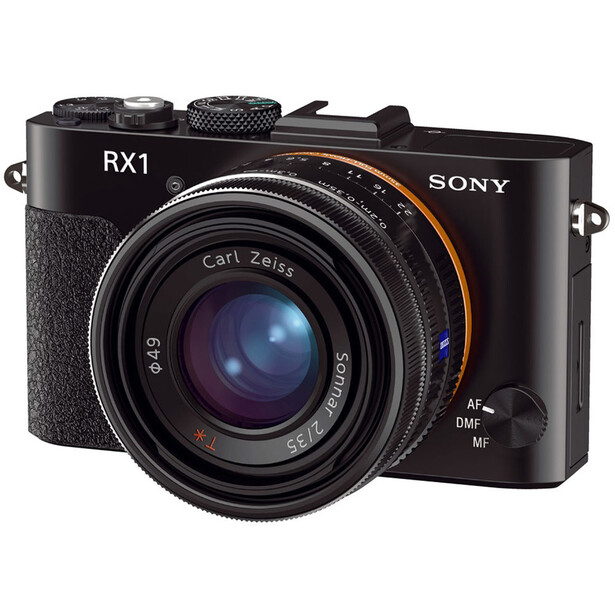
The RX1 didn't sell in huge numbers, but it changed the conversation. Suddenly, a $3,000 compact camera wasn't ridiculous, but desirable. The Leica Q (another expensive full frame fixed-lens compact) became a massive success partly because the RX1 had softened the market. The RX1 proved that serious photographers would pay serious money for a camera that disappeared into their daily carry.
8. Fujifilm X100 (2011): Retro That Became Revolutionary
The Fujifilm X100 was an APS-C compact with a fixed 23mm f/2 lens (35mm equivalent), hybrid optical/electronic viewfinder, and analog-style controls covering the entire body. It looked like a vintage rangefinder but shot digital.
The X100 bet that photographers were tired of mode dials and menu diving. It offered aperture rings, shutter speed dials, and exposure compensation dials. All the controls you needed were physical. The hybrid viewfinder let you switch between optical (for shooting experience) and electronic (for exposure preview). It made photography tactile again.
Critics called it a hipster toy. At $1,200, it seemed overpriced for a camera with a fixed lens. The first version had genuinely problematic slow autofocus and laggy performance that frustrated reviewers. Many dismissed it as a niche product for Instagrammers who wanted to look cool in coffee shops. The technical issues were real, not just perception.
The X100 predicted the entire retro camera movement. Dedicated physical controls. Hybrid viewfinders. The realization that user experience matters as much as specifications. And when the second version, the X100S, arrived, it exploded in popularity.
The X100 didn't just succeed. It created an entire category. It's now in its sixth generation (X100VI) and is so popular it's constantly sold out. More importantly, it influenced Fujifilm's entire X series design philosophy and inspired other manufacturers to embrace physical controls again. What critics called a "niche" product became one of the most influential camera designs of the 2010s. Every retro-styled mirrorless camera owes something to the X100.
9. Minolta DiMAGE 7 (2001): The All-In-One That Predicted IBIS
The Minolta DiMAGE 7 was a 5-megapixel camera with a 7x zoom lens (28-200mm equivalent), tilting EVF, full manual controls, and TIFF support. It tried to be everything. While this model lacked stabilization, Minolta would introduce the world's first sensor-shift anti-shake system just two years later in the DiMAGE A1 (2003).
The DiMAGE 7 was asking "what if you never needed to change lenses?" It combined DSLR-level controls with superzoom convenience and an early EVF. Minolta then introduced the world’s first sensor-shift anti-shake in the DiMAGE A1 (2003), and the A1/A2 added a tilting EVF, nudging ergonomics toward what we expect now. It was Minolta's statement that electronic viewfinders could be good enough for serious work. More importantly, Minolta was clearly thinking about sensor-shift technology, as they'd crack it with the A1 just two years later.
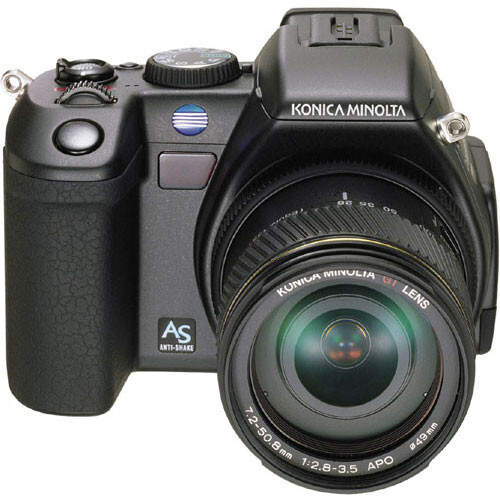
The DiMAGE 7 predicted the entire superzoom/bridge camera category, electronic viewfinders as legitimate tools, and most importantly, in-body image stabilization. Minolta introduced sensor-shift stabilization in 2003, years before competitors took it seriously.
Minolta's anti-shake technology, pioneered just after the DiMAGE 7, evolved into Sony's IBIS system when Sony acquired Konica Minolta's camera business in 2006. Every modern camera with in-body stabilization descends from Minolta's innovation. The superzoom concept lived on in cameras like the Sony RX10 series. The DiMAGE 7 represented Minolta thinking about the future of camera technology at a time when everyone else was focused on megapixels.
10. Olympus E-P1 (2009): Retro Mirrorless Pioneer
The Olympus E-P1 was Olympus's first Micro Four Thirds camera, arriving a year after Panasonic's G1 launched the format. But where the G1 looked like a small DSLR, the E-P1 embraced vintage aesthetics completely. It looked like a 1960s rangefinder, had no built-in viewfinder, and while it had an accessory port, that port didn't support external EVFs. That capability came with the E-P2 later in 2009. The E-P1 prioritized design over specification.
The E-P1 said that digital cameras don't have to look like electronics. While Panasonic proved the MFT format worked, Olympus proved that mirrorless cameras could be beautiful objects, not just functional tools. It was small, light, elegant, and completely different from every DSLR on the market. It was the first Micro Four Thirds camera to embrace retro design as a core philosophy.
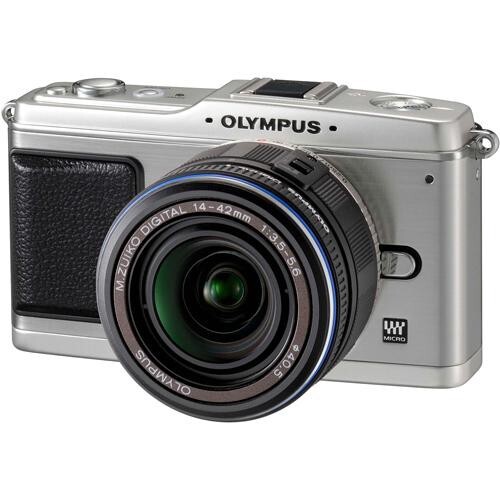
The E-P1 predicted the entire retro mirrorless movement that dominated the 2010s and the idea that camera size matters more than marginal spec differences, that style and substance aren't mutually exclusive.
The E-P1 inspired the design language of countless cameras. The Fujifilm X series, Olympus's own OM-D line, even Nikon's Z fc all followed the path the E-P1 carved. It showed that photographers wanted cameras that felt good to hold and looked good on a shelf. The Instagram generation of photographers grew up with cameras that looked like the E-P1, not like DSLRs. While the Panasonic G1 proved mirrorless was viable, the E-P1 made it aspirational.
The Pattern: Market vs. Culture
Looking at these five cameras alongside the previous five, the distinction becomes clearer. Innovation fails for two different reasons, and sometimes both at once.
Some cameras faced market readiness issues in technological or economic barriers they couldn't overcome. The Ricoh GXR's modular concept was too expensive to execute. The RX1's $2,800 price point arrived before the premium compact market existed. The DiMAGE 7's image quality couldn't match DSLRs because sensor technology wasn't there yet.
Others faced cultural readiness issues. The X100's retro approach seemed like style over substance. The E-P1's design-first philosophy was dismissed as a gimmick. The idea that cameras could be beautiful objects and serious tools simultaneously seemed absurd.
The cameras that struggled most fell into both categories. They were technologically compromised and culturally rejected. The X100's slow autofocus confirmed critics' suspicions that it was just a pretty toy. The E-P1's video limitations proved to spec-focused photographers that design came at the cost of performance.
But here's what matters: every single one of these ideas won eventually. Modular cameras exist in specialized markets. Premium compacts are now standard. Retro designs dominate the enthusiast segment. In-body stabilization is mandatory. Beautiful cameras are seen as legitimate professional tools.
The cameras we use today are built on ideas that these "failures" demonstrated. Sometimes, the most important cameras aren't the most successful ones. Sometimes, they're the ones that arrive 10 years too early and show everyone else where to go.




Join the Fstoppers community for free
-
Post comments and join in the discussions
-
Browse the site ad-free
-
Share your work and get featured in the community
-
Compete in the photo contests for fun and prizes
2 Comments
Another problem(?) with the Minolta is I keep imagining its name as DaMAGE!
A problem with all of the older Minolta SLRs was that they used a weird proprietary flash shoe. My father had a late-1980s Minolta AF film SLR--I think it was a Maxxum 5000i--and the built-in flash wasn't very powerful and produced a lot of red-eye. He was frustrated that he couldn't use an older flash he had that used a standard shoe, and I eventually bought him an adapter for a standard shoe as a gift. He would have disowned me if he knew I paid $40 for it (in 1990)!