

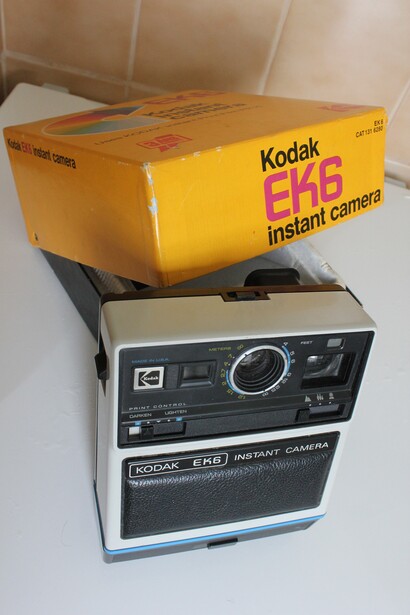
In 1976, Kodak made what seemed like a smart business decision. Polaroid had dominated instant photography for decades, and consumers clearly wanted the technology. Kodak had the manufacturing scale, the distribution network, and the engineering talent to compete. They released their EK series instant cameras and started selling film. Within months, Polaroid sued them for patent infringement. What followed was one of the most expensive and consequential legal battles in photographic history.
It was a conflict stretching from 1976 to 1991 that would reshape how the photography industry thought about intellectual property. The irony is that both combatants lost. They spent years fighting over a technology that digital photography would make obsolete before either company could fully recover. The lawsuit drained Kodak's finances and focus just as digital disruption began, a blow it never fully recovered from.
When Kodak Thought They Could Work Around the Patents
Kodak wasn't naive about instant photography. They knew Polaroid owned the space. Edwin Land, Polaroid's founder, had built a fortress of patents around every aspect of instant film technology. The chemistry, the film structure, the camera mechanisms, even the way the image developed. Kodak had actually supplied Polaroid with film negatives and reagents for early instant films back in the 1950s and 1960s, giving them detailed familiarity with instant film chemistry. This historical partnership would become a key issue in court, with Polaroid arguing that Kodak had leveraged insider knowledge to develop their competing system. Kodak spent years researching and developing their own system anyway, convinced they'd found ways to achieve instant photography without violating Polaroid's intellectual property. Their engineers worked on different chemical processes, alternative film structures, new approaches to the self-developing mechanism. By the time they launched, Kodak had invested hundreds of millions of dollars in research, manufacturing facilities, and marketing. They weren't trying to copy Polaroid. They were trying to compete with an alternative approach.
The Lawsuit That Wouldn't End
Polaroid filed suit almost immediately after Kodak's launch in April 1976. This wasn't just a cold corporate decision. Edwin Land, Polaroid's founder, viewed Kodak's entry into instant photography as a profound personal betrayal. Kodak had supplied Polaroid with critical components for years, and Land saw their competing system as theft of his life's work. He was reportedly relentless in pursuing the case, determined to see Kodak punished. The legal teams started what would become a marathon of discovery, depositions, expert witnesses, and technical arguments about patent boundaries. This wasn't a simple case of one company copying another. It was a complex battle over whether fundamental approaches to instant photography were so broad that no one could compete without licensing, or whether the technology was specific enough that alternative methods were possible. Kodak argued they'd innovated around Polaroid's patents. Polaroid argued that instant photography itself was so thoroughly covered by their intellectual property that any competing system would inevitably infringe.
The case dragged through the courts for nine years before a decision. During that time, Kodak continued selling instant cameras and film. They couldn't just stop production while awaiting a verdict. They had manufacturing plants running, employees working, retail relationships to maintain, and consumers who'd bought into their system expecting continued film availability. The uncertainty hung over everything. If Polaroid won, Kodak would face massive liability. If Kodak won, they'd validated their investment and positioned themselves as a permanent competitor in instant photography. The photography industry watched closely because the outcome would set precedent for how aggressively companies could defend their innovations.
The Verdict That Changed Everything
In October 1985, Judge Rya Zobel ruled in favor of Polaroid. The court found that Kodak had infringed seven of Polaroid's patents, including those covering film chemistry and image-forming layers. The decision was detailed and technical, examining specific aspects of Kodak's instant film system and finding that despite Kodak's efforts to innovate around Polaroid's intellectual property, they'd crossed too many protected boundaries. The chemistry was too similar. The film structure infringed. The developing process violated patents. Kodak's attempt to compete in instant photography was ruled fundamentally incompatible with Polaroid's patent protection. In January 1986, the court issued an injunction forcing Kodak to immediately cease all manufacturing and sales.

The Bill Comes Due
The damages phase took another six years to resolve. In 1991, the award totaled $909.5 million in damages plus interest, reaching about $925 million in the final settlement. This remains one of the largest patent infringement settlements in history. Adjusted for inflation, it would be over $2 billion today. Kodak had lost not just the instant photography business but nearly a billion dollars in damages, plus all the investment they'd sunk into developing, manufacturing, and marketing the system. The total cost to Kodak was probably closer to $1.5 billion when you count everything. This wasn't a minor setback. This was a company-threatening financial disaster.
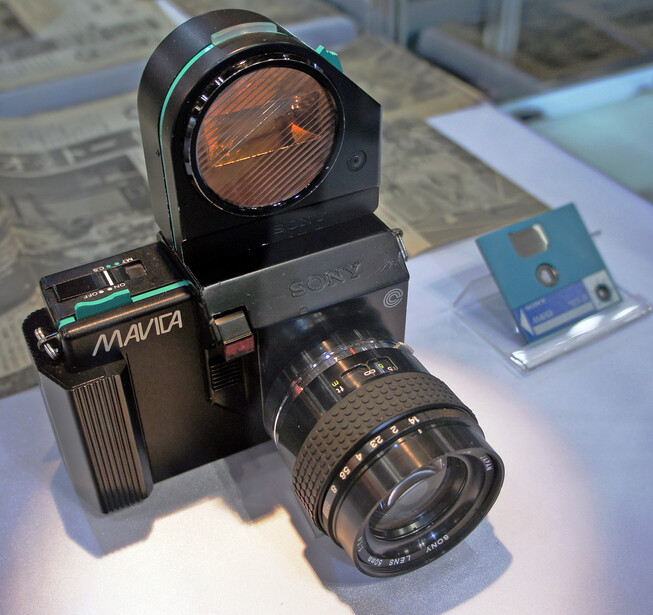
But money was only part of the damage. The distraction mattered as much as the cost. During the 1980s, while Kodak was fighting this legal battle and trying to manage the fallout from losing instant photography, electronic and digital imaging technology was developing. In 1981, Sony unveiled the Mavica, an electronic still video camera that previewed digital imaging's potential, though it was technically analog rather than digital. True digital cameras would arrive later in the decade. Kodak's own engineers were working on digital sensors. The company was aware of the threat. But corporate attention and resources were divided. Legal teams were fighting Polaroid. Finance departments were managing the instant film disaster. Management was dealing with a public failure and massive financial penalty. The distraction may have contributed to Kodak's slow and inadequate response to digital photography, which would ultimately threaten their entire business model far more than instant film ever did.
The Pyrrhic Victory
Polaroid won the legal war completely. They'd defended their patents, destroyed a major competitor, and received nearly a billion dollars in damages. Land, who'd founded the company and invented instant photography, had protected his life's work from being commoditized by a larger competitor. But the victory was hollow in ways that wouldn't become clear for another decade.
Polaroid's monopoly on instant photography was now reinforced by legal precedent. No one would try to compete with them after watching what happened to Kodak. But monopolies without competition tend toward complacency. Polaroid continued to innovate technically, developing new film systems like 600 film in 1981 and Spectra in 1986, but it failed to adapt strategically. Its breakthroughs remained within analog boundaries even as digital imaging emerged outside them. Why take major risks when you own the entire market? They refined instant film technology and sold cameras, but the drive to push into fundamentally new directions diminished. Meanwhile, digital photography was improving rapidly. Early digital cameras were expensive and low resolution, but the trajectory was clear. Every year, sensors got better and cheaper. Storage got more affordable. Image quality improved. By the late 1990s, digital cameras were good enough for consumer use and improving faster than film technology ever had.
When the War Didn't Matter Anymore
Kodak's fate was even worse in some ways. The instant film disaster cost them a billion dollars and significant credibility. But the larger failure was strategic. Kodak actually invented the first digital camera in 1975, before they even launched instant film. Steven Sasson, a Kodak engineer, built a prototype that captured 100x100 pixel black and white images onto cassette tape and played them back on a TV. The device took 23 seconds to record a single image. Kodak saw it, understood the implications, and chose not to pursue it aggressively because it threatened their film business. Throughout the 1980s and 1990s, while fighting Polaroid and managing the aftermath, Kodak watched digital photography develop without fully committing to it. They sold digital cameras eventually, but halfheartedly, always worried about cannibalizing film sales.
By the time Kodak fully committed to digital, they were too late. Canon, Nikon, and Sony had established positions. Kodak's brand, once synonymous with photography itself, didn't translate to digital. Consumers didn't think of Kodak when buying digital cameras. They thought of Japanese electronics companies. Kodak filed for bankruptcy in 2012. The company that had dominated photography for over a century, that had fought and lost a billion-dollar patent war over instant film, was destroyed by failing to embrace the technology they'd actually invented first.
The patent war between Kodak and Polaroid was the most expensive legal battle in photography history. Fifteen years of litigation. Over $900 million in damages. Careers ruined, a product line abruptly ended with refunds and credits, investments wasted. Both companies fought viciously over instant photography technology. Both companies believed the fight mattered. Both were right in the short term. Polaroid successfully defended their patents and their monopoly. Kodak learned an expensive lesson about respecting intellectual property boundaries. But in the longer view, both lost. The technology they fought over became a curiosity, a nostalgic niche, while digital photography rendered the entire dispute meaningless.
What the War Actually Changed
The Kodak versus Polaroid patent battle did change photography, but not in the way either company expected. It established strong precedent for patent protection in imaging technology. It showed that even massive companies like Kodak couldn't just enter markets protected by broad patents without facing existential consequences. It made the photography industry more cautious about intellectual property. Companies started licensing technology more readily rather than trying to innovate around patents. Cross-licensing agreements became common. The aggressive defense of innovation became standard practice.
The patent war that changed photography forever taught the industry the wrong lesson at the wrong time. It reinforced the importance of protecting existing technology right when companies should have been preparing for the technology that would replace everything. Both Kodak and Polaroid were so focused on fighting each other over instant film that they missed or underestimated the digital revolution happening around them. The most expensive patent battle in photography history was ultimately about a technology that didn't matter in the long run. That might be the real lesson. Legal victories are temporary. Market forces are permanent. And fighting yesterday's battle, even if you win, doesn't prepare you for tomorrow's war.




.jpg)

.JPG)
Join the Fstoppers community for free
-
Post comments and join in the discussions
-
Browse the site ad-free
-
Share your work and get featured in the community
-
Compete in the photo contests for fun and prizes
2 Comments
I was working in a camera store when Kodak introduced their instant camera and film. Somewhere around here I still have a sample image of the new film taken at the PMA convention in Chicago. I always thought the Kodak film was better than the Polaroid but Kodak had nothing to compare to the SX70.
Kodak was one of the most mismanaged companies...ever. From dominating the industry, then reduced to a business school case study. They blew it in the instant space and truly blew it in the digital space.