
On April 3, 2013, one company turned off the lights in more than 2,000 portrait studios in a single day. CPI Corp. ran the Sears Portrait Studios and the PictureMe studios tucked inside Walmart, and when it collapsed it took the mottled blue backdrop, the laser-beam background, and the sheet of wallet-size prints down with it. For most of a century, that little studio at the back of the store was where America went to get its face made.
The Penny Picture and the Democratized Face
The idea that any ordinary family should own a decent portrait is younger than you might think. For most of human history a painted likeness was a luxury reserved for people who could afford a painter. Photography changed the math almost immediately. The daguerreotype arrived in 1839, and within a decade storefront studios were selling likenesses to shopkeepers and farmers who never could have sat for an oil portrait.
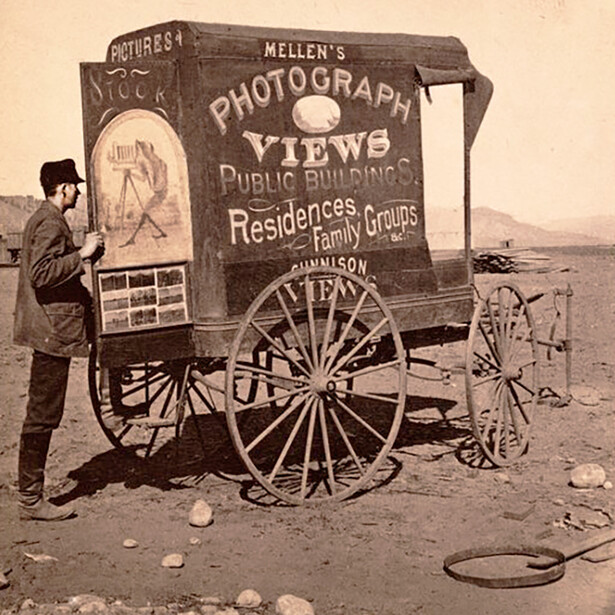
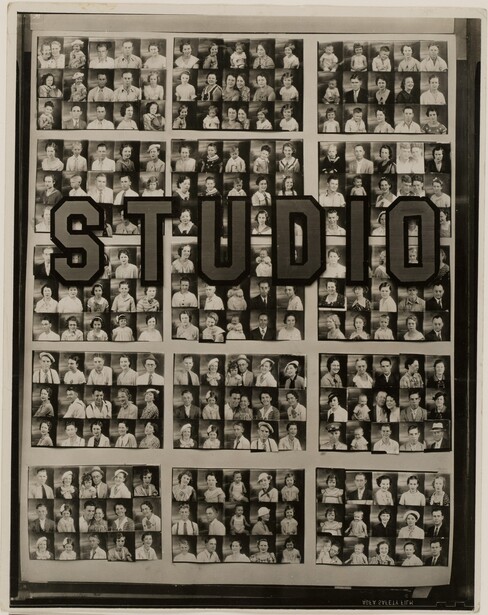
The truly cheap portrait came later, and it came on wheels. Itinerant photographers carried their gear from town to town and set up temporary studios wherever there was foot traffic, including inside early department stores. At tourist spots like Niagara Falls and Atlantic City, they used multiplying cameras with banks of small lenses to expose a grid of tiny images on one plate, then cut them apart and sold each one for a penny. That is where the term "penny picture" comes from. A likeness that once cost a month's wages now cost a coin you could find in the street.
The through line from that penny picture to the mall studio is a single stubborn idea. If you make the sitting cheap enough and put it where people already are, they will buy the prints. Everything that follows, from Olan Mills to Glamour Shots, is a variation on that one bet. Sell the session at a loss or close to it, place the camera in the path of ordinary life, and make the money on the paper.
Olan Mills Builds a Portrait Empire
The first company to turn that bet into an empire was a husband-and-wife operation from Alabama. Olan Mills Sr. and Mary Stephenson Mills started out in the early 1930s copying and hand-tinting old photographs, working at first out of a board-and-batten shed near the river in Selma. They formally set up their portrait studio in Tuscaloosa in 1933, taking over a bankrupt studio and adding portraiture to the copy work. Mary Mills, trained in art, developed a soft, hand-finished house style that gave the young company a recognizable look.
What made Olan Mills enormous was not the pictures. It was the phone. In 1948, after a salesman tried booking sittings by telephone and reportedly quadrupled his weekly sales, the company built a telemarketing operation around the idea. A few years later it added a club plan: pay a few dollars up front for a series of sittings spread across the year. The Millses had figured out that the hard part of the business was not taking the picture, it was getting a family to decide, today, to come in. So they took that decision away from the customer and made it over the phone.
The scale got staggering. By around 1940 the company was running about 650 employees in three shifts and finishing roughly 12,000 portraits a day, and in 1941 it moved its main processing operation to Chattanooga. At its height the company operated something on the order of 1,000 free-standing studios and pulled in around $475 million a year, controlling close to a tenth of the American portrait market. A separate church-directory division photographed entire congregations for the printed member books that sat in narthex racks across the country. For a couple of generations, if you asked an American to name a portrait company, a huge share of them said Olan Mills without pausing.
The style became a punchline eventually, but the ubiquity was real. The mottled backdrop, the careful chin-down pose, the older sibling's hand resting on the younger one's shoulder: that visual grammar was standardized and mass-produced by companies like this one, drilled into thousands of camera operators who followed a script. The conventions themselves reach back to the painted backdrops and posed family groups of the nineteenth-century studio; the chains did not invent them so much as stamp them out by the millions.
Sears, CPI, and the Backdrop Everyone Remembers
The studio most Americans actually remember was not free-standing at all. It lived at the back of a Sears. That operation belonged to CPI Corp., and its origins were as humble as Olan Mills'. A St. Louis photographer, Milford Bohm, hung out his shingle in 1942 under the name Rembrandt Studio, a lone shop with a single camera. Over the next two decades he and his family grew it into a chain of about 20 studios scattered from Kansas to Pennsylvania. In 1968 the business was sold to Chromalloy American and renamed CPI.
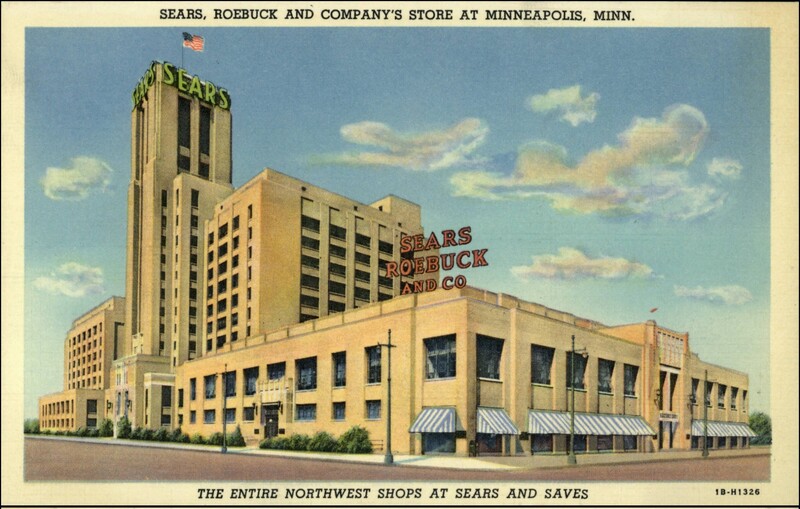
The relationship that defined the company was slower and longer than a single deal. By CPI's own account in its SEC filings, it had been photographing Sears customers since 1959 and held a Sears license from 1961, when more than fifteen companies held one. In 1973 it narrowed to Sears alone, giving up its other retail accounts, and it was not until 1986 that it became the only portrait studio operator Sears had. It was a brilliant piece of real estate. Sears in the 1970s was the largest retailer in the country, and a huge majority of the population lived within a short drive of one. CPI did not have to build a single store or drive a single mile of traffic. It just set up a camera, a posing stool, and a bank of backdrops in a corner that already had a river of shoppers flowing past it. That Sears-only bet ran for 40 years, right to the end, and at its peak CPI operated more than 1,000 studios, the great bulk of them inside Sears stores across the United States and Canada.
You know the choreography even if you have not thought about it in years. A coupon came in the Sunday paper or the mailer: a sitting for almost nothing, a free 8x10, a package that seemed too cheap to be real. You dressed the kids in matching outfits, waited past your appointment time, and sat on a carpeted riser while a camera operator squeezed a squeaky toy and told everyone to look at it. Then came the part that paid the rent, the sales table, where a stack of proofs and a menu of packages turned that cheap sitting into a real bill. The mottled gray-blue muslin, the fake autumn leaves, the notorious laser-grid background that beamed colored lines into the dark: those were the props of a genuinely national ritual.
CPI kept expanding the footprint beyond Sears. It ran the PictureMe Portrait Studios inside Walmart, and in 2010 it picked up the assets of Kiddie Kandids, a Utah children's-portrait chain that had gone bankrupt with roughly 200 locations inside Babies R Us stores and malls. By late in its life the company was operating around 2,700 studios across the United States, Canada, Mexico, and Puerto Rico. It looked, from the outside, like an unkillable fixture of American retail.
The Mall Years: Glamour Shots and the Makeover Boom
While the department-store studios sold the family record, the enclosed shopping mall gave rise to a louder, stranger cousin: the portrait as a night out. The signature brand was Glamour Shots. An Oklahoma City entrepreneur named Jack Counts Jr., who already ran a photo-finishing business, saw a makeover-and-photo shop while traveling and opened his own version in 1988. His first attempt, branded Fantasy Faces, went nowhere. The concept caught fire only when he opened a location in Dallas under the name Glamour Shots.
The offer was irresistible in a very late-1980s way. For around $30, a woman got professional hair and makeup, a rack of feather boas and sequined wraps and off-the-shoulder tops, and a soft-focus photo session that turned an ordinary Tuesday at the mall into a fashion shoot. The clientele was overwhelmingly female, and the look was unmistakable: teased hair, heavy blush, a haze of diffusion, a slightly parted-lips gaze over a bare shoulder. It was a photo that did not really look like you, and that was the entire point. You were buying a fantasy of yourself.
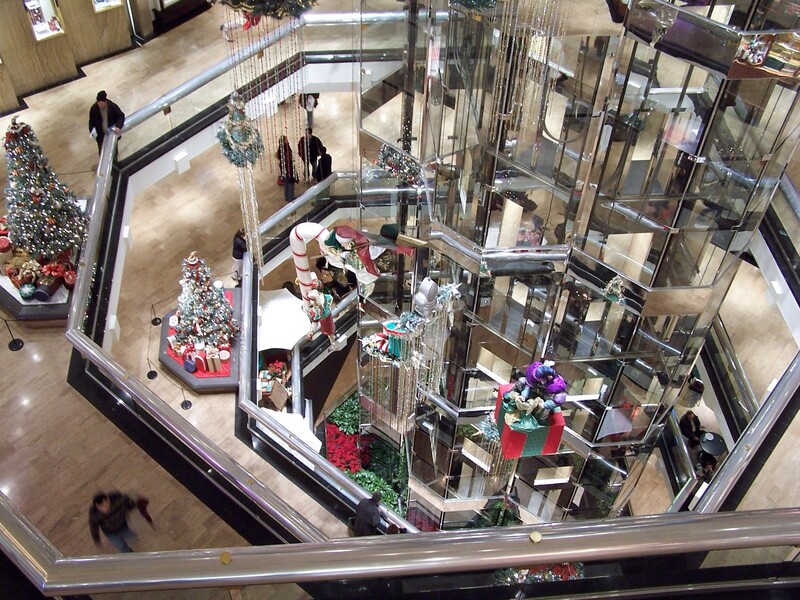
It scaled fast. In its first three years, revenue jumped from under $250,000 to nearly $7 million, and by the mid-1990s Glamour Shots peaked at around 380 stores, including locations in Mexico, Canada, and across Asia and the Middle East, with roughly 6,000 employees and around $100 million in sales. The mall was the perfect host: high traffic, a captive weekend audience, and a customer already in the mood to spend. Freestanding chains like Picture People worked the same territory, selling quick family and children's portraits from storefronts and kiosks between the food court and the shoe store.
These were not serious photography businesses in the way a wedding or commercial shooter would recognize. The lighting was fixed, the poses came from a binder, and the operators were retail employees trained in a week, not photographers building a portfolio. The genius was never the craft. It was the location, the price, and the understanding that a print in your hand feels like something you own.
What the Studio Actually Sold
It is easy to sneer at the laser background and the airbrushed cheeks, and photographers have been doing it for decades. The condescension misses what these studios got right, which is worth understanding before you write the whole industry off.
They sold consistency and a finished object. A working parent did not want to learn lighting ratios. They wanted a decent picture of the kids, at a predictable price, on a predictable date, with prints they could mail to grandparents. The studio delivered exactly that, over and over, with the reliability of a fast-food menu. The soft, even, unmemorable light that portrait snobs mock is also light that is very hard to get badly wrong, which is precisely why a chain could hand it to a teenager with a week of training and still ship an acceptable 8x10. A good headshot is genuinely a craft worth studying, but the mall studio was never trying to make a good headshot. It was trying to make a good-enough one, a thousand times a day, without fail.
They also sold a ritual, and rituals are sticky. Going to get the picture taken was an event. You planned outfits, you corralled the family, you sat still, and a few weeks later a physical thing arrived that went on the wall or into a frame on the mantel. That object outlived the day it was made. Plenty of people reading this have a grandparent whose only surviving good portrait came off a department-store backdrop. The studio was not selling photography. It was selling a small, affordable piece of permanence, and for a long time nobody else was offering that to a family of modest means.
The Smartphone Did What the Recession Couldn't
The thing that killed the mall studio was not a competitor. It was the phone in your pocket, and the collapse of the model it was built on.
The business always depended on a scarcity that no longer exists. A generation ago, a good photo of your kid was hard to get. You needed film, a decent camera, some skill, and a lab to make prints. The studio bundled all of that and sold it cheap. Digital cameras started to chip away at the premise in the early 2000s, but the real blow was the smartphone. The first iPhone arrived in 2007 with a mediocre 2-megapixel camera. The iPhone 4, in 2010, put a genuinely usable 5-megapixel camera into millions of pockets, and from there the point-and-shoot market went into a freefall it never recovered from. Suddenly every parent carried a competent camera at all times, backed by a free photo lab that fit in a jacket pocket and could send a picture to grandma in seconds. Capture and distribution, two thirds of what the studio sold, were now free and instantaneous, and a print had stopped being the only way to put a picture in someone else's hands.
The chains fell one after another. CPI, drowning in debt and watching sales evaporate, defaulted on its lenders and abruptly shut its United States operations in early April 2013. Across the opening nine months of that fiscal year, the company's red ink had ballooned fivefold to top $60 million, even as revenue slid nearly a quarter, landing at $192.7 million. In a letter to employees, CEO Jim Abel wrote that the "decline of our business proved too great an obstacle to overcome." More than 2,000 studios went dark almost overnight, thousands of workers lost their jobs without notice, and customers who had already paid were left staring at a website and a message that the company was "attempting to fulfill as many customer orders as possible." Weeks later, CPI filed for bankruptcy.

The others followed the same script. Picture People filed for Chapter 11 in September 2016 and sold its assets that November to a new operating company. That company moved into some of the Sears studio spaces CPI had left behind, then shut its United States operations without warning on May 18, 2018, again leaving employees jobless and customers stranded mid-order. The name has since come back, and Picture People studios are booking sessions again. Glamour Shots, once 380 stores strong, dwindled to a literal handful of mall locations by the end of the decade. Olan Mills had already read the writing on the wall, selling its entire portrait and church-directory business to the school-photography giant Lifetouch on November 9, 2011. Lifetouch itself was swallowed a few years later, when Shutterfly bought it for $825 million in a deal that closed in April 2018.
What's Left, and What We Lost
The category is not quite extinct. Lifetouch, now a Shutterfly company, still runs JCPenney Portraits studios inside a few hundred department stores, and Lifetouch photographers still shoot the school pictures that were always the steadier half of this business. Even the church-directory line, the quiet backbone of the old Olan Mills, did not survive the pandemic. But the freestanding empire, the thousands of little studios at the back of every Sears and Walmart in the country, is gone, and it is not coming back.
Here is the quiet irony. We take vastly more pictures of our families than any generation in history, and we print almost none of them. The studios sold a physical artifact, and we replaced it with a stream of images that live on a phone until the phone is lost, or on a cloud account that goes dark when a card expires. The mottled-backdrop 8x10 in a shoebox has an unglamorous superpower: it is still there in 40 years. Your camera roll may not be.
If you want the thing the studio actually delivered, you can now build a better version at home. A used mirrorless body and a lens, or a modern kit like the Sony a7 IV, a single flash such as the Godox V1, and a roll of Savage seamless paper taped to a wall will out-resolve anything that ever came off a Sears backdrop. What you cannot buy back is the appointment, the drive to the mall, and the certainty that a few weeks later a real print would arrive. The mall studio did not lose because its pictures were bad. It lost because it was selling permanence, and we decided we would rather have everything, instantly, and keep almost none of it.
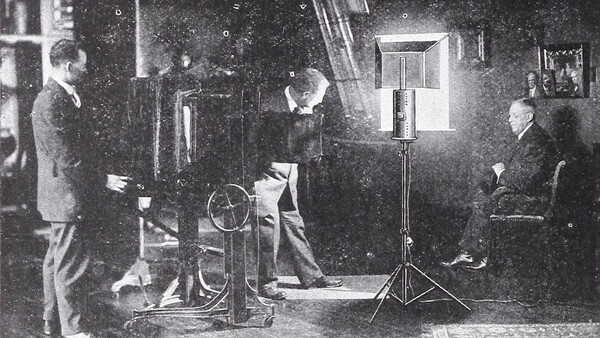
Lead image: J. C. Strauss photographing a sitter in his St. Louis studio, circa 1916, Public Domain. Source.




Join the Fstoppers community for free
-
Post comments and join in the discussions
-
Browse the site ad-free
-
Share your work and get featured in the community
-
Compete in the photo contests for fun and prizes
5 Comments
This was a fun read, and I think the last lines really hit the mark. The mall studio was always about a good product. It was never a masterpiece, but it was a solid photo, delivered. We also need to keep in mind this was in a time of manual focus, as well. But more than the technology, I think it fits with what the post WWII world was about. Suburban housing, the rise of consistent experiences like Holiday Inn and Howard Johnson. It was all about a good, solid product. Not the best but solid.
Now I want a Howard Johnson's clam roll. Oy.
My first job in photography was at the portrait studio at the Sears in White Oak, MD
I wasn’t there to learn photography, but I did learn how to quickly establish a rapport with the subjects, which is a learned skill, and which I’ve drawn on to this day.
Digital pics — primarily viewed on phones and/or computer monitors — will fail to provide the permanence of prints. Even people with ILCs and the assorted accoutrements needed to achieve "professional" results, seldom print their photos. Those who do print either pay fairly steep prices to companies that provide the service, or they buy a high quality inkjet printer that comes complete with very expensive "consumables" and the headaches involved with maintaining such machines. Digital photographs are transient, at best. Sad.
An interesting perspective on what was part of growing up. There were people who came around your neighborhood with a pony, put on a cowboy hat, and some plastic toy guns for a portrait. Perhaps you have a photo taken in your home with a white background, sitting on a small bench? Those are treasured photos because they have stood the test of time.