Great light isn't random. After 15 years of landscape photography, William Patino makes the case that almost none of his best work has come down to luck. It comes down to reading the sky, understanding cloud behavior, and knowing exactly what to do once conditions start to break your way.
Coming to you from William Patino, this field-based video follows Patino as he heads out by boat in Fiordland, New Zealand, chasing a sunset that looked uncertain right up until it wasn't. He monitors satellite imagery to spot a clearing on the horizon, positions himself on the lake so he's facing the best incoming light, and watches a sky full of cloud burn off, rebuild, and eventually deliver. The tension in that sequence is real. Cloud cover that disappears can come back, and Patino explains how to read those changes rather than give up. He switches between a Sony 16-35mm and a Laowa 10mm prime to work the composition, settling on the wider option to pull in lichen-draped trees, lake reflection, and sky all in a single frame.
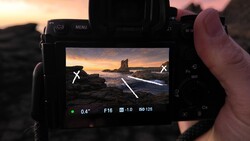
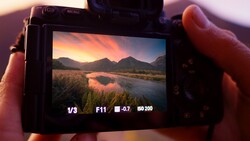
What makes the footage instructive is how Patino moves through the shoot. Rather than locking into one composition and repeating it, he circles the small rocky outlet he's standing on and builds a library of different framings. He talks about why this matters when you're back at the desk days or weeks later, reviewing raw files with less emotional attachment to any one shot. That distance, he argues, is when you make better decisions about what to actually publish. He runs through three candidate frames and explains why he leans toward one that balances foreground plant life, reflection, sky, and a mountain focal point without overcrowding or oversimplifying the scene.
The editing walkthrough is where the video gets particularly specific. Patino shoots deliberately dark, exposing for the highlights rather than the shadows, which lets him protect the rich pinks, oranges, and reds in the sky without blowing them out. He processes in Lightroom and Camera Raw, using the adjustment brush almost exclusively instead of automated sky selections, which he avoids because of the halos and uneven horizon darkening they tend to create. He works in color grading to push a warm-cool contrast that was already present in the scene, adds atmospheric depth by progressively lightening tones toward the background, and boosts whites and highlights selectively through the lichen and vegetation. He stops short of calling the edit finished, saves it as a Photoshop document, and puts it in a draft folder to revisit later with fresh eyes, a step he treats as part of the process rather than an afterthought. There's also a practical moment where he catches unwanted magenta in the reflected tones and pulls it back, the kind of small correction that's easy to miss when you're editing under mixed lighting conditions. Check out the video above for the full editing breakdown and field commentary from Patino.


Join the Fstoppers community for free
-
Post comments and join in the discussions
-
Browse the site ad-free
-
Share your work and get featured in the community
-
Compete in the photo contests for fun and prizes
No comments yet