
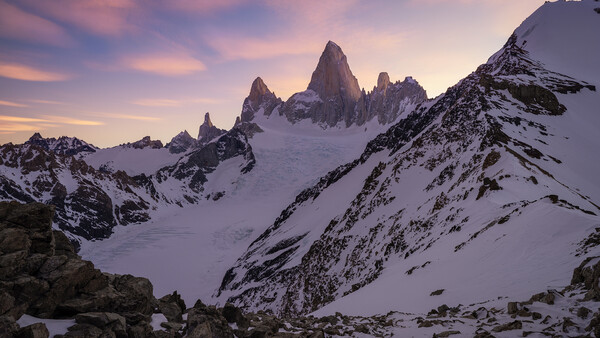
Landscape photography is not just an art, it is also an act of endurance, exploration, and personal vision. This is especially true in Patagonia.
Not long ago, I read an article titled “Why I’m Not Going Back to Patagonia as a Photographer” by Chandler Borries. Although I don’t agree with many of the author’s views, the article raises a question worth pondering: Nowadays, the increasing convenience of transportation and the continuous reduction of photography costs have made it easier than ever for us to reach remote areas that were once out of reach and engage in landscape photography. So, in this era, can we still create truly original photographic works, especially in those popular regions?
In this article, I will share my experience of photographing Patagonia over the years from different dimensions.
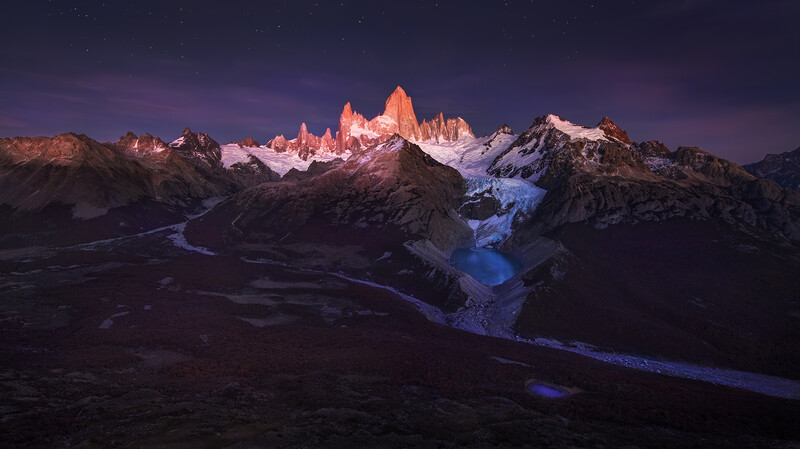
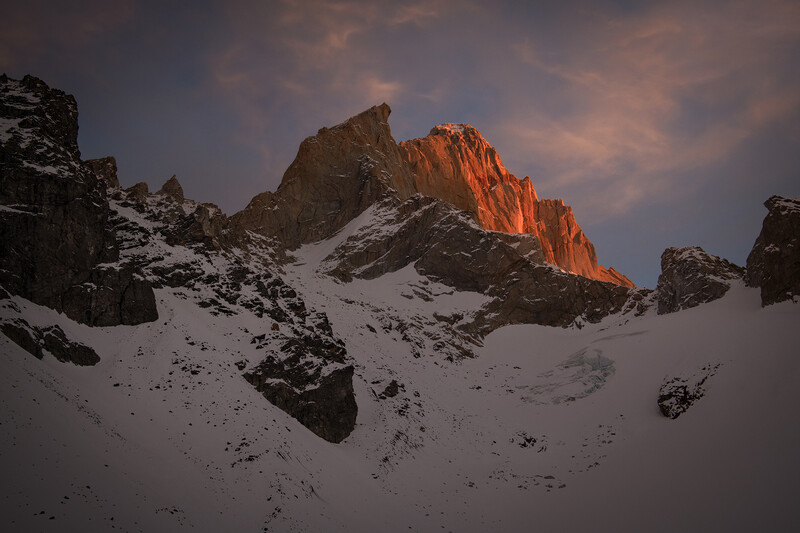
Patagonia Is Transforming Into a Photography Pilgrimage
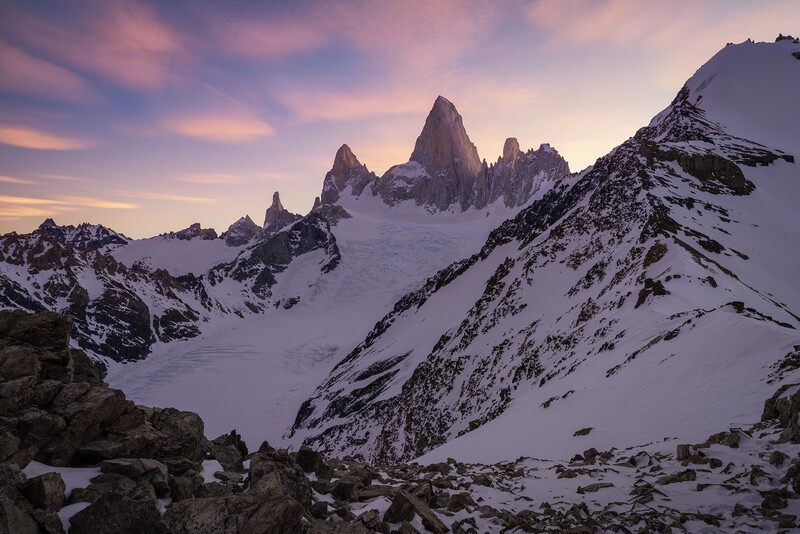
The iconic peaks of Patagonia are renowned for their unique forms and pristine beauty.
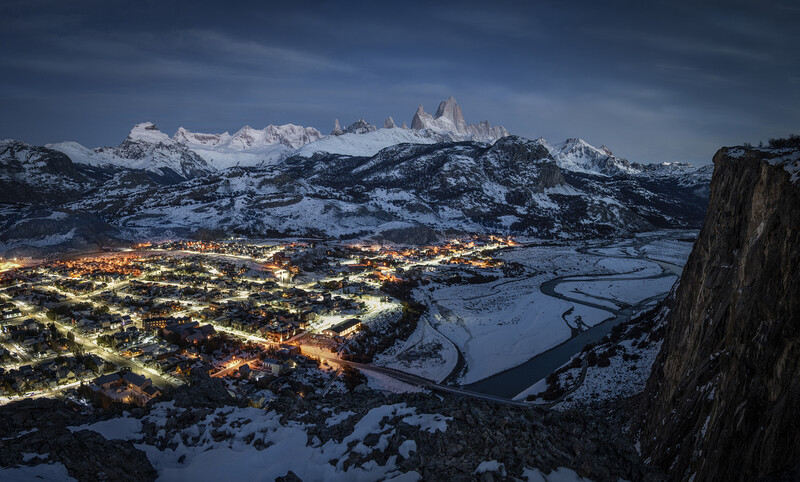
Over the past decade, Patagonia has gradually become a popular playground for photographers from all over the world. From March to May every year, individual photographers and photography workshop teams can be seen everywhere, whether in the small town of El Chaltén in Argentina or on the hiking trails in Torres del Paine National Park in Chile.
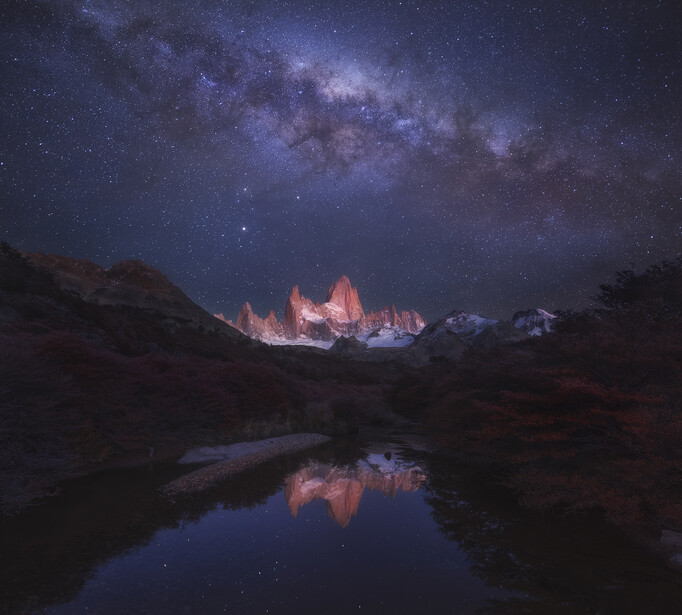
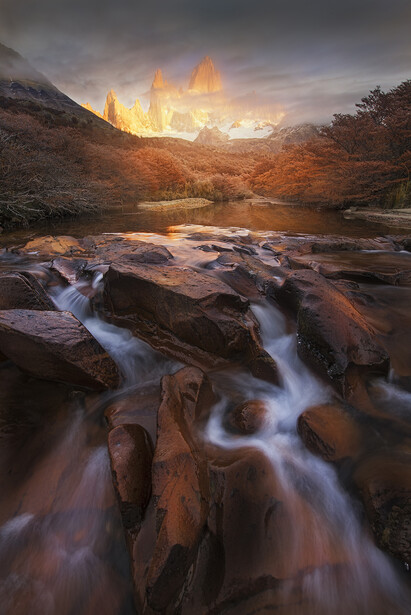
Some popular shooting spots have even experienced crowding and competition for camera positions. This once remote and desolate place is transforming into an annual photography pilgrimage, attracting landscape photographers from around the world. As a result, however, a growing number of Patagonia images now appear repetitive and lacking in originality.
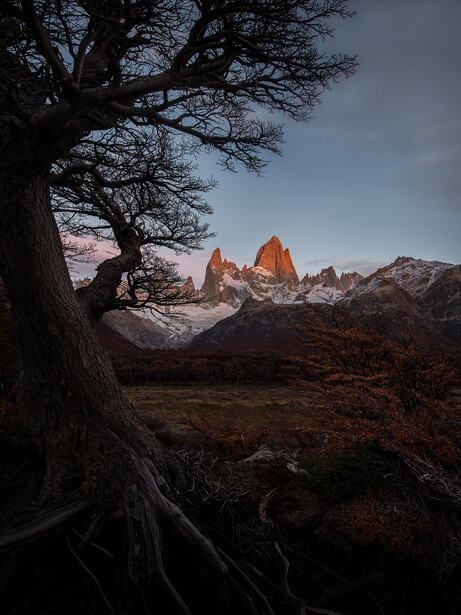
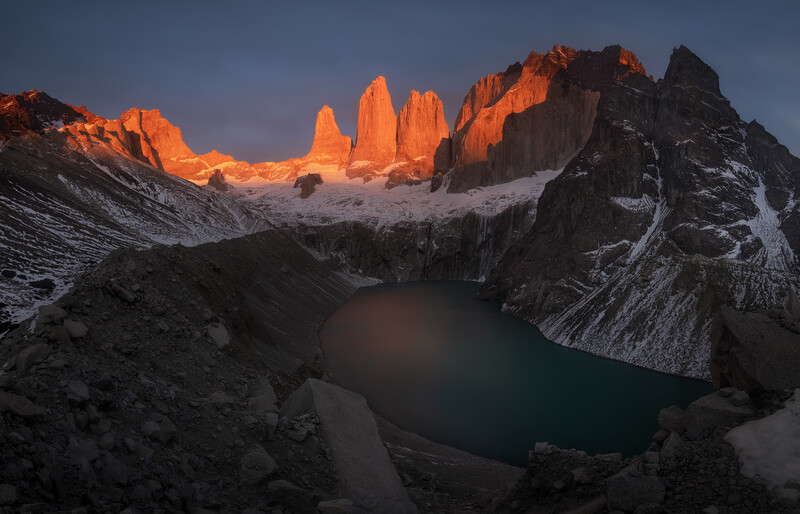
You Didn’t Hike Farther, You Didn’t Climb Higher
Why does this happen? Much of it has to do with the herd mentality that most people have. Many photographers tend to follow the crowd—when we see amazing Patagonia photos on social media (such as Instagram), we want to go to the same place and shoot similar images or just replicate the stunning beauty.
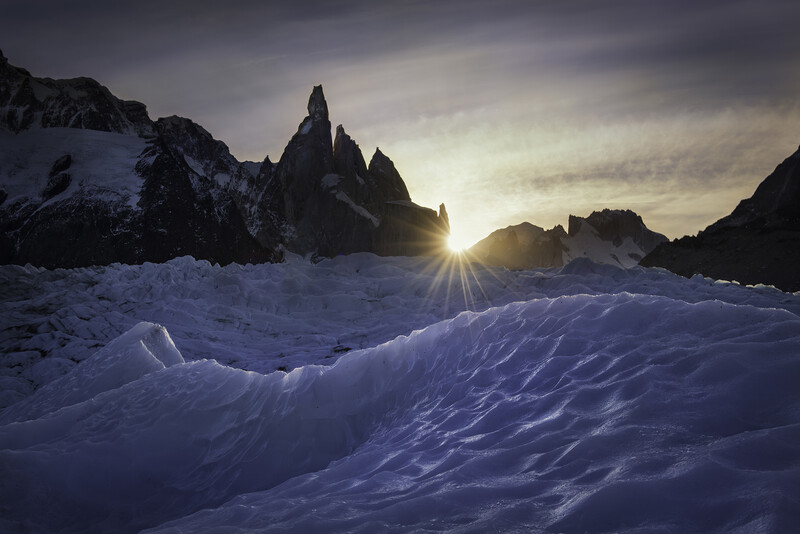
For the average photography enthusiast, there's nothing wrong with following the footsteps of photography masters and taking photos that are similar, or even identical, to their work. In fact, this is a common learning path for many beginners. However, as serious photographers, we must maintain independent thinking and avoid blindly following trends. Only in this way can we create truly original and personal photographs.
Although numerous photographers travel to Patagonia each year, often producing repetitive and uninspired images, this region is by no means devoid of creative space. On the contrary, for landscape photographers, Patagonia holds infinite possibilities and inspiration, a source of immense depth and tension.
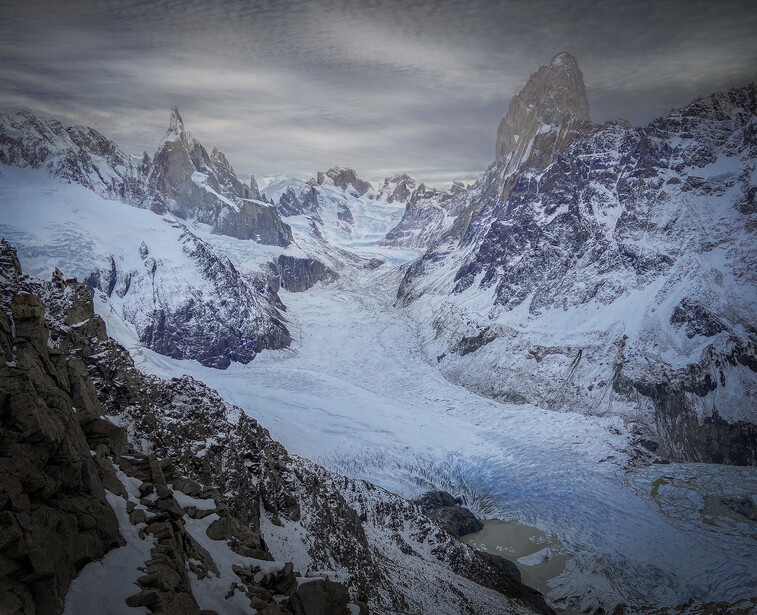
If a photographer complains that Patagonia's crowded landscapes and limited photo spots make it difficult to create truly original work, it likely means they haven't put in enough effort—perhaps they haven't hiked farther or climbed higher to discover landscapes that haven't been thoroughly explored by others. Only by venturing into the mountains and transcending conventional perspectives can one discover a Patagonia that's truly theirs.
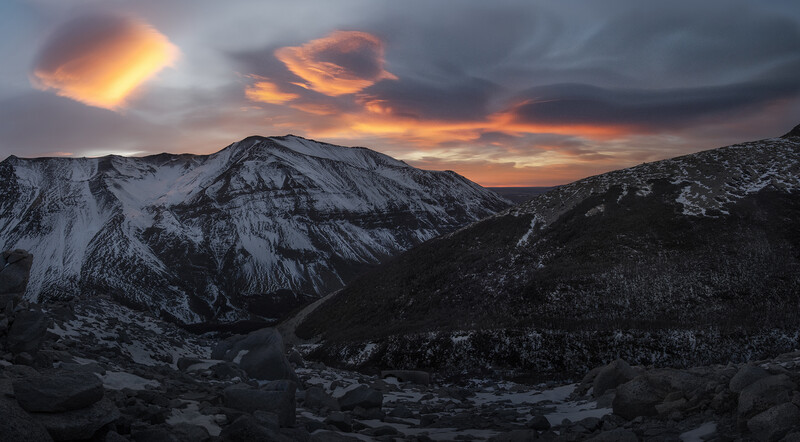
The Ultimate Testing Ground
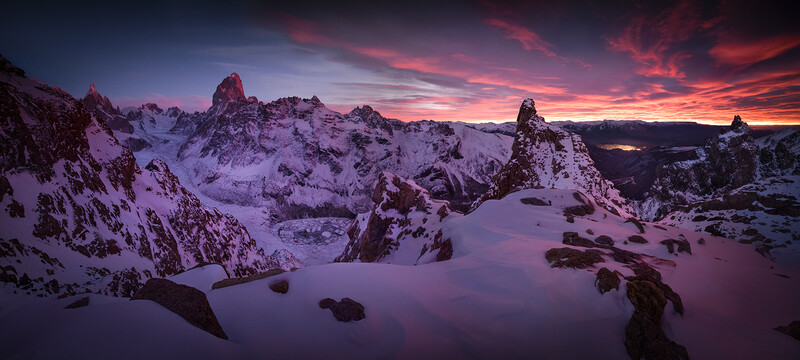
While many photographers capture Patagonia from popular viewpoints or along well-trodden trails, I explore this mountain range with a different approach—I climb to remote ridgelines, high alpine lakes, and some named or unnamed peaks, carrying my heavy camera gear through harsh weather and difficult terrain. It’s in these elevated, hard-to-reach places—where few, if any, have stood with a camera—that I find my perspective.
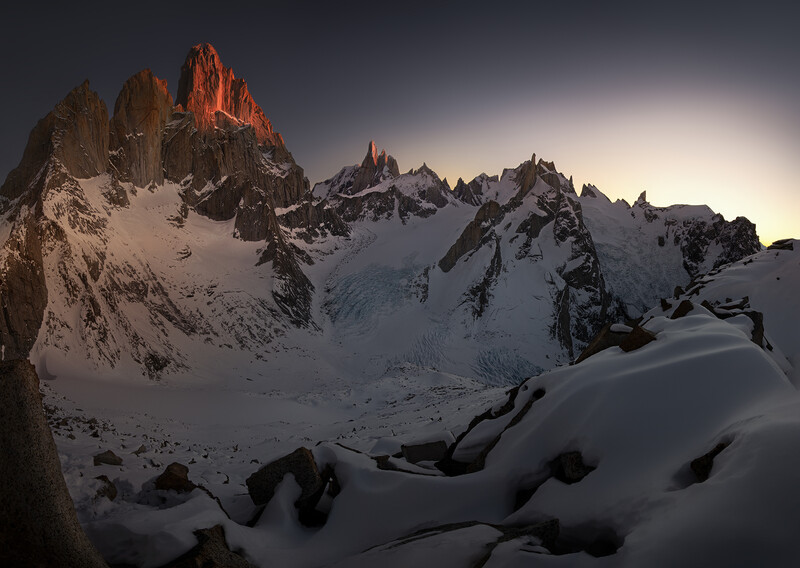
Many times, I must camp near the ridges and patiently wait—sometimes for days—for the right window of light. I must also be ready to accept that it might not come at all. Such great uncertainty is what makes the reward so deep. When the light does appear—sweeping across jagged peaks, igniting the sky in fire, or softly revealing a hidden lake—it feels like a gift. The images I bring back are not just pictures of Patagonia, but visual records of personal journeys into the wildest corners.
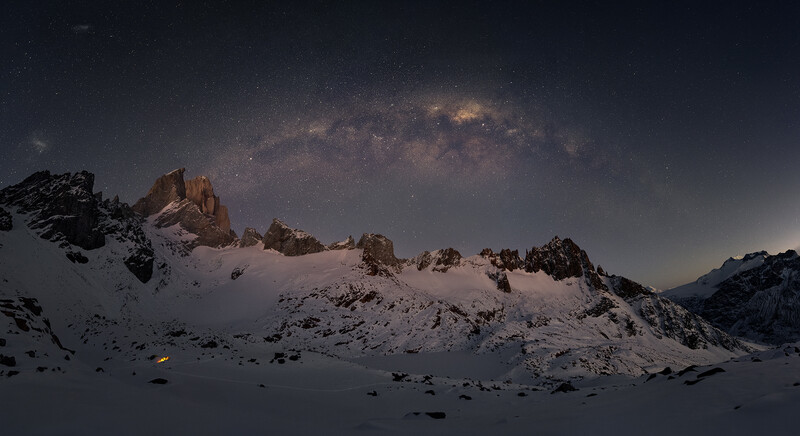
In this sense, Patagonia tests not only your physical and mental resilience, but your inner compass—the ability to resist repetition, to hold onto your own vision, and to seek solitude when others stay on the path.
So, Patagonia is a place that I always want to come back to. It is a destination that continues to challenge and refine my craft—not just as a photographer, but as an artist, an explorer, and a human being.



Join the Fstoppers community for free
-
Post comments and join in the discussions
-
Browse the site ad-free
-
Share your work and get featured in the community
-
Compete in the photo contests for fun and prizes
2 Comments
😅🤣
https://fstoppers.com/landscapes/why-im-not-going-back-patagonia-photog…
WOW two perfect reasons! I have friend who travels the world and goes on the Photography tours that everyone also goes on. YES the tours are expensive but the tours give room and board and some extras BUT how much is it worth to one for an epic captures that is if you are not selling images.
There are many photographers who give the tours all over the world, as proof go to YouTube and the photographers site/videos and it is always part of a video where it is said "on my last tour at where ever"!
It is like this to me if one can afford it so be it.
Some years ago Trey Ratcliff gave walking tours and the number of people was so deep I do not know how one got a capture.
Yes images are awesome and breath taking but how many walls do you have or are all your images on a computer drive where most trophies are hidden.
"The Ultimate Testing Ground for Photographers" is right out the front door!!! Sure there are places that one dreams of BUT your Photo Eye is best served in everyday surroundings and as you see what no other sees and a perfect framing time. Not talking about tourist photography of just clicking away at random BUT something that makes you stop your car or as you walkabout view that Mother Nature put right in front of you that only happens once ever!!! A photographer is a planner looking at weather and lighting but mainly with "Have Camera will record this for forever for anyone to see like I see it"
I was on a walk with a nephew and his wife on a nature trial just minutes from their house in New Hampshire where there is the Heublein Tower and as I walked with them I would see and capture, afterwards and edits the comments were "I did not that" even with them basically right next to me. The mind forgets things but a picture reminds!
You can travel anywhere by yourself on the dime you are spending any way.
I was on a trip and got a room for a couple nights at the Grand Canyon, and did what a Photographer does up early and at sunset and at night while my wife slept or we had early/late meals, you do not eat or sleep much when on a roll.
All I am saying is where you are planned or not is the "The Ultimate Testing Ground"
#1 a sunset while on a walkabout
#2 on a tour all by myself ,only one to buy that night so much fun, capturing what the native tour guide never saw , the horse and rider in the rock structures and a angary chief inside.
#3 As I was coming to the back of our hotel with my new A7RM2 and FE 12-24mm F4 hand holding
#4 Walked out my front door and saw the crescent moon with sunlight glowing on the darkness part and got a two fer on the site I went to using just my old FE 24-240mm and A7M3 the comet upper right corner mother nature provided a unknown at that time to me!