Landscape photography with a telephoto lens completely shifts how you approach a scene. Instead of sweeping vistas, you're chasing tighter compositions and fleeting details that wider lenses miss.
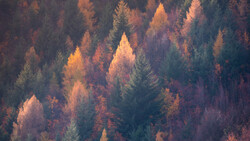
Coming to you from William Patino, this practical video takes you through his morning shoot on New Zealand’s South Island, emphasizing the versatility and creativity a 100-400mm lens offers. Patino initially heads out intending to align the moon with mountain peaks but quickly pivots when a distant tree catches his attention. His spontaneous decision to switch from a wide angle to the telephoto lens perfectly illustrates why the ability to adapt matters so much when photographing dynamic landscapes.
What stands out most is Patino’s explanation of telephoto framing: you’re not capturing expansive views, but selective, tightly arranged compositions. He walks you through his process of separating key elements, like distant trees, peaks, and mist, to achieve balance within the compressed frame. The lens allows him to isolate small-scale scenes within a broader landscape, turning brief moments of changing fog or sunlight into visually powerful shots. These are opportunities that wide angle lenses typically can't exploit, revealing why a telephoto should be in your landscape toolkit.
Patino also underscores the fleeting nature of these scenes, explaining why patience and speed matter equally. You watch as he hurriedly repositions, racing sunlight and shifting fog, emphasizing the need for decisiveness when capturing moments that vanish in seconds. This part of the video clearly demonstrates how mastering a telephoto involves knowing exactly when to wait, when to act, and when to abandon an idea entirely if conditions shift unexpectedly.
Patino also briefly dives into his editing process, sharing quick insights into cropping and adjusting images shot at longer focal lengths. He openly discusses why he may or may not keep certain frames, providing insight into how to critique your own telephoto landscapes honestly. He encourages you to think carefully about whether an image genuinely adds to your portfolio rather than simply filling space. Check out the video above for the full rundown from Patino.
And if you really want to dive into landscape photography, check out our latest tutorial, "Photographing the World: Japan II - Discovering Hidden Gems with Elia Locardi!”



Join the Fstoppers community for free
-
Post comments and join in the discussions
-
Browse the site ad-free
-
Share your work and get featured in the community
-
Compete in the photo contests for fun and prizes
6 Comments
When I switched from 35mm and APS to Micro Four Thirds in 2012, I found the ability to carry a 45-200 (90-400 in 35mm-format terms) in a coat pocket absolutely liberating when exploring hilly landscapes on foot for hours. I also used the long end of a 14-140 (28-280 on 35mm format) quite a lot picking out distant mountain peaks with a one-lens hiking kit.
I had a 100-400 but sold it and bought the Tamron 50--400. I have no regrets, it is one of my most used lenses.
I had forgotten that Tamron made a 50-400mm. I just looked it up and reviewed the specs, and was amazed to learn that it has a minimum focus distance of just 9.8 inches, which yields a whopping 1:2 magnification ratio! So it would not only be great for landscapes, but also super great for close-ups of flowers, butterflies, frogs, leaves, etc.
I can not think of any useful advantage that the Canon 100-400mm has over this Tamron of yours, and that is coming from someone who has owned and used the Canon for a decade and absolutely loves it.
I use it for close-ups more often than my Sigma 105 macro lens. Excellent lens.
A Tamron 50-300 fills this role alongside a 20-40 and a7CR in my walkabout landscape kit. The 50-300 is quite sharp, also focuses very close, and is easy to carry all day.
The Sony 12-24 GM, Sony 24-105 and the Tamron 50-400 are my main lenses for my full frame kit.