
March 2026 was one of those months where every corner of the photography world seemed to shift at once. From semiconductor crises driven by AI infrastructure to the Supreme Court declining to touch a pivotal AI copyright case, from the biggest camera trade show on the planet delivering almost no new cameras to Kodak rewriting the names of its most beloved film stocks, this was a month that will be remembered as a turning point. These ten stories captured the month.
1. Sony Japan Suspends Memory Card Orders Across Nearly Its Entire Lineup
The single most disruptive story of the month landed on March 27, when Sony Japan announced it would immediately stop accepting orders for the vast majority of its CFexpress and SD memory cards within the Japanese market. The suspension covers CFexpress Type A cards across every major capacity from 240 GB through 1.9 TB, CFexpress Type B at 240 GB and 480 GB, and virtually every SD card the company sells in Japan, including its entire TOUGH line. The 960 GB CFexpress Type B and some entry-level SF-UZ series SD cards were exempt from the suspension. Sony cited the global shortage of semiconductors and noted that supply will not be able to meet demand "for the foreseeable future," offering no timeline for resumption. The suspension currently applies only to Japan, but industry analysts expect similar constraints could spread globally if supply conditions deteriorate further. Existing retail inventory remains available until depleted, but once it is gone, it is gone.
Our Take: This is the moment the AI memory crisis stopped being an abstract concern for photographers and became a workflow problem. AI datacenters have been consuming NAND flash at an extraordinary rate, outbidding consumer electronics manufacturers for limited wafer supply. NAND wafer costs surged 25% in February alone, and SanDisk Extreme Pro 128 GB cards have jumped more than 70%, from around $30 at the start of the year to roughly $52 by March (RedShark News). Sony is the first major photographic brand to pull back from memory card fulfillment, and while the suspension is currently limited to Japan, it would be naive to assume similar constraints will not spread to other markets. Relief is not expected until new fabrication capacity comes online in late 2027 at the earliest. If you shoot on CFexpress Type A, stock up now. The broader implication is sobering: artificial intelligence is reshaping photography not by replacing photographers, but by making it physically harder and more expensive to store the images they capture.
2. The U.S. Supreme Court Declines to Hear the AI Copyright Case
On March 2, the U.S. Supreme Court denied certiorari in the long-running case of Thaler v. Perlmutter, in which computer scientist Stephen Thaler sought copyright registration for an image created entirely by his AI system, DABUS. By declining to hear the appeal, the Court left intact lower court rulings holding that works without a human author are ineligible for copyright protection. The denial of certiorari is not a decision on the merits, but the practical effect is the same: Thaler's seven-year effort to establish AI-generated works as copyrightable is over, and the lower court precedent reinforcing human authorship as a foundational requirement of U.S. copyright law stands.
Our Take: The outcome is significant, but its scope is narrower than the headlines suggest. Thaler explicitly and repeatedly disclaimed any human involvement in the creation of his image, which means neither the lower courts nor the Supreme Court ever addressed the far more common scenario in which a photographer uses AI tools as part of a broader creative process. AI-assisted works, where a human meaningfully directs or edits the output, may still qualify for copyright protection, and that is the question the Copyright Office and future courts will have to grapple with in the months ahead. For working photographers, the practical takeaway is this: if you use generative AI in your workflow, document your creative decisions. The line between tool-assisted authorship and autonomous machine output is going to matter enormously as additional cases, including Getty v. Stability AI and the consolidated OpenAI MDL, work their way toward trial.
3. Eastman Kodak Completes Its Film Takeover With New Ektacolor Pro and Ektapan Lines
On March 24, Eastman Kodak announced six new film stocks: three Ektacolor Pro color negative films at ISO 160, 400, and 800, and three Ektapan black-and-white negative films at ISO 100, 400, and P3200. The films are available in both 135 and 120 formats (with the exception of the P3200, which is 135 only), and they are priced comparably to the existing Kodak Alaris product lines. The community noticed immediately that these "new" films bear a striking resemblance to Kodak Portra and T-Max, respectively, matching exactly in speed, format availability, and described characteristics. While Eastman Kodak has not explicitly confirmed they are the same emulsions under new branding, the specifications are functionally identical.
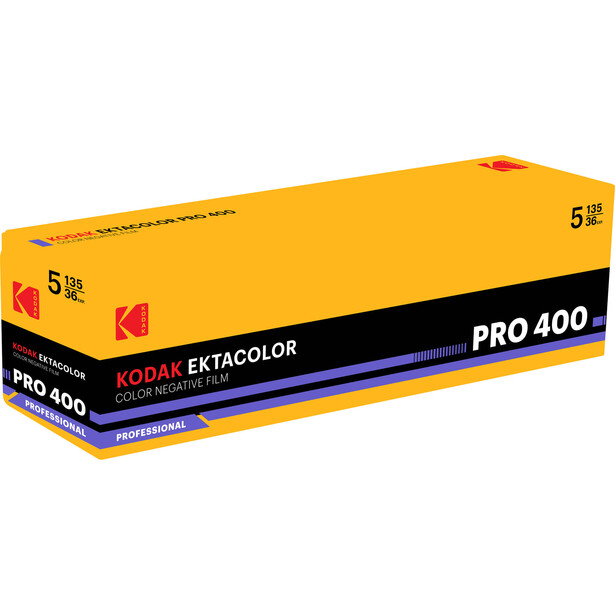
Our Take: This release completes a process that began last September when Eastman Kodak started pulling film distribution back from Kodak Alaris, the entity that had handled still photography film sales since the messy 2012 bankruptcy. Kodacolor, Gold, Ultramax, Ektar, Tri-X, and Ektachrome have all already transitioned. Ektacolor Pro and Ektapan represent the final chapter. Whether you call it Portra or Ektacolor, the emulsion appears to be the same, and Eastman Kodak's stated goal of increasing supply stability and reducing price volatility is good news for film shooters who have spent years dealing with erratic availability. The name changes will confuse people for a while, but the underlying story here is one of consolidation and renewed commitment to analog photography from the company that invented the medium.
4. CP+ 2026: Record Attendance, Almost Zero New Cameras
CP+ 2026 ran from February 26 through March 1 at Pacifico Yokohama, drawing a record 149 exhibitors and building on last year's approximately 56,000 in-person visitors. The show floor was packed. The camera announcements were not. Sony arrived with no new products whatsoever despite having the largest booth. Canon brought no production-ready bodies. Nikon launched a redesigned Nikkor Z 70-200mm f/2.8 VR S II just ahead of the show. Sigma unveiled its 35mm f/1.4 DG DN II Art and 15mm f/1.4 DC DN Contemporary for APS-C two days before the show opened, then used the show floor itself to confirm development of an 85mm f/1.2 DG Art lens. Third-party lens manufacturers and accessory makers filled the gap, but the absence of headline camera releases was conspicuous.
Our Take: Amateur Photographer's Gavin Stoker put it bluntly, writing that he had not seen this little movement in the camera market in a quarter century, and that is hard to argue with. CIPA forecasts mirrorless shipments to fall 2.6% in 2026, to roughly 6.82 million units, and while the total digital camera market is projected to grow a modest 1.6% to about 9.59 million units, that topline number is propped up almost entirely by compact camera sales rather than interchangeable-lens bodies. The camera industry is in a holding pattern, and CP+ reflected that. What the show lacked in flagship announcements, however, it made up for in character. Sigma continues to fill gaps that first-party manufacturers refuse to address, Voigtländer debuted three beautiful manual-focus primes, and the third-party lens ecosystem has never been healthier. The era of annual flagship refreshes may be over, but the era of interesting glass is just getting started.
5. Canon's Analog Concept Camera Stole the Show
The most talked-about product at CP+ 2026 was not a shipping camera. Canon's Analog Concept Camera is a box-style digital camera with a top-down, waist-level optical viewfinder, fully manual focus, and a deliberately restrained feature set. The prototype uses a Type 1 sensor and produces images that Canon describes as intentionally tactile and vintage. There is no rear LCD for chimping. There is no autofocus. The entire design philosophy encourages photographers to slow down, compose through a viewfinder reminiscent of medium format cameras, and engage with the physical act of making a picture.
Our Take: This camera may never ship in its current form, and Canon has not committed to a production timeline. But the response it generated tells us something important about where the market's emotional center of gravity has shifted. Photographers are tired of spec sheets. They are tired of megapixel wars and 8K video capabilities they will never use. What they want is something that feels good in the hand and makes the process of taking pictures enjoyable again. Canon is clearly paying attention to the same cultural current that Fujifilm has been riding for years with the X100 series and that Nikon tapped into with the Nikon Zf. Whether the Analog Concept Camera or the rumored AE-1-inspired RE-1 actually reaches retail, the message from Canon is clear: the company understands that photography's future might involve looking backward as much as forward.
6. The Compact Camera Revival Is No Longer a Trend. It Is a Market Shift.
CIPA's 2026 forecasts project 2.77 million fixed-lens camera shipments, representing a 13.6% increase over 2025, which itself saw a 29.6% jump. The compact camera category is growing faster than any other segment of the camera market, and the demand is coming from both ends of the price spectrum. At the high end, the Fujifilm GFX100RF, a 102-megapixel medium format body with a fixed 28mm-equivalent lens, is finding buyers who want serious image quality in a portable package. On the opposite end of the spectrum, a $35 Kodak Charmera, essentially a keychain-sized novelty camera, climbed to the top of B&H's trending products. Canon has wound up compact camera production by 50%.
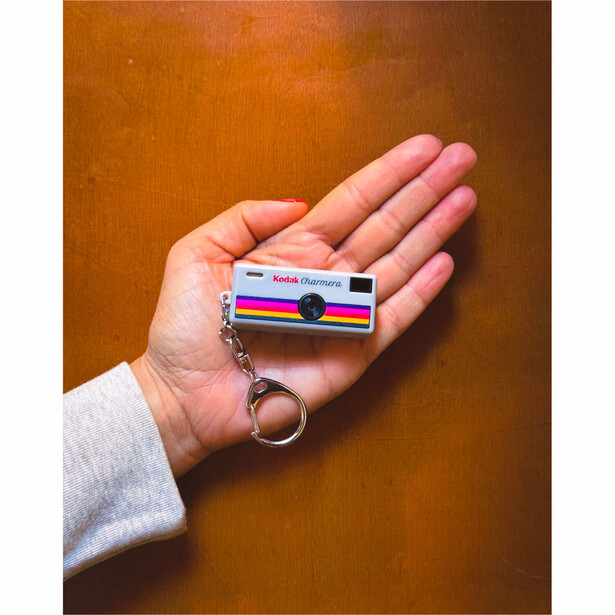
Our Take: The compact revival is being driven by two distinct and nearly opposite forces. One is the "anti-phone" impulse: younger buyers who want a device that only takes pictures, with no email, no notifications, and no doomscrolling. The other is the premium enthusiast who wants a pocketable camera that produces genuinely excellent images. Fujifilm has articulated this better than anyone, with executives telling interviewers that "fun cameras will keep photography alive" and comparing their strategy to Nintendo's approach in gaming: prioritizing the experience over raw technical horsepower. The $35 Charmera and the $5,000+ GFX100RF are not competing with each other. They are both symptoms of the same underlying shift, which is that the camera market's growth is coming from people who want cameras to be something other than a phone with a bigger sensor. If you are among the wave of new shooters picking up a dedicated camera for the first time, Fstoppers' Photography 101 covers everything you need to know to get started.
7. DJI Launches the Avata 360
DJI officially announced the DJI Avata 360, an immersive FPV drone equipped with dual 1/1.1-inch CMOS sensors, 8K 360-degree video capture, and up to 120-megapixel still photos. The drone represents DJI's direct challenge to the Insta360 Antigravity A1, which launched just weeks earlier. DJI is positioning the Avata 360 as its most advanced consumer drone, featuring its top-tier transmission technology and obstacle avoidance systems. The Avata 360 secured FCC authorization on November 19, 2025, just before the FCC implemented new restrictions on equipment authorizations for certain foreign-manufactured drones under the FY2025 NDAA framework. That prior authorization clears one significant regulatory hurdle, but it has not translated into a straightforward U.S. launch: as of late March, the Avata 360 had not received an official U.S. release, was not listed on DJI's U.S. store, and B&H was still showing it as a preorder. Don't miss our look at the Avata 360.
Our Take: The Avata 360 is a genuinely impressive piece of hardware, and the fact that it secured FCC authorization just before the regulatory window closed is a significant detail for American buyers. But the rollout itself underscores how complicated DJI's U.S. presence has become: even a product that cleared the legal hurdles was not straightforwardly available on launch day through all expected channels. The broader DJI situation remains precarious. Future DJI products that have not already received FCC certification face an uncertain path into the U.S. market, and the regulatory landscape around Chinese-manufactured drones continues to shift. For content creators who want immersive 360-degree aerial footage, the Avata 360 may be the last new DJI drone that is straightforward to buy in the United States for some time. That alone makes it worth paying attention to, regardless of how its specs compare to the Antigravity A1 on paper.
8. The AI Memory Crisis Is Reshaping the Entire Gear Market
The Sony memory card suspension is the most dramatic symptom, but the underlying crisis extends far beyond one company's product line. CFexpress Type A and Type B cards across all manufacturers have seen significant price increases, with the most extreme examples reaching well beyond 100%. One European retailer saw a CFexpress 512 GB card go from 160 euros to over 360 euros in a two-week span, a jump of roughly 125%. Even more modest increases of 20 to 60% are painful enough for working professionals buying cards in volume. The cause is structural: AI datacenters are consuming the global supply of NAND flash, and the photography industry does not have enough purchasing power to compete. Camera manufacturers face a trilemma: raise prices on bodies and accessories, trim specifications to reduce memory demands, or alter internal architectures to shrink buffer sizes.

Our Take: This is arguably the most consequential long-term story on this list, because it threatens to change the economics of professional photography in ways that have nothing to do with photography itself. The push toward higher resolutions, 8K video, and faster burst rates all demand more and faster storage. If storage becomes scarce and expensive enough, it could slow adoption of high-resolution systems, shift buying behavior toward cameras with lower data throughput, or force manufacturers to invest more heavily in lossy in-camera compression. Industry analysts do not expect meaningful relief until late 2027 at the earliest, when new fabrication capacity is projected to come online. In the meantime, working photographers should treat memory cards the way they treat lens caps: buy extras, protect the ones you have, and do not assume replacements will be easy or cheap to find.
9. Getty v. Stability AI Refiled in the U.S., and the AI Training Lawsuits Keep Mounting
Getty Images voluntarily dismissed its stalled Delaware case against Stability AI in August 2025 and refiled in the Northern District of California. Getty's refiled complaint identifies 7,216 copyrighted images and advances the theory that mass AI-generated content "hollows out" the value of the original licensed work. Getty's original action had pursued damages in the neighborhood of $1.7 billion. Meanwhile, the Andersen v. Stability AI class action, which proposes to represent all U.S. copyright holders whose works were used to train any version of the defendants' tools, has had its summary judgment hearing pushed to February 2027. The consolidated OpenAI MDL, which encompasses twelve cases from news organizations, authors, and video creators, continues to expand in scope.
Our Take: None of these cases will resolve this year, and some may not resolve for several more. But the legal infrastructure being built right now will determine whether photographers have any meaningful recourse when their images are used to train generative AI models without consent or compensation. The Getty case is particularly important because it tests whether "market harm" can be established at scale: not just that individual images were copied, but that the entire business model of stock photography is being undermined by AI systems trained on that very archive. For photographers who license work through any stock agency or maintain their own licensing business, these cases are not abstract. They are the fight for the economic foundation of commercial photography. The outcomes will shape licensing contracts, usage rights, and revenue models for the next decade.
10. Apple Discontinues the Mac Pro
Apple removed the Mac Pro from its website on March 26 and confirmed the discontinuation to the press the same day, ending the product line that has served as the backbone of high-end creative workflows for decades. While the Mac Studio and Mac Pro with Apple Silicon had already blurred the lines between Apple's professional desktop offerings, the formal end of the Mac Pro line closes a chapter for studios, retouching houses, and post-production facilities that built their entire infrastructure around the tower form factor and its expansion capabilities.
Our Take: For most photographers, this will not matter. The Mac Studio with M-series chips handles Lightroom, Photoshop, and Capture One without breaking a sweat, and the vast majority of photo workflows do not require the kind of expandability the Mac Pro offered. Apple has clearly decided that its future is in integrated, efficient systems rather than expandable towers, and the photography industry will adapt. It always does.

Join the Fstoppers community for free
-
Post comments and join in the discussions
-
Browse the site ad-free
-
Share your work and get featured in the community
-
Compete in the photo contests for fun and prizes
No comments yet