
Opinions should always be challenged, even in the art we call photography. Here are contentious views that you might disagree with. Trigger warning: they might detonate your temper.
UV Filters Rule
This is one of the most antagonistic issues in the world of photography. I can already visualize the steam rising from the readers' collars.
I don’t understand why the anti-UV filter brigade gets so angry about it. Despite all the evidence to the contrary, they will argue aggressively against using a UV filter and refuse to listen to the other side of the debate.
Those in favor of using a filter say that it protects the front element of the lens. Meanwhile, those opposed to the practice say that adding an extra layer of glass will deteriorate the image.
I’ve tested lots of UV filters, including some expensive ones. Indeed, some do cause unwanted artifacts. But others I have tried don’t.
A wedding photographer I know spent a small fortune on a new lens. On his very first wedding using it, a bridesmaid sprayed hair lacquer onto the front element. The lens was unusable for the rest of the wedding. I also managed to scratch the front element of a professional lens on a beach night shoot when some sea spray splashed it. Despite carefully removing the water, a grain of sand still managed to make a mess of the glass. Therefore, I am a member of Team Use-a-Filter.
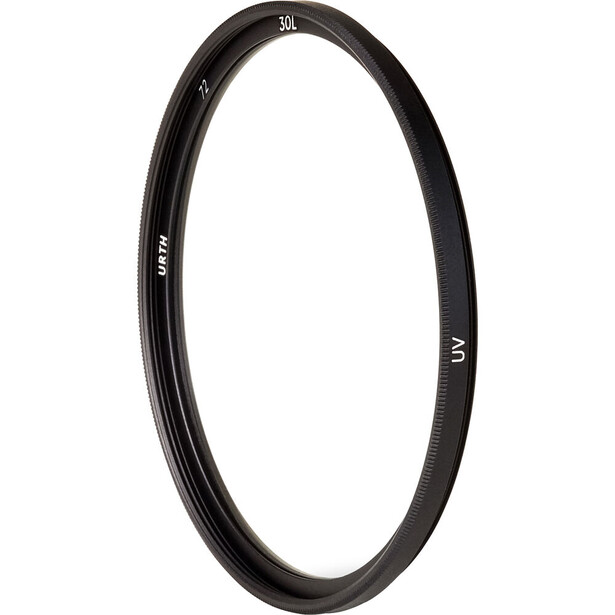
I do thoroughly test the filters I use to ensure they do not damage my photos. I learned the hard way by buying a low-quality professional-grade filter from a big brand that created unwanted parallel lines in the bokeh.
But one brand of filter improves the photo. You make up your mind. Here are two images, one shot with an Urth Plus+ UV filter attached and one without. Can you tell which is which?
First, here are the uncropped versions. Both were shot in manual mode using the OM-1 Mark II and the 12–40mm f/2.8 PRO lens at 40mm, f/5.6, and 1.3 seconds. One of them has an Urth Plus+ UV magnetic filter attached and the other doesn't.


Here are cropped versions of the same two images. You can click on these to see a full-size version.


Could you tell them apart? The left-hand and bottom images were with the filter attached.
There is a slight difference. Looking at the histogram, while their black point and the shadow areas are identical, the upper midtones, highlights, and whites are about 1/4 stop darker in the photo with the filter attached. You can see this difference if you look closely at the leaves. This is advantageous for landscape photographers as it helps reveal the highlights in the sky, acting like a skylight filter from the days of film.
By the way, those who argue you should use a lens hood to protect the lens instead—I disagree; I say use both together.
Your Gear Isn’t Any Better Than Someone Else’s
Whenever I write a gear review, there is often someone who will take it as a personal slight. For instance, if I sing the praises of a particular tripod, bag, or brand of filter, someone will inevitably mention their brand and model and how superior it is to the one I have just reviewed.
At other times, people are unwilling to accept that a range of great gear is available. They think everyone should buy what they have. Moreover, some don’t want to admit they could have made a better choice.
Similarly, if we point out the failings of a product, it can seem like every owner of that brand will jump to the attack of the reviewer. Dare to mention that there is a problem with Canikony cameras, and the brand's users will rage and throw their teddies out of their prams.
Get your soft toys at the ready.
Full Frame Has Had Its Day
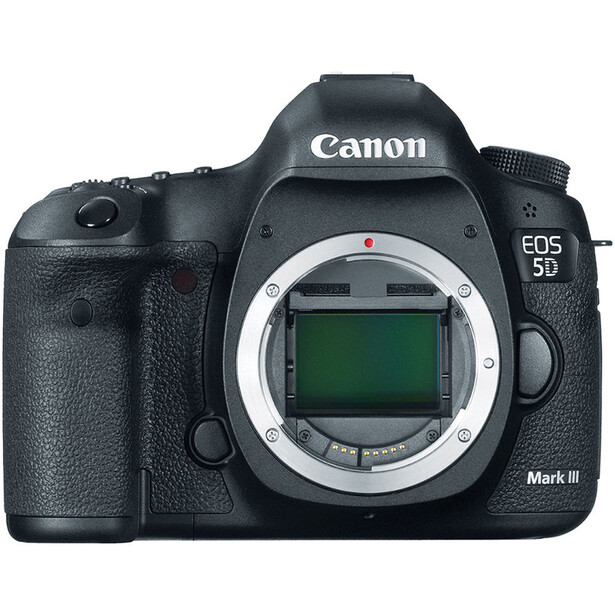
Historically, 35mm sensor DSLRs were considered superior to crop frame cameras in every way. Ignoring all those build quality issues, that was probably true when it came to image quality. However, time has moved on, and so too has technology. The quality of images has exploded thanks to the latest generations of sensors. Some so-called crop sensor cameras have outstanding performance and produce more-than-good-enough images if the manufacturers invest in the smaller formats. Sadly, not all of them do.
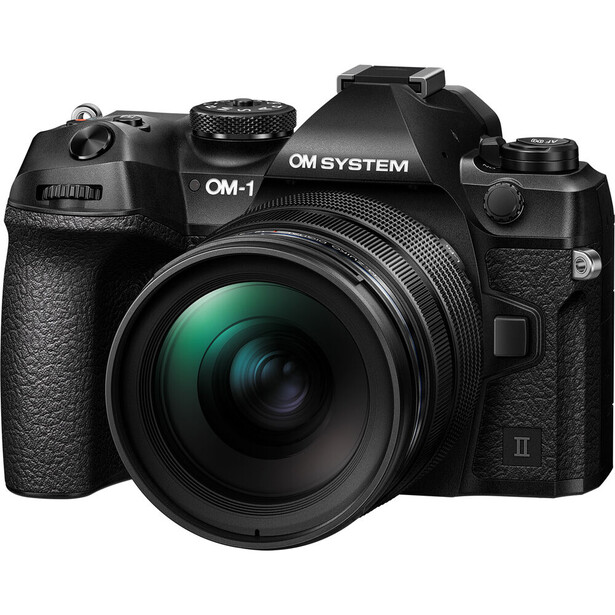
There are other differences, too. Given that the image quality of contemporary Micro Four Thirds sensors is more than good enough for most people, there is no need to buy a more expensive, back-breaking, heavy camera system. It's the photographer who takes great photos, and most contemporary interchangeable lens cameras will allow them to do it.
The uncomfortable reality is that it doesn’t make sense for big manufacturers to make their smaller cameras perform as well as the big ones. Their entry-level and mid-range crop frame cameras are deliberately restricted in functionality and build quality so people grow out of them and upgrade within the system.
Of course, that is a marketing strategy that works. However, it doesn’t necessarily give the best options for photographers. The aging population doesn’t want to lug those behemoths around, and neither do young photographers who want something discreet and stylish. So, maybe 35mm DSLRs have had their day.
That is good news for manufacturers that specialize in smaller-format cameras, whose sales are increasing.
Adobe's Raw Conversion Isn’t That Great
Raw conversions from Adobe don’t stand up to scrutiny when compared with some other software. I find Lightroom Classic and the other Adobe raw converters underexpose raw files by half a stop. Furthermore, even at that reduced brightness, the images are noisier. Plus, the lens profiles are poor.
Look at the following two versions of the undeveloped raw files. On the left is the Lightroom version at default settings, and on the right is a screenshot of the same image shown in PhotoLab 8.
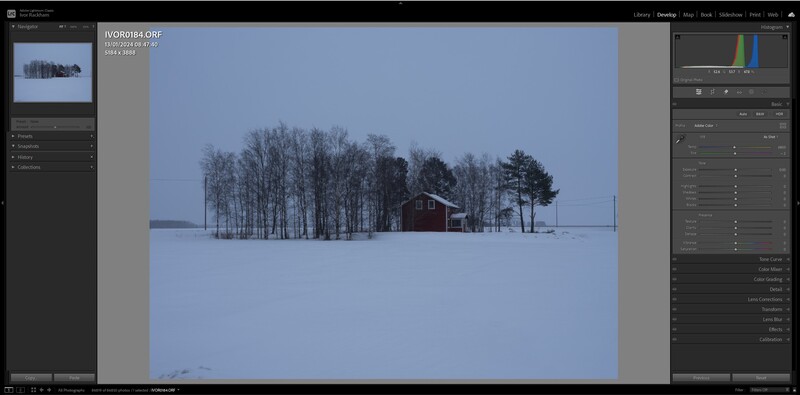
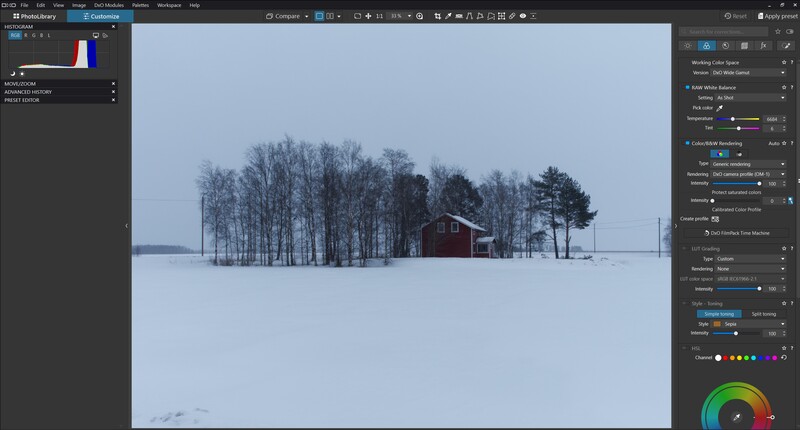
Not only is the PL8 image brighter, but it exhibits less noise, it's not oversharpened, and the lens profile hasn't cropped the sides of the image. Compare the edges of the frame; those two small trees are missing in the Lightroom version because of its inferior lens profiling.
Lightroom Classic does have one of the best cataloging systems. That doesn’t mean the others are bad; some come very close, but it has the edge over many. However, when it comes to image quality, it is outshone by some of the other products on the market. That, coupled with Adobe’s relatively expensive subscription model and the user-unfriendly Photoshop that is unnecessarily complex for most photographers, means there are far better options out there for many of us.
Playing Devil’s Advocate
Okay, I was playing devil’s advocate there. I don't necessarily fully agree with all those points because there are two sides to every argument. Usually, both sides can make valid arguments in their favor because, in photography, for every advantage, there is almost always an opposite disadvantage.
That’s important to remember because it’s healthy to be challenged in our beliefs and practices. There is always more than one way of approaching things, and your opinion doesn’t have to be the same as mine. Sadly, we are living in a fragmented world where there are extremists that blindly follow a set of beliefs and refuse to accept that theirs isn’t the only way, and this is often carried over into the world of photography.
In short, our beliefs or opinions, preferred equipment, or approaches to working do not need to be the same. And that's okay.





Join the Fstoppers community for free
-
Post comments and join in the discussions
-
Browse the site ad-free
-
Share your work and get featured in the community
-
Compete in the photo contests for fun and prizes
44 Comments
Years ago Steve Perry did a series of controlled tests to see if UV filters actually provide any meaningful protection and from his tests he came to the conclusion that they do not. Just because you broke a uv filter doesn’t mean the, much stronger, front element would have been damaged.
Moreover, by saving the money you would have spent on UV filters you can use that as “insurance” against any damage, not just front impact.
https://youtu.be/P0CLPTd6Bds?si=_63xZSD1zXwkJVEF
I get your point, but I scratched my front element removing sea water from it on a photoshoot. That was about 10 years ago, and the repair cost me three times as much as a filter would have done. A UV filter would have protected it. It would also have meant the wedding photographer I mentioned could have carried on shooting with his lens after it was sprayed with hair lacquer.
I think one could go on at length with anecdotal accounts of when a filter might have been a good idea. I used to work in camera retail sales for about a decade. The real reason we pushed filter sales is because they are relatively high markup items. In terms of repair service there were exceedingly few that came in that a filter would have helped avoid. The real hero of lens protection is hoods. I’m still amazed to see so many people with them on backwards.
Thanks for the great comment, Steve.
I fully agree with using a lens hood as well. If one could go on at length with anecdotal evidence of how a UV filter has or could have protected the front element of the lens, it surely builds the case for it being a good idea.
I've tested many UV filters. Most of them significantly degrade the image quality, but a few don't. In that case, I see no harm in using those good ones in conjunction with a lens hood to get the secondary benefit of protecting the front element. As I have scratched the front element of two lenses over the years, the other being back in the 1990s, I prefer using a good-quality UV filter. Furthermore, I have also replaced filters that have become scratched, so the filters have probably saved the front element from damage.
As demonstrated above, they also help reduce the brightness of highlights, which is another benefit.
But I think it is fine for there to be opposing opinions on this matter.
Well the point isn’t that one UV filter will save you the cost of a single repair. Its that the cumulative cost of all UV filters on all your lenses will vastly exceed the cumulative cost of all repairs that they could have prevented over the course of a career.
But yes, there are certain specific situations where a UV can be a good idea. Which Steve covers in the video. Conditions of spraying sea water or sand are examples he gives.
But I still see the idea of plopping a UV filter on every lens you buy as a pretty big waste of money, esp as they don’t provide much protection.
But yeah, everyone is different. Personally I don’t want to take on the burden and cost of UVing every lens for the extremely minor protection that they provide. Especially considering the image quality hit that you take. They don’t drain sharpness much, its true. But they do introduce flaring and ghosting, even the best ones. (because physics)
Personally, my anecdotal evidence is that in 20 years of shooting, I haven’t once been in a situation where I felt a UV filter would have protected my lens. I have only damaged a single front element in that time, and it was due to a fall that messed up the internal mechanisms in the lens too so the UV wouldn’t have really mattered. Even you had to dig a decade into your past for a situation where it might have saved you, did that repair exceed the cost of every UV filter you have bought since then?
Perhaps some of it is to do with where you shoot. I am at the coast, so I am regularly getting sprayed with sea water and blown with sand. At night, if you shine a torch, you can see the air is full of particles, and the filters get filthy as a result. I would rather clean those than continuously abrade the coating of my lenses.
Yeah, one of the regrets I have is that when I first got into photography, I bought filters for my lenses, to protect them. They were very high-end filters and cost between $140 and $200 each. A year or two later I realized that my lenses did not need any protection, and I wished I had spent that money on other things instead. To this day those filters are somewhere at the bottom of a pile of camera bags and boxes and miscellaneous gear that for some reason or other just wasn't as useful as I thought it would be.
BUT ...... if other photographers want to use filters, it doesn't upset me. I think they are making a poor choice, but I don't care if they make a poor choice or not. Having the filter may make them feel good or give them some misguided peace of mind, and if that's the case then let them have their filters!
Totally agree just another layer of glass ... standard sales pitch when you buy a new lens.
Whenever I hear or read from someone say certain photographic gear is "more than good enough" for me, I stop reading or listening as I consider this comment a bit arrogant and even elitist in that the author thinks he/she knows better of what I want or need. Oh and UV filters? I gave up on them years ago.
You are misrepresenting what I said. I didn't say it was good enough for you. So I guess yours is an unpopular opinion too. Ha ha.
I also have heard that, and agree that it is wrong for anyone to say it.
There are some photos I want to take that no camera/lens combination is capable of taking. For some images I think up, there is literally no camera on earth that is capable of capturing the image.
So when people tell me that there are a plethora of cameras and lenses that are more than capable of capturing any image I would ever want to take, I don't argue with them ..... I just inwardly chuckle at them and think that they must not be very cutting edge or imaginative when it comes to the images they take and/or want to take.
Truly innovative, creative photographers will usually want to do things that push beyond the limits of the gear that is available to us.
Just to clarify, I did say "more than good enough for most people." That is very different from saying everything is more than good enough for everyone or you. Sadly, some people don't read articles as closely as they should.
My comment was not in direct response to anything that you wrote in your article. I just wrote about what I have heard some people say, and made a counterpoint to that.
Sadly, some people don't read comments as carefully as they should. By that I mean that just because a comment is posted at the bottom of an article, that does not automatically mean that it is in direct response to anything that the author wrote in that article. As is the case here, it could be in response to a comment that another reader wrote. Or it could be about a tangentially related topic that the author did not even address.
Ivor, to be clear, I did not suggest or imply that you ever said that today's gear is good enough for anyone, or anything of that ilk. In fact, I was not even talking about anything that you wrote in the article! However, I will say that I read your article carefully, as I always do, and I think that you worded everything correctly, in a way that avoids any statements that could be disproven. Excellent writing, as I have come to expect from you.
I use gear I feel comfortable with and that suits my needs, and I know it's not the best at everything (nothing is) . I'm always interested in other gear and what possibilities they have.
I don't want to part with my full frame camera's , but advised a M43 camera to a relative that does a lot of outdoor sports and hikes great distances. I'm not that young anymore and not top fit, but I walked more than 10 kilometers a day for seven days across Iceland with my Lowepro Whistler 450 on my back (packing two full frame bodies, four lenses and a tripod) so I don't mind a bit of weight as long as you package it right.
And in the end the result is what counts not how and with what you create it.
To also play the devil's advocate, people with full frame and larger format camera's feel superior and people with micro 4/3 camera's suffer from Napoleon's syndrome.
And in short, I don't use UV filters, for protection I use a lens hood and common sense. I don't use camera raw or lightroom, Capture one is the one for me. So that's is going to be helpful for a lot of people, or wait maybe not ;-)
Capture One is good. I found it gave better results than Lightroom, but it has the same issue as Adobe in that it's only available as a subscription and not a perpetual licence.
When I walk around with my largest lens and people comment on it, I tell them I am making up for inadequacies in other areas! :D
Good to hear you are fit, Ruud. I cycle at a fast pace for an hour or so, three or four times a week to keep my aged ticker pumping. It amazes me how few photographers younger than me can't even crouch down and stand up again.
Anyway, I am off to find Josephine before I meet my Waterloo.
you can buy Capture one without a subscription, but you will not get updates with the newest functions when there's an update . And when you are a subscriber you build up a discount percentage every month. Last month I reached 100% discount and changed my version to a perpetual license, no monthly payments anymore, but no new features anymore. When the newest features become something I want, I will restart my subscription.
They young people around me are all in great shape luckily , such a waste to not take care of your body.
"When I walk around with my largest lens and people comment on it, I tell them I am making up for inadequacies in other areas! :D " I used to ride a Ducati for that ;-)
Good luck with finding Josephine, keep clear of the beef Wellington.
ha ha...you've been following the "mushroom murders" trial here in Australia? she was found guilty on all charges yesterday...our papers are full of "follow up" articles detailing the evidence, the early police interviews and so on...satirical sites are posting memes about her offering the judge and jury a free lunch in thanks for her conviction.
Yes it’s in the news here too. It combined nicely with Napoleon, Waterloo and the Duke of Wellington
I stand corrected on the license. Thanks Ruud. I was sure that I had read a couple of years ago that they had switched to a subscription-only basis. It's good news that they haven't.
My wife's family is from Finland, and the first time I visited there years ago, my in-laws made wild mushroom soup. I was halfway through eating it when her dad told me that 28 people a few miles away over the border in Russia had died recently from eating the wrong ones. Fortunately, he knew what he was picking.
I prefer large format, and I assure you it isn't Napoleon syndrome. It is that I am much more comfortable with LF than with most digital cameras. I enjoy the process, and the smell of fixer in the morning is better than that of coffee. Perhaps I will write a book called "Upside Down and Backwards" about using large format cameras with film.
I follow Ben Horn and love his YouTube videos when he is out with his camera. Amazing results and a true craft.
I very nearly moved house so I could have a dark room, in which case I would have bought a large-format camera. Alas, my buyers dropped out about a fortnight before we were supposed to move. No new house, but I am buying an A2 printer instead.
About filters. If I spend $2k on a lens, I have several times, and I can use a relatively inexpensive filter to protect the front element. Early on I worked in a camera store. One afternoon a guy came in nearly in tears. He was from Europe and was hitch hiking across the US and making photographs as he went. He had a film Leica, as I recall though that is irrelevant except to say he valued his images and had spent a boatload of money to get good glass. He was standing beside the highway of our city, hitching, when a semi roared past him kicking up gravel from the road bed as he drove. One of those rocks kicked up and landed square on the front of his camera lens, shattering everything it came in contact with. He walked into Duffy's Camera Store where another guy and I were working. He got out the camera, we looked at it and realized he had a UV filter on the camera. Though the threads were damaged, the filter was shattered the its ring was really screwed up. My co-worker pulled some needle nose pliers out, twisted the broken filter ring off leaving the lens undamaged. It was a graphic lesson. All of my lenses have a UV filter on them, at all times. Digital cameras have a B+W UV -1 filter on them. All of my film camera, large format lenses have a B+W UV-15 filter on them. Those are a carry over from when I used to use color film and the UV-15 was needed due to the high incidence of UV light at altitude. So, ALWAYS use a very high quality UV filter on your lenses. They are expensive, however they are made from Schott glass, the same glass used in higher quality Rodenstock and Schneider lenses.
And why didn’t those hard UV filter shards damage the front element only mm’s behind it. Probably because the front element is much tougher than a UV filter. No way to find out, and if it makes you feel more safe to use a uv filter, go ahead.
Last year, I bought a very nice vintage lens at a car boot sale for £5 (people turn up in cars, set up a table, and sell stuff.) I didn't even look that closely at it because I intended to dismantle it and make a lens using the mount. The guys sold it so cheaply because the front was smashed. When I got home, I found out it was the filter that was smashed, and the lens was fine. I didn't dismantle the lens.
Ruud van der Nat. Nope, not the reason. The reason is that the shards of glass and the missile were stopped by the UV filter. Most of the damage was absorbed by the filter ring.
During Storm Arwen, which hit here a couple of years ago, the roof of the house opposite blew off and the slate tiles hit the back of our house. The outer panes of our double glazing were smashed or scratched, but the inner glass stayed intact. That's why I use a filter!
Exactly.
Just a bunch of cry babies who live in the past and probably decry shooing mirrorless and stuck on film - who cares? Do what you want and what works for you! If you're taking pictures for clients and they aren't' complaining about bokeh balls, filter/no filter or anything else, then keep doing that. Only photographers care about all the nonsense (myself included at times).
Thank you, Reginald. I bet that in any other area of interest, be it cars, origami, astronomy, philately, or ornithology, there will be people who are fascinated by every aspect of it. They will discuss the benefits, or otherwise, of a swivel-sprocket flange compressor or whatever. They will get hot under the collar and fume about it. The same is true with using filters.
When I take clients on a workshop and they have a cheap filter on their lens, I always get them to take images with it attached and removed to see if there is a difference in image quality. They invariably do.
and therein lies the difference. Get the best glass available, Schott glass, in my opinion. There used to be company called Spiratone that advertised in all the Photography rags at the time. Their equipment wasn't just cheap, it was poor quality. As you may know i work using black and white film, almost exclusively. Using black and white film in large cameras filters are necessary. These aren't UV filters, they are dye infused glass. I invested in B+W filters and there is no doubt in my mind that if the filters are clean and not scratched up, there is no image degradation. People get what they pay for. If you buy a filter that is $29.99 new, there is no way it will perform as well as a $150.00+ filter.
Yes, Nathan. That's why I use Urth Plus+ filters. They use Schott glass. I've done lots of tests on them, going back to when it was the Gobe brand name. I cannot see any degradation in the image quality when I use them (as shown above.)
I damaged lens a serious scratch almost a chip chasing tornadoes in april.
Travel Insurance is covering it in full but had a call, more information required.
As it turned out the lady was a hobbyist photographer as well.
She asked did you have a UV filter or a lens hood at time of incident I said yes lens hood only.
Ah good you will be fine but time will come you may well need both or insurance may be refused or reduced or excess applied.
One could argue insurance companies always looking for a out.
But she basically suggested filter always if possible and hood just passing it on.
Canon 70/200 2.8 rf L $1372 australian dollars to replace front lens phew thank goodness for travel insurance
I very much favour always having a filter on my lenses, but it's either a mist or CPL. A filter protects my very expensive lenses from damage, and has saved them many times. As my main camera has a built in lens and costs around $6,500, there's no way I'm using it without a filter. Tat would be very foolish.
A lens hood is a huge help, but when using these new filter kits that have become so popular a hood is made redundant.
My most expensive lens costs in the same ballpark as that camera. Which reminds me, I must get a UV filter to protect that one's front element. Thanks for the comment, Simon.
Regarding filters, time was that filters were considered necessary protection, not for the glass but for the front filter threads. That's what was most likely to be damaged if you bumped the front of the camera, and damaged threads made using filters much more difficult. This was back when a variety of filters were considered necessary part of any serious photographer's kit, whether color correction filters for color film, colored filters for black and white, polarizers, or cheesy "special effects" filters. Now people do all that digitally.
So disappointing you left out "Prime vs. Zoom" and "Raw vs. JPEG". Those usually end in fist fights.
Feel free to suggest what you would go for.
I like your article.
The use of both UV filter and Lens hood seems a bit belt and braces. I only use CPL filters and hoods as I still don’t think software can replace a polarising filter (you might be able to educate me there).
With photography equipment being expensive for most budgets it's understandable why those who have committed to one expensive format over another, adopt an Emperor's new clothes defence.
I'm awaiting flat lens technology to mature.
My favourite bug bear is the number of pixels on a sensor. International Projected Image competitions restrict the projected image size to be 1,600 x 1,200 pixels maximum along the long and short edges. That's less than 2megapixels and the image is projected upto the size of a barn door. I find it hysterical when the owners of massively over mega pixel specc'd cameras resort to claims about print sizes as they clearly all live in houses with blank walls that are more than billboard size.
Keep up the good work,
Malcolm
I think using a filter depends on the photographic environment. I've shot in many different industrial environments. In some I would only use a camera from goodwill that I could trash after. If you need respiratory protection so does your camera. The air around the sea and geothermal vents (think Old Faithful) contains enough junk that cameras require professional cleaning.
A lens without a UV filter is like a vehicle without a windshield, a lab worker without safety glasses or a motorcycle helmet without a plexiglass bug screen. Every lens I own and have owned have all been fitted immediately out of the box with a UV filter. This has proven itself to be an excellent thing multiple times, where I have smashed the front of the lens, or something was inadvertently rubbing on the front of the lens in my bag, or a shone flew up and hit the front of the lens, etc. It also has helped me for resale value because it keeps the front lens element impeccably clean and untouched. Another analog to this is using a screen protector on your mobile phone (or not).
Except the difference is the UV filter provides almost no meaningful protection. They are paper thin and break extremely easily. Once broken they introduce, sharp, broken glass onto your lens front element. (which is more likely to scratch the lens than whatever impacted it because glass has the same hardness as glass) They provide almost no protection for the lens with the possible exception of pitting from sand or salt water.
If you were to calculate the cumulative cost of every UV filter you have ever bought it is likely significantly higher than the cost in repairs that they saved you. (mostly because they repair cost is probably 0 or next to 0 but also just because good UV filters aren't cheap)
Personally, in 20 years I have not once had to repair a lens because of damage a UV filter could have even vaguely plausibly prevented. And I don't treat my gear well. It sits in canoes with no lens cap on or hangs from my neck I pound through the underbrush. In the studio it gets banged around, jostled, left sitting on the floor, tripped over, etc. I don't intentionally destroy it, but I also don't go out of my way to baby it. In all that time, I've only taken lenses to a repair shop 3 times, and all 3 times, a UV filter would have done nothing to protect against the damage in question. (Even if it plausibly was stronger than it actually is)
Nothing wrong with using one if it makes you feel better, but I would challenge your analogues above, it doesn't correlate at all.
A lens without a lens hood is like a vehicle without a bumper. An uv filter is like a piece of cardboard on a tank. But do what you feel best about, a good UV filter will do no harm to the image, and supports your camera store.
Good points. But remember that some of us absolutely HATE screen protectors on our cell phones, some motorcycle riders HATE to wear helmets and will move to states that do not require it, some of us HATE the cheesy bedliners that 'protect' our pickup beds from scratches and dents, etc., etc., etc. I don't really care if the front element of my lens gets scratched or worse .... it has happened with almost every lens I have owned and I don't have any problem with such minor damage. Would much rather have a scratch on my front glass than a filter covering it.