
What is photography even about? What’s the goal? Billions of photos are made every day, shared instantly, and forgotten just as fast. When I first picked up a camera, I struggled to understand where my photos fit into all of that and whether making them mattered at all.
When I started photography, I felt like it needed a clear objective—some kind of outcome I could point to. I wanted to know what I was working toward, because without that, it felt like I was just producing images without any real direction.
As I began exploring photography as an art form, that uncertainty bothered me more than I expected. I assumed value had to be demonstrated somehow. If photography mattered, surely there was a way to tell whether I was doing it “right” or “well enough.”
Thankfully, I’ve grown as a photographer. I’ve worked my way through a few of these challenges. Here are some of the sticking points I experienced, and if you’re anything like me, maybe you’re running into them too.
Photography Needs a Measurable Outcome
Photos are everywhere. They’re shared on social media, sent through texts, and occasionally printed or placed into albums. Many of the photographers we collectively recognize as masters have books or curated collections of work. Seeing this as someone new to photography, it reinforced the idea that output mattered—that photography’s value lived in what it produced for others.
At the time, that felt reasonable. But it raised a question I couldn’t really answer: How do you measure that output in a way that actually makes it meaningful? Is it volume? Is it consistency? Number of prints sold? I wanted a framework that would tell me whether my photography was going somewhere, because without one, it felt like I was flying blind.
Photography Needs to Be Seen and Recognized
Pretty early on, I tied the sense of value of my photography to being seen. I started sharing my work and paying attention to how it was received. Likes or comments became a kind of proxy for meaning. I didn’t fully admit that to myself at the time, because I wasn’t bothered by not getting hundreds of likes. I thought that the lack of comparing it to the success of other photos meant I was free of the expectation, but I was still comparing how my photos compared to each other.
That led me to focus on social media more than I probably needed to. I spent time thinking about how to drive visibility, concerning myself with which hashtags were best to use for a given image. I also entered a couple of photography competitions, hoping they might offer better visibility and clearer validation through being shortlisted or even winning.
What I ran into instead was a pretty narrow idea of what “good” photography looked like in those spaces: dramatic light, big moments, images designed to grab attention quickly.
My own work doesn’t really fit that mold, and trying to make it fit fell incredibly flat. After a while, it started to feel like I was shaping my idea of photographic value around external expectations rather than my own interests.
Eventually, after spending money on competitions that went nowhere and accepting that building a large social media presence wasn’t likely to happen quickly, I had to admit something to myself. The kind of recognition I was chasing didn’t line up with my idea of successful photography. It wasn’t motivating me. It was just making me feel lost.
Photography Needs to Be Mastered
So I shifted my thinking again.
If recognition wasn’t the goal, maybe mastery was. If I focused on getting better, on becoming one of the best, then the rest would sort itself out. That mastery would lead to recognition of my work, which in turn would become respect. Opportunities would appear simply because of how skilled I was.
How does this translate into a clear outcome, though? The answer I found was money. Somehow, this mastery would turn into income through print sales or something else based on the respect and reputation I’d built. If my hobby could pay for itself, then clearly I was a successful photographer.
I ran into the obvious reality check. Making money from photography is hard. Doing it casually, without approaching it like a business, is harder still. Although I sat with this vision of photographic success for a decent bit of time, it felt less and less comfortable. Eventually, I abandoned it as the way to define value.
Photography Is a Long, Slow Build
The problem was that all of these definitions of value shared the same flaw: They defined success in a way that made it feel like I wasn’t achieving anything. I couldn’t look at how I was measuring my photography and say to myself, yes, I’m doing well.
So I leaned into learning. It’s something I enjoy anyway, and it made sense as a way to operationalize “mastery” in a way that was more relevant day-to-day.
I spent nearly a year working to get the sharpest photos I could. I studied various techniques. I worked to elevate my editing. I read countless articles and watched endless videos on composition. I tried to understand why certain photos worked better than others, especially online. I kept posting, telling myself that this was just part of the long process. Eventually, after enough time and enough posts, the audience would come. Eventually, the work would feel more meaningful.
That mindset gave me direction. And I don’t want to misrepresent my whole journey here; I still enjoyed photography this whole time. But even as my photos improved, something still felt like it was missing. I’d look at images I’d spent a lot of time on, and maybe even felt were quite good, and would be left feeling unsatisfied.
I was improving, but I wasn’t more fulfilled. And that gap started to bother me. So did not having the answer to how to bridge it.
A Pivot on Value
Two things finally shifted how I thought about photography.
The first came from a comparison that lodged itself in my mind and kept demanding more attention. I enjoy sports, and I’ve participated in quite a few of them over the years. I particularly love skiing, and for a long time, I skied nearly every weekend in the winter. I worked to get better. I paid attention to technique. I pushed myself, and eventually was skiing steep and deeply technical runs.
But I never expected skiing to lead anywhere. I wasn’t trying to become a professional. There was no outcome required for it to be worthwhile. The enjoyment came from doing it and slowly improving, not from external validation.
That realization stuck with me. Plenty of people write, paint, or play music without expecting recognition. The act itself is enough. So why had I convinced myself that photography needed to produce something tangible in order to matter? Why did I believe it needed a clear outcome?
The second came from a slight shift in the content I was consuming. I started engaging with photography education that focused less on gear and technique and more on expression and emotion. I began gravitating more toward videos that showed experiences and talked about how they felt about their photography, rather than how to set up the shot. It challenged how I thought about images and why we make them. Photography stopped feeling like a problem to solve and started to feel more like a way of responding to the world.
That was the thing I’d been missing.
What Photography Is Actually For
Once I stopped trying to measure my photography, my relationship with it changed.
I leaned into composing more by feel. I paid attention to how things related within the frame rather than whether they followed established rules. I stopped avoiding times of day that were supposedly bad for photography. I started noticing what drew my attention when I wasn’t actively hunting for a certain kind of shot to satisfy some external judgment.
The fact that billions of photos are made every day stopped feeling like something I needed to compete with. I no longer felt pressure to stand out in an impossibly crowded space.
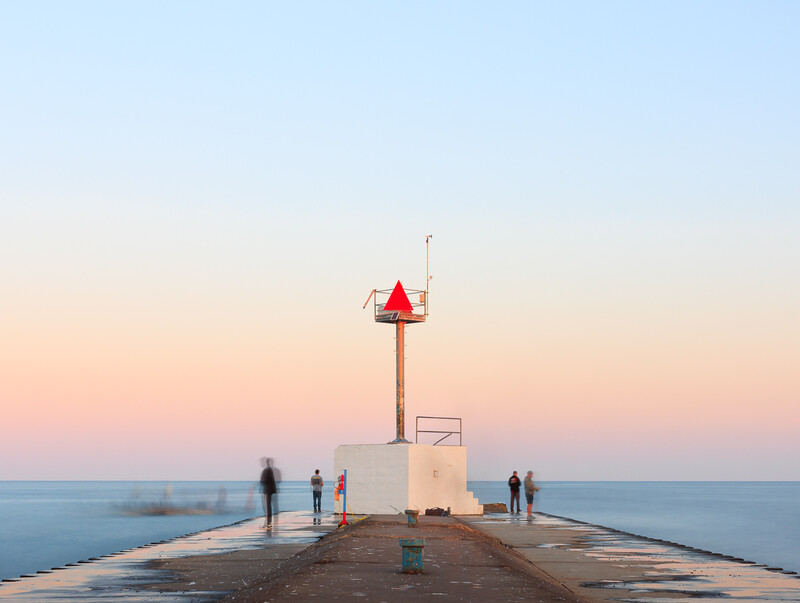
Now, I make photographs because something caught my attention or made me feel a certain way. The images are a record of how I experienced a place or a moment. Their value isn’t defined by how they’re received, but by how honestly they reflect that connection with the world.
Progress, for me, isn’t measured in likes or recognition anymore. It’s measured by whether I feel I’m expressing myself more clearly. Being part of a like-minded community helps develop that through genuine feedback and hearing different perspectives. Seeing how others approach photography continues to shape how I think about my own work. Crucially, though, it doesn’t define things I need to do or a type of photographer I need to be.
We’re all doing different things with photography. Some people want to turn it into a business, and for them, metrics matter. But for most photographers, especially those practicing it as a creative outlet, letting go of the idea that photography has to be productive or successful in a traditional sense can be freeing.
And in a quiet way, that freedom might be where real photographic growth actually begins.


Join the Fstoppers community for free
-
Post comments and join in the discussions
-
Browse the site ad-free
-
Share your work and get featured in the community
-
Compete in the photo contests for fun and prizes
9 Comments
Photography improves seeing and discovering.
Photography is for my enjoyment. Nothing more; nothing less. If we have no enjoyment or pleasure from what we do in life… and that includes work, play, hobbies, relationships; there’s not much point in doing them. That said, different people find pleasure from different ways of doing things. I remember several people in our camera club who enjoyed the competitions more than any other club activity. One older gentleman in particular kept asking me to come by his house sometime. When I finally did, he couldn’t wait to show me his collection of trophies and awards accumulated over the years. Some people use photography as motivation to get outdoors, with the hike itself more important than the photograph. Other people only want a great picture and would just as soon lower the car window, shoot the picture, and skip the hike. So each person has their own reason for enjoying photography.
This article, Adam, seems to tie into your last article. What photography is for, is perhaps further explained by those categories that we place ourselves in. Snapshot photography implies creating a memory for some people, rather than a work of art. Fine art is at the opposite end of the spectrum. Intention, expression, deeper meaning, etc., shape the “for” of fine-art photography. Maybe so… or maybe false pretension? The concept of “fine art” photography has always seemed to me like forcing a square peg into a round hole. It’s like photographers suffer from self-doubt, and need to justify the value of their work by attaching a label of fine art. Music and literature are art forms too, but musicians and writers don’t go around calling themselves fine art musicians or fine art writers.
My photography does not need to explain, persuade, challenge, or say anything. Every picture on the planet could conceivably be an expression of deeper meaning. William Eggleston’s photos of ordinary objects are considered by some people as fine art, and to others as no more than over-hyped snapshots. The lines of distinction can be blurry. Technique (that middle ground of your last article) is not so blurry though. Technique and polish, essentially what you called vernacular photography, are the result of skill. And what craftsman does not want to be a master of his craft, recognized for the quality of his work? Quality is important in every product we buy, from refrigerators to t-shirts. We examine the quality of fabric and hemming when clothes shopping. Mastery need not be measured in terms of sales or income derived from your work. A great pianist doesn’t have to perform in public or sell records to prove his skill. Indeed, most artists go about quietly mastering their art without any public recognition whatsoever. Ultimately I find no greater pride and joy in photography than simply holding in my hands a well-crafted, tangible “polished” print. Yes, photography is for our enjoyment, and somewhere behind each photograph is an emotional attachment. Our family photo album triggers an emotional response because of the subject. Skill and technique, however, are the reason for the emotional response to my work as a photographer.
Thanks for the comment Deleted User ! We all find photography in different ways, and like you mentioned get different value out of it. Or enjoy different aspects. I'd say the challenge I'm making with this article (and you're right, perhaps the last one too) is to find what aspect you enjoy. When I started, I had a lot of preconceptions about photography. Those preconceptions, alongside my own dispositions, led me to cycle through certain choices or approaches. Some people would use the squishy way of phrasing it: I hadn't found my "why" yet. It isn't that I failed to enjoy photography. It was really the opposite -- I enjoyed it so much that I didn't understand why it felt like something was missing. Or that I was missing some trick. Working through that, and shedding the perspectives that were unhelpful to me, increased my connection to my own work and so my overall enjoyment.
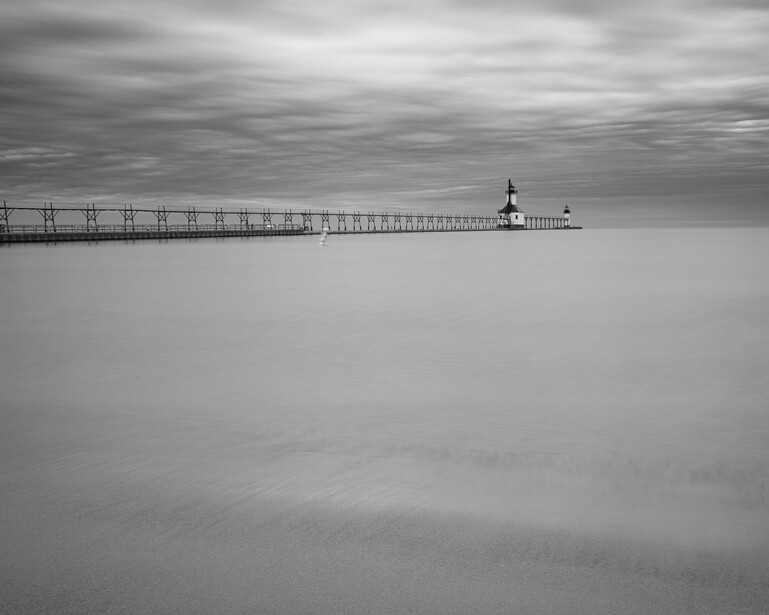
I chuckled when I read your part about "fine art musicians" and "fine art writers." Writing might have more parallels to photography than music, in some ways. Just like a lot of people think they can write well, a lot of people think they're photographers. In both cases, they might be producing fine results for themselves, but not something that would be collectively considered "true art" or whatever label you want to apply. Is that valid? I'm not sure. It is a distinction we make, though. And similarly I think "fine art photography" is really just trying to distinguish that artistic intent. Granted, it's also used as a poor label for a certain style or approach that is a small subset of artistic photography. It's value there is very debatable, especially as social media has tended to flatten out its meaning to essentially long exposure, black & white, minimalistic compositions. We muddy a lot of waters as photographers!
Yes we certainly do muddy a lot of water as photographers. And despite our best intentions and deep intense thought, it may not get a lot clearer. The more I think about stuff and try to find a purpose and a place for everything, I seem to find more questions than answers.
I completely agree! But then again, questions can be pretty interesting in their own right 🙂
A good essay and I know many of us can relate to this journey.
Thanks jim hughes ! I appreciate the comment.
Perfect article. Thank you.
Thanks for reading, and for the comment RedDog USMC