New lenses landed fast in 2025, and not all of them earned a spot in a working kit. Here are the best and worst lenses of the year.
Coming to you from Christopher Frost, this thoughtful video walks through the lenses that stood out across every major category, starting with fast zooms. Frost gives a nod to the Sony FE 28-70mm f/2 GM, which just missed last year’s cutoff and effectively replaces a whole stack of primes if you can handle the size. The real star, though, is the Sony FE 50-150mm f/2 GM, a lens Frost calls his new favorite zoom because it covers portraits, events, and tighter action work in one very bright package. If you shoot weddings, stage work, or indoor sports, that constant f/2 and compressed perspective are a serious upgrade over a typical 70-200 mm f/2.8. He also highlights how the Sigma 17-40mm f/1.8 DC Art finally gives APS-C users a modern, fast standard zoom that feels like the rightful successor to the classic 18-35mm f/1.8.
From there, the video swings to the long end of the spectrum where things get extreme. Frost hands his telephoto award to the Sigma 300-600mm f/4 DG OS Sports, a huge but surprisingly usable zoom that gives you prime-level reach with the flexibility of a zoom ring instead of a pile of super tele primes. If you do wildlife or field sports, the idea of framing anywhere between 300mm and 60 mm at a constant f/4 is a big deal. On the wide end, he splits the award: for full frame, the collaboration Schneider-Kreuznach Samyang AF 14-24mm f/2.8 FE impresses with sharpness, filters, and size; for APS-C, the Sigma 12mm f/1.4 DC Contemporary stands out as a tiny astro-ready prime that still feels practical for video and everyday shooting. That mix of super telepower and serious ultra wide options makes the awards much more than a portrait-only conversation.
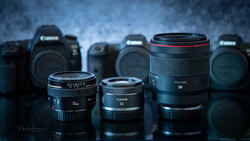
Budget gear gets real attention as well, without drifting into pure bargain chasing. If you just want an emergency ultra wide in the bag, the Viltrox AF 9mm f/2.8 Air for APS-C and the Viltrox AF 14mm f/4 Air for full frame get called out as tiny, autofocus, and cheap enough that you do not need to be a landscape addict to justify them. For portraits on a tight budget, Frost compares the Viltrox AF 85mm f/2 EVO with the new Meike 85mm f/1.8 SE II, pointing out that the Meike gives up a bit of refinement but adds more speed and an even lower price. He is very clear about the trade-offs, so you can decide whether you care more about absolute sharpness or maximum aperture and savings. You also get to see where he draws the line with Canon’s controversial Canon RF 75-300mm f/4.5-5.6, which he has no trouble calling the worst lens he reviewed this year.
The video gets more creative as it moves into bokeh, cine, and just plain weird lenses, with more categories in the video, including a community-voted favorite and a sharper-than-expected Canon telezoom. Check out the video above for the full rundown from Frost.




Join the Fstoppers community for free
-
Post comments and join in the discussions
-
Browse the site ad-free
-
Share your work and get featured in the community
-
Compete in the photo contests for fun and prizes
3 Comments
Often in my career I have sought out lenses with bad reviews and found a few gems. To each their own in gear.
Micro 4/3 users may argue you snubbed the M.Zuiko Digital ED 50-200mm F2.8 IS PRO. An expensive yet amazingly exceptional zoom lens. I don't have a M4/3 camera but if I did, this would be one of the must have lenses in my kit, probably the 1st buy along with the OM System's OM I - Mark II. All the reviews I have watched show this kit to provide fantastic images.
You missed the Canon 16-28 2.8. Sharp, small, and light and very reasonably priced.