

In the relentless march toward clinical sharpness and autofocus perfection, camera manufacturers have left behind some truly special lenses. These weren't always the sharpest or the fastest focusing optics ever made, but they possessed something increasingly rare in modern lens design: character. While today's lenses are technical marvels that can resolve every eyelash at f/1.4, some of us still dream about the unique rendering, specialized capabilities, and creative possibilities that these discontinued classics offered. Here are five lenses that manufacturers absolutely need to resurrect for the modern era.
Canon EF 50mm f/1.0L USM: The Bokeh Monster
Before every manufacturer was racing to create f/1.4 and f/1.2 normal lenses, Canon did something absolutely insane. They created the EF 50mm f/1.0L USM, a lens that remains the fastest autofocus 50mm lens ever put into production. This wasn't just about bragging rights or spec sheets. At f/1.0, this lens created a depth of field so impossibly thin that you could have someone's front eyelash in focus while their pupil fell into blur. The rendering was unlike anything else, creating images with an almost liquid, dreamlike quality that made subjects appear to float in pools of creamy bokeh.
Yes, it had problems. The autofocus was glacially slow, using a ring-type USM motor that struggled to move the massive glass elements required for that f/1.0 aperture. Making matters worse, the manual focus ring employed an electronic focus-by-wire system that felt disconnected and lacked the tactile, mechanical feedback of traditional manual focus lenses. Wide open, it was soft enough that some photographers joked you needed to stop down to f/1.4 just to get "acceptably blurry" sharpness. It was also ruinously expensive and the size of a small telescope. But none of that mattered when you saw the images it produced. There was something magical about that rendering, an ethereal quality that the sharper, newer f/1.2L that replaced it simply couldn't replicate. Today's photographers shooting environmental portraits, editorial work, or anything where mood matters more than clinical sharpness would absolutely lose their minds for a modern version with better coatings, improved autofocus, and maybe even image stabilization. Canon proved with the RF 85mm f/1.2L that they can make fast lenses that actually focus quickly. Now imagine that technology applied to an f/1.0 fifty.
Canon EF 200mm f/2L IS USM: The Portrait Lens That Still Has No Equal
If you've ever seen someone shooting with the Canon EF 200mm f/2L IS USM, you've probably done a double-take. This absolute unit of a lens looks like a small satellite dish and weighs nearly as much as a newborn baby, but what it does is truly special. Combining the subject compression of 200mm with a jaw-dropping f/2 maximum aperture created a level of background separation that simply has no equal in modern photography. This wasn't just a telephoto lens. It was a portrait photographer's secret weapon, capable of turning cluttered gyms into silky-smooth backgrounds and making outdoor portraits look like they were shot in a professional studio. It's the one lens that kept me in the Canon ecosystem, the many times I was tempted by Sony.
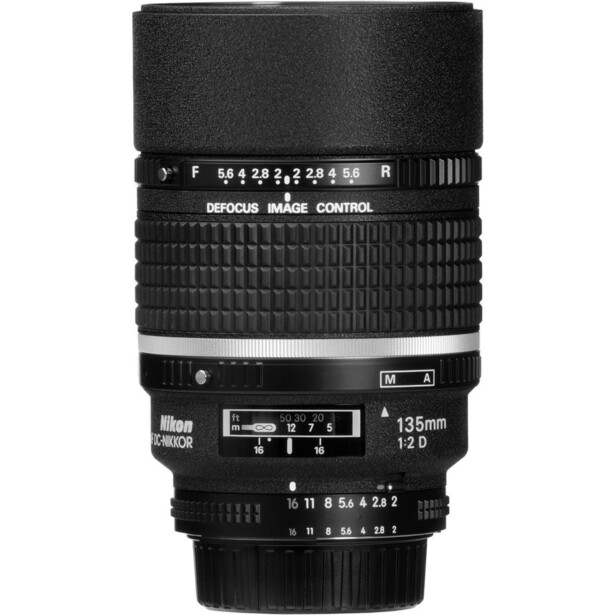
Nikon AF DC-NIKKOR 135mm f/2D: The Lens That Let You Paint With Bokeh
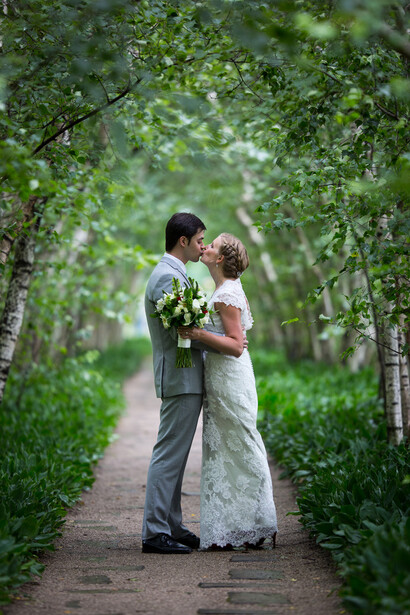
In an era where every lens maker is trying to create the "perfect" bokeh through optical design alone, it's worth remembering that Nikon once gave photographers direct control over bokeh quality with their DC (Defocus Control) lenses. The AF DC-NIKKOR 135mm f/2D was the crown jewel of this line, featuring a separate control ring that allowed you to manipulate the spherical aberration characteristics of out-of-focus areas in front of or behind your focus point. This wasn't just a gimmick. In the hands of a skilled photographer, the DC control could transform the same lens from razor-sharp to beautifully soft-focused, creating a painterly, almost romantic look that no amount of post-processing or soft-focus filters can truly replicate.
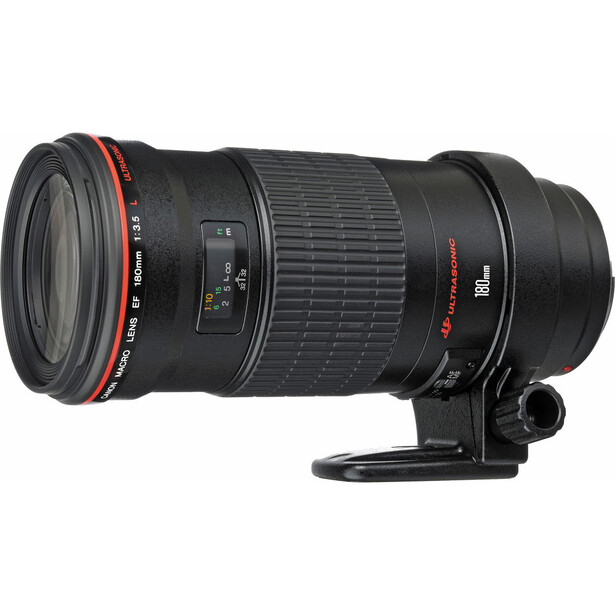
Canon EF 180mm f/3.5L USM Macro: The Working Distance Champion That Canon Forgot
Macro photography requires getting close to your subject, but sometimes you don't want to get that close. When you're photographing skittish insects, dangerous spiders, or any subject that might flee or react to your presence, working distance becomes critical. The Canon EF 180mm f/3.5L USM Macro built its reputation solving precisely this problem. This L-series macro lens offered true 1:1 life-size reproduction from a comfortable distance, giving photographers the space they needed to light their subjects properly, use longer flashes or ring lights, and avoid spooking wildlife. It was also surprisingly sharp and well-corrected, producing the kind of image quality you'd expect from Canon's premium L series.
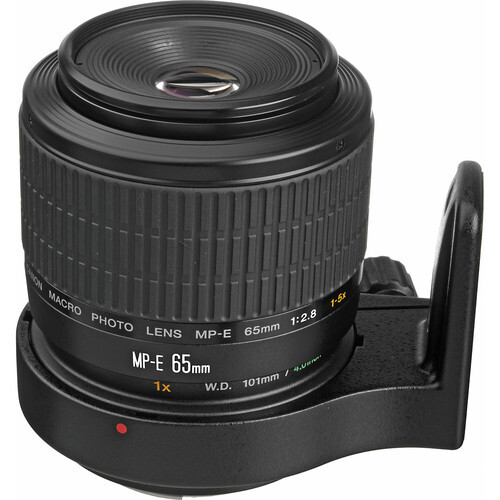
Canon MP-E 65mm f/2.8 1-5x Macro: The Weirdest Lens That Proved Specialized Tools Matter
Some lenses are designed to do everything reasonably well. The Canon MP-E 65mm f/2.8 1-5x Macro Photo breaks that mold entirely. This is one of the strangest pieces of glass ever mass-produced by a major manufacturer, and that's exactly what makes it brilliant. It's a manual focus only lens that cannot focus to infinity. In fact, it can't focus on anything beyond a few inches from the front element. What it can do, however, is magnify subjects from life-size (1:1) all the way up to five times life-size (5:1), revealing microscopic details that are literally invisible to the naked eye. This makes it the ultimate tool for extreme macro photography, allowing photographers to capture the compound eyes of insects, the individual scales on butterfly wings, or the crystalline structure of snowflakes with stunning clarity.




Join the Fstoppers community for free
-
Post comments and join in the discussions
-
Browse the site ad-free
-
Share your work and get featured in the community
-
Compete in the photo contests for fun and prizes
8 Comments
Missed a big one: The Canon TS-E tilt-shift family. The 17mm, 24mm, 50mm, 90mm and 135mm lenses are incredible tools for both architecture and landscape use and the 50,90 and 135 are among the sharpest lenses ever produced in their respective focal lengths.
Maybe not exactly the same but the Lomography Petzval Focus-coupled Bokeh Control Art Lenses in 35/55/85mm and the Voigtlander Portrait Heliar 75mm do offer bokeh control like the Nikon AF DC-NIKKOR 135mm f2D.
I'm not a fan of the obsession with perfection in most modern lenses. To me they are just too clinical for my liking. It's the reason I use Voigtlander and a TTArtisan based on the old Meyer Optik Görlitz Trioplan.
Thank you for listing the 180mm. If Canon released a new improved RF version of that or a 200mm macro it would be an instant purchase for me. 100mm is just too short with a full frame sensor and there are no longer alternatives with auto focus ( for automatic focus stacking).
Canon EF 200mm f/2L IS USM: The Portrait Lens That Still Has No Equal - but plenty of betters
So, Canon and Nikon are the only ones who made "legendary lenses that desperately need a modern remake"?
I'd like to see some of the outstanding Olympus SHQ (Super High Quality) 4/3rds lenses get resurrected for µ4/3rds.
The 40-150/2 was the fastest zoom available at the time. The 150/2 was a simply incredible portrait lens, and it would be nice to have a smaller, lighter version of the 300/2.8.
Their old stepper-based autofocus could use a re-do, and it would be nice if at least the longer ones got Sync-IS.
He didn’t say that. no where in this article does he imply that the list is comprehensive. Its just 5 lenses he feels should be remade.
Imo one of the biggest is the 300 2.8 for both Canon and Nikon.
Both are among the sharpest, best performing lenses on their respective old platforms and boast legendary image quality. Both haven’t been updated in about 15+ years. And both are twice as heavy as they need to be. (in comparison to the Sony which is relatively new)
The 65mm with the 5x macro is probably the only one that makes sense. 200 f/2 is just not that different from a 300 2.8. Plus, imagine carrying that around when a 70-200 2.8 is relatively cheap (200 F/2 will be 4k-5kUSD) and yet so close in performance AND it zooms. Now, I use an old 200mm zoom and that lens has BIG pop off the background at 200mm. Way more than the RF 70-200 2.8 manages. I bet it's similar to the 200 f/2 up close. So, it's not just focal over aperture, it's also design that makes a HUUUUGE difference in background pop.