
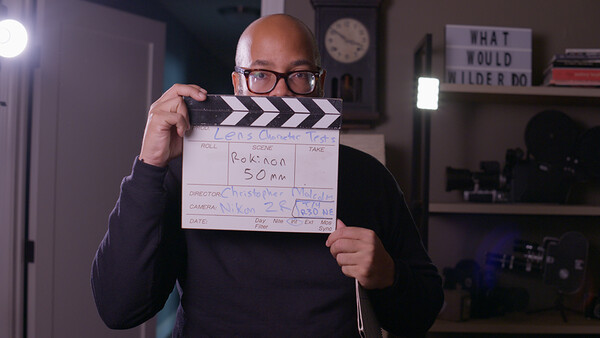
Allow me, for a moment, to try and entertain you with the story of one of the most boring days of my life.
I’m a conflicted artist. Not conflicted in the sense that I don’t know what I want to do or that I can’t decide what art I feel is good and what art I feel is… not so good. Instead, I’m conflicted in the sense that my artistic goals have always somewhat clashed with my inherent personality. On the artistic side, I’ve always had grand goals. Whether I’ve reached those goals or not is doubtful, but the level of ambition has always been there. I’m one of those pretentious people who never wanted to make “videos.” I only make “films.” Okay, that was obviously an overexaggeration for emphasis, but you get the point. I’m one of those. Sometimes I fail to live up to my own expectations. Sometimes I far exceed them. But my mind has been hardwired in a certain way, and it’s hard to turn off.
On the flip side, I am incredibly practical as a human being. And despite the type of goals I have being the sort that require inordinate amounts of time and effort, I also don’t see any reason to run in circles to reach that objective when you can just walk in a straight line. I’m not lazy. Much the opposite. I just try to structure my life in such a way that I can achieve the end goal in the most energy-efficient way possible.
This pragmatism has made me incredibly productive, as it has allowed me to produce an amazing amount of art over the course of my life. But it also has its downsides. When you go straight from point A to point Z, without swerving from time to time, you can miss a few gems along the way.
Case in point, you’ve probably often heard me say that the 24-70mm f/2.8 is the lens that stays attached to my camera bodies pretty much 100% of the time. Regardless of what camera brand I’m using at the moment, the very first thing that I do is purchase the 24-70mm f/2.8 (or equivalent for other sensor sizes) and hit the road running. It wasn’t always like this. In my early days, I basically just lived and died with a fast 50mm. But when I started getting serious about photography and first tried a pro-level 24-70mm, it basically sealed my fate for decades to come. That focal length simply did everything I ever needed a lens to do, and I found myself with little reason to ever second-guess my choice. To tell you the truth, even as I’m writing this article, I still see little reason to shoot with anything other than the 24-70mm f/2.8—for stills, at least. Video? Well, that’s a different story.
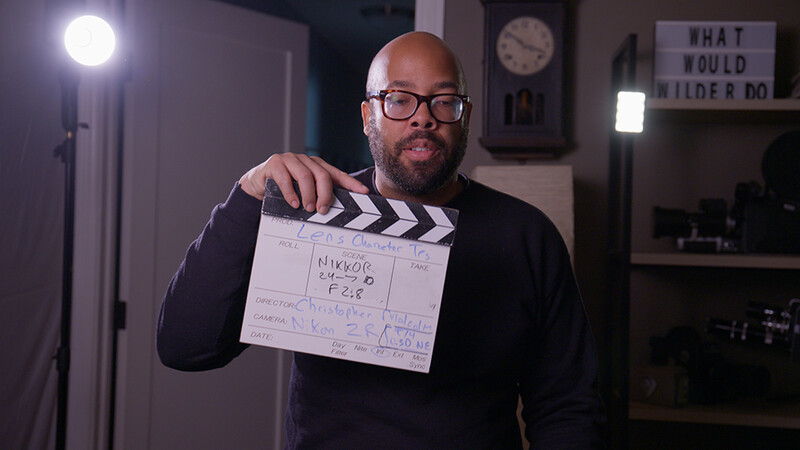
One interesting thing you’ll learn if you are both a photographer and a filmmaker is that, whereas when it comes to stills, your camera body rules the roost, when it comes to film and video, it’s all about the lenses. Lenses obviously matter for still work as well, but video is a very different beast. And when trying to give your video a “look,” you’ll find that the lens you choose matters way more than what camera body it is attached to. It’s part of the reason a cinematographer may shoot with a $100,000 camera and a $100 lens. He or she isn’t cheap; they’re just after a very specific look. And that cheap vintage lens, warts and all, may actually be more valuable to them than a pristine $30,000 master prime.
As you might be able to gather from my previously stated affinity for 24-70mm zoom lenses, my first inclination when shooting video with a mirrorless camera was simply to continue shooting with the exact same lens. If it ain’t broke, don’t fix it. And, to be clear, my favored lens was, once again, doing the job. But I still wasn’t getting the look that I was after. The video was clean—but too clean. Mentally accurate but not emotionally resonant.
I went on the usual journey. I overspent on diffusion filters. I’ve spent hours refining my lighting (which, by the way, is a good thing, as lighting is perhaps even more important than lenses). But as I ping-ponged between projects, using a different combination of tools each time, I would seem to take two steps forward and three steps back.
To be clear, “taking two steps forward and three steps back” should be the literal definition of becoming a better artist. But playing things by gut was resulting only in my stomach being tied up in knots. I knew that, if I was going to improve, I needed to add a little math to the poetry.
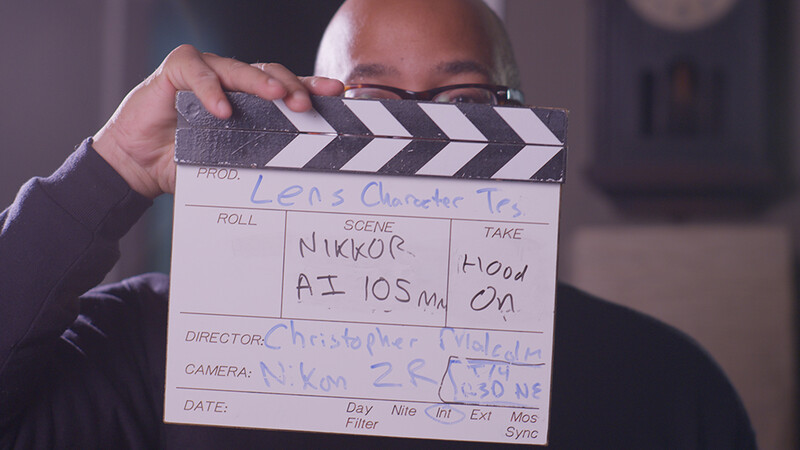
What do I mean by “math?” Well, you might assume that means to survey B&H and start comparing and contrasting the spec sheets for every product in my wish list. But instead, I wanted to do my own math. And my own math, in this case, meant I needed to judge the tools at my disposal in as objective a way as possible, while still keeping in mind my own personal aesthetic taste. Art, after all, is subjective. I’m not shooting to satisfy scientific lens tests. I’m shooting to satisfy my own subjective standard. But I needed to find a way to separate my emotional response to a particular end result from the ingredients that went into the mix.
If I shoot with a certain camera, with a certain lens, with a certain filter, under certain lighting conditions, and the end product is exactly what I wanted—well, that’s just fantastic. But just looking at the end result, there’s no way to quantify how much of that enjoyment is a result of the camera, how much is a result of the lens, how much is a result of the filter, and how much is a result of the lighting. They all add up to this thing. But what exactly is each ingredient contributing to the overall flavor? So, I decided to start doing the boring thing.
I started running my own objective A/B testing to try and suss out exactly what every individual element of my artistic pipeline is actually doing. It’s exactly as boring as it sounds.
For instance, the other day I set about running tests on every single lens I own (and some I was just borrowing). Everything from pro “holy trinity” zooms to budget primes to anamorphic cinema lenses. Any usable lens I had on hand, I wanted to know exactly what attaching it to a camera would do.
So, I set up my Nikon ZR. I used this because the Z mount is the most adaptable mount and thus could accommodate the myriad of lenses I’ve acquired through the years. I kept my settings standardized throughout: same shutter angle, same lighting, same frame rate, same color temperature. I shot everything at T/4 since that is the aperture that I most often shoot at. Again, I wanted to specialize this test for my personal use case. To make things even tougher on each piece of glass, I put a strong backlight in the frame to test flaring. I often shoot scenes backlit, so this was applicable to my workflow. I also placed a random point source in the background as well to objectively identify how each lens’ bokeh took shape. It wasn’t a perfect lab test by any stretch of the imagination, but it was incredibly illustrative from a real-world application standpoint.
The exact results of each lens tested aren’t important. If you want to see the results, you can have a peek at this incredibly boring video that I made for my own reference:
https://vimeo.com/1155570843/1be697d44e
But the results of the tests were, no pun intended, illuminating. Putting all of my lenses side by side in identical settings, in a dry setting, unaffected by a compelling narrative or any aim to make something for the reel, I got an objective look at exactly what each lens was doing—objective within my own reality, that is.
I got to see which lenses flared and how they flared. I got to see which lenses had imperfections. But, equally as important, I got to see what benefits those imperfections brought with them, as well as the technical shortcomings. Sometimes, certain lenses just felt better than others. And many times, the lenses that felt closer to the look I wanted were the ones with the most imperfections on paper.
Other times, I’d look at the result of one lens I spent a small fortune on versus another option that I picked up for the price of a loaf of bread and be shocked by how similar they were in output. There were usually clear objective improvements in the more expensive lenses’ rendering. But oftentimes, the improvement was decidedly minimal and left one to wonder whether the lens was worth 10x the investment for such a marginal increase in result.
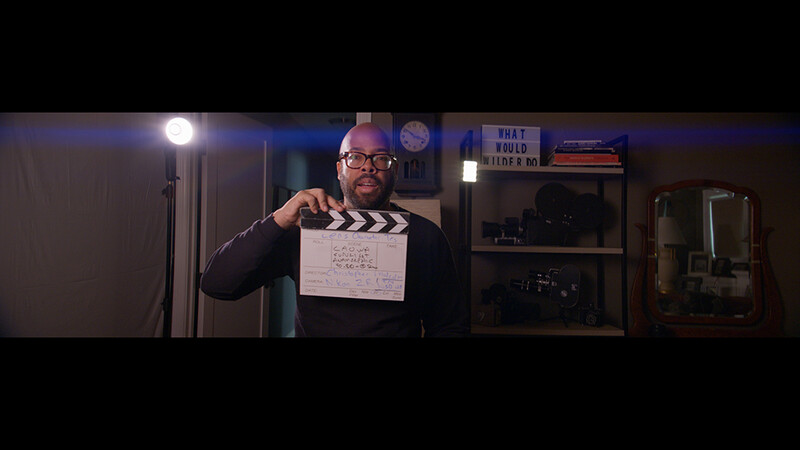
Some lenses shifted the image cooler. Some lenses shifted the image warmer. Some added a sense of depth and cinematic storytelling. Others screamed pure video. I even tested each lens multiple times—first as a bare lens, and then the same lens with different levels of diffusion attached. This was even more interesting, as it showed me, in no uncertain terms, how the same diffusion would affect different lenses in different ways. One of the lens/diffusion pairings that I used to use literally every single shoot a few years ago, it turns out, was the absolute worst pairing in the whole test. I completely hated the result every time I played it back when reviewing. I can’t stress how awful that particular combo was. And yet, because I had never taken the time to do such in-depth tests before, I had used it on endless projects because I was betting on a hunch.
The takeaway from my test wasn’t to never use this combination or always use that one. The takeaway for me was the importance of running your own A/B test before making assumptions. I’ve repeated similar tests with lenses, lighting setups, and even camera codecs. Taking the word of a YouTuber or even an Fstoppers writer like me is nice. But there is nothing as valuable as taking a full day to objectively test your own gear in a manner in which you expect to be using it.
I guarantee you it will be one of the most boring 12 hours of your life. But at the end of that time, you will be filled with vast knowledge specific to your shooting style that you’ll never be able to get anywhere else.
In short, it will make you better.






Join the Fstoppers community for free
-
Post comments and join in the discussions
-
Browse the site ad-free
-
Share your work and get featured in the community
-
Compete in the photo contests for fun and prizes
No comments yet