An 85mm f/1.8 lens is one of the simplest ways to upgrade portraits, giving tighter framing and strong subject separation without a huge, heavy setup. When that lens also costs about as much as a budget kit zoom, it becomes a very real alternative to saving up for a big-brand prime.
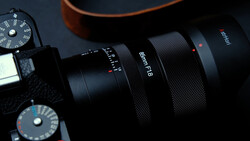
Coming to you from Christopher Frost, this practical video takes a close look at the new Meike AF 85mm F/1.8 SE II lens that aims to be a low-cost full frame portrait option on Sony E, Nikon Z, and L Mount. Frost starts by walking through the redesign, which uses a smoother barrel shape, brushed plastic, and a metal mount with a USB-C port for firmware updates. You also see a basic level of weather-sealing with a gasket at the mount, a quiet STM focus motor, and an honest 369 g weight that keeps your camera bag from turning into a gym workout. The price lands at about $230, which undercuts most first-party 85mm options by a wide margin. You are not getting high-end extras like an aperture ring or image stabilization, but the basics are firmly in place.
Frost then moves to autofocus and sharpness, which are the main reasons you would consider this lens instead of an older manual 85mm. On a Sony a7CR, single-shot autofocus is quiet and accurate, while continuous mode snaps to subjects quicker than you would expect at this price. Wide open at f/1.8, the center of the frame is already very sharp with strong contrast, and stopping down to f/2 or f/2.8 only gives a small bump. Corners on full frame start out softer and lower contrast but improve a lot by f/4 and look very tidy by f/5.6. You see similarly strong results in APS-C crop mode, especially with the pleasing lack of purple fringing that often ruins bright primes on smaller sensors.
Key Specs
-
Mount options: Sony E, Nikon Z, and L Mount
-
Focal length: 85mm full frame coverage
-
Maximum aperture: f/1.8
-
Minimum aperture: f/16
-
Optical design: 7 groups, 11 elements
-
Aperture blades: 11
-
Minimum focusing distance: 0.65 m
-
Filter thread: 62mm
-
Dimensions: 76 mm diameter × 100.2 mm length
-
Weight: 369 g for Sony E and L-Mount, 379 g for Nikon Z
-
STM autofocus motor with support for eye and face detection
-
USB-C port on the mount for firmware updates
The video also digs into handling details that matter when you are working all day rather than testing gear at home. The plastic manual focus ring turns smoothly and responds predictably, so you can fine-tune focus without wrestling with it. There is a simple AF/MF switch, but no focus hold button, which keeps the exterior uncluttered at the cost of some convenience on higher-end bodies. Focus breathing is visible, so if you shoot a lot of video where you rack focus from near to far, you will notice framing shift. Bright-light performance shows some broad flare when strong sources are in frame, which makes the included hood less of an afterthought and more of a default setting.
Close-up work is where Frost finds the lens’ main weakness, and this is the part you want to pay attention to if you like tight headshots. At the minimum focusing distance and f/1.8, image quality drops off hard with low contrast and visible color fringing, only starting to clean up around f/4. That means you can still shoot close portraits, but you will want to stop down and raise ISO a bit rather than rely on the widest aperture. The trade-off is that when you step back even slightly, the lens snaps back into that crisp look, with smooth background blur and clean highlight circles that suit portraits and details. Frost also tests distortion and natural vignetting, plus how the gentle corner darkening can actually help pull attention toward the center instead of feeling like a flaw. Check out the video above for the full rundown from Frost.




Join the Fstoppers community for free
-
Post comments and join in the discussions
-
Browse the site ad-free
-
Share your work and get featured in the community
-
Compete in the photo contests for fun and prizes
No comments yet