A looming shift in what drones you can buy in the U.S. forces a choice you probably have been delaying. If you rely on aerial shots to set location, scale, or motion, losing access to your default upgrade path changes how you plan shoots and travel kits.
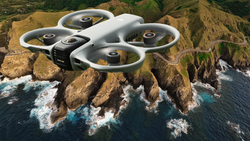
Coming to you from David Manning, this uneasy video puts a spotlight on the Skyrover X1 and whether it can stand in for the DJI Mini 4 Pro if new DJI drones stop being sold in the U.S. Manning frames it as a real-world replacement hunt, not a lab-style spec duel, after spending about two weeks flying both. He points out that Skyrover’s earlier drone, the Skyrover S1, felt close to the DJI Mini 4K in shape while behaving more like the DJI Mini 3 in practice. The premise is simple: if your everyday drone is a Mini 4 Pro, you do not want to rebuild muscle memory under pressure. The hook is that the X1 is presented as “almost the same drone,” just wearing different branding.
Manning runs through the overlap in a way that maps directly to how you shoot. Both drones are sub-249 g, both do 4K 60p, and both offer high-resolution stills. He emphasizes true vertical mode where the gimbal rotates, instead of a cropped 16:9 frame, which matters when you deliver vertical clips without sacrificing composition. He also spends time on the feel of the app and the flight modes, claiming the active track menus and settings look almost identical, and noting that waypoints were added on the Skyrover side. If you have ever tried a non-DJI drone and immediately felt lost in the interface, that familiarity is the point he keeps circling back to. He even brings up the bigger DJI Air 3S to underline that he’s comparing against drones he already uses, not guessing from a single afternoon flight.
The part you should pay attention to is range, because that is where most alternatives fall apart in real use. Manning describes being “shockingly far” from his takeoff point with a stable feed and full control. He also talks about battery reality versus marketing numbers, suggesting 25 to 28 minutes of practical flight even if the claim sits around the low 30s, especially if you push sport mode to move fast and then switch to slower movement for the shot. Then he finally gets into the gaps, and they are the ones that affect your workflow more than a spec sheet. A Mini 4 Pro can pair with a screen controller like the DJI RC 2, and once you get used to that, going back to a phone clamp feels like a step backward in setup speed and screen visibility. He also mentions D-Log M on the Mini 4 Pro and says it grades better than the standard color profile, while claiming that in normal color the two drones looked essentially the same in his side-by-side checks.
Pricing becomes the pressure point, and Manning puts actual numbers on the tradeoffs without pretending the decision is purely technical. He cites about $750 for a Mini 4 Pro kit with a screen-style controller, then describes higher bundles that can land around $1,250 to $1,300, versus X1 pricing he quotes at $539 for a kit and about $629 for a “Fly More” style bundle with three batteries and a controller. He argues that paying hundreds more just to avoid using a phone screen is hard to justify, even if the nicer controller is a genuine quality-of-life upgrade. He also raises the strategic problem: if you cannot count on new DJI models being sold, the next upgrade you planned, like a DJI Mini 5 Pro, might not be an option in the U.S., which changes whether you buy into an ecosystem right now. Check out the video above for the full rundown from Manning.
Join the Fstoppers community for free
-
Post comments and join in the discussions
-
Browse the site ad-free
-
Share your work and get featured in the community
-
Compete in the photo contests for fun and prizes
3 Comments
Why wouldn't DJI just keep production going for the mini 5 pro, air 3s, and Mavic 4 pro, just so they can keep selling drones to their U.S. Customers, knowing that their new models are now banned.
It would be the smart thing to do.
The ban actually covers ALL drones and critical components manufactured outside the USA. So this will fall under the ban as well if it’s not already certified. It’s going to take the US years to catchup, if ever to DJI technology and lots of jobs and services (including search and rescue) are going to be severely impacted by this decision.
TL;DR: This Skyrover is almost certainly a rebranded DJI, that says "Malaysia" on the bottom instead of China. Looks great!