Sony’s new 1.4x macro lens changes how close you can get without adapters or cropping. That jump matters when you want texture-level detail and clean working distance while keeping handling familiar.
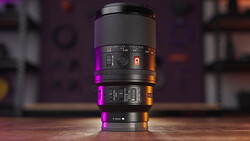
Coming to you from Dave Paul with The Camera Store TV, this practical video puts the Sony FE 100mm f/2.8 Macro GM lens through real use and shows where it improves on the older 90mm option. You see the manual focus clutch in action, which lets you hard-switch into precise control when depth of field thins out. The magnification scale is clear, running from 1:1 up to 1.4:1, so you can set a target ratio instead of guessing. Range limiting and stabilization help avoid hunting at close distances. The layout keeps your hands on the lens rather than in menus, which speeds up the way you work.
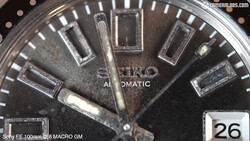
Paul doesn’t stop at flowers and coins. He throws motion at it to show what four XD linear motors do when you track subjects at mid-distance, and the sequence holds together. You also get a flat-target look at center-to-corner sharpness so you can spot field behavior, not just bokeh. Image quality holds on high-resolution bodies, and the files stand up to pixel-level scrutiny without looking brittle. You see why this focal length also doubles as a clean portrait option when you want tight framing and consistent working space.
Key Specs
-
Focal length: 100mm
-
Aperture: maximum f/2.8, minimum f/22
-
Lens mount: Sony E
-
Format: full frame
-
Minimum focus distance: 10.2 in / 26 cm
-
Magnification: 1.4:1 macro reproduction ratio
-
Optical design: 17 elements in 13 groups
-
Aperture blades: 11, rounded
-
Image stabilization: yes
-
Filter size: 67 mm (front)
-
Dimensions: 3.2 × 5.8 in / 81.4 × 147.9 mm
-
Weight: 1.4 lb / 646 g
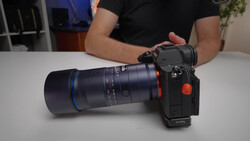
Teleconverters are part of the story, and the video shows why. Add a 1.4x or 2x unit to push beyond 1.4:1 and reach up to 2.8x. That extra headroom lets you isolate micro textures, product engravings, and tiny living subjects while keeping comfortable working distance.
Handling details matter when you’re close. The clutch invites you to ride manual focus and use focus peaking to land the slice you want, then jump back to autofocus for moving subjects. The limiter keeps the lens from racking the full range when you’re working inches from the subject. Stabilization helps when handholding at high magnifications where shake gets magnified. The 100mm field of view also works for quick head-and-shoulders shots when you need a clean background and simple perspective. Check out the video above for the full rundown from Paul.



Join the Fstoppers community for free
-
Post comments and join in the discussions
-
Browse the site ad-free
-
Share your work and get featured in the community
-
Compete in the photo contests for fun and prizes
1 Comment
Yeah, it looks great. Is it better than the Canon version? Probably not.