Long wildlife zooms usually force you to choose between reach, speed, and weight, and you often end up sacrificing at least one. The OM SYSTEM M.Zuiko Digital ED 50-200mm f/2.8 IS PRO lens is built to pull off a 100–400mm full frame equivalent range while still being something you can actually carry around a bird park for hours.
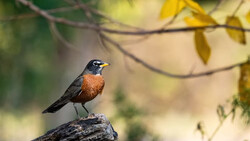
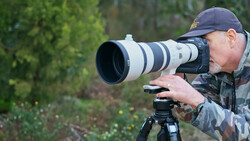
Coming to you from Robin Wong, this thoughtful video puts the OM SYSTEM M.Zuiko Digital ED 50-200mm f/2.8 IS PRO lens into a real-world wildlife scenario instead of just talking through specs. Wong heads to a busy bird park, pairs the lens with an OM System body, and chases moving subjects in inconsistent light and cluttered backgrounds. You see how the constant f/2.8 aperture helps keep shutter speeds up while still giving enough subject separation at 200mm. Wong also calls out how clean the files look: strong contrast, crisp fine detail at the long end, and smooth bokeh without nervous edges. You get a clear sense of how the look changes across the zoom range.
Wong spends time on technical performance without getting lost in charts, and that makes the video useful if you are trying to decide whether this zoom can replace a heavier setup. The lens is treated as a serious Micro Four Thirds option for long-reach work, with sharpness that stands up even wide open at f/2.8. Wong notes almost no visible flare, distortion, or chromatic aberration in typical shots, so you are not spending time fixing basic issues. At the same time, you see how the long focal length and bright aperture interact with busy foliage and layered perches, which matters more than a lab test. The video also teases how the lens compares to other long options in the system without turning into a full-on shootout.
Stabilization is another major focus of the field test. Mounted on an OM SYSTEM OM-1, the lens’ sync image stabilization lets Wong handhold frames at shutter speeds you normally would not risk at such long focal lengths, with sharp results even around 1/4 second in the right conditions. That extra stability means you can treat lower speeds like 1/60 or 1/100 second as very safe, which opens up options when light drops under the canopy. Wong also talks about handling over a few hours, including how the weight feels once you factor in breaks between bursts of shooting. Autofocus with bird detection on the OM System bodies is shown locking on quickly with a high keeper rate on real birds, not just staged tests.
Key Specs
-
Focal length: 50 to 200mm (100 to 400mm full frame equivalent)
-
Maximum aperture: f/2.8
-
Minimum aperture: f/22
-
Lens mount: Micro Four Thirds
-
Format coverage: Micro Four Thirds
-
Minimum focus distance: 2.6' / 78 cm from the sensor
-
Maximum magnification: 0.25x (1:4 reproduction ratio)
-
Optical design: 21 elements in 13 groups
-
Aperture blades: 9, rounded
-
Focus type: Autofocus
-
Image stabilization: Built in, works with body sync IS
-
Tripod mounting: Removable, rotating collar with 1/4"-20 thread
-
Filter size: 77mm front thread
-
Dimensions: 3.6 x 8.9" / 91.4 x 225.8 mm
-
Weight: 2.8 lb / 1,250 g
Later in the video, Wong adds reach with the Olympus MC-14 1.4x teleconverter, turning the long end into a 280mm setting that behaves like 560mm in full frame terms. You see that image quality does take a hit with the teleconverter attached, especially in fine detail and contrast, but the results still look usable for many subjects. Wong points out that some flaws that are basically invisible without the teleconverter, such as purple fringing in harsh backlight, start to show up more clearly once you stack extra glass. Stabilization also becomes slightly less effective at the extended focal length, so you are working more around speeds like 1/30 second instead of pushing to 1/4 second. The video walks through how those tradeoffs feel in the field so you can decide whether the extra reach is worth the compromises in your own shooting. Check out the video above for the full rundown from Wong.


Join the Fstoppers community for free
-
Post comments and join in the discussions
-
Browse the site ad-free
-
Share your work and get featured in the community
-
Compete in the photo contests for fun and prizes
No comments yet