





Profile picture for Alex Cooke
Editor-in-Chief

Alex Cooke

Cleveland, OH
18 3 Star badge
1 10+ Portfolio Images badge
1 Editor's Pick badge
1 Top Contributor badge

Articles from Alex Cooke

One Speedlight, One Umbrella, and a Lighting Trick That Actually Works

Shooting portraits in bright outdoor light is one of the harder problems to solve with a single speedlight. The sun is usually too strong, your flash can't keep up, and the results look forced. Here's a specific technique that sidesteps all of that, and it's simpler than most people expect.

Ilford HP5, a 4x5 Camera, and a Ruined Victorian Quarry in North Wales

Shooting large format film in an abandoned Welsh slate quarry sounds like a niche pursuit, but the images that come out of locations like this are unlike anything a modern digital workflow produces. The combination of 4x5 film, dramatic ruins, and unpredictable natural light creates a specific kind of pressure that forces deliberate, considered photography.

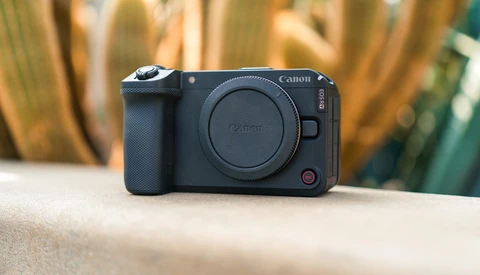
The Camera Industry Ignores Its Youngest and Oldest Customers

The camera industry designs products for a narrow band of humanity. Browse the marketing material from Canon, Nikon, Sony, Fujifilm, or any other manufacturer and the target buyer is consistent: a 25-to-45-year-old enthusiast or professional, fit enough to carry a kilogram of gear on a mountain, dexterous enough to operate tiny buttons in the dark, and technically literate enough to navigate a 400-item menu system. The cameras are excellent for this person. They are less excellent for the two populations on either side of that band: the photographer over 60 whose hands, eyes, and patience have different requirements than they did at 35, and the child under 12 who wants to take real photographs with a camera that can survive being a child's possession.

Five Premium Compact Cameras Tested Side by Side: Which One Actually Wins?

Choosing a premium fixed-lens compact camera is harder than it looks, because the category spans everything from true shirt-pocket cameras to chunky near-mirrorless bodies, and the right answer depends almost entirely on what you actually shoot. The Canon PowerShot V1, Fujifilm X100VI, Panasonic Lumix LX10, Panasonic Lumix ZS300, and Sony RX100 VII are not variations on the same theme; they make fundamentally different tradeoffs across sensor size, lens range, portability, and price.

Hasselblad X2D II vs. 907X 100C: Same Sensor, Very Different Cameras

Choosing between the Hasselblad X2D II and the Hasselblad 907X 100C is genuinely difficult, and not just because both cost the same and share the same 100-megapixel sensor. The decision comes down to something more personal than specs, and getting it wrong at this price point is an expensive lesson.

How to Start Wedding Photography

The exposure triangle, autofocus modes, backup systems, flash technique, portfolio curation, and scam awareness — wedding photography demands you get competent across all of them before your first paid job. Miss any one, and you'll either lose the shots, lose the files, or lose money from your bank account.

5 Lenses Nobody Gets Excited About That Produce More Photos Than Anything in Your Bag

Photography publications, including this one, spend most of their editorial energy on exciting lenses. The fastest aperture in the category. The sharpest optic in the lineup. The new release that leapfrogs last year's model. The GM, the Art, the L-series, the S-Line flagship. These are the lenses that generate press coverage, forum arguments, and YouTube thumbnails with wide-eyed reviewers holding glass that costs more than a used car.

How to Edit Portrait Skin Tones in Lightroom

Lightroom skin tone editing is one of those things that separates a gallery that looks cohesive from one that looks like a collection of individual images. Get it wrong and even technically sharp, well-exposed portraits look off in ways clients can't always name but will absolutely feel.

The Viltrox AF 75mm f/1.8 Review: A $329 Portrait Lens That Actually Delivers

The Viltrox AF 75mm f/1.8 is a short telephoto portrait lens for APS-C mirrorless cameras, giving you a full frame equivalent of around 113mm. At $329, it sits in a price range where quality can vary wildly, and whether Viltrox has delivered something genuinely worth the money is exactly what this review puts to the test.

The Camera Industry Treats Beginners Like Future Professionals. Most of Them Are Not.

The camera industry is built on a ladder. At the bottom, there is a $600 to $800 entry-level body with a kit zoom, often no in-body stabilization, a single card slot, a plastic build, and a thin lens ecosystem. At the top, there is a $3,000 to $6,000 professional body with IBIS, dual card slots, weather-sealing, a magnesium alloy chassis, and an extensive lens lineup. In between, there are two or three rungs spaced at $500 to $1,000 intervals, each one adding features the rung below deliberately omitted. The structure is obvious when you look at it from above: every camera in the lineup is designed to make you want the one above it.

The '90s CGI Render Challenge: Pro 3D Artists vs. Bryce 2

Bryce 2 defined the visual language of '90s CGI, and almost nothing in modern 3D software can replicate it. The raw ray tracing engine, the playful UI designed by Kai Krauss, the fog, the chrome, the fractal mountains — modern renderers have layered so many features on top of that foundation that getting back to that specific look is nearly impossible without going back to the source.

The Sony a7R VI Has Illuminated Buttons. Why Did It Take a Decade?

The Sony a7R VI arrived this month with 66.8 megapixels, a fully stacked sensor, 30 frames per second, and 8.5 stops of stabilization. The spec sheet is extraordinary. But the feature that will matter most to photographers who use their cameras after dark is one that does not appear in any resolution or burst-speed comparison: the rear buttons glow.

OM System 100-400mm vs 50-200mm f/2.8: Which Wildlife Lens Is Worth the Money?

Choosing between the OM System 100-400mm and the OM System 50-200mm f/2.8 is one of the more genuinely difficult calls in the Micro Four Thirds wildlife kit. Both cover similar ground in terms of size and weight, but they get to their results in completely different ways, and picking the wrong one for how you actually shoot will cost you.

One Year With the Fujifilm X-M5: Is It Still the Best Camera Under $800?

The Fujifilm X-M5 sits at around $800 and punches well above that price with 6.2K open gate video, a 26-megapixel APS-C sensor, a mechanical shutter, and a hot shoe — specs that most competitors at this price point simply don't offer. After a full year of real-world use, McClure has a clear-eyed take on where this camera succeeds, where it falls short, and who it actually makes sense for.

How to Make Your Subject Pop Using Lightroom and Photoshop

Getting a sharp subject is one thing. Getting that subject to visually separate from the background and command attention is something else entirely. These editing techniques can make the difference between an image that looks decent and one that stops people mid-scroll.

A Two-Year Journey From Landscape Photography to the Streets

Feeling creatively stuck is one of the most common problems in photography, and the advice to "pick a genre and stick to it" might be making it worse. Rick Bebbington spent years labeling himself a landscape photographer, and by his own account, that label kept him stalled for a long time.

How to Know When a Portrait Belongs in Black and White

Shooting portraits in black and white is a genuine creative decision, not just a stylistic default. The difference between a black and white image that works and one that falls flat comes down to whether the light, expression, and mood were already there before you pulled the color out.

The Canon EOS R6 V Has Active Cooling, IBIS, and Internal Raw for $2,500 — So What's the Catch?

The Canon EOS R6 V lands at $2,500 with active cooling, IBIS, open gate 7K, and internal Raw — a spec sheet that would have cost you significantly more just a couple of years ago. The obvious question is how it actually performs against cameras like the Sony FX3 at $4,300 and the Canon EOS C50 at $3,900, and whether the gap in price reflects a meaningful gap in real-world image quality.

5 Features Every Camera Should Have by Now

Every camera manufacturer in 2026 can build a sensor that resolves fine detail, an autofocus system that tracks a bird in flight, and a video engine that records 4K at 60 frames per second. The engineering on the headline specs is genuinely impressive across the board. And then you buy the camera, try to charge it from the same cable you use for your laptop, and scream into a pillow.

The Panasonic Lumix L10 Is the Premium Compact Camera the Market Has Been Missing

Compact cameras are making a serious comeback in 2026, and the Panasonic Lumix L10 is one of the most compelling arguments for why that matters. It pairs a 26.5-megapixel Micro Four Thirds sensor borrowed from the Lumix GH7 with a 24–75mm f/1.7–2.8 equivalent zoom lens in a body that's genuinely pocketable.

Sony a7 V Street Test: Is Pre-Capture Actually Cheating?

The Sony a7 V is a serious tool for street photography, and the question of whether its most powerful features cross a line worth thinking about. Pre-capture, silent shutter, and subject-tracking autofocus all raise real questions about what street photography actually demands from you and your gear.

Instagram's Optional AI Labels Are Worse Than No Labels at All

Instagram has started testing an "AI creator" label, an account-level badge that tells viewers a profile "posts content that was generated or modified with AI." It is clearer than the vague "AI info" tag Meta already sprinkles on some posts, and it reads like a step toward honesty in a feed increasingly clogged with synthetic images and video. There is one detail that undoes all of it. The label is entirely optional. 

The 3 Sharpest Pancake Lenses Worth Owning

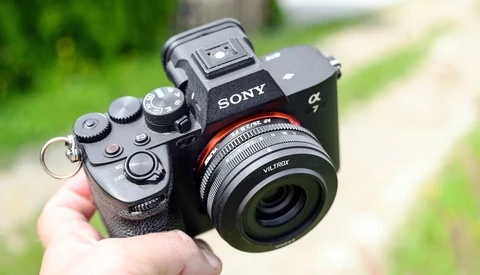
Pancake lenses are a niche obsession, but they solve a real problem: full-size image quality in a package small enough to actually carry. Most of them cut corners on sharpness to hit that tiny footprint, but a handful genuinely don't.