




Fstoppers Reviews the Sundisc Softbox
When is a softbox not a softbox? When it's a Sundisc. Here's a long-term review of a multi-talented light modifier that packs down to the size of a pack of small tortillas.
When is a softbox not a softbox? When it's a Sundisc. Here's a long-term review of a multi-talented light modifier that packs down to the size of a pack of small tortillas.

In the first part of this series of two, I introduced bokeh — out-of-focus areas — and outlined the main controls of defocus. These include sensor size, focal length, aperture, distance to subject, and distance to the backdrop. How, then, do you compare defocus between lenses and cameras? Read on.

I raise you my swirly bokeh to your circular bokeh because I intuitively know that it looks nicer. However, is my swirly Nikkor AF-S 50mm f/1.4G on the Fuji X-T4 more blurry than your circular Nikon Series E 50mm f/1.8 on the Nikon D850? Read on.

Fuji recently unveiled their Instax Wide photo printer, over 20 years after the format first made its appearance. So, why has it taken Fuji so long?

Now that the dust has settled on Nikon's big Z 9 announcement and pundits have chewed the cud over the raft of firsts that the announcement heralded, let's pause for a moment and consider some of the reality that will undoubtedly follow this.

Transferring images from the camera to the customer is a complex process that — depending upon your genre — will require a greater or lesser number of intermediate steps. Irrespective of who you are delivering to, you need to get photos off your camera, and this is where the fun and games start. Nikon has released NX MobileAir as another solution to fix the problem.

It's a universal truth: wireless connections are rubbish. How many times has your tether terminated, have your maps been massacred, was Netflix nuked, or Zoom zonked all because your Bluetooth, WiFi, or 4G connection simply dropped, died, or was otherwise incapacitated?

Financial results are one thing and pundit commentary another; however, there is nothing like hearing it directly from the horse's mouth. So, how does Nikon think they are doing? Hear what they've got to say.
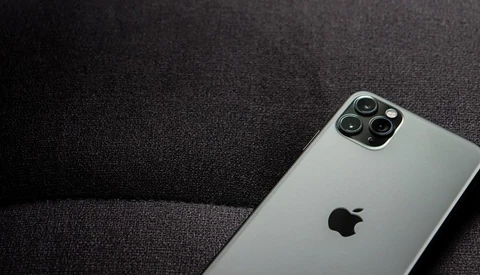
Cameras just aren't good enough at processing photos — witness the inexorable rise of the smartphone which leverages adequate hardware and clever software to produce images that look as good as those from a high-flying $2,000 camera. What can manufacturers do to remain relevant in today's market?

In Part 1 of this In-Depth review, I outlined the core philosophy of Photo Mechanic Plus before going on to summarize and test the ingestion process. Arguably, this is the star in the crown however, Camera Bits have now added an image catalog allowing it to manage your photo archive. Read on to find out how it performs, as well as a comparison with Lightroom's own catalog.
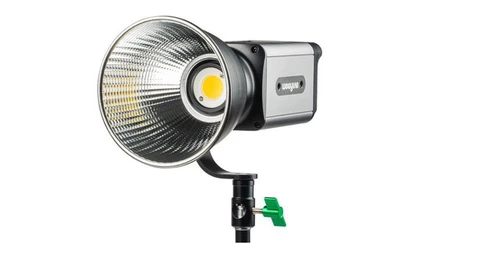
Viltrox has released a new single-color LED continuous light under their Weeylite brand. At $179 for the base package, it's a compelling option. So, is this the end of the strobe? Find out in this exclusive Fstoppers review.
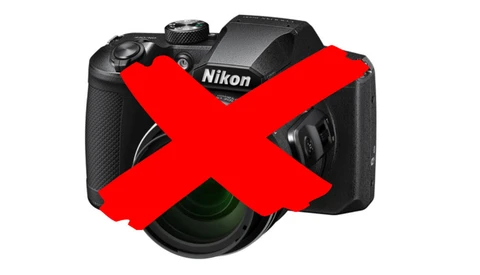
Nikon quietly — or maybe not so quietly given the press — announced the demise of the innocuously named Coolpix B600, a product name that just trips off the tongue and screams cheap and cheerful. What is startling about this camera is that it only hit the market in December 2020. Some eight months later it has bitten the dust. Why is this and what does it say about the camera market?
Mirrorless hasn't only won the battle, it's won the war. Last year — 2020 — was a landmark as more mirrorless cameras were shipped than DSLRs. It is the primary design choice for manufacturers and is therefore the future of the camera. However, the future of photography undoubtedly lies with the smartphone.
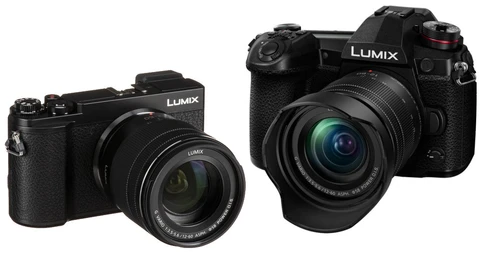
Henri Cartier-Bresson is hailed in the pantheon of photographers as one of the leading lights of his time. He is also inextricably linked with Leica. If he were shooting today, what brand would he choose and how would he shoot? It would of course be Panasonic and 6K Burst Mode.
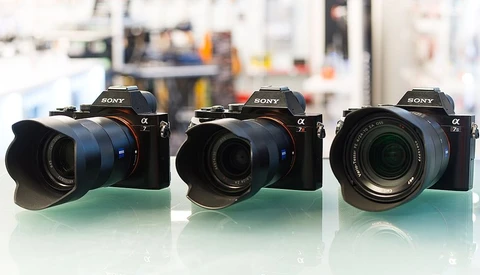
The mirrorless camera was an innocuous enough invention that stemmed from Olympus' early innovation, but is it Sony that has managed to change the camera market for good and upset the CaNikon apple cart?

Nikkei recent published a synopsis of Techno System Research's Market Share Survey for 2020, a detailed paywalled survey of camera shipment data from major manufacturers. The headline is a 5.0% drop for Nikon, decreasing its total market share. This isn't great news for Nikon, but is it all it seems?
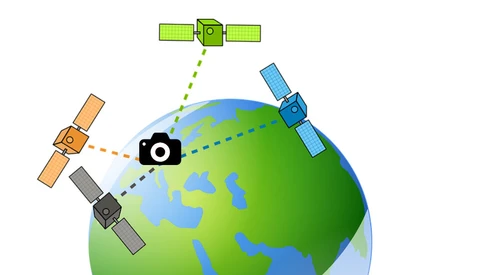
The recent press about an upcoming Nikon camera — denoted the "N2014" — highlighted a government registration filing that suggests it will be "equipped with Wi-Fi, Bluetooth, and Global Navigation Satellite System (GNSS)." This has been a positive media development for Nikon as, if correct, it would make them the first camera manufacturer to integrate GNSS into one of their products.

Nikon recently posted its first quarter financial report which shows improved sales but still leaves many questions unanswered about its post-COVID recovery. Is it making or — indeed — losing ground to its competitors?

Back in film days, you loaded up a 24 or 36 exposure film and shot away until it was used up. Frames were precious because when your film was gone, it was all over. Digital removed that barrier, which has just created different problems. So, should you delete photos and, if you do, when should you stop?

Tamron recently announced the development of a new 18-300 mm zoom lens which is notable for two claimed firsts: its first X-mount model and the first APS-C model produced as a superzoom. Why is this an important development for Fuji?

Fujifilm — the clue is in the name, except it isn't. Fuji was a behemoth in the film world, with Kodak its only rival. And then film went bust, and Kodak rapidly followed suit. Meanwhile, Fuji evaluated its business position and refocused principally around the healthcare sector and document management divisions.

If there is one type of news story that is a recurring theme in journalism it is the protest. Think "Tank Man", "The Burning Monk", or "Taking a Stand in Baton Rouge" (with Ieshia Evans). They stick in the memory, their iconographic status forming a peg from which we hang related memories. So why then are we more interested in riots as opposed to protests?

Notwithstanding problems with ramping back up production to pre-COVID levels, manufacturers have been generally optimistic about the emerging camera market as consumers start spending money that has been hoarded over periods of lockdown. Canon looks set to be the big beneficiary, but what about the other manufacturers?

Nikon's new Z fc has been widely praised for its return to retro styling and — indeed — taking the design cues of the much loved FE/FM series. It's one thing to make a retro camera, but it's quite another thing to sell it. So, who is it targeted at?

It is a truism that the rich and famous are early adopters of the latest technology. Given that photography was unleashed on the world in 1839, what is the earliest surviving photo of a US President?
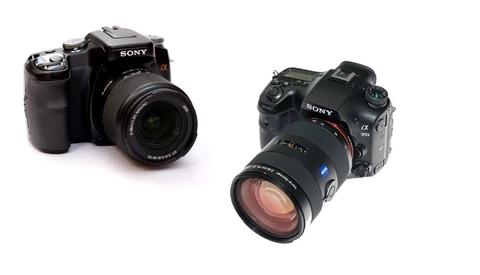
Sony's not a camera company or at least hasn't been until relatively recently. Its heritage is as un-optical as any recent manufacturer can be and is certainly far removed from the heritage of the likes of Nikon, Canon, Leica, and Pentax.

You take photos, you write books, you're published in weekly and monthly newspapers and magazines, and travel the world with the sole purpose of... traveling. You sound like one of the early social media influencers of the 2010s who was "living the dream," constantly on the road, distributing a drip of photos and articles to the travel-enthused general public.

Leica pretty much took the world by storm with the 35mm camera, and manufacturers haven't looked back since. In the film and digital realms, 35mm has been the mainstay for any serious photographer, however, it is also true that those who wanted a little bit "more" went medium format. This tended to be the mark of certain professionals with a price tag to match.

Another day, another dollar. In Nikon's case, it wishes it had a whole load more dollars, as its annual financial report shows significant losses. So, is it making progress to get itself back on a level footing with Canon and Sony?

The film era was a cash cow, with cameras being high-precision instruments from specialist manufacturers and because they used film that needed developing and printing, a huge service sector that surrounded it. From the 1960s onward, the sector innovated and grew at breakneck speed. And then, it fell apart. Is that about to happen for digital?

The last year has been pretty dire for the camera industry, as the impact of COVID forced a general shutdown of manufacturing and sales outlets. As parts of the global economy have reopened, we have seen the shoots of revival start to spring up. Will the camera industry return to its 2019 pre-COVID levels?

Fuji's Instax line of products — the legacy of its film heyday — is successful. They've sold more than 50 million cameras, with 10 million alone in the 2019 business year. However, more than that, it's the financial powerhouse for its Imaging division, turning over twice as much money as its digital counterpart.

CIPA recently released February shipment figures for the camera industry, which paint a picture of mixed fortunes and a complex path ahead for manufacturers. This generally looks to be positive news for Sony and Canon but is a warning for Nikon and Pentax.

The Sony a1 has arrived and the Nikon Z 9 was recently been announced, so it's now Canon's turn to make an announcement about its forthcoming top-end camera, the R3. Last month, I compared Canon's then top-end R5 to Sony's and Nikon's offerings, commenting on the different strategic approaches of the three companies.

It's a perplexing state of affairs: the DSLR as a product category is officially on life support now that more mirrorless cameras ship every year. Of what is left of the DSLR sector, Canon and Nikon hold a staggering 98% of it. So, why on Earth is Pentax releasing a flagship model?