
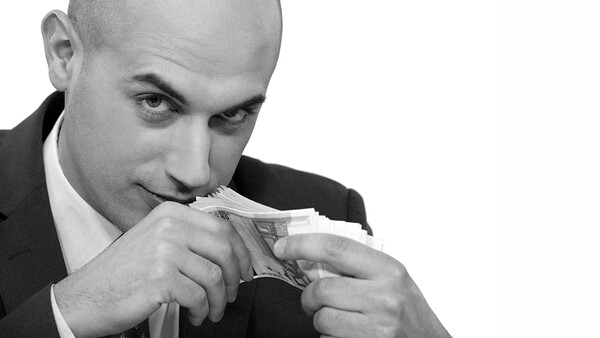
I hate the idea of credits. It's like feeding quarters into an arcade game (yeah, I'm old), never sure how many it'll take before you get a decent run. After years of working with generative AI, the credit system feels like an ongoing beta trial designed to monetize trial and error.
The Meter Is Running, Whether You Realize It or Not
I've got nothing against companies making money. Developers should profit. Innovation, servers, and AI training all cost money. But what we're living through right now feels like the Wild West. There's no standard unit, no consistency, no universal way to compare what one "credit" actually means from platform to platform. Credit, token, per-image, per-export, GPU time metered in the background. It's as annoying as it can be confusing. It reminds me of the early smartphone chaos before USB-C became the standard. Every company had its own cable, every charger was different, and consumers paid the price for that fragmentation. Right now, AI credits feel like we're still in the proprietary charger era.
For this article, I'm focusing only on a few multi-functional photo editing apps like Photoshop. Apps like these are the tools many photographers depend on for real work: basic editing, retouching skin, replacing skies and backgrounds, removing distractions, masking subjects, and automating edits. Many of you reading this probably have one of these editors open right now.
What nobody warns you about upfront is that, beyond your subscription costs, you may find yourself paying extra for results that aren't even close to what you needed. AI sometimes gets it right immediately (still, much to my amazement when it happens), but often it misses the mark. Skin retouching over-softens. Hair masking breaks down. Generative Fill invents things that simply don't belong — like the classic extra finger or an object from another dimension. So, you regenerate, adjust, and try again. In many of these systems, every attempt burns another credit.
In my fine art photography work, I've spent so much time hitting Generate on a single edit that I've begun to wonder whether the old manual approach would have been faster in the first place. Under today's billing structures, that entire learning curve carries a hefty cost. Experimentation costs. Even figuring out how to use the tools efficiently costs money. This credit model isn't just one or two companies gingerly rolling out a new pricing scheme with their fingers crossed. It's already built into the software many photographers rely on, and the meter is running whether you like it or not. If we're forced to work within such schemes, they need to support a sustainable workflow. In the current photo-editing arcade system, we're often required to show up with a pocket full of quarters while paying rent for the privilege of being there.
What Counts as an “Edit” Now?
There was a time when an edit was just an edit. You opened Photoshop or whatever editor, moved some sliders around, cloned out a distraction, and called it a day. Whether it took five minutes or fifty, the cost was the same. You paid for the software, and that was it.
That's no longer true across the board. Certain operations have become transactions. Generative Fill is a billable event. Background replacement costs a credit. Cloud-based skin retouching is a metered export. Even within the same app, the rules change. I can manually mask a subject all day long for free, but the moment I click Generative Expand, that's a credit. Local AI denoise costs me nothing, but cloud-powered retouching hits the meter.
The definition of "edit" has quietly split in two. Traditional adjustments remain unlimited within your subscription. AI-assisted or cloud-powered operations get counted, tracked, and capped. And every platform measures differently — per generation, per export, GPU time, and monthly credit pools that vanish if you don't use them. It's like everyone agreed that metering was the future but forgot to agree on what a meter actually is.
So, when we talk about cost per 1,000 edits, we're talking about AI-dependent operations. The tools are marketed as time-savers and workflow accelerators. Those accelerators now have a meter attached.
AI Photo Editing Credits: What They Actually Cost

It's not my intention to pick winners and losers or push you toward any particular app. But the economic models are worth understanding before they quietly restructure your workflow budget. Some platforms bundle AI into a flat subscription. Some meter specific tools in the background. Some charge per image processed. Others run everything locally with no marginal cost at all. Once you move from unlimited editing to metered AI operations, the math changes, especially if experimentation is as central to how you work as it is to mine.
The numbers below are based on published pricing, subscription tiers, and credit allocations for four platforms that professional photographers are actively using right now. These aren't perfect figures. Pricing shifts, promotional rates come and go, and actual costs depend heavily on which tools you use and how often you need to regenerate. But they give you a working basis for comparison in a market that seems determined to sell you apples, oranges, and mystery fruit labeled as "one credit."
How Five Major Platforms Handle AI Credits
Adobe Photoshop is the unavoidable starting point, partly because it's where most photographers already live and partly because the math is legible — or used to be. Adobe's credit structure has shifted significantly, and what you get depends heavily on your plan and when you subscribed. The Photography Plan now includes as few as 25 generative credits a month for new subscribers (those who joined after June 17, 2025), though earlier subscribers may have 100 or 500. The former All Apps plan — now rebranded as Creative Cloud Pro — includes unlimited access to standard generative features like Generative Fill, with 4,000 monthly credits reserved for premium features like AI video. Photographers who want unlimited standard generations can pair the Photography Plan ($20/month) with a standalone Firefly Standard plan ($9.99/month) for a combined $30/month. Dedicated Firefly plans run from $9.99 a month for 2,000 premium credits up to $199.99 for 50,000 — but note that these credits now apply specifically to premium features like video and partner AI models, not to standard Generative Fill, which is unlimited on qualifying plans. The catch remains the same as ever: you're paying per attempt, not per finished image. Every regeneration that misses burns a credit the same as one that lands.
Evoto AI sits at the other end of the cost spectrum. It's one of the more capable retouching tools available right now, and the output quality is genuinely impressive, but on a pay-as-you-go basis, costs range from $130 to $245 per 1,000 credits, depending on pack size. Annual subscribers get a significantly better rate, landing somewhere in the $50 to $100 per 1,000 range, and credits roll over with subscription plans. For a high-volume retoucher who knows the tool well, the math may work out. For anyone still climbing the learning curve, those numbers compound quickly.
Retouch4me operates on a more transparent unit of measurement. One retouch equals one full image processed through any number of their cloud plugins — not one attempt, not one tool. Subscription plans run $0.06 to $0.10 per retouch, working out to $60 to $100 per 1,000 images. One-time packs cost more, ranging from $0.12 to $0.20 per retouch. The local plugins remain unmetered entirely, so the meter only starts when you cross into cloud features. That gives photographers a genuine choice about when they're on the clock and when they're not. If you're looking to deepen your retouching skills and get more out of every credit you spend, the Skin Retouching Course for Beauty, Fashion, and Portrait Photography is worth a look.
Aftershoot doesn't publish a per-image rate, but the cost is implied by their own modeling. There are no credits and no per-image charges. You pay a flat subscription fee and process as many images as your workflow requires. Based on 25,000 images per year, monthly plans run from around $7 per 1,000 images on the entry-level Selects tier up to $35 per 1,000 on the Max plan. Annual plans bring those figures down to roughly $4.80 and $29 per 1,000, respectively. The per-image cost drops the more you shoot and edit, which is the inverse of how every credit system on this list behaves. The feature set is narrower than Photoshop's generative tools, but for photographers who want predictable costs and the freedom to experiment without watching a meter, it's a genuinely different way of thinking about what you're paying for.
Pixieset Photo Editor is a complete edit-to-delivery workflow built right into Pixieset. Editing and culling is available within a free plan with 100 export credits. The subscription is a flat fee of $12/month paid annually with unlimited exports. Tools like Generate and Erase use GenAI credits, while the Healing feature does not.
Perfectly clear, right? Don't worry, there'll be a quiz later. It'll cost you one credit per wrong answer.
Why Trial and Error Now Has a Price
The numbers in the previous section tell part of the story. What they don't capture is the session that runs long, the image that resists, the prompt that never quite lands. A photographer processing 1,000 images a month isn't running these calculations once. They're running them constantly, every time they decide whether to regenerate or walk away. That's a different kind of overhead than anything this industry asked us to carry before, and it didn't come with much of a warning.
Here's what that looks like in practice. I'm working on an image that matters. The lighting is strong, the composition holds, and the subject carries the emotional weight I hoped for. The only thing holding it back is the background. So, I open Generative Fill in Photoshop, select the area, enter a prompt, and generate something that looks promising but not quite right. Naturally, I generate again. The second version improves one element but introduces another problem. Each iteration gets closer in one respect while drifting in another, and it's not unusual to exceed 60-plus variations before Photoshop forces me to create a new mask and start over (thankfully, most of these runs were performed during beta and before they started charging). What began as a simple enhancement evolves into layer masks and increasingly granular attempts to coax the software into producing something usable. By the end, I've forgotten what the original background even looked like. I've also forgotten to eat lunch.
Trial and error has always been embedded in photography. Experimentation was understood as part of the craft, and once you owned the software, refinement didn't carry a separate charge. Now, certain types of experimentation are metered. Each iteration consumes a unit. Refinement has become transactional, and that shift introduces a new internal dialogue during editing. Instead of focusing on whether the next adjustment will improve the image, I'm also calculating whether it's worth the cost. These questions surface in real workflows, especially when refining images for clients.
Learning and refining these tools now carries a measurable financial consequence. That's the part that stings.
If This Is the Future, We Need a Standard for Uncertainty
To be fair, these apps do tell you what something costs. They'll post the credit price for a generative fill or a background replacement. The problem is that in real editing, you're rarely paying for one action. You're paying for the number of attempts it takes to get a usable result, and that number is wildly unpredictable.
That unpredictability is the real consumer risk. A one-credit operation sounds cheap until it takes 25 tries. A per-export retouch sounds reasonable until you realize you're exporting three versions because the hairline looks odd in one and the skin texture breaks in another. The posted cost stays the same, but the real cost becomes uncertain. You're buying a probability.
I've been on both sides of this. Sometimes I get a perfect background replacement in three attempts and feel like a genius. Other times, I burn through every generation the system allows me and still end up with something that looks like the AI had a fever dream about my image. There's no consistent way to know in advance which experience I'm going to get. Two platforms can both claim a tool costs one credit, while one lands in three tries and the other routinely needs thirty. That difference is everything.
This gets worse on the images that matter most. The more I care about the final result, the less "good enough" becomes acceptable, and the more likely I am to regenerate until it's right. When I'm fixing a simple distraction, I can keep it straightforward. But when I'm building a background that has to match the lighting and perspective of the frame, the tool can become a loop. I generate until the system stops me, then make a new mask, then generate again. Suddenly, I've spent an hour and burned a stack of credits chasing something that still feels slightly off. My coffee has gone cold. I've missed two phone calls. My cat is judging me.
If we want to talk about standards, it should be a standard for uncertainty. These platforms should publish something closer to reality — average attempts-to-success for common tasks, and ranges that reflect what users actually experience. How many generations does it typically take to get a clean background replacement on a portrait? How often do users accept the first result versus the tenth? Those metrics would actually protect users from misleading expectations.
The stake here is how often you have to pay the same cost repeatedly just to reach the finish line. A pricing model that charges per attempt charges directly for uncertainty. That's what deserves scrutiny, and that's what photographers feel in their gut when the meter is running and the image still isn't there yet.
Feeding the Machine: When Editing Starts to Feel Like an Arcade Game
Dropping quarters into arcade machines in the 1980s was neat. You knew exactly what you were signing up for. You lost, you paid, you tried again. It was loud and flashy and designed to keep you feeding those clunky, pizza-stained machines. What I don't find "neat" is pumping my credit card number into a professional photo editing app so I can regenerate a background for the eighteenth time because the lighting still doesn't match. This isn't Pac-Man, folks. It's my workflow.
Iteration has always been part of photography. But now, in certain tools, refinement carries a meter. One credit per attempt sounds harmless until the attempt count climbs. Fifty regenerations on a single image stops feeling like efficiency and starts feeling like a transaction loop. The promise of AI is acceleration. The reality can look like repeated spins until the output finally lines up with my vision. Or doesn't. Sometimes I walk away with nothing usable and a vague sense that I've been pickpocketed by an algorithm.
My experience with credits has been terrible, and I'm choosing not to participate in the system unless I'm being reimbursed for client work or through art I'm actually selling. I'm already giving Adobe a lot of money annually, along with other platforms. The subscription model is bad enough, but that's life. We have to pay to play somehow. What I'm not willing to do anymore is chase a high score in the game of photo editing just to make an algorithm behave. That's somebody else's job. The people predicting AI-driven civilizational collapse might want to spend an afternoon with Generative Fill to cure them of their nightmares.
I don't need another spin. I don't need another regeneration. I'm done feeding quarters into the machine. I hope this particular phase of the AI rollout is short-lived and ends up in a dusty warehouse with the rest of the obsolete arcade cabinets. At least back then, if you burned through a pile of quarters, you might get your initials in the Top 10. With AI credits, there's no winner. There's just a running meter and tens of thousands of frustrated players wondering when somebody's going to unplug this thing.






Join the Fstoppers community for free
-
Post comments and join in the discussions
-
Browse the site ad-free
-
Share your work and get featured in the community
-
Compete in the photo contests for fun and prizes
3 Comments
Complete agree. Waste of time and money! And you lost your skills. For me generative AI is crap AND for me no time saver.
You called "Wild West". I name it anarchy. Subscribers aren't users anymore, they become addicted. This kind of business model is looking like a license to print money. I am happy that I can remain outside of such a system remaining as an amateur using Dark table. Maybe I don't have such AI tools on my finger tips, but I enjoy the freedom without a company's finger in my wallet. And yes, I am obligated to refine my skills!
Don't use AI, problem solved.