Picking the right small refractor for astrophotography isn't just about specs on a chart. The telescope you choose will determine which objects you can shoot well, how fast you can gather light, and whether you'll be fighting chromatic aberration every time you push your processing.
Coming to you from Nico Carver of Nebula Photos, this thorough video puts four small refractors head to head: the SV Bony SV545, the Sky Rover 66MA, the Tubeek Hope D60, and the NCO 60 GT. Carver received all four from their manufacturers but reviewed them under his own terms, with no paid involvement and no manufacturer input. He tested them over multiple nights and ran all six optical configurations in a single 5.5-hour imaging session using an ASI 2600MC Air on a Sky-Watcher EQ6-R mounted to a concrete pier, with guiding between 0.4 and 0.6 arcseconds RMS. Each configuration got 15 three-minute exposures, with the worst three rejected, leaving 36 minutes of calibrated data per scope.
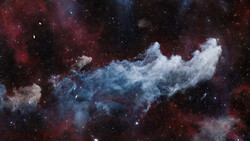
Before the technical comparisons, Carver makes an important strategic point that a lot of beginners miss. Small refractors aren't limited tools. They're specialized ones. The Messier catalog has a handful of genuinely large objects, like Andromeda, but most beginner-listed objects are actually tiny in apparent diameter. Where small scopes shine is on large emission nebulae from catalogs like the Sharpless catalog, interstellar dust clouds, and interstellar flux nebula (IFN) around objects like M81 and M82 or near the celestial poles. Add a dual narrowband filter, and the number of accessible targets expands dramatically. Carver has been shooting targets like the Witch Head Nebula for ten years and is still pulling new detail out of the same field, not by upgrading to a bigger telescope, but by refining technique and filtering strategy.
On the optical performance side, the Sky Rover 66MA impressed at f/7 with sharp, contrasty images, and held up reasonably well with its 0.8x reducer at f/5.6. The NCO 60 GT stood out in the extreme color saturation test, retaining clean blue star color even with its aggressive 0.65x reducer at f/3.9, pointing to high-end glass that the other scopes can't match at their price points. The SV Bony SV545 showed softer stars overall but surprised Carver with better-than-expected color correction for a scope in its price range. The Tubeek Hope D60 landed solidly in the middle, delivering respectable sharpness at f/4.6, though it showed green chromatic fringing under extreme saturation. Price gaps between these scopes are real: the SV545 runs around $500, while the NCO 60 GT in its full reducer configuration tops $1,400. Whether that difference shows up in your actual images depends heavily on what you're shooting and how hard you push the processing.
The build quality breakdowns, the full aberration inspector results for every configuration, the registered side-by-side comparisons, and Carver's final recommendations on which scope fits which use case are all covered in detail in the video. Check out the video above for the full rundown from Carver.




Join the Fstoppers community for free
-
Post comments and join in the discussions
-
Browse the site ad-free
-
Share your work and get featured in the community
-
Compete in the photo contests for fun and prizes