Nikon spent the first years of the Z system apologizing for a thin lens catalog. That era is over, and the problem has flipped: there are now so many good Z lenses, from Nikon and from the third parties Nikon finally let through the door, that the hard part is knowing which ones are worth their asking price. The mount itself is the reason. Z is the widest full frame mount on the market at 55mm, with a short 16mm flange distance, and optical designers have used that room to build lenses that are sharp into the corners at maximum aperture rather than two stops down.
Three things decide this purchase. The first is whether you need Nikon's S-line, which buys you the best optics, the best weather-sealing, and now the Silky Swift VCM autofocus motors that make the newest lenses dramatically faster to focus. The second is how much weight you are willing to carry, because Nikon's f/1.2 primes and f/2.8 zooms are superb and heavy. The third is third-party glass. Nikon has licensed the Z mount to Tamron, Viltrox, Laowa, and Cosina, and Viltrox alone now lists around 30 Z-mount products at prices Nikon does not attempt. Sigma is the conspicuous exception: as of mid-2026 its entire Z catalog is three APS-C primes, with no full frame Sigma glass available at all.
We have organized this guide by what you shoot rather than by price. Each pick states its real weakness and where it sits in its product cycle, and every specification below was checked against the manufacturer's current spec sheet rather than a number carried over from an older model.
At a Glance
- Best Overall: Nikon NIKKOR Z 24-70mm f/2.8 S II
- Best Budget Prime: Nikon NIKKOR Z 40mm f/2
- Best Third-Party Prime: Viltrox AF 35mm f/1.2 LAB
- Best for Portraits: Nikon NIKKOR Z 85mm f/1.2 S
- Best for Weddings and Events: Tamron 35-150mm f/2-2.8 Di III VXD
- Best Wide Angle for Landscapes: Nikon NIKKOR Z 14-24mm f/2.8 S
- Best Telephoto Zoom: Nikon NIKKOR Z 70-200mm f/2.8 VR S II
- Best for Wildlife and Sports: Nikon NIKKOR Z 180-600mm f/5.6-6.3 VR
- Best Macro Lens: Nikon NIKKOR Z MC 105mm f/2.8 VR S
- Best for DX Crop-Sensor Bodies: Sigma 30mm f/1.4 DC DN Contemporary
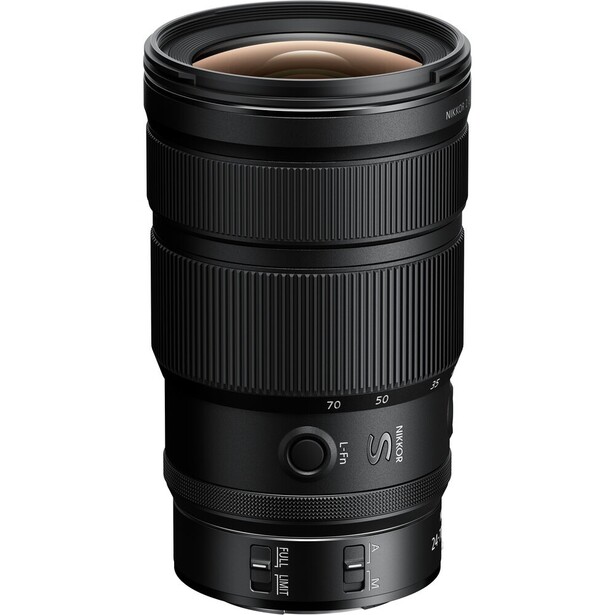
Best Overall: Nikon NIKKOR Z 24-70mm f/2.8 S II
- Focal length: 24-70mm
- Maximum aperture: f/2.8
- Format: FX (full frame)
- Construction: 14 elements in 10 groups, 11 aperture blades
- Stabilization: none, relies on in-body VR
- Minimum focus: 0.24 m at 24mm, 0.33 m at 70mm
- Filter size: 77mm
- Dimensions: 84 x 142 mm
- Weight: 675 g
- Price: $2,796.95 (B&H)
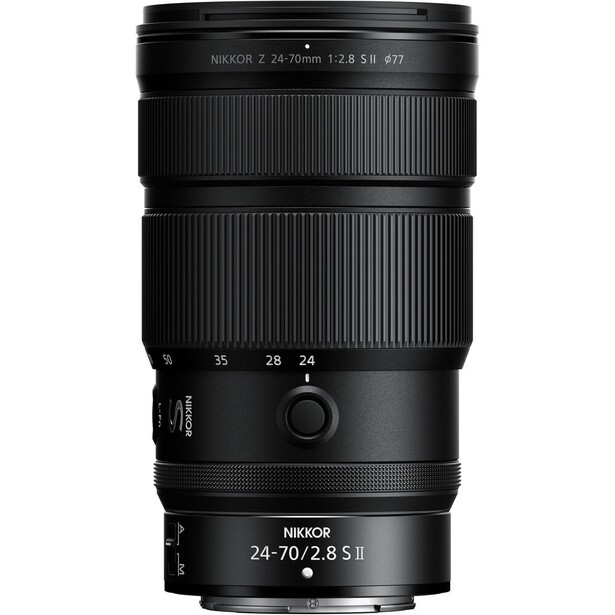
Nikon announced its replacement for the workhorse standard zoom in August 2025 and put it on sale that September, and the 24-70mm f/2.8 S II is the rare version-two that changes how a lens feels rather than just how it measures. It zooms internally, which Nikon says is a first for a 24-70mm f/2.8, so the barrel never extends and the balance on a gimbal or tripod never shifts. It also lost 130 g, down to 675 g from the 805 g original, and Nikon claims that makes it the lightest full frame 24-70mm f/2.8 on the market.
Autofocus is the bigger story. This is the first Nikon zoom to use Silky Swift VCM motors, and Nikon rates the focus drive at roughly five times the speed of the previous 24-70mm f/2.8 S, with AF tracking during zooming improved by about 60 percent. That second figure describes a specific old frustration: on the previous lens, pulling the zoom ring mid-burst could unsettle the tracking box. Nikon's Meso Amorphous Coat, its strongest anti-reflection coating, is here too, which is the coating Nikon reserves for the lenses it expects to be pointed into the sun.
On the optical side, corner sharpness at f/2.8 goes beyond what the original could reach at 24mm, with near-prime resolution through the middle of the range. The honest problem is the premium over that original, which Nikon still sells alongside it. If you already own the first version, this is an upgrade you will feel but probably do not need. If you are buying your first professional standard zoom for a Z8, Z9, or Z6III, it is the one to get, and the internal zoom alone settles the question for anyone who shoots video. Anyone who wants f/2.8 for less should look at the Tamron 28-75mm f/2.8 Di III VXD G2, which gives up 4mm at the wide end and very little else. Check the current price of the Nikon NIKKOR Z 24-70mm f/2.8 S II at B&H.
Read our field test: Field Test: Nikon ZR + NIKKOR Z 24-70mm f/2.8 S II
What We Like
- Internal zoom keeps length and balance constant
- 675 g, which Nikon calls the lightest in its class
- Silky Swift VCM autofocus, roughly five times faster than the original
- Meso Amorphous Coat controls flare and ghosting
What Could Be Better
- Expensive, and the original 24-70mm f/2.8 S is still sold for less
- Longer than the lens it replaces at 142 mm
- No optical stabilization, so DX bodies get no help
Best Budget Prime: Nikon NIKKOR Z 40mm f/2
- Focal length: 40mm
- Maximum aperture: f/2
- Format: FX (full frame)
- Construction: 6 elements in 4 groups, 9 aperture blades
- Stabilization: none, relies on in-body VR
- Minimum focus: 0.29 m
- Filter size: 52mm
- Dimensions: 70 x 45.5 mm
- Weight: 170 g
- Price: $326.95 (B&H)
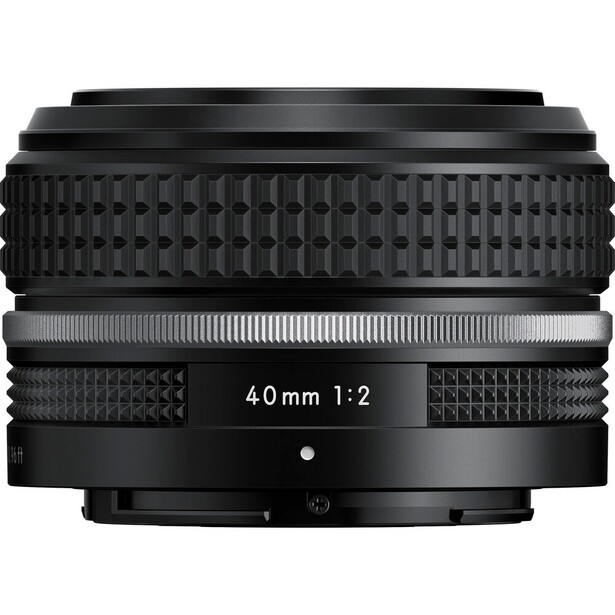
Almost every Z owner should own the 40mm f/2. It weighs 170 g, costs less than a decent tripod head, and turns a Z6III or Z5II into a camera you will actually carry to dinner. The 40mm focal length is the compromise nobody asks for and everybody ends up liking: wide enough to include a room, long enough that faces do not distort, and on a DX body such as the Z50II it becomes a 60mm equivalent that works as a short portrait lens.
Nikon built it cheaply and did not hide that. The mount is polycarbonate rather than metal, the barrel is plastic, and the six-element design is simple by S-line standards. What Nikon did not cut is the part that matters: center sharpness at f/2 is genuinely good, it holds across the frame by f/2.8, and the nine-bladed aperture renders backgrounds smoothly rather than nervously. There is dust and drip resistance around the mount, not the full weather-sealing of an S lens, which is the right call at this price. The compromises show if you go looking. The stepping motor is quiet and accurate but not fast, so it will not track a bird in flight or a toddler at full sprint, and longitudinal chromatic aberration paints purple fringes on high-contrast edges at f/2.
This is the lens we would hand to anyone who just bought their first Z body, and it pairs naturally with the entry-level Nikons in our beginner camera guide. Nikon also sells a NIKKOR Z 40mm f/2 (SE), which costs a little more for retro knurling and a vintage Nikkor typeface. It is the same optics, the same weight, and the same polycarbonate mount, so buy it for the looks or not at all. The design has been on sale since 2021 without an update, but there is nothing here Nikon needs to fix and no successor has been announced. Check the current price of the Nikon NIKKOR Z 40mm f/2 at B&H.
What We Like
- 170 g and genuinely pocketable on a small body
- Sharp in the center wide open, sharp everywhere by f/2.8
- Useful 40mm view on FX, short portrait length on DX
- The cheapest way into a fast Nikkor prime
What Could Be Better
- Slow stepping-motor autofocus that struggles with action
- Visible purple fringing on high-contrast edges at f/2
- Polycarbonate mount and only basic dust resistance
Best Third-Party Prime: Viltrox AF 35mm f/1.2 LAB
- Focal length: 35mm
- Maximum aperture: f/1.2
- Format: FX (full frame)
- Construction: 15 elements in 10 groups, 11 aperture blades
- Stabilization: none, relies on in-body VR
- Minimum focus: 0.34 m
- Filter size: 77mm
- Dimensions: 89.2 x 123.5 mm
- Weight: 970 g
- Price: $999 (B&H)
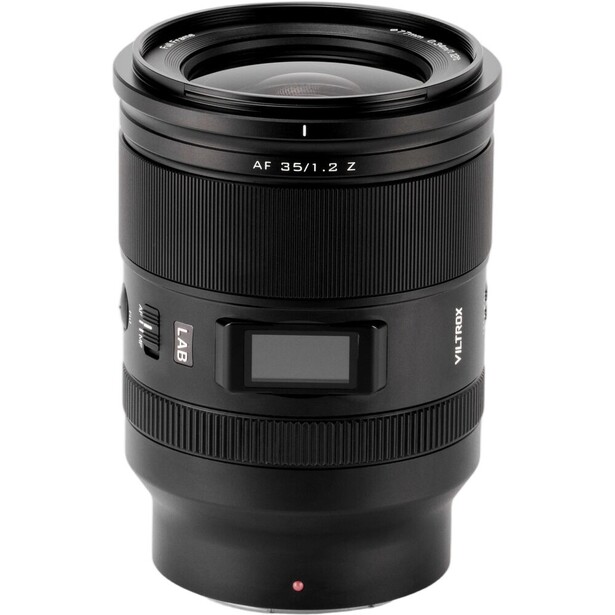
Here is the arithmetic that makes the AF 35mm f/1.2 LAB the most interesting lens in the Z catalog. Viltrox brought the Z-mount version to market in December 2025 at roughly a third of what Nikon charges for its own NIKKOR Z 35mm f/1.2 S, and the images do not show a three-times gap. It is sharp at f/1.2, which is the number that matters here, because a fast prime that needs stopping down to f/2 to clean up is just an expensive f/2 lens.
The build reads like a lens costing far more: all metal, weather-sealed, with a de-clickable aperture ring, customizable function buttons, a color information display on the barrel showing aperture and focus distance, and USB-C firmware updating. When we reviewed the LAB, that construction was what stood out. Our reviewer found it felt like a premium item, with an aviation-grade magnesium-aluminum alloy housing that holds its own against OEM glass costing considerably more, and controls placed where your fingers expect them. He also found it sharp in the center wide open at f/1.2 with excellent color and contrast, tightening up to very sharp across the frame by f/4.
The optical formula runs 15 elements in 10 groups with five ED and three high-refractive elements, driven by Viltrox's HyperVCM motors, which track eyes on Nikon bodies competently rather than brilliantly. Viltrox has been shipping Z glass for several years now, and its autofocus has stopped being the punchline it once was.
The weakness everyone agrees on is the weight. At 970 g in Z mount it outweighs Nikon's 24-70mm f/2.8 S II, and on a Z6III it is genuinely front-heavy. Longitudinal chromatic aberration is visible at f/1.2 as green and magenta fringing on specular highlights, and there is no automatic distortion correction profile on Nikon bodies, so the roughly 0.7 percent pincushion distortion lands in post. If you want a 35mm you will actually carry, Nikon's NIKKOR Z 35mm f/1.4 is a fraction of the weight and price, at the cost of about a third of a stop of light and some corner performance. Viltrox has released a screenless LAB N variant in Sony E mount and confirmed a Z version is coming, so a second option is likely later in the cycle. Check the current price of the Viltrox AF 35mm f/1.2 LAB at B&H.
Read our full review of the Sony E-mount version: The New Viltrox AF 35mm f/1.2 LAB Lens Enters the Ring Swinging!
What We Like
- Roughly one-third the price of Nikon's 35mm f/1.2 S
- Sharp wide open at f/1.2, not just when stopped down
- Metal, weather-sealed build with an aperture ring and custom buttons
- USB-C firmware updates directly on the lens
What Could Be Better
- 970 g, heavier than Nikon's 24-70mm f/2.8 S II
- Visible longitudinal chromatic aberration at f/1.2
- No automatic distortion correction profile on Nikon bodies
- Autofocus is good, not class-leading, for fast action
Best for Portraits: Nikon NIKKOR Z 85mm f/1.2 S
- Focal length: 85mm
- Maximum aperture: f/1.2
- Format: FX (full frame)
- Construction: 15 elements in 10 groups, 11 aperture blades
- Stabilization: none, relies on in-body VR
- Minimum focus: 0.85 m
- Filter size: 82mm
- Dimensions: 102.5 x 141.5 mm
- Weight: 1,160 g
- Price: $2,896.95 (B&H)
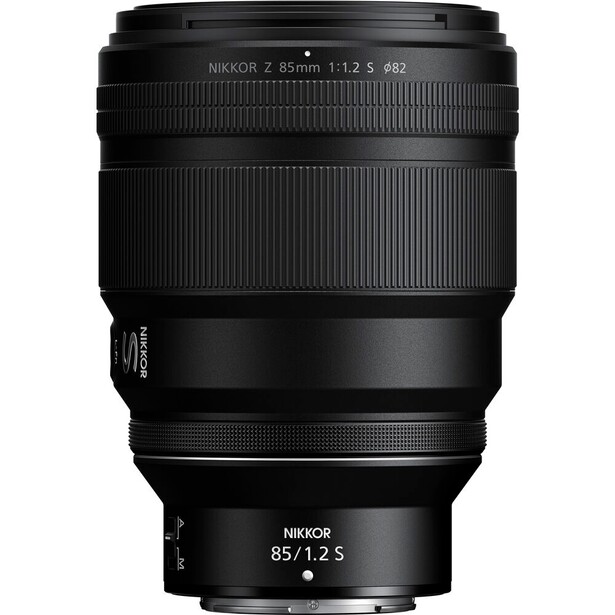
Portrait photographers argue about 85mm lenses more than any other focal length, and the 85mm f/1.2 S ends most of those arguments by brute force. The wide Z mount let Nikon correct spherical aberration to a degree that shows up in a specific, visible way: the transition from the plane of focus into the background is smooth, without the harsh outlining that ruins bokeh on busy backgrounds, and specular highlights stay round rather than collapsing into cat's eyes near the edges of the frame.
At f/1.2 on a 45.7 MP Z8, an eyelash is sharp and the ear behind it is not. That razor-thin depth of field is either the point of the lens or a liability, depending on how much you trust your camera's eye detection, and Nikon's subject detection on the EXPEED 7 bodies is good enough to make it practical for paid work. The 11-bladed aperture keeps highlights circular when you stop down to f/2 for a couple, and the lens carries most of the S-line treatment: fluorine coating on the front element, comprehensive weather-sealing, a customizable control ring, and a single L-Fn button you will want set to AF-on. It does not get the OLED information panel Nikon fits to the 50mm f/1.2 S, which is a strange omission on the more expensive lens.
Then there is the weight. This lens is 1,160 g and 141.5 mm long, and it is not something you sling over a shoulder for eight hours at a wedding without feeling it the next morning. The 0.85 m minimum focus distance rules out a tight beauty crop, and it costs more than most people spend on a body. It is a 2023 design that Nikon has given no sign of replacing. Most photographers should seriously consider the alternatives: Nikon's own NIKKOR Z 85mm f/1.8 S is around a third of the price, half the weight, and optically excellent, and the Viltrox AF 85mm f/1.4 Pro splits the difference. Our portrait lens guide covers the full range. But if you shoot portraits for a living and the look is your product, check the current price of the Nikon NIKKOR Z 85mm f/1.2 S at B&H.
What We Like
- The smoothest background transition of any Z lens
- Round specular highlights, even toward the frame edges
- Full S-line weather-sealing and a fluorine-coated front element
- Sharp enough at f/1.2 to use wide open as the default
What Could Be Better
- 1,160 g is punishing over a full event day
- 0.85 m minimum focus rules out tight beauty crops
- Costs more than most Z bodies
- No OLED information panel, which the cheaper 50mm f/1.2 S gets
- Autofocus is accurate but not the fastest in the S-line
Best for Weddings and Events: Tamron 35-150mm f/2-2.8 Di III VXD
- Focal length: 35-150mm
- Maximum aperture: f/2 at 35mm, f/2.8 at 150mm
- Format: FX (full frame)
- Construction: 21 elements in 15 groups, 9 aperture blades
- Stabilization: none, relies on in-body VR
- Minimum focus: 0.33 m at 35mm, 0.85 m at 150mm
- Filter size: 82mm
- Dimensions: 89.2 x 160.1 mm
- Weight: 1,190 g
- Price: $1,699 (B&H)
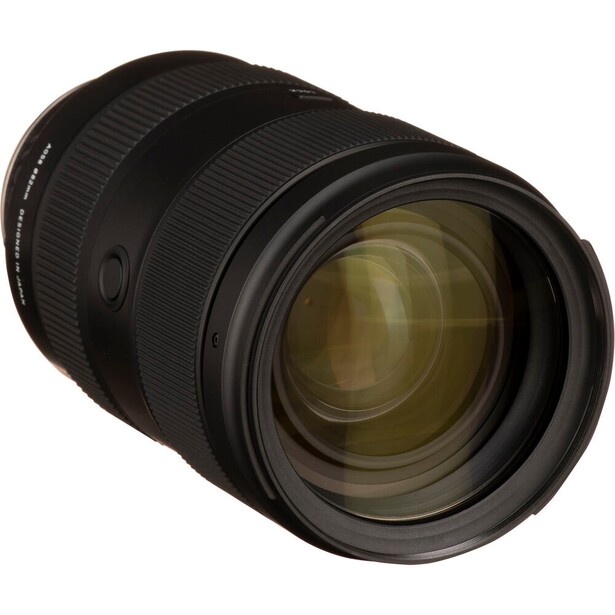
Wedding photographers have spent decades running two bodies, a 24-70mm on one and a 70-200mm on the other. The Tamron 35-150mm f/2-2.8 is a serious argument for carrying one. It arrived in Z mount on September 21, 2023 and remains the only zoom for the system that opens to f/2, and the aperture closes only gradually as you zoom: f/2 at 35mm, f/2.2 by 50mm, f/2.5 by 70mm, and f/2.8 from about 85mm to the long end.
At a reception, that range lets you shoot a wide environmental frame of the first dance, then pull to 150mm for a tight reaction from the back of the room, without swapping bodies or missing the moment. The speed advantage is real where you use it most: at 35mm you have a full stop on any f/2.8 zoom, and at 50mm, where a lot of reportage lives, you still have roughly two-thirds of a stop. Past 85mm it settles to f/2.8 and behaves like a very good 70-200mm that happens to also be a 35mm. Tamron's VXD linear motor is fast and quiet, which matters during a ceremony.
The costs are real. It is 1,190 g and 160.1 mm long in Z mount, the barrel extends as you zoom, and Tamron built it with no optical stabilization in any mount, so you rely entirely on your body's IBIS. That is fine on a Z6III or Z8 and less fine handheld at 150mm in a dark church. Corner sharpness at f/2 is soft and does not fully clean up until around f/4, though on a lens you will mostly point at a face between 85mm and 150mm, that is not where you look. Tamron began shipping a smaller 35-100mm f/2.8 Di III VXD in Z mount in March 2026 for photographers who found this one too big; at 575 g it sits alongside rather than replaces it. If you shoot events and have been carrying two bodies out of habit, check the current price of the Tamron 35-150mm f/2-2.8 Di III VXD at B&H.
Read our full review of the Tamron 35-150mm f/2-2.8 Di III VXD.
What We Like
- The only f/2 zoom available in Z mount
- Covers the whole reportage range from wide to short telephoto
- Fast, quiet VXD linear autofocus
- A full stop on any f/2.8 zoom at 35mm, two-thirds at 50mm
What Could Be Better
- 1,190 g and 160.1 mm long, with an extending barrel
- No optical stabilization, so it leans entirely on body IBIS
- Soft corners at f/2, needing f/4 to fully clean up
- Big enough that it unbalances smaller Z bodies
Best Wide Angle for Landscapes: Nikon NIKKOR Z 14-24mm f/2.8 S
- Focal length: 14-24mm
- Maximum aperture: f/2.8
- Format: FX (full frame)
- Construction: 16 elements in 11 groups, 9 aperture blades
- Stabilization: none, relies on in-body VR
- Minimum focus: 0.28 m at all focal lengths
- Filter size: 112mm on the supplied hood, plus a rear gel slot
- Dimensions: 88.5 x 124.5 mm
- Weight: 650 g
- Price: $2,396.95 (B&H)
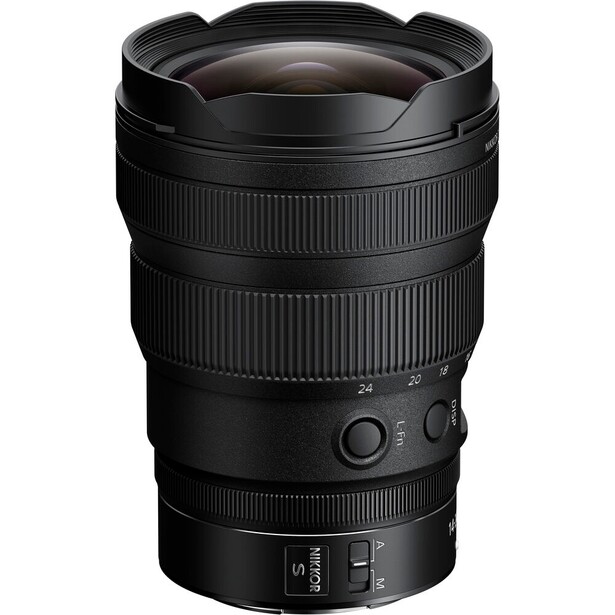
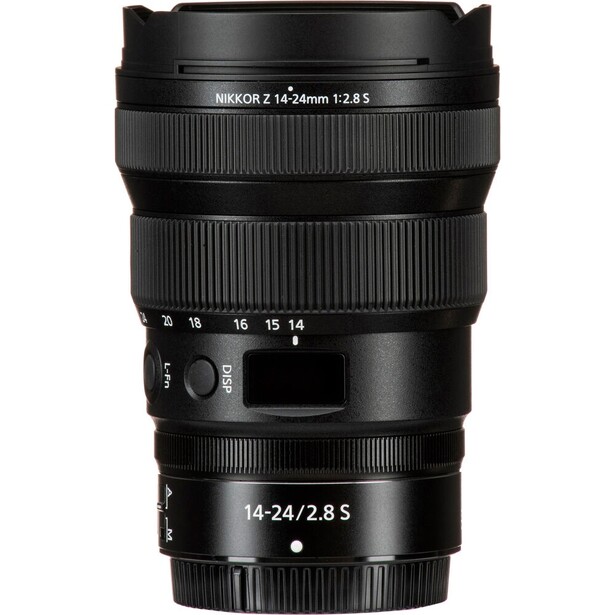
Anyone who carried the old F-mount 14-24mm f/2.8 up a mountain remembers it as a brick with a fishbowl on the front and no way to use a filter. The Z 14-24mm f/2.8 S weighs 650 g, and Nikon solved the filter problem twice over: a rear gel slot behind the mount for neutral density work, and a supplied HB-97 hood carrying a 112mm front thread so a circular polarizer screws straight on. For landscape shooters, that one design decision is the reason to buy this rather than a cheaper wide zoom.
Optically it is among the strongest lenses Nikon has made for Z. Coma is well controlled at f/2.8, which is the specification astrophotographers care about and almost nobody else does: stars near the corners stay as points rather than smearing into little wings. That makes 14mm at f/2.8 on a Z6III a serious Milky Way combination as well as a landscape one. Sunstars from the nine-bladed aperture are clean and defined at f/11 and f/16.
The weaknesses are the ones ultra-wides always have. At 14mm the perspective stretching at the frame edges is severe, so a person standing in your corner will look wrong and you have to compose deliberately around it. The bulbous front element is exposed whenever the hood comes off, which is exactly when you are changing filters in wind and salt spray. It costs about as much as a mid-range body. The design dates to 2020, making it the oldest S lens here, and reports suggest Nikon is working on a cheaper wide zoom to sit below it, though nothing has been announced and there is no sign the 14-24mm is going away. If you want similar coverage for far less and can give up the 14mm to 17mm range, the constant-aperture NIKKOR Z 17-28mm f/2.8 is the budget answer, and our landscape lens guide goes deeper on that tradeoff. Check the current price of the Nikon NIKKOR Z 14-24mm f/2.8 S at B&H.
What We Like
- 650 g, remarkably light for an f/2.8 ultra-wide
- Rear gel filter slot plus a 112mm front thread on the hood
- Excellent coma control for astrophotography
- Clean, defined sunstars stopped down
What Could Be Better
- Expensive for a specialist focal range
- Exposed bulbous front element when the hood is off
- Severe edge stretching at 14mm demands careful composition
- A 2020 design, the oldest S lens on this list
Best Telephoto Zoom: Nikon NIKKOR Z 70-200mm f/2.8 VR S II
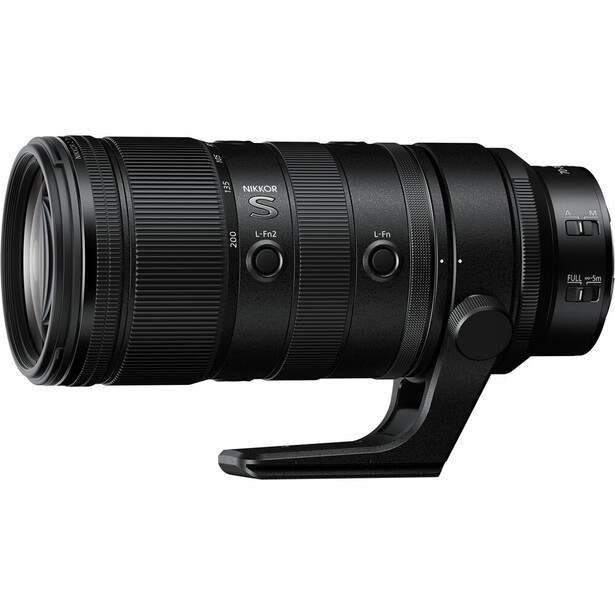
- Focal length: 70-200mm
- Maximum aperture: f/2.8
- Format: FX (full frame)
- Construction: 18 elements in 16 groups, 11 aperture blades
- Stabilization: VR, up to 5.5 stops, or 6.0 stops with Synchro VR
- Minimum focus: 0.38 m at 70mm, 0.8 m at 200mm
- Filter size: 77mm
- Dimensions: 90 x 208 mm
- Weight: 998 g without the tripod collar
- Price: $3,196.95 (B&H)
Nikon announced this lens in February 2026, and the headline is a number every working photographer will understand: 998 g. The 70-200mm f/2.8 has been a three-pound lens for as long as anyone has been shooting one, and the 70-200mm f/2.8 VR S II takes roughly 26 percent off the previous Z version, which weighed 1,360 g, by rebuilding the optics around fluorite and Short-wavelength Refractive elements and dropping three elements from the formula. That saving is enough to change what a full day on your feet feels like.
The autofocus uses the same Silky Swift VCM motors as the 24-70mm f/2.8 S II, and Nikon rates it at about 3.5 times the speed of the previous model with 40 percent better tracking during zooming. VR is rated at 5.5 stops on its own and 6.0 stops with Synchro VR on a compatible body, half a stop past the original's 5.5-stop ceiling, and Nikon quotes the 6.0-stop figure at the frame edges as well as the center, which is a more honest way to state it. Both the TC-1.4x and TC-2.0x teleconverters work, so you can push to 280mm or 400mm when you need to. The detail that gives away who designed it is the tripod foot: this is the first Nikkor with a native Arca-Swiss profile, so it drops straight into a ball head clamp without an adapter plate.
This is the most expensive lens in the guide, which is a lot to spend when the original 70-200mm f/2.8 VR S is still excellent, still sold, and now discounted. The case for the II is weight and autofocus speed, and if you shoot sports or events for a living, both are worth paying for. If you shoot a portrait session a month, buy the original and put the difference toward a body. It is also brand new, which means its long-term reliability is still unproven, though when we field-tested it on a commercial job, it was easy to hold all day and its autofocus kept up. Check the current price of the Nikon NIKKOR Z 70-200mm f/2.8 VR S II at B&H.
What We Like
- 998 g, about 26 percent lighter than the previous Z version
- Silky Swift VCM autofocus, roughly 3.5 times faster
- 6.0 stops with Synchro VR, rated at the frame edges too
- First Nikkor with a native Arca-Swiss tripod foot
What Could Be Better
- The most expensive lens in this guide
- The excellent original is still sold, now at a discount
- 208 mm long, so it is light rather than small
- Too new for long-term reliability reports
Best for Wildlife and Sports: Nikon NIKKOR Z 180-600mm f/5.6-6.3 VR
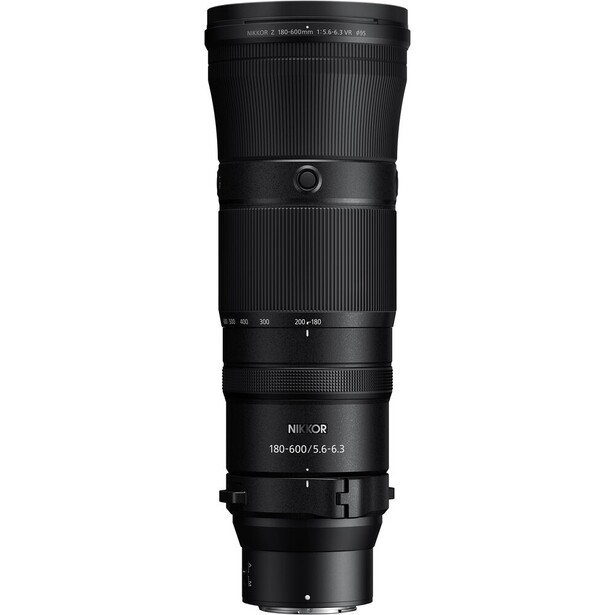
- Focal length: 180-600mm
- Maximum aperture: f/5.6 at 180mm, f/6.3 at 600mm
- Format: FX (full frame)
- Construction: 25 elements in 17 groups, 9 aperture blades
- Stabilization: VR, up to 5.5 stops
- Minimum focus: 1.3 m at 180mm, 2.4 m at 600mm
- Filter size: 95mm
- Dimensions: 110 x 315.5 mm
- Weight: 1,955 g without the tripod collar, 2,140 g with it
- Price: $2,196.95 (B&H)
Reach used to cost five figures. The 180-600mm f/5.6-6.3 VR put 600mm within range of anyone who has ever saved for a camera, and it did it with two decisions that matter more in the field than any MTF chart. It zooms internally, so the barrel does not extend and pump dust into the lens as you track a bird. And the entire 180mm to 600mm range takes a 70-degree turn of the ring rather than the sluggish two-handed shuffle older superzooms demanded.
That fast zoom throw is why wildlife photographers keep this lens instead of trading up. A heron lifts off, it fills the frame at 600mm, and one quick twist back to 300mm keeps it there. The 1.3 m minimum focus distance at 180mm is unusually close for a lens like this, which makes it surprisingly good on butterflies and dragonflies. VR is rated at 5.5 stops at the long end, and both teleconverters work, giving 840mm at f/9 with the 1.4x.
The tradeoffs are the ones physics imposes. At 1,955 g, or 2,140 g with the tripod collar you will actually be carrying, it is handheld for perhaps 20 minutes before it wants a monopod, it is 315.5 mm long, and f/6.3 at 600mm means an overcast morning in the woods pushes ISO higher than you would like. Autofocus is quick on a Z8 or Z9 and merely adequate on a Z5II, and corner sharpness at 600mm wide open is soft, though with a centered subject that rarely matters. Nikon has raised its price since the 2023 launch, narrowing the gap to the sharper but shorter NIKKOR Z 100-400mm f/4.5-5.6 VR S, so compare the two before committing. If you want reach for travel rather than serious wildlife work, the NIKKOR Z 28-400mm f/4-8 VR covers a 14.3x range in a 725 g package. For birds, mammals, and field sports, check the current price of the Nikon NIKKOR Z 180-600mm f/5.6-6.3 VR at B&H.
What We Like
- 600mm of reach for a fraction of the cost of a prime
- Internal zoom, so no barrel extension in dusty conditions
- Only a 70-degree twist from 180mm to 600mm
- 1.3 m minimum focus at the wide end for close subjects
What Could Be Better
- 1,955 g bare, 2,140 g with the collar, wants a monopod after 20 minutes
- f/6.3 at 600mm forces high ISO in low light
- Corner softness at 600mm wide open
- Nikon has raised the price since launch
Best Macro Lens: Nikon NIKKOR Z MC 105mm f/2.8 VR S
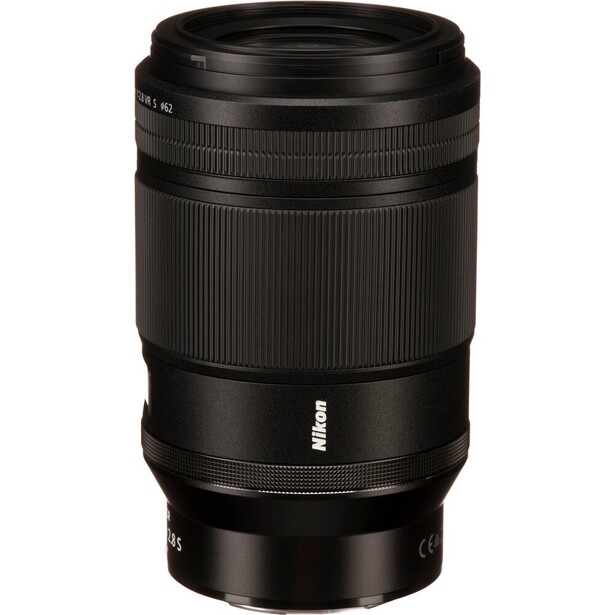
- Focal length: 105mm
- Maximum aperture: f/2.8
- Format: FX (full frame)
- Construction: 16 elements in 11 groups, 9 aperture blades
- Stabilization: VR, up to 4.5 stops
- Minimum focus: 0.29 m, 1:1 maximum magnification
- Filter size: 62mm
- Dimensions: 85 x 140 mm
- Weight: 630 g
- Price: $1,046.95 (B&H)
Macro lenses get judged on one number, and the MC 105mm f/2.8 VR S hits it: true 1:1 reproduction at a 0.29 m minimum focus distance. What makes it the pick rather than merely competent is what happens on either side of that. The 105mm focal length leaves enough working distance between the front element and a nervous insect that you can light the subject without scaring it off, which a 50mm macro cannot do. And when you are not shooting macro, it is a genuinely lovely 105mm portrait lens with S-line sharpness and smooth backgrounds, which very few dedicated macro lenses can honestly claim.
Nikon put an OLED display on the barrel showing magnification ratio and focus distance, which sounds like a gimmick until you are stacking focus on a coin and need to know exactly where you sit in the range. VR is rated at 4.5 stops, and while stabilization is nearly useless at 1:1 (physics defeats it), it earns its keep at half life size and for handheld portraits. The fluorine-coated front element sheds the water and pollen a macro lens inevitably collects in a garden.
Two things to know before you buy. Autofocus hunts at close distances, as every macro lens does, and Nikon fitted a focus limiter switch precisely because you will need it; leave it off and the lens racks through its whole range looking for a bug. And with 630 g on the front at f/2.8, this rewards a tripod more than handholding, because at 1:1 your depth of field is measured in millimeters and your own breathing pulls you out of focus. The lens has been on sale since 2021 with no sign of a successor, which in the S-line means mature rather than aging. Nikon's cheaper non-S NIKKOR Z MC 50mm f/2.8 also does 1:1, at the cost of a working distance so short your own lens shades the subject. If the technique rather than the glass is what is holding you back, our Mastering Macro Photography tutorial covers the shooting and stacking workflow this lens is built for. For flowers, insects, product work, and the occasional headshot, check the current price of the Nikon NIKKOR Z MC 105mm f/2.8 VR S at B&H.
Read our full review: We Review Nikon’s Z 105mm Macro: Did Nikon Make the Safe Choice?
What We Like
- True 1:1 magnification with a usable 105mm working distance
- Doubles as an excellent 105mm portrait lens
- OLED display shows magnification ratio while you work
- 630 g, light for a stabilized S-line macro
What Could Be Better
- Autofocus hunts at close range without the focus limiter engaged
- VR does little at true 1:1 magnification
- Really wants a tripod to deliver its best
- Pricier than most third-party macro options
Best for DX Crop-Sensor Bodies: Sigma 30mm f/1.4 DC DN Contemporary
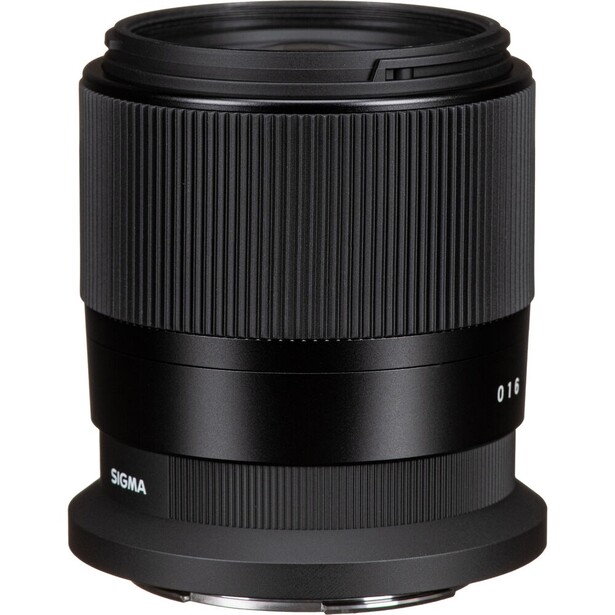
- Focal length: 30mm (45mm equivalent on DX)
- Maximum aperture: f/1.4
- Format: DX (APS-C)
- Construction: 9 elements in 7 groups, 9 aperture blades
- Stabilization: none, and Nikon's DX bodies have no in-body VR
- Minimum focus: 0.30 m
- Filter size: 52mm
- Dimensions: 70 x 75.3 mm
- Weight: 285 g
- Price: $374 (B&H)
Nikon's DX bodies have always deserved better glass than Nikon gave them, and Sigma's APS-C primes in Z mount fix the worst of that. The 30mm f/1.4 DC DN Contemporary gives a Z50II, Zfc, or Z30 owner a 45mm equivalent at f/1.4 for roughly the price of a good filter set, and it is the single most transformative thing you can bolt onto a crop-sensor Nikon. The extra light is what makes an APS-C sensor look like a bigger one: at f/1.4 you get background separation and low-light headroom a kit zoom at f/5.6 simply cannot produce.
Sigma has been building this optical formula since 2016 and brought it to Z mount in April 2023, so it is a known quantity with no replacement in sight. Nine elements in seven groups with two aspherical elements, a brass mount, a 52mm filter thread, and a stepping motor that focuses quietly and accurately. Sharpness at f/1.4 is very good in the center and merely acceptable at the edges, and it becomes excellent everywhere by f/2.8. The rounded nine-blade aperture keeps out-of-focus highlights circular, and at 285 g it does not unbalance a small body.
The weaknesses are honest ones for the money. Weather-sealing is limited to a rubber gasket at the mount, so this is not a lens for a rainy hike. The focus motor is not silent and a sensitive on-camera microphone will hear it. And the 45mm equivalent view is a genuine compromise, not wide enough for a landscape and not long enough for a flattering headshot, which is exactly why it works as a walkaround lens and not a specialist one. Sigma's presence in Z remains frustratingly partial. Its entire Z catalog is the 16mm, 30mm, and 56mm f/1.4 DC DN trio, all APS-C, and neither company has explained on the record why no full frame Sigma glass has followed, so DX shooters are the only Nikon owners Sigma serves. If you want a longer DX prime, the Viltrox AF 56mm f/1.2 Pro is faster and more ambitious. For the first prime on a crop-sensor Nikon, check the current price of the Sigma 30mm f/1.4 DC DN Contemporary at B&H.
Read our full review: Finally Some Good DX Glass for Nikon Mirrorless: We Review the Sigma DC DN Contemporary Trio
What We Like
- f/1.4 on a DX body for the price of a filter set
- 285 g, well balanced on a Z50II or Z30
- Proven optical design with a brass mount
- Rounded nine-blade aperture and pleasant background rendering
What Could Be Better
- No real weather-sealing beyond a mount gasket
- Audible focus motor on video
- Edge sharpness only becomes strong by f/2.8
- Sigma still offers no full frame lenses in Z mount
How to Choose a Nikon Z Lens
Start by deciding whether you need the S-line. Nikon uses that badge to mean three things: better optical correction, comprehensive weather-sealing, and a control ring you can assign to aperture or exposure compensation. The newest S lenses add a fourth, the Silky Swift VCM focus motors, which are dramatically faster than the stepping motors in older designs. If you shoot professionally in bad weather, or you shoot action, that premium buys you something you will feel. If you shoot landscapes from a tripod in good light, it mostly buys you a heavier bag.
The spec that matters more than people think is weight, and the spec that matters less is maximum aperture. Nikon's f/1.2 primes are extraordinary and they are also a kilogram each, and a lens that stays home because it is heavy takes no photographs. The gap between f/1.8 and f/1.2 is roughly a single stop of light and a visible but modest change in background blur, and modern sensors have made the low-light argument for f/1.2 much weaker than it was a decade ago. Nikon's f/1.8 S primes, particularly the 20mm, 35mm, 50mm, and 85mm, are the best value in the entire system and are the lenses most Z owners should actually buy.
Third-party glass is now a serious part of this decision, and it is not evenly distributed. Tamron sells both rebranded and original designs in Z, and Nikon has even sold Tamron optics under its own name (the 17-28mm f/2.8 and 28-75mm f/2.8 are Tamron designs in Nikon barrels). Viltrox is the aggressive one, with a Z-mount catalog of around 30 products spanning cheap pancakes to flagship f/1.2 primes, and its recent LAB and Pro lenses hold up against Nikon's own on test benches. Laowa covers the manual-focus specialties. Sigma is limited to three APS-C primes and has added nothing to Z since 2023, so do not plan a full frame kit around Sigma glass arriving.
Finally, think about what your body can and cannot do for a lens. Every current full frame Z body has in-body stabilization, so a lens without VR is fine for stills. The DX bodies, the Z50II, Zfc, and Z30, do not, which means a stabilized lens matters far more on those cameras, and it is the strongest argument for buying a VR zoom rather than a fast unstabilized prime if a crop-sensor Nikon is your only camera.
What We're Looking For
Our picks weigh optical performance at the aperture you will actually use, autofocus reliability on current Z bodies, weight relative to what the lens delivers, and whether the price makes sense against the alternatives inside and outside Nikon's own catalog. Every specification here was verified against the manufacturer's current spec page and a live retailer listing at the time of writing, and every product was confirmed to still be shipping rather than discontinued. Where an entry draws on Fstoppers' own hands-on testing, it links that review or field test. Nothing in this guide is stated as a test result unless it came from our own testing, and where a claim is the manufacturer's own we attribute it to them.
Frequently Asked Questions
Can I Use My Old F-Mount Nikon Lenses on a Z Body?
Yes, with the Nikon Mount Adapter FTZ II, which maintains autofocus and stabilization with AF-S and AF-P lenses. Older screw-drive AF and AF-D lenses will mount and meter but focus manually only, because neither the adapter nor any Z body carries a focus motor. The adapter adds roughly 125 g and 30 mm of length, and image quality is unchanged, so a good F-mount lens stays a good lens.
Are Third-Party Nikon Z Lenses Any Good in 2026?
Many are excellent. Viltrox and Tamron both build Z lenses that compete directly with Nikon's own on sharpness, and Viltrox's LAB series in particular tests close to Nikon's flagship primes at roughly a third of the price. The usual compromises are weight, autofocus speed on fast-moving subjects, and less consistent in-camera lens correction support.
What Is the Best All-in-One Travel Lens for Nikon Z?
The NIKKOR Z 28-400mm f/4-8 VR, which covers a 14.3x zoom range in a 725 g package and lets you shoot a cathedral interior and a distant mountain with the same lens. You pay for that range with a slow f/8 aperture at the long end, so treat it as a good-light lens. The NIKKOR Z 24-120mm f/4 S is the sharper, faster alternative if you can accept less reach.
Why Can't I Buy Full Frame Sigma Lenses for Nikon Z?
Because Sigma does not make any. As of mid-2026 the only native Sigma lenses in Z mount are the 16mm, 30mm, and 56mm f/1.4 DC DN primes for APS-C bodies, all released in 2023, and nothing full frame has followed. Neither Nikon nor Sigma has explained the gap on the record. Tamron, Viltrox, Laowa, and Cosina all sell full frame Z lenses, so the shortage is specific to Sigma.
Do I Need VR in a Lens if My Camera Has In-Body Stabilization?
Not on a full frame Z body, where IBIS handles most situations and Synchro VR combines both systems on lenses that have it. It matters much more on Nikon's DX bodies, none of which have in-body stabilization, and it matters at long focal lengths, where lens-based VR is far more effective than sensor-shift correction alone.
Fstoppers may earn a commission from purchases made through links in this article. Our picks are made independently by our editorial team.