A smart telescope collapses the whole intimidating ritual of astrophotography, the polar alignment, the guide scope, the laptop tangled in cables on a folding table, into a sealed box you set on a tripod and talk to from your phone. You pick a target, the box points itself, focuses itself, and stacks minutes of exposures into a picture of a galaxy while you stand there in the cold doing nothing. The catch is that these devices span an enormous range, from an 840-gram gadget that costs less than a nifty fifty lens to a 41-pound home observatory that costs as much as a used car, and they are not simply cheaper and more expensive versions of the same thing. Aperture, sensor resolution, portability, and whether you can actually look through the thing all pull in different directions.
The three questions that decide your purchase are how dark your skies are, how much you care about resolving fine detail in small targets, and how far you plan to carry the thing. A city dweller shooting from a balcony has different needs than someone with a dark rural yard, and a backpacker needs something a car-camper would never bother with.
The market moved fast this year: ZWO discontinued the Seestar S50 that defined the category and replaced its lineup, DwarfLab shrank its scope to pocket size, and Vaonis launched a new flagship. We have organized the picks below by the shooter each one actually serves, spread across five brands and every price tier from pocket-money compacts to observatory-class rigs that cost as much as a serious camera kit. Prices move constantly in this space, so treat any figure you see as a current snapshot rather than a promise.
Our Picks
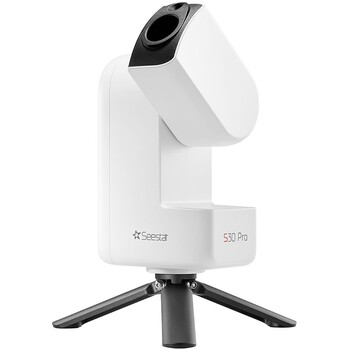 Best Overall ZWO Seestar S30 Pro
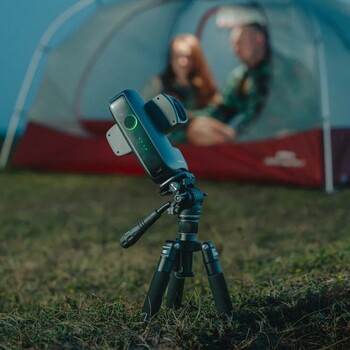 Best Budget DwarfLab Dwarf Mini
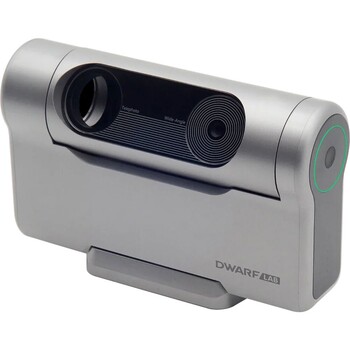 Best for Daytime and Wildlife DwarfLab Dwarf 3
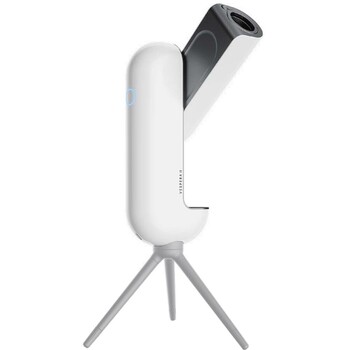 Best Step-Up for Deep-Sky Vaonis Vespera II
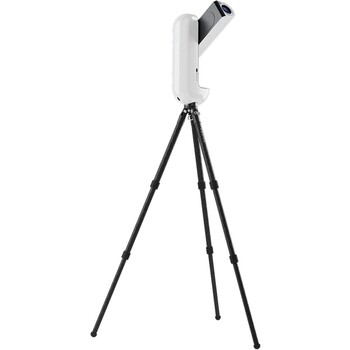 Best for Maximum Resolution Vaonis Vespera Pro 2
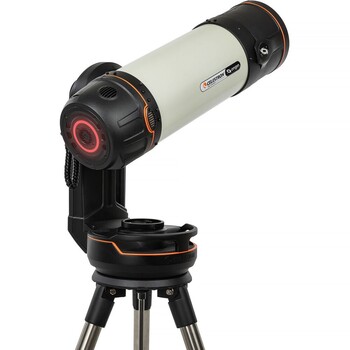 Best Premium Home Observatory Celestron Origin Mark II
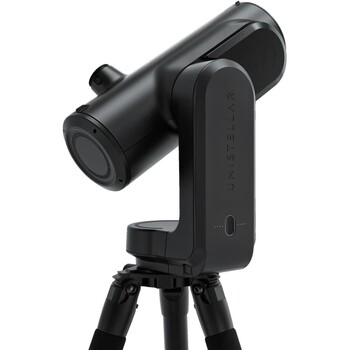 Best for Visual Observing Unistellar Odyssey Pro
Best Overall: ZWO Seestar S30 Pro
Two genuine cameras pair a deep-sky IMX585 with a wide-angle sensor for Milky Way panoramas, and a built-in dual-band filter pulls nebulae from suburban skies.
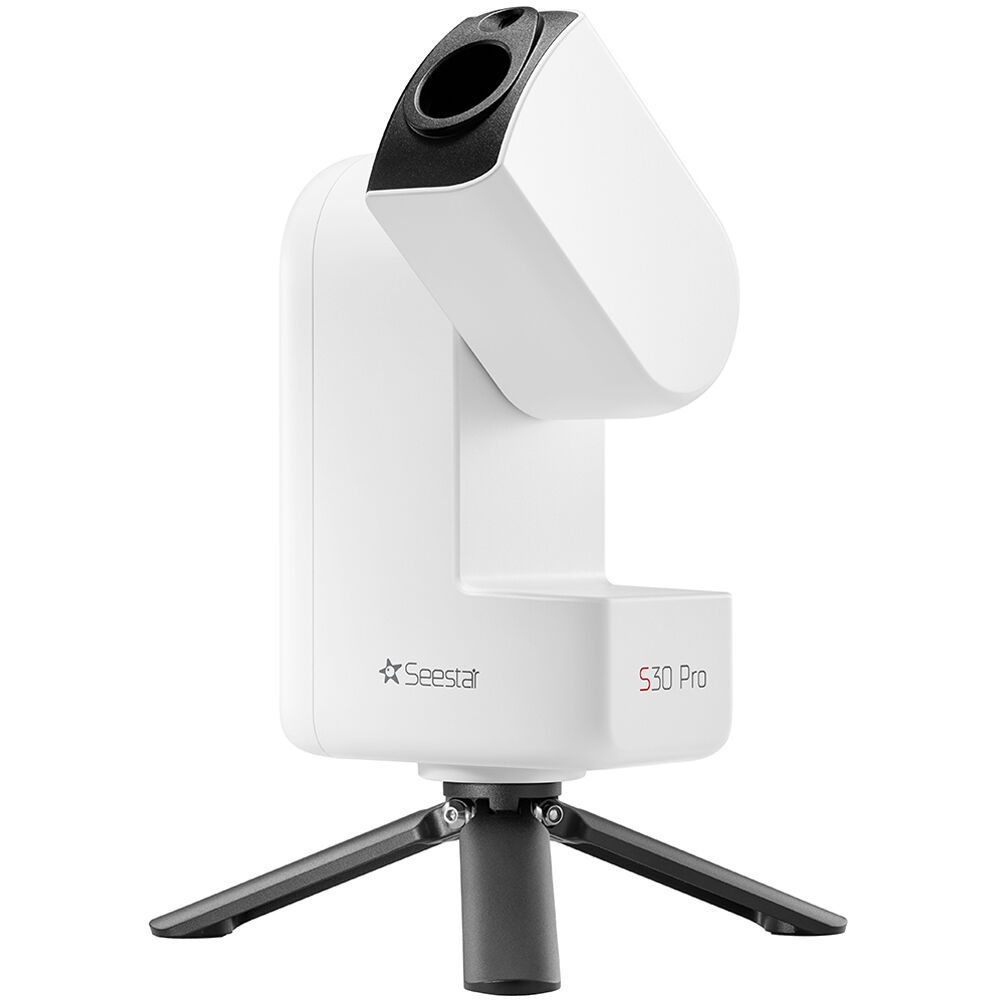
The old Seestar S50 was the scope that convinced tens of thousands of people that smart astrophotography was real, and when ZWO retired it this year, the question was what would inherit the crown. The answer turned out to be smaller. The Seestar S30 Pro takes the 30mm aperture of the standard S30 and pairs it with a longer 160mm focal length, a sharper four-element apochromatic lens with ED glass, and a genuinely dual-camera setup: a Sony IMX585 for deep-sky work and a separate IMX586 wide angle for framing, Milky Way panoramas, and landscapes. When we reviewed it, the scope slewed to M42 on its own, took about a minute to find it, autofocused, and started stacking 10-second exposures that appeared on screen in real time while we watched the nebula build up frame by frame.
What earns it the overall spot is not any single spec but the completeness of the package at the price. The 8.3-megapixel sensor is the same resolution class you get in telescopes costing three times as much, the built-in dual-band filter pulls emission nebulae out of light-polluted suburban skies, and the app is the most mature in the category, with a mosaic mode that widens the frame and an equatorial-mount option that lets you push exposure lengths for cleaner data. There is 128 GB of onboard storage behind it, enough for weeks of subframes before you offload anything. At 1.65 kg it drops into a daypack without a second thought. For the person who wants one device that does the most things well, from the Moon to galaxies to a horizon-to-horizon Milky Way arch, this is it.
The honest limitation is aperture. A 30mm objective gathers a fraction of the light of the premium 50mm scopes further down this list, so faint galaxies take longer to develop and never reach the same depth, and on small targets you are cropping into an 8.3-megapixel frame rather than resolving them optically. There is also a workflow quirk we hit repeatedly: the wide angle and telephoto cameras cannot both be live during an active imaging session, so you commit to one job at a time. Neither is a dealbreaker for the shooter this scope is built for. If you are buying your first smart telescope and want the safest, most versatile choice, this is the one to beat, so check the current price of the ZWO Seestar S30 Pro at B&H. Also consider the standard ZWO Seestar S30 if you want to save money and can live with a lower-resolution sensor and simpler triplet lens.
What We Like
- Genuine dual-camera system for deep-sky, wide field, and landscapes
- Sharp four-element apochromatic optics with ED glass
- The most polished app and firmware in the category
- Effective built-in dual-band filter for city skies
What Could Be Better
- 30mm aperture limits reach on faint targets
- Cameras cannot run simultaneously during a session
- Small targets rely on cropping rather than focal length
Related posts

Best Budget: DwarfLab Dwarf Mini
The smallest smart telescope you can buy at 840 grams, the Dwarf Mini still reaches a 1,016mm equivalent and pushes single exposures to 90 seconds in equatorial mode.
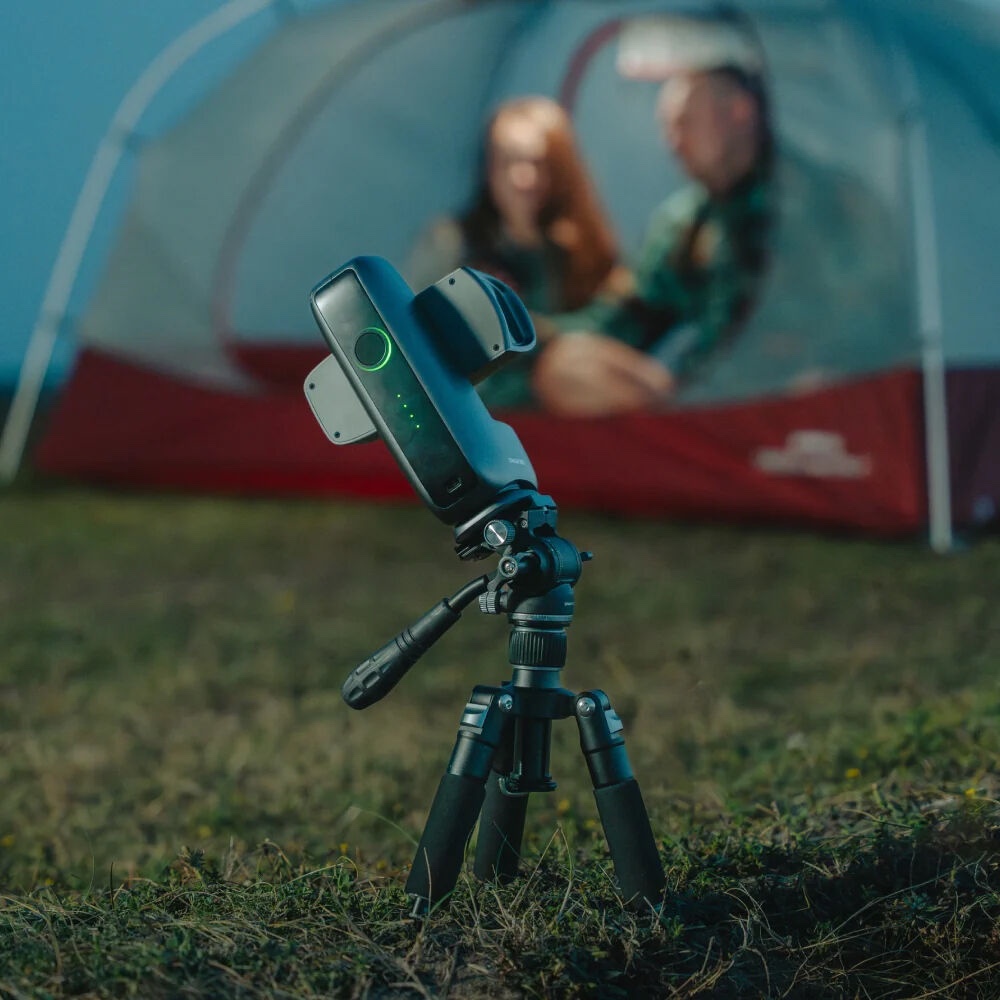
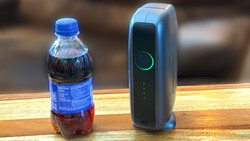
DwarfLab called the Dwarf Mini the world's smallest smart telescope, and at 840 grams and roughly the footprint of a paperback, the claim holds. It is the cheapest way into real automated astrophotography, and the surprise is how little it gives up to get there. We came into our review skeptical that something this small could produce a usable deep-sky image, and it changed our minds: the dual-lens system pairs a long telephoto reach with a wide angle finder that doubles as a Milky Way camera, and it handled targeting, tracking, and stacking without fuss.
The trick DwarfLab pulled off is reach. Where most budget scopes give you a modest field of view, the Mini's telephoto lens delivers a 1,016mm full frame equivalent, so galaxies and small nebulae fill more of the frame than the price suggests they should. The six-element apochromatic optics keep stars tight to the edges, and an equatorial-mount mode pushes single exposures to 90 seconds for cleaner signal on faint objects. Add built-in dark, astro, and dual-band filters and you have a complete imaging kit that fits in a jacket pocket, powered by an internal battery good for a four-hour session. For a student, a curious beginner, a gift, or a seasoned imager who wants something to throw in a carry-on, it is remarkable value.
The compromises are exactly where you would expect them at this size and price. The Sony IMX662 is a 2-megapixel sensor, a real step down from the 8.3-megapixel chips in the pricier scopes here, so your final images are lower resolution and crop poorly. The four-hour battery sits at the short end of this guide, and the tiny 30mm aperture means faint targets need patience and a genuinely dark sky to come through. This is not the scope for someone chasing wall-sized prints, and a shooter who already knows they want galaxy detail should skip straight to the 50mm class. For the person who wants to find out whether this hobby grabs them without spending real money, or who simply wants the most portable option that exists, this is the honest floor of the category, so check the current price of the DwarfLab Dwarf Mini at B&H.
What We Like
- The smallest and lightest smart telescope you can buy
- Long 1,016mm equivalent reach for the money
- Six-element apochromatic optics with tight stars
- Built-in filters and a 90-second exposure mode
What Could Be Better
- 2-megapixel sensor limits resolution and cropping
- Four-hour battery is at the short end of the category
- 30mm aperture struggles with faint targets
Best for Daytime and Wildlife: DwarfLab Dwarf 3
Unlike the night-only competition, the Dwarf 3 tracks birds and shoots panoramas by day, then turns its 35mm f/4.3 optics and STARVIS 2 sensor on the Orion Nebula by night.
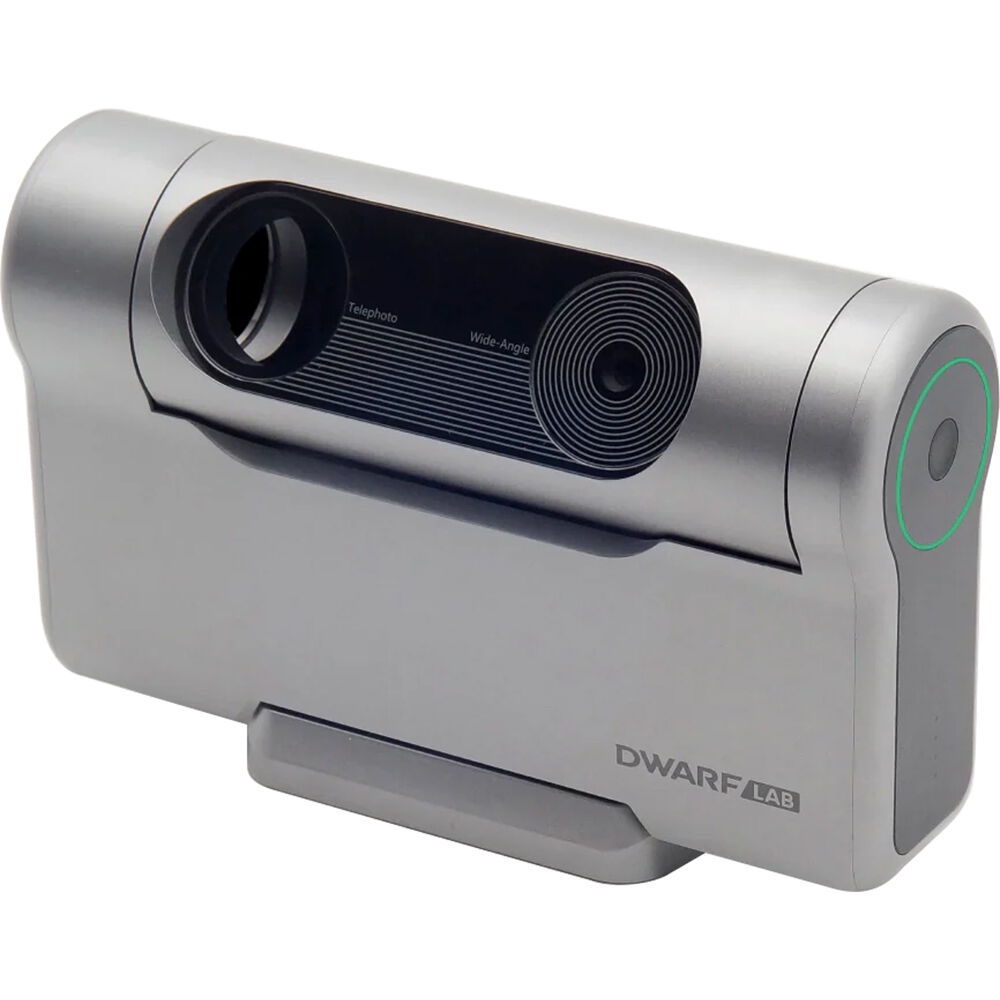
Most smart telescopes are single-minded night-sky machines. The Dwarf 3 is the one that also works when the sun is up. Its dual-lens design, wildlife tracking, and panorama modes make it as much a daytime long-lens camera as an astrophotography rig, and that flexibility is why it earns its own slot rather than competing head-on with the Seestar. When we reviewed it, setup took about a minute from power-on to connected, and by the end of the evening the whole family had queued up for a turn with the phone. It is genuinely fun in a way the spec sheet does not capture.
On the astro side it is a serious little instrument. The 35mm aperture is slightly larger than the Seestar's, the f/4.3 optics are a touch faster, and the Sony IMX678 STARVIS 2 sensor delivers a full 8.3 megapixels with strong low-light behavior. The 737mm equivalent reach frames galaxies and nebulae well, the built-in dual-band filter cuts light pollution, and 128 GB of onboard storage holds a lot of subframes. In daylight the same optics turn it into a tracking telephoto for birds and wildlife, and its panorama mode stitches wide landscape scenes. The IP54 rating means a bit of dew or dust will not end your night. At 1.3 kg and the size of a large book, it travels as easily as the Seestar.
The tradeoffs are the ones every compact scope shares, plus one of its own. The 35mm aperture still gathers modest light next to the 50mm premium scopes, so deep faint targets take time. The bigger practical friction is the app, which is powerful but less polished than ZWO's and asks more of you to get the best results, with a steeper learning curve on the manual controls. For a pure point-and-shoot night, the Seestar is smoother, and a reader who will only ever shoot after dark should buy that instead. For the shooter who wants one device that photographs a heron at noon and the Orion Nebula at midnight, nothing else here comes close, so check the current price of the DwarfLab Dwarf 3 at B&H.
What We Like
- Doubles as a daytime wildlife and landscape camera
- 35mm aperture and fast f/4.3 optics
- 8.3-megapixel STARVIS 2 sensor with 128 GB storage
- IP54 weather resistance and a book-sized footprint
What Could Be Better
- App is capable but less polished than ZWO's
- Steeper learning curve for best results
- Aperture still limits reach on faint deep-sky targets
Best Step-Up for Deep-Sky: Vaonis Vespera II
Stepping up to a 50mm apochromatic quadruplet, the Vespera II gathers far more light than the compacts, and its CovalENS mosaic mode stitches out to 24 megapixels.
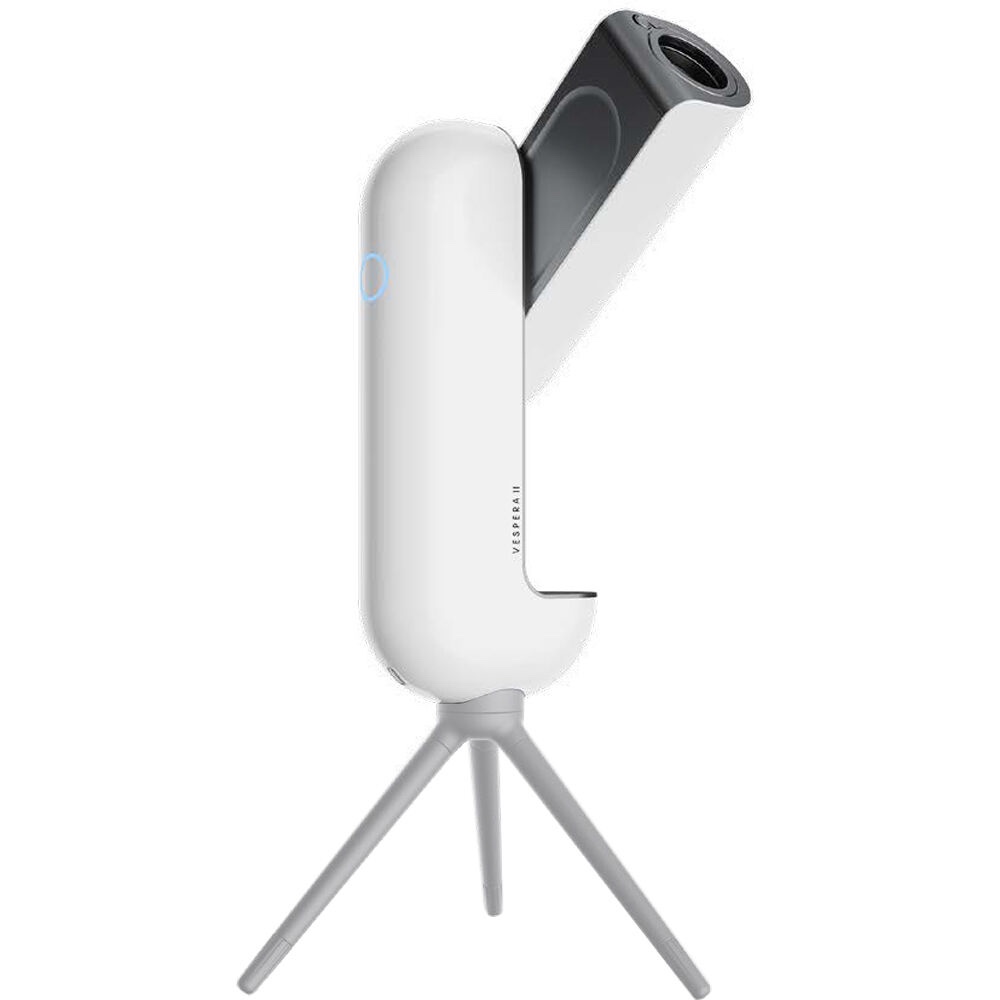
When you outgrow a 30mm scope, the honest next step is more glass, and the Vespera II is where the image quality jump becomes obvious. Vaonis is a French company that treats these devices as design objects, and the Vespera II looks and feels like one, but the reason to buy it is the 50mm apochromatic quadruplet lens with ED lanthanum glass feeding a Sony IMX585 sensor. That larger aperture pulls in far more light than the compact scopes above it, so faint galaxies and dim nebulae develop faster and deeper. When we reviewed it, it delivered great results on the first night out with no fuss, a step up in every way over the lower-priced competition.
Its signature feature is CovalENS, Vaonis's mosaic system, which automatically captures and stitches a grid of frames into a single high-resolution image, pushing the effective output to 24 megapixels and widening the field to fit large objects like the Andromeda Galaxy or the North America Nebula that overflow a single frame. The plan-a-session interface is the friendliest way we have seen to build an evening of targets, and the whole thing is quiet and self-contained enough to hand to a family member without a lecture. It sits in the sweet spot between the toy-priced compacts and the four-figure flagships, delivering premium optics without premium-flagship cost.
The price is the obvious barrier. The Vespera II costs several times what a Seestar or Dwarf does, and for a casual dabbler that is hard to justify. It is also markedly less portable at 5 kg, a device you carry to the yard rather than tuck in a coat pocket, and its 8.3-megapixel base sensor, while excellent, is matched in resolution by scopes a third of the price. The internal storage is only 25 GB and the battery runs about four hours, so a full dusk-to-dawn night means a USB-C power bank and some file housekeeping. What you are paying for is the aperture and the optics, and on faint targets that gap is real and visible. For the committed hobbyist who wants a serious jump in image quality without stepping up to an observatory-class rig, check the current price of the Vaonis Vespera II at B&H.
What We Like
- 50mm apochromatic optics gather far more light than compacts
- CovalENS mosaic mode reaches 24 MP and a wide field
- The friendliest session-planning interface in the category
- Beautifully built and pleasant to live with
What Could Be Better
- Several times the price of the compact scopes
- Heavier and less pocketable at 5 kg
- Base sensor resolution is matched by cheaper rivals
- Four-hour battery and 25 GB of storage limit long nights
Best for Maximum Resolution: Vaonis Vespera Pro 2
Its square 12.5-megapixel STARVIS 2 sensor is the highest native resolution in the category, feeding a mosaic engine that scales all the way to 50 megapixels.
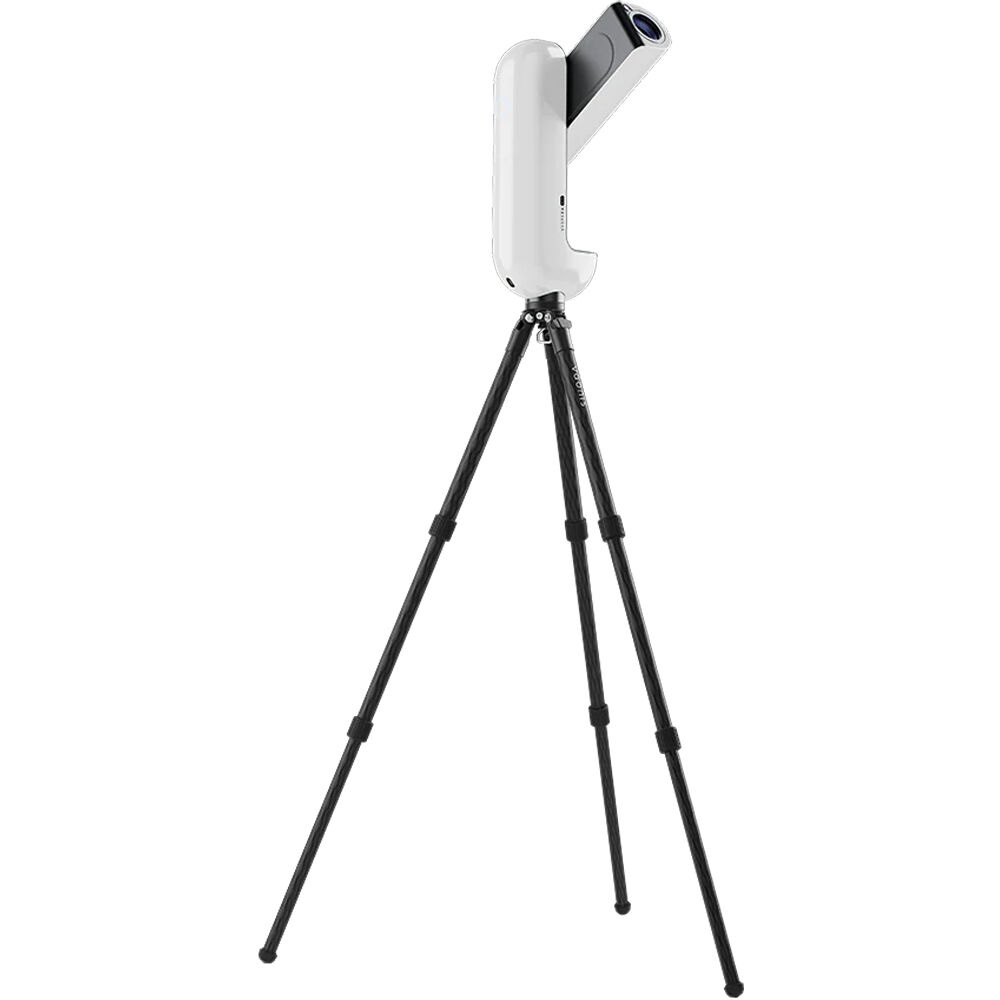
If your goal is the most detailed single image a smart telescope can produce, the Vespera Pro 2 is the current answer. Vaonis launched it in spring 2026 with a redesigned optical path and the highest native resolution in the category: a Sony IMX676 STARVIS 2 sensor delivering 12.5 megapixels on an unusual 1:1 square format. That square sensor is deliberate, because it lets the mosaic engine build outward in any direction, and in mosaic mode the Pro 2 scales all the way to 50 megapixels, the largest field of view and the most resolution any smart scope can reach today. We have not tested this one hands-on yet, so the following is drawn from Vaonis's specifications and the redesigned optics they describe.
The specifications make it a genuine flagship. The reworked 50mm apochromatic optics are built to cut chromatic aberration and hold sharpness to the edges of that big square frame, the STARVIS 2 sensor keeps noise low on long stacks, and the practical numbers are strong: 11 hours of battery and 225 GB of internal storage mean you can run all night and shoot for weeks between offloads. The square 12.5-megapixel base output is a real resolution increase over the IMX585 scopes, and the 50-megapixel mosaic ceiling is in a class of its own for framing the largest nebulae in one composition. For the imager who prints large or crops hard and wants the finest detail available without leaving the smart-telescope format, this is the ceiling.
The obvious cost is money, and the less obvious one is diminishing returns. The Pro 2 sits at the top of Vaonis's range and costs meaningfully more than the Vespera II for a resolution and workflow advantage that only reveals itself if you print big, mosaic often, or pixel-peep. At 5 kg it is no more portable than its sibling, and as a brand-new model its firmware will keep evolving through its first year, so early quirks are likely. Most people do not need this much telescope, and the casual observer who mostly shares images on a phone screen is better served three picks up the page. For the detail-obsessed astrophotographer who wants the highest-resolution smart scope on the market, check the current price of the Vaonis Vespera Pro 2 at B&H. Also consider the cheaper Vaonis Vespera III if you want the new-generation optics without the 12.5-megapixel square sensor.
What We Like
- Highest native resolution of any smart telescope at 12.5 MP
- Square sensor enables a 50 MP mosaic ceiling
- Redesigned optics aimed at edge-to-edge sharpness
- 11-hour battery and 225 GB of storage
What Could Be Better
- Priciest scope short of the observatory-class options
- Resolution gains only matter if you print or crop hard
- New model, so expect firmware to keep maturing
Best Premium Home Observatory: Celestron Origin Mark II
A 6-inch RASA astrograph at f/2.2 gathers roughly nine times the light of a 50mm scope, so images that take compacts an hour develop here in minutes.
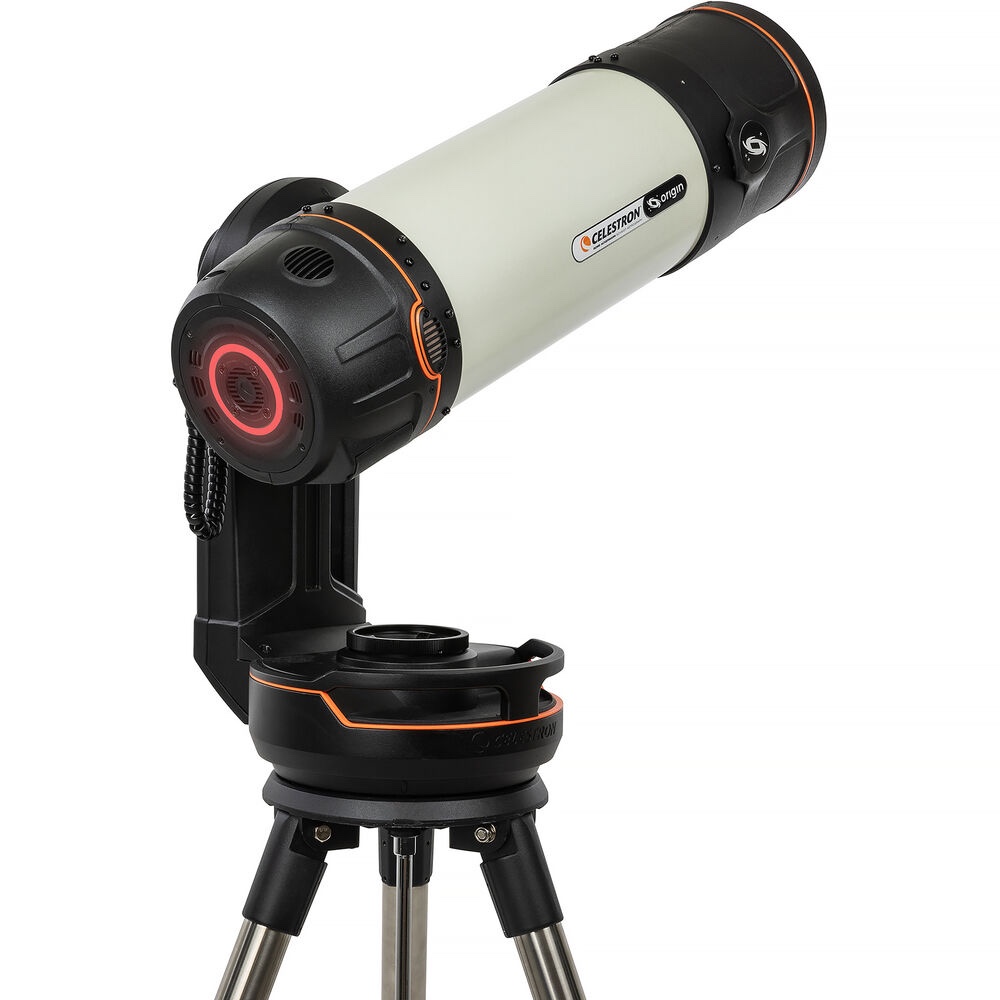
Everything above this line is a portable gadget. The Origin Mark II is a real telescope with a computer bolted on, and the difference is aperture. Its 6-inch Rowe-Ackermann Schmidt Astrograph, the RASA design Celestron adapted from serious astrophotography rigs, gathers roughly nine times the light of a 50mm scope, and its blistering f/2.2 focal ratio means it collects usable signal astonishingly fast. That combination is why images that take a compact scope an hour can develop on the Origin in minutes. We have not tested the Mark II ourselves, so this is based on Celestron's published specifications and the RASA optical pedigree.
The smart layer is Celestron's, and it is mature. Set it outside, connect the app, and StarSense scans the sky, focuses, and aligns itself, with Celestron quoting under two minutes to first target. The Mark II moves to a Sony IMX678 STARVIS 2 sensor for a resolution and sensitivity bump over the original, runs off a LiFePO4 battery good for six-plus hours, and is engineered so no single piece weighs more than 17 pounds even though the whole system tips the scale at 41.6. This is the device for someone with a backyard, a permanent or semi-permanent setup, and the ambition to produce images that rival a traditional deep-sky rig without learning to guide and calibrate one.
The barriers are size, weight, and price, all of them serious. At 41.6 pounds this is not a travel scope or an apartment-balcony scope, it is a home observatory you commit space to, and it costs as much as a capable full frame camera and lens together. The large aperture and fast optics also mean it is more sensitive to setup and collimation than a sealed compact, so it demands a little more of its owner. Unlike the compacts, it ships without a light-pollution filter, and its filter drawer takes standard 1.25-inch and 2-inch filters you buy separately, which is flexibility if you know what you want and an extra purchase if you do not. For the dedicated backyard astrophotographer who wants near-observatory results with smart-scope convenience and has the space and budget for it, check the current price of the Celestron Origin Mark II at B&H.
What We Like
- 6-inch RASA optics gather far more light than any compact
- f/2.2 focal ratio collects signal extremely fast
- Mature StarSense auto-alignment and app
- Modular design keeps individual pieces manageable
What Could Be Better
- Heavy and bulky at 41.6 pounds, not portable
- Costs as much as a serious camera-and-lens kit
- More setup-sensitive than a sealed compact scope
- No filter included; the drawer takes filters you buy yourself
Best for Visual Observing: Unistellar Odyssey Pro
Alone in this guide, the Odyssey Pro lets you look through a Nikon-designed OLED eyepiece and watch a galaxy brighten as its 85mm optics stack the signal in real time.
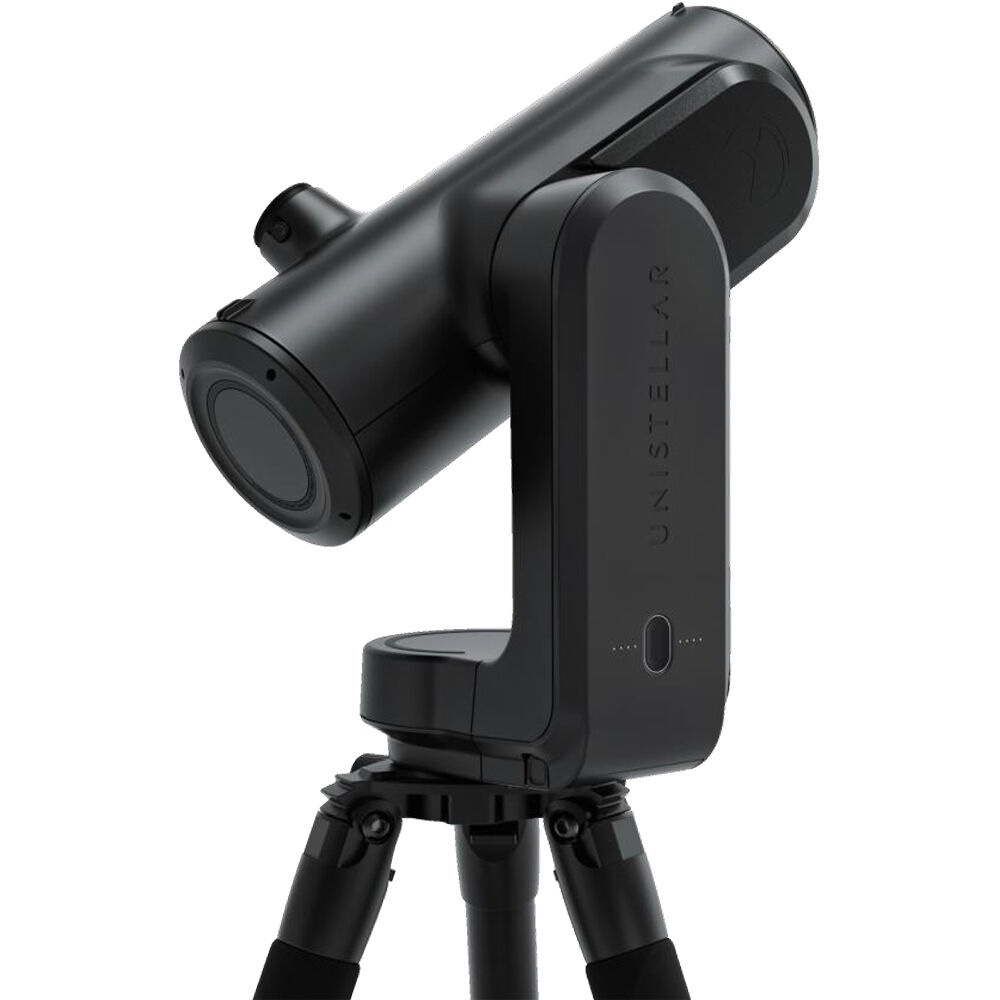
You can put your eye to the Unistellar Odyssey Pro, which sounds unremarkable until you realize no other scope in this guide lets you. Its defining feature is a Nikon-designed electronic OLED eyepiece, so instead of huddling around a screen you look through the telescope the way you always imagined, except the view is the stacked, light-amplified image its sensor is building in real time. That experience, seeing a galaxy brighten and gain color through the eyepiece as the scope integrates the signal, is something no phone-only device delivers, and it is the whole reason this scope exists. We have not put the Odyssey Pro through a full hands-on review, so this draws on Unistellar's specifications and the eVscope lineage behind it.
Underneath the eyepiece is a capable instrument. The 85mm mirror and f/3.9 optics give it a quoted limiting magnitude of 17.2, meaning faint galaxies and clusters are within reach even from light-polluted city locations, and Unistellar's Smart Light Pollution Reduction is tuned for exactly that urban use. Alignment is fully automatic against a 37-million-star database, with a catalog of more than 5,000 objects to tap through, and the scope is ready within a couple of minutes of setup. At 4 kg for the scope plus a 2.5 kg tripod it is portable enough to take to a dark site, and it is the pick for someone who values the act of observing as much as the final photograph.
The Odyssey Pro asks you to pay handsomely for that eyepiece. It is one of the most expensive scopes in this guide, and its imaging sensor resolution is modest next to the 8.3-megapixel and 12.5-megapixel chips in cheaper rivals, so if you only care about the final saved image you get more pixels for less money elsewhere. The 64 GB of storage and 5-hour battery are also on the smaller side. What you are buying is the observing experience, not the megapixel count, and an imager who never intends to look through an eyepiece should spend the money on aperture instead. For the stargazer who wants the romance of looking through a telescope with the reach of a modern sensor behind it, check the current price of the Unistellar Odyssey Pro at B&H. Also consider the standard Unistellar Odyssey if you want the same optics and app without the eyepiece.
What We Like
- Nikon electronic eyepiece delivers a genuine look-through experience
- 85mm aperture reaches magnitude 17.2, strong for cities
- Automatic alignment against a 37-million-star database
- Portable enough to carry to a dark site
What Could Be Better
- Among the most expensive scopes here
- Modest imaging resolution next to cheaper rivals
- Smaller 64 GB storage and 5-hour battery
How to Choose a Smart Telescope
Start with your sky, because it dictates everything else. If you shoot from a light-polluted city or suburb, a built-in dual-band or light-pollution filter is not optional, and every scope here except the entry compacts has one worth having. Aperture matters most under dark skies, where a 50mm or larger objective on the Vespera or Origin will pull out faint galaxy structure that a 30mm scope simply cannot reach. Under heavy light pollution the gap narrows, and a filtered compact often gets you most of the way for a fraction of the cost. Be honest about where you will actually use the thing before you pay for aperture you cannot exploit.
Next, weigh reach against resolution. A telescope's aperture governs how much light it collects and therefore how deep it can go, while sensor resolution governs how much detail you keep in the final file. The compact scopes cluster around 8.3 megapixels, the Vespera Pro 2 pushes to 12.5, and mosaic modes on the Vaonis scopes stitch far higher, which only helps if you print large or crop hard. For screen sharing and normal prints, 8.3 megapixels is plenty, so do not overpay for pixels you will never see. Focal length decides framing: longer reach fills the frame with small galaxies and planetary nebulae, while a wider field suits sprawling targets like the Andromeda Galaxy or the Milky Way core.
Then decide how far you carry it and whether you want to look through it. Portability splits this market cleanly. The Dwarf Mini and the Seestar disappear into a bag, the Vesperas are yard-and-car devices at 5 kg, and the 41.6-pound Origin is a fixed installation. If the romance of observing matters to you, the Unistellar's eyepiece is the only one that delivers it, and you pay for the privilege. If you want a broader grounding in the craft behind these images, our tutorial Photographing the World 2: Cityscape, Astrophotography, and Advanced Post-Processing covers the processing side that turns raw stacks into finished pictures. And if what you actually want is a camera that shoots the Milky Way over a landscape rather than a box that photographs galaxies for you, a fast lens on a conventional body remains the better tool, and our best mirrorless cameras guide is where to start.
What We're Looking For
Our picks weigh aperture and optical quality, sensor resolution and low-light behavior, the maturity of the app and auto-alignment, portability, and whether the price matches the results a shooter will actually get. Several of these scopes we have put through full hands-on Fstoppers reviews, including the Seestar S30 Pro, the Dwarf Mini, the Dwarf 3, and the Vespera II, and we write those entries from that testing. Where we have not tested a model ourselves, the Vespera Pro 2, the Celestron Origin Mark II, and the Unistellar Odyssey Pro, we say so plainly and build the entry from current manufacturer specifications rather than implying experience we do not have. Every specification here was verified against current manufacturer and retailer sources at the time of writing.
Frequently Asked Questions
Are smart telescopes good for astrophotography?
Yes, for a specific kind of astrophotography. They excel at automated deep-sky imaging of nebulae, galaxies, and clusters, handling alignment, tracking, focus, and stacking for you. They are less suited to high-magnification planetary detail, where a large traditional telescope still wins. For most people who want striking images of the night sky without a steep learning curve, a smart telescope is the easiest path there is, and it demands none of the technique our cameras for beginners guide assumes you will learn.
What happened to the ZWO Seestar S50?
ZWO discontinued the Seestar S50 in early 2026 after a roughly three-year run, and a Seestar S50 Pro is expected to replace it later in the year. Until it ships, the Seestar S30 Pro is ZWO's current flagship compact, and it is the model we recommend from the brand. Existing S50 units still work fine and remain well supported by the app.
Can you use a smart telescope in a city?
Yes, and it is one of their biggest strengths. Built-in dual-band and light-pollution filters, combined with long-exposure stacking, let these scopes pull emission nebulae and bright galaxies out of heavily light-polluted skies where visual observing would show almost nothing. Galaxies and faint targets still benefit enormously from darker skies, but city imaging of the right targets is genuinely rewarding.
Do you need a computer to run a smart telescope?
No. Every scope in this guide is controlled entirely from a phone or tablet app over its own Wi-Fi network, with no computer, cables, or separate mount required. You place it on its tripod, connect the app, pick a target, and the telescope aligns, focuses, and images on its own. The finished pictures download straight to your device.
How much should you spend on a smart telescope?
Match the spend to your commitment. A first-timer or casual user is well served by a compact scope in the entry tier, which delivers real results for the price of a mid-range lens. A committed hobbyist who wants a clear image-quality jump should look at the 50mm Vaonis scopes, and only dedicated backyard imagers with space and budget need the observatory-class Celestron. Buy the cheapest scope that fits your sky and ambition, then upgrade if the hobby sticks.
Fstoppers may earn a commission from purchases made through links in this article. Our picks are made independently by our editorial team.