
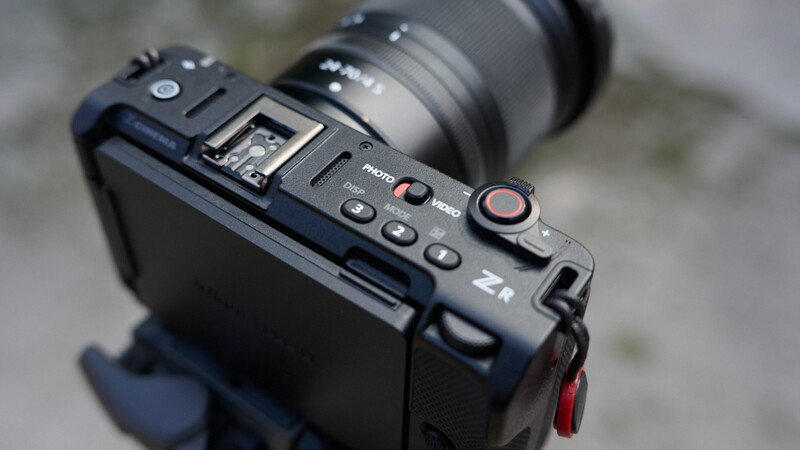
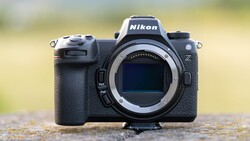
I am now the proud owner of a Nikon ZR. But as I’ve put it through some early paces, it’s led to some surprising questions.
First, off the bat, I’m loving my ZR. I wrote a full review upon launch if you’d like a deep dive into the pros and cons. So this isn’t a full review of the ZR. Instead, what I’d like to relate is the somewhat unexpected questions that have begun floating around in my head now that the ZR is part of my arsenal.
Let’s start with a bit of context. I am currently, and temporarily, in a unique position. I just received my ZR as mentioned. I also happen to currently have a Zf on loan for a completely separate review. While my having the Zf in my possession is completely unrelated to my owning a ZR, it did put me in the temporary position of getting to choose between the two of them depending on what it was that I was shooting at the moment. Much to my surprise, this incredibly informal use-case testing caused me to challenge some of my previous assumptions. Certain clear-cut thoughts I had regarding both products suddenly started seeming more variable. Even more questions arose when my mind started drifting to the relative merits of the Nikon Z6III. I don’t own a Z6III, but have shot extensively with it and am aware of its strengths and weaknesses. With all three cameras hovering around the $2,000 mark (give or take) and sporting 24.5MP each, my brain began thinking of the trio as more of an ecosystem as opposed to a hierarchy.
Why I Bought The ZR
Here’s what I mean. I am a professional filmmaker and photographer. I work in both narrative and commercial worlds. I’m a long-time Nikonian. For stills, I own Z9 bodies. For video, I own a RED Komodo, but often rent larger systems such as the Alexa or the Venice for higher-profile (and higher-budget) productions. The main motivator for my preorder of the ZR was the small size. In the photography realm, I’ve always loved the walkabout—just leaving the house with no particular plan and exploring on a photo safari to see what you come back with. There are several small walkabout camera options for stills, the Zf for example, but the filmmaker side of me felt left out. Yes, there are pint-sized cameras like the Sony cameras, but I’m already firmly invested in the Nikon world, so my preference would be to stay there. But the Nikon video offerings prior to the ZR didn’t have the codecs I preferred for my personal workflow.
But, of course, the ZR is more than just small. In addition to the massive 4-inch LCD, the ZR packs two specific features that set it apart literally from any other camera of its size, regardless of brand, and any other camera in its price range. The ZR can shoot R3D raw video files, the same as my RED Komodo. This means that I can easily integrate my workflow between the two cameras and match color science. Not the most exciting headline, but a real game changer for a professional workflow, since I like the option of having that fun footage I shoot just for me end up being professionally useful down the line when I might suddenly need B-roll for another project. Matching color science means even casual footage could theoretically become professionally advantageous down the line.
Even more important, the ZR has 32-bit float audio internally. This literally strips even more weight from my shoulders because it reduces the number of times I’ll need to pack a full sound field recorder in addition to the size and weight savings of leaving the external monitor at home courtesy of the 4-inch built-in display.
In short, the ZR gave me dreams of being the video walkabout that I always dreamed of: a camera small enough to be used for casual walk-around shooting, but with enough professional-grade internal specs to use either as a B cam to one of my larger video rigs, an A cam on smaller indie shoots, or simply as a walkaround camera that can shoot amazing B-roll in a pinch. At $2,196.95, the purchase was a no-brainer.
My idea was that the ZR would become, in addition to a B cam for pro work, my day-to-day walkabout camera as well. As I mentioned, the Zf I’m currently holding is just a loaner. One of the biggest gaps that I have in my permanent collection is that I don’t own a small walkabout camera anymore. By the way, this is where I acknowledge that this is a problem of privilege, not a real problem. But still, the lack of a small walkabout camera has surprisingly caused a major real-world problem for me in recent years.

Simply put, when filmmaking and photography is how you make your living, the times you pick up a camera just for fun begin to dwindle. Mentally, picking up a camera starts being associated with work as opposed to passion or fun. This is normal. But, if left unchecked, it can also sap your energy for the art form. It becomes a paycheck more than a passion. Just shooting for fun helps keep you in touch with that passion. And, in turn, that ongoing personal passion makes you a better professional.
So, my hope for the ZR was that it would serve that small passion camera purpose in addition to being a great professional tool. The camera that would work every day. The camera I would take on walkabouts or on family vacations. A personal tool that could give me pro-quality video specs and still deliver high-quality stills in a pinch. Seems pretty clear-cut that the ZR would be the best all-around choice. Right? Well, this is where things get a little interesting.
Nikon Zf
As I mentioned, the fact that I even had a Nikon Zf at the same time as I had the ZR was pure coincidence. I’ve been pining after a Nikon Zf ever since it was released, but I’ve also been trying really hard in recent years to overcome my G.A.S. (gear acquisition syndrome) and get my finances in check. This is why I don’t currently own a personal walkabout camera. I was trying to limit my possessions to things I could rent to a client on a commercial shoot. I’ve outlined some of the folly in that way of thinking in the previous section. But the end result is that the smallest camera I own is a Nikon Z9. By far the best camera I’ve ever owned, but far from a tool one looks forward to toting around the city all day on vacation for fun.
I was waging my war against overspending very well until I got a sneak preview of the ZR prior to its release. And, well, that spending freeze went right out the window.
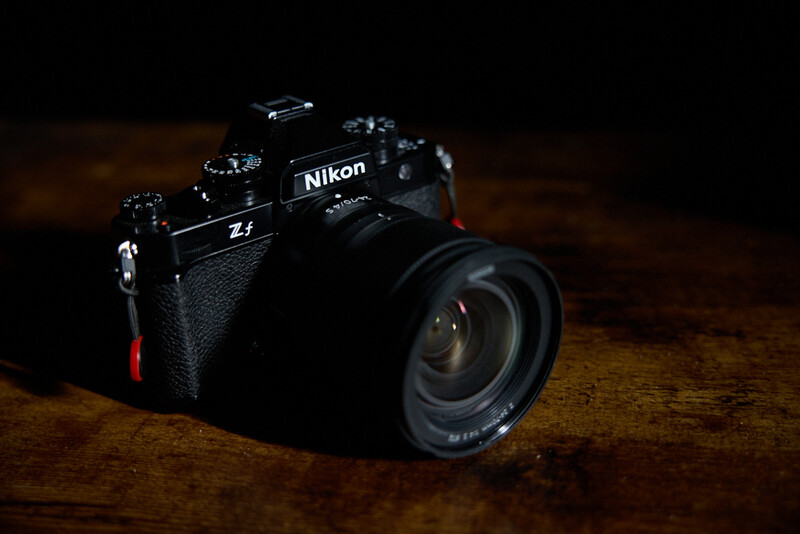
But, despite not being able to justify breaking my fast on pure specs alone, my desire for the Zf never went away. The Zf scratches me right where I itch. It’s light and compact enough to carry with me all day. And, oddly important, it’s a stylish camera, so I feel confident with it around my neck as a fashion accessory as opposed to feeling like the nerdy camera guy toting around his DSLR and wildlife lens at the dinner party. Simply put, I can go more places with it. And this, more than any specific spec, is exactly what I want in a walkabout camera.
I’m not looking for something to replace my Z9 for professional work. Just something that brings me joy. On paper, the Zf provides me zero benefits for my own professional use case. Its video specs are no match for the ZR. No R3D files. Not even N-RAW. No 32-bit float audio. It does have internal 10-bit recording with N-Log. While it’s only a couple hundred bucks cheaper than the ZR (the Zf is $1,996.95), of the three cameras I’m going to mention today, the Zf is by far the one with the lowest specs on paper. But, daggabit, I want one. The way the ZR speaks to my head, the Zf speaks to my heart.
Why? Because, from a pure photography standpoint, the Zf is absolutely the most enjoyable shooting experience of the bunch. The files may not be as technically advanced as the other two, but I personally find the process of shooting is far more enjoyable. And, as discussed, the objective of this camera, if I were to own it, would be to stoke passion for the art form, not replace my already excellent Z9 for pro work.
A large part of that joy of shooting is the EVF. Apologies to the younger readers who came up a different way, but, for me, I absolutely have to have a viewfinder to take photographs. There are practical advantages of an EVF, which I’ll discuss in a moment, but from an ergonomic preference standpoint, I need to physically press my big right eye up against the back of my camera and absolutely ruminate in every small detail of the frame. Trying to shoot stills with an LCD screen just makes no sense to my brain chemistry.
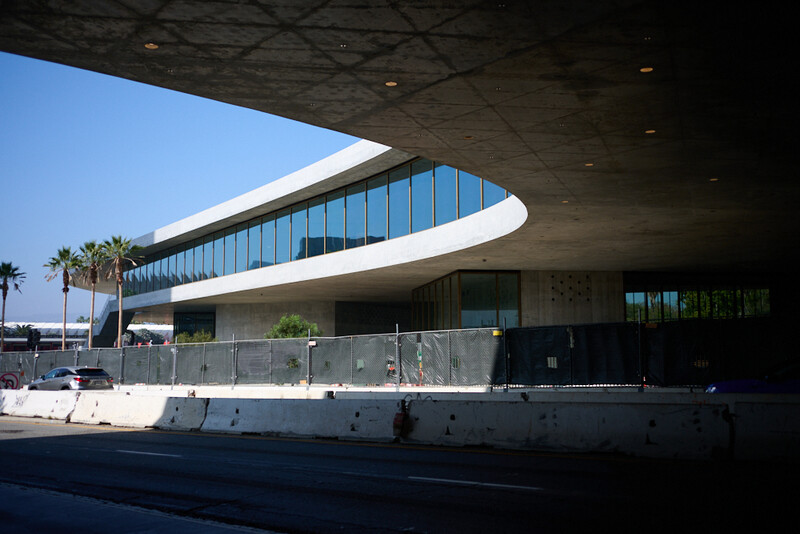
The other day as an experiment, I took my ZR out as my walkabout camera. The idea was to test out its capabilities as a vlogger/content creator camera. But I was also curious to see how it would perform if I used it primarily as a stills walkabout camera. So, in addition to the vlogging test, I took a number of photos along the 2-mile walk from my house to the Academy Museum here in Los Angeles.
Two things were immediately apparent with my ZR. One, the video features are every bit as stunning as I imagined. As a content creation camera, or one where you might need to flip around the camera to point at yourself at any moment, this fits the bill perfectly. But the second thing that was clear was that I really can’t see myself using it often, if ever, as a still camera.
Technically, it has the guts of a Z6III (which we’ll get to in a second), so the image quality is excellent. The files are every bit as beautiful as you’d expect from a Nikon. But, again from my own personal perspective, the ergonomics of still photography with the ZR just make it impractical for my use case in most situations. And, since we’ve already introduced it into the discussion, I can’t say I really enjoyed shooting stills with it. The 4-inch LCD screen is beautiful. But I did struggle a bit in bright midday sun with glare from the sun. I already struggle with eyesight to begin with. So either catching reflections of the sun in the screen (when the sun was behind me) or dealing with flare in my eyes (when the sun was behind my subject) was a practical issue. Clearly, I could adjust my position to reduce glare on the LCD, but that may compromise the framing of my subject. This is an occasion when quickly being able to press my eye tight against an EVF to block out any extraneous light is more than just an old-man gripe and becomes an actual tangible consideration.
Also, the normal button layout you are likely used to with Nikon cameras is completely different with the ZR. That 100% makes sense, as this is their attempt at a pure cinema camera. So prioritizing things like back-button autofocus makes zero sense for the target market of a ZR. But, again, for my own personal use case, it meant that, for video, the ZR was perfect for nearly every occasion. But for stills, well, it’s not really built for that.
Again, the ergonomics of the ZR make perfect sense for its target audience. But, because of my personal use case (for a personal camera, not necessarily the same needs as a professional one) that would require a more hybrid approach, I found the decidedly less spec-worthy Zf surprisingly starting to make a more persuasive argument than I would have expected.
Note: The initial thoughts ZR review above was shot on the ZF in the regular Rec709 profile.
If you are a shooter who prioritizes stills, and video is just an afterthought, the Zf, despite its inferior specs, may actually be the better choice. The still shooting experience is going to be way more enjoyable. It still has a flip-out screen (albeit a smaller one) if you like to shoot via the LCD screen or flip it around to see yourself in front of camera. It doesn’t have R3D or 32-bit float, but 10-bit N-Log is still an excellent profile. Not as great as the 12-bit raw video formats. But, again, for the hypothetical user for whom video is strictly secondary, the video capabilities of the Zf are more than enough.
Take note that all of this is heavily dependent on use case. So I’m not saying the Zf is a better camera overall than the ZR. But before looking at a camera’s specs, it pays to look in the mirror. If you are a user who is not looking to get heavy into video and are just taking photos for the love of the game, the less expensive and less feature-rich Zf may actually be the more effective tool.
Z6III
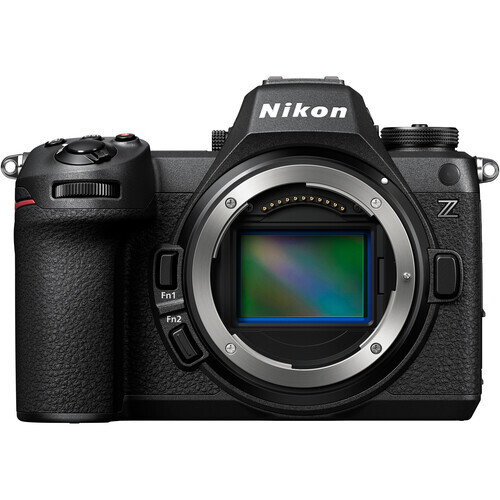
Things get even more complicated when we throw the Z6III ($2,196.95) into the mix. When doing my initial hands-on review of the ZR, the most surprising finding I had was how much the ZR kept begging me to compare it to the Z6III. Again, to recap, the ZR still far exceeds the Z6III in terms of recording formats and sound capture. The ZR’s body weight of 540 grams is less than the Z6III’s 760 grams (with battery and card). To be fair, if you add a cage to the ZR, which you definitely will want with the ZR, those weight differences shrink, but you could say the same for the Z6III.
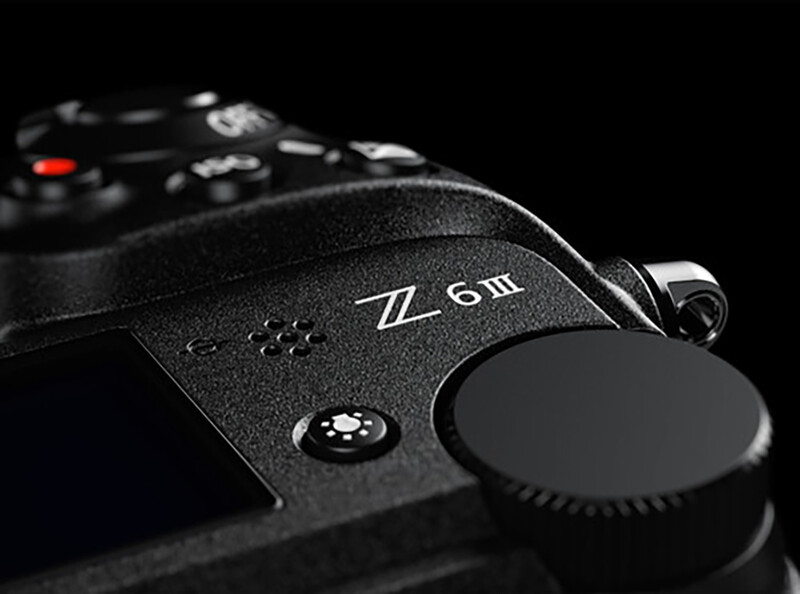
Under the hood, the ZR and Z6III are very similar cameras. The photo specs are essentially identical. They share the same stacked sensor. The same megapixel count. The difference again is that the ZR adds R3D, 32-bit float, and an LCD screen you can swim inside of. But what surprised me is how much the Z6III still has to recommend it despite those differences.
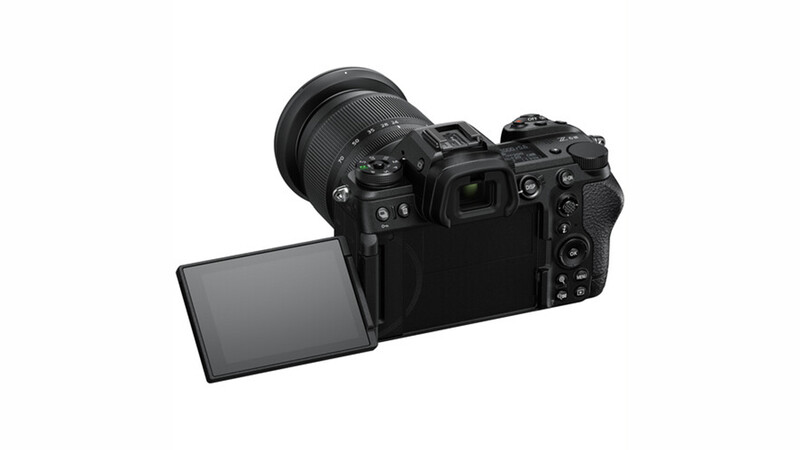
For one, the Z6III has an EVF. Given my old-man screed earlier, you’ll know that is significant for me if you’re looking to have any hope of using the camera as a hybrid tool. If you are less 80/20 video to stills and more 50/50, that EVF may be worth more to you than any specific file format.
And, while on the topic of formats, my tests so far do suggest that the R3D raw files do seem to be the best choice inside the ZR. However, I think people may be overlooking how good the N-RAW video already is. I’ve been shooting with N-RAW video on my Z9 for years and have had zero complaints. The main issue between the two formats is less image quality and more workflow and pipeline issues. If you are already working as part of a multi-tiered professional workflow, having R3D in your camera is a legitimate advantage, as it is read by more NLEs and your teammates are more likely to be familiar with the files. So that is a real, hard advantage of the ZR. But, if, for instance, you are a wedding photographer/videographer or a solo filmmaker who is going to be processing your footage through the pipeline yourself, N-RAW is more than capable as a capture format. R3D, especially the Log3G10 gamma curve, which provides advantage in the highlights over N-Log’s current gamma curve, is a benefit. But shooting in the format doesn’t instantly make your footage more cinematic. It’s more of a workflow improvement that may or may not apply to you depending on your current setup.
Even if you are more video-heavy than purely hybrid, the full-size HDMI on the Z6III versus the micro HDMI on the ZR could also be a massive sticking point. The line of thinking seems to be that the massive 4-inch LCD screen negates the need to ever connect a monitor in most situations, so the micro HDMI port is not a big deal. And that is true… if you are working solo. But, if you are working in a team environment, as most filmmakers are, being able to send out video signals via transmitters connected to the HDMI could be non-negotiable. Now, you can absolutely do so with a micro HDMI port. But, as anyone who’s ever been hit with a massive repair bill for those delicate micro HDMI ports can tell you, a full-size HDMI is far more steady for a professional workflow. The ZR is purpose-built for the solo shooter. But the micro HDMI is an odd choice for a team-based workflow.
Again, we go back to use case. Objectively, the internal recording formats are better inside the ZR. But those come with a micro HDMI connection, no EVF, and worse still-photography ergonomics. So, if you are mainly a hybrid shooter or simply someone who does not need to use an R3D workflow, the Z6III may actually be a better choice for your use case.
Which Of The Three Is The Best?
So which of the three is right for you? You can probably tell from the above paragraphs that it all depends on what you need the most. It may sound like a cop-out, but there really is no right answer to which of the three cameras is the best—only the camera that is the best fit for your needs.
I tend to separate the cameras into three benefit categories.
ZR = Workflow
Buy this if:
- Video and filmmaking is your top priority
- Stills are a distant afterthought
- You are already in, or want to learn, the R3D workflow
ZF = Heart
Buy this if:
- You are in it for the love of still photography
- You shoot occasional video, but that’s not your priority
Z6III = Practicality
Buy this if:
- You are a true hybrid shooter with equal emphasis on stills and motion
- You need the most well-rounded camera at this price point
- You can live without R3D and 32-bit float
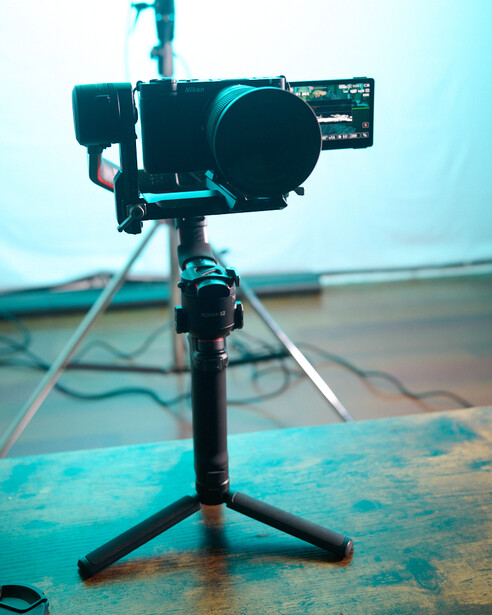
With all three coming in at 24.5MP and the ZR and Z6III sharing the same sensor (the Zf is slightly different), determining where the camera will sit in your use case will determine which is best for you. For instance, the ZR makes a lot of sense for me. I am 80/20 filmmaking to stills. I already own both Z9s and RED cameras. This means the ZR can be a B cam to either of my A-camera setups or even stand alone as an A cam itself in certain circumstances.
Then again, the Zf makes a lot of sense for me too. Because I personally enjoy a good photo safari, it is by far the most street-worthy of the three for still-focused excursions. Compared to the other two, there is absolutely zero reason, spec-wise, why I would choose it over either the ZR or Z6III. But, of the three cameras, the Zf is admittedly the one that makes my heart flutter the most when I hold it. It’s the one that makes me want to go out and shoot, whereas the other two are more practical for making sure I get the ultimate file once I get there.
Then there’s the Z6III. It lives right there in the meaty middle. Not as fancy as the Zf. Doesn’t have the extended video specs of the ZR. But for a hybrid tool that sits right between stills and video and can capably deliver in either format, the Z6III has a lot of practical advantages. If, for instance, you’re not already partial to the R3D workflow and can live with a human-sized LCD instead of a gargantuan one, the Z6III is plenty capable as a video tool. And the EVF is just going to give you massive advantages for stills—or, indeed, for video on particularly sunny days.
So far, purchasing the ZR has proven to be a worthy reason to break my new-gear fast. It delivers image quality even beyond what I was expecting. And the flip-around LCD screen and 32-bit float have literally lightened my load on set. It punches way above its price tag. But it has further reminded me how any camera is only ever going to be as good as its use case. There is no such thing as a one-size-fits-all camera system. The ZR, Zf, and Z6III aren’t so much competitors as three individual cameras that, together, build out a 24.5MP ecosystem. None of the three are absolutely perfect. But each, in its own right, may be a perfect fit for you.




Join the Fstoppers community for free
-
Post comments and join in the discussions
-
Browse the site ad-free
-
Share your work and get featured in the community
-
Compete in the photo contests for fun and prizes
2 Comments
kind of surprised that you didn't mention here that the ZR lacks a mechanical shutter. doesn't that make a difference?
Good call out. I've gotten used to not having a mechanical shutter with my Z9. I haven't noticed it making a massive difference in actual practice.