Opinion

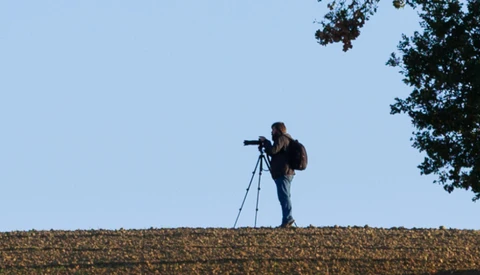
Not everything in photography has a right answer — and this section is where Fstoppers writers and contributors make their cases. Expect contrarian takes, honest assessments of industry trends, essays on the state of photography, and the occasional argument starter. Agree or disagree — either way, this is the place for photography ideas that go beyond the technical.

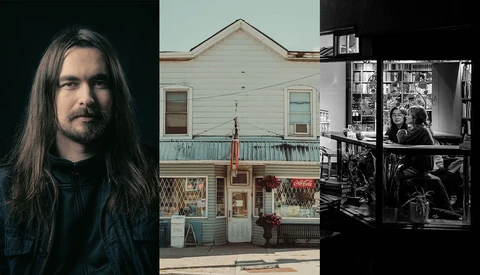
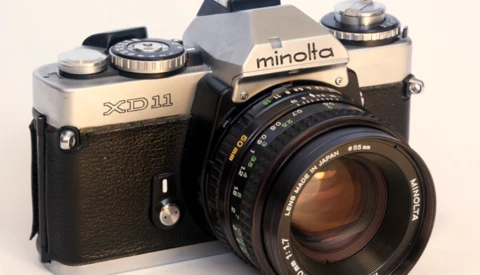
Why Physical Media Is Making a Comeback Among Younger Generations

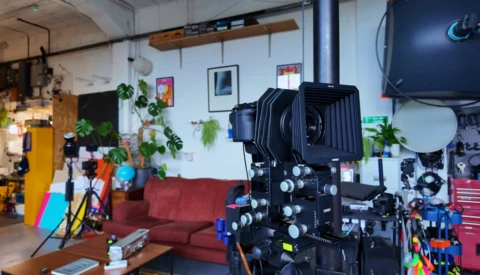
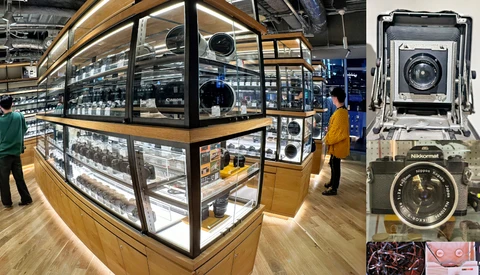
Film photography, vinyl records, analog synthesizers covered in knobs, cassettes, and other once-obsolete formats have enjoyed a sustained revival. Why is that? Boomers often dismiss this resurgence as a “hipster” trend. But when a trend has been growing, evolving, and attracting new participants for more than 25 years, it’s clear that something deeper is going on.

The 10 Biggest Photography Stories of February 2026

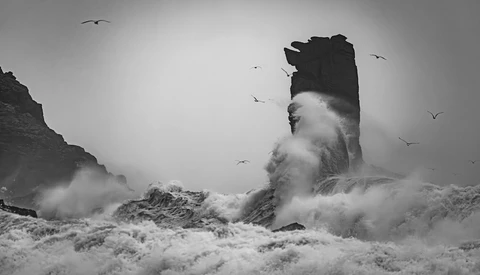
February is typically the month the photography industry shakes off its post-CES hangover and starts showing its hand for the year ahead. In 2026, that meant the return of CP+ in Yokohama, the conclusion of the Milan Cortina Winter Olympics, a flood of new glass from both established and upstart lens makers, and the continued collision between AI-generated imagery and the photographers whose livelihoods depend on the real thing. Here are the ten developments that mattered most.

What a Yearlong Photography Project Taught Me

At the end of 2024, I committed to a simple project for 2025: one photo per week, taken at midday, every week of the year. What sounded straightforward quickly became harder than I anticipated, and by the end of the year, it had changed how I think about consistency, pressure, and personal work.

10 Photography Myths That Refuse to Die

Photography has been around long enough to accumulate a thick layer of conventional wisdom, and much of it is wrong. These myths get passed from forum to forum, YouTube comment to YouTube comment, and camera-store counter to camera-store counter with the confidence of established fact. The problem isn't that they're entirely baseless; most contain a grain of truth buried under decades of misapplication. The problem is that they cost photographers money, waste their time, and actively prevent them from improving. Here are ten of the most persistent offenders.
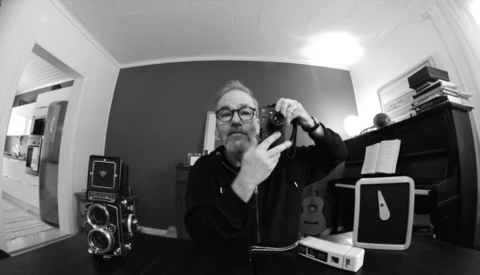
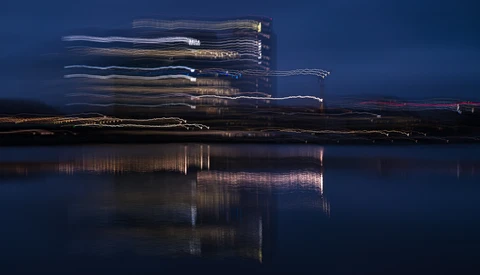
The 3 Most Overlooked Lenses for Night Photography

Most night photographers use ultra-wide angle lenses when night falls. And for good reason. If they are photographing the Milky Way, it arcs over a wide expanse of sky. But night photographers shouldn’t sleep on these three lens categories, which can crank up your creativity.
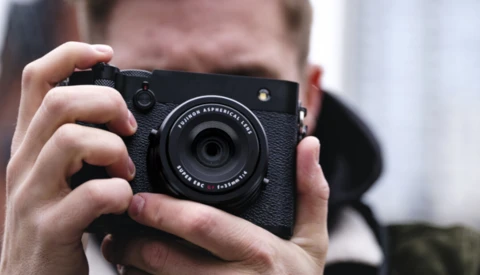
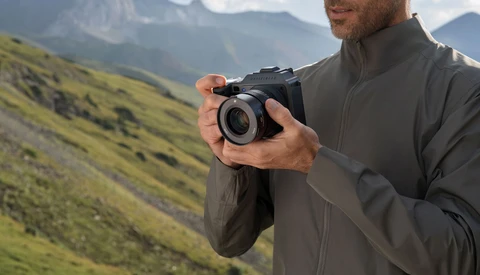
Why I Went Back to DSLR After a Decade of Mirrorless

I was an early mirrorless adopter. Not in the “influencer early” sense, but back when using mirrorless for professional work still meant explaining yourself. Other photographers said I was crazy, that I was just betting on a passing technology.

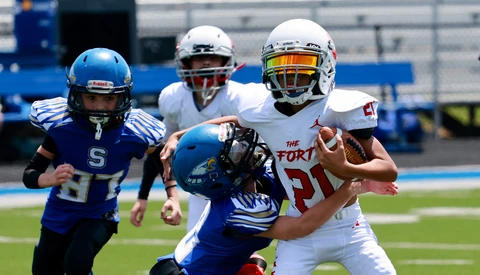
The Free Photo Economy Is Ruining Sports Photography

When outlets can fill galleries with “credit-only” submissions, quality drops, prices crater, and working shooters quietly burn out. I’ve been part of the problem. Here’s why I’m done working for free—and how I’m building paid alternatives that serious shooters can copy without burning bridges.

Photojournalism Can't Fight AI Disinformation Alone

Photo fakery has existed since the darkroom days, with photographers removing poles from people’s heads or positioning dead bodies in photos for impact. But the fakery has shifted to the one place it never should have: the government itself.

How Your Camera Trains You to Shoot Safe Photos

Modern cameras are extraordinary machines. They meter light with near-perfect accuracy, track subjects across the frame in real time, and recover detail from shadows that would have been pure black a decade ago. But all of that capability comes with a side effect that almost nobody talks about: your camera is quietly shaping the way you see, the way you decide, and the way you feel about your own photographs. It is not a neutral tool. It has preferences, and over time, those preferences become yours. The question worth asking is whether the photographer you are becoming is the one you actually want to be, or the one your camera has gently trained you to be.

The Hidden Cost of Saying “Gear Doesn’t Matter”

“Gear doesn’t matter” is usually spoken from a place where most decisions are already behind the speaker. It sounds supportive, even generous. The trouble begins when this sense of closure appears precisely where attention to differences, limits, and concrete choices is still required.

The Lens Upgrade You Think You Need vs. the One You Actually Do

Most photographers approach lens purchases with a familiar mental checklist. They identify a problem, usually something technical, and then shop for a solution. The logic seems airtight: if the images aren't sharp enough, buy a sharper lens. If the background blur isn't creamy enough, buy something with a wider aperture. If the autofocus hunts too often, upgrade to the newest generation with better motors and tracking algorithms. That's wrong.

Choosing The Best Prime Lens: Size Matters

There are so many fabulous prime lenses that have been launched these past 12 months—and continue to be launched—it’s hard to know which direction to go if you’re looking to buy a new one. The choice can be overwhelming and confusing. 

Why Instant Film Is Winning While 35mm Film Is Dying

The analog photography revival is real. You can see it at every wedding reception with a disposable camera basket, every college campus where students dangle point-and-shoots from their wrists, every TikTok tutorial on how to load a roll of Kodak Gold. But if you follow the money instead of the aesthetics, you'll find two radically different stories unfolding under the same "film is back" umbrella.

The Early 2026 L-Mount Alliance Report Card: Seven Years In, Is It Working?

On paper, the L-Mount Alliance has never been healthier. Ten members. Over 120 lenses. More than 20 camera bodies. Sigma shipped nine new lenses and an alien-looking unibody camera in 2025. Panasonic finally buried its autofocus reputation with the Lumix S1R II and Lumix S1 II. Leica celebrated its centennial. Viltrox joined as the tenth member and already delivered its first native L-mount autofocus lens. By the numbers, this is an ecosystem that should be thriving.

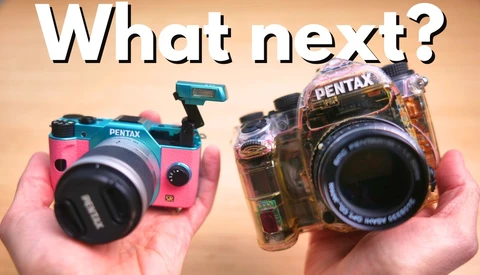
Can Pentax Survive on Film and Niche Digital?

Pentax has not released a new digital camera in three years, and its last full frame DSLR is eight years old. If you still shoot Pentax, or you’re thinking about it, that gap should get your attention.

5 Things You Can't Control in Photography (And 5 You Can)

Photography is an exercise in managing variables. Some of those variables bend to your will, and some of them laugh at your attempts to impose order. The sooner you learn to tell the difference, the sooner you stop wasting energy on the wrong problems.

5 Things That Matter in Photography (And 5 That Don't)

Photography forums, YouTube comment sections, and gear review threads would have you believe that the path to better images runs through spec sheets and brand allegiances. Spend enough time in these spaces and you might start to think that your sensor size is holding you back, or that real photographers only shoot in manual mode, or that your follower count reflects the quality of your work. None of this is true, but it takes time and experience to see through it.

How Modern Cameras Turn Photographers Into Supervisors

We tend to mistake technological adaptation for professional maturity. As cameras grow more “helpful,” they quietly relocate our attention from seeing to supervision. We stop making decisions and start managing a system.

AI-Generated Photography vs Real Shoots: The 4-Hour Test

Artificial images are moving into places that once depended on real shoots, real light, and real decisions, and that shift is already changing how work gets commissioned and valued. If you make images for clients or personal projects, the pressure to compete with fast, cheap AI output is no longer abstract.

Why Hard-to-Use Cameras Often Make Better Photos

Your camera is too good. I mean that as a genuine problem, not a humble brag about your gear. That $2,500 mirrorless body sitting in your bag can identify human eyes at 30 meters, track a subject across the frame while firing 30 frames per second, and deliver usable images at ISOs that would have been science fiction a decade ago. It is, by every measurable standard, a miracle of engineering. And it might be making you a worse photographer.

Why Your Mindfulness Practice Is Stalling Your Growth

Photography increasingly measures its progress through internal states rather than visible change. The language of self-care feels ethical and mature, but it quietly removes the ability to tell whether the work itself is improving.

The Biggest Photography Stories of January 2026

January opens the year with CES and closes before the spring photography-focused trade shows like CP+ and NAB. It is often treated as a transitional month, but 2026 proved anything but routine. Between major gear launches, regulatory crackdowns on AI tools, a prestigious engineering award for the inventor behind every camera sensor on the planet, and the continued evolution of what photographers and audiences consider "authentic," the first month of 2026 delivered stories that will shape the industry for the rest of the year. Here are the ten developments that mattered most.

Photography Isn’t About the Camera — It’s About Learning How to See

“Wow, what an amazing photograph. What camera do you use?” “I really love your photographs; you must have a very expensive camera.” “Gee, thanks. I use a very old, outdated camera system that’s not very expensive at all.” Let's talk about gear and how it doesn't make you a better photographer.

The "Fun Camera" Effect: Why People Buy Worse Cameras

There's a particular kind of cognitive dissonance that happens when you spend months researching dynamic range charts, reading MTF curves, and comparing autofocus systems, only to find yourself genuinely excited about a plastic camera with a 1.6-megapixel sensor that hangs from your keychain. I've spent years writing about camera technology for this site, dissecting the differences between sensors and explaining why certain lenses outperform others. And yet, some of the most enjoyable photography I've done recently has been with cameras that would make any spec-sheet enthusiast wince.

Why Camera Upgrades Feel Incremental and Why Leica Still Feels Different

Decades ago, when a new iteration of your favorite camera model was released, you looked forward to seeing the meaningful improvements the new model offered. Today, the Mk II version of a camera is likely to be almost indistinguishable from its predecessor. The only time the new offering is unique is when that camera was made by Leica.

AI Images That Look Real: What Happens to Your Photography Next?

AI image generators are making images that look like photographs, and it’s pushing you to ask what part of your work is skill, taste, or just access to a tool like Photoshop. That question hits even harder when a prompt can produce something that passes at a glance, whether it’s going on your website, a client deck, or a social feed.

What Reviewing a Year of Photos Taught Me About Who I Am as a Photographer

Every year, I make it a ritual to look back at the photographs I’ve taken—not just to see if I ended up with a set of images I’m actually happy with, but to understand what they say about me. Reviewing a year’s worth of images can reveal patterns you didn’t know were there: the subjects you’re drawn to, the way you use light, the emotions you chase. It’s an honest reflection of who you are as a photographer—and who you’re becoming.

5 Whys Photography Discussions Always Collapse Into the Same Arguments

Photography arguments don’t stall because people are uninformed. They stall because professionals, hobbyists, and spectators speak from different realities while using the same language. This text maps the fault lines that make most debates structurally impossible.

The Age Old Debate: Zooms vs Primes. Which Side Are You On?

I have long wavered between being a "bag 'o primes" shooter and a zoom lens shooter in my personal work. Sure, as a photojournalist and sports photographer, the choice was always easy: zooms. But for everything else, are zooms the best choice?

Will Sony Ever Make a Retro Camera?

Fujifilm has built an empire on it. Nikon proved it works at full frame. Canon is openly entertaining the idea, with an AE-1 tribute rumored for this year. And Sony, the company that defined modern mirrorless photography, is nowhere to be found.

The Leica Test Nobody Explains: How Your Framing Habits Get Exposed

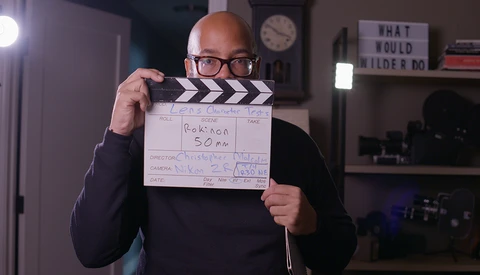
You keep hearing that a Leica can change how you shoot, but it is hard to separate myth from real shifts in how you see and move. This videop puts that question in a messy, real setting, then pulls out a few specific changes that might sound small until you recognize them in your own contact sheets.

The Spec Sheet Is a Dead End. These Cameras Found Another Way.

Pick up a Sony a7 V. Now pick up a Canon EOS R6 Mark III. Now a Nikon Z6 III. All three cameras launched in 2025. All three hit roughly the same resolution. All three offer comparable autofocus performance, similar video capabilities, equivalent build quality, and nearly identical ergonomics. They are, for most practical purposes, the same camera wearing different logos.

Medium Format Is the New Full Frame: What's Next?

There was a time, not so long ago, when medium format digital photography existed in an entirely separate universe from the rest of the camera market. It was a universe populated by wealthy commercial photographers and the occasional landscape obsessive who had saved for years to afford a system that promised marginally better image quality than what everyone else was using. Not anymore.

Photography as Work: What Defines It Today

Most discussions about photography describe the work of the photographer through technique, timing, or the ability to react quickly. Yet these explanations do not match what actually gives an image its meaning. If the photograph depends on a choice made before the camera is raised, then the work of the photographer is not the moment of capture but the decisions that make the moment possible.

When f/1.4 Is Worth It and When f/2.8 Wins

A $1,000 gap between a 35mm f/1.4and the 35mm f/2.8 sounds dramatic until you look closely at what that extra aperture actually changes. If you shoot people, events, or fast-moving scenes in fading light, this choice affects sharpness, noise, and how much control you really have when conditions get difficult.

The “Looks Like AI” Problem: When Your Best Photo Gets Doubted

Two nearly identical landscape images can hit your Facebook feed and get wildly different reactions, even when the platform is doing the distributing. This video puts Midjourney and ChatGPT in the middle of a bigger problem: how “real” work gets judged when the algorithm and AI aesthetics keep blurring the line.

Is Medium Format Right for You?

Medium format keeps pulling you back when prints start getting big and your files need to hold together under picky edits, and that is the exact lane where the Hasselblad X2D 100C starts to look less like a luxury and more like a tool with a point. If you have ever looked at a finished print and felt the color and shadow transitions were just slightly brittle, this video is aimed straight at that frustration.

Apple Just Dropped a $13/Month Bomb on Adobe's $70 Subscription Empire

Apple announced Apple Creator Studio yesterdayay, and I don't think Adobe fully understands what just happened to them. For $12.99 per month, or $129 per year, Apple is bundling Final Cut Pro, Logic Pro, Pixelmator Pro, Motion, Compressor, and MainStage into a single subscription. The subscription also unlocks premium templates and intelligent features in Keynote, Pages, and Numbers across iPhone, iPad, and Mac, with Freeform joining later. Students and educators can get the entire bundle for $2.99 per month or $29.99 per year.

11 Predictions for the Photography Industry in 2026

The photography industry has entered 2026 at a fascinating inflection point. What follows are 11 predictions for where the industry is headed, covering hardware, software, legal frameworks, and market dynamics. Some of these trends are already visible if you know where to look; others represent logical conclusions from forces already in motion. 

5 Things Camera Companies Are Getting Right in 2026 (And 5 They Are Getting Wrong)

We are living in a paradox. Cameras have never been more capable, yet the experience of buying and using them is still frustrating in many ways. The sensors are incredible. The autofocus is borderline supernatural. The lenses are sharper than anything we had a decade ago. And yet, there's a lot that can still be improved.

Photography Is Not a Competition

Photography is often spoken about as if it were a competition, measured by likes, awards, or comparisons with others. Yet at its core, photography is a deeply personal practice. The way we see, decide, and capture moments is unique to each of us, shaped by our experiences, timing, and attention. Understanding this distinction is essential to sustaining a meaningful and fulfilling relationship with the creativity that photography allows.