The idea that full frame is the "serious photographer's" destination has shaped how people spend money on gear for decades. In 2026, that assumption deserves a hard look, because the lens market, sensor technology, and real-world shooting habits have all shifted in ways that change the math.
Coming to you from The Bergreens, this thoughtful video makes a case that full frame cameras, while still excellent, are no longer the default right answer for most people. Bergreen traces the belief back to the early days of digital, when shooting on something like a Canon EOS 60D meant working with slow kit lenses and limited prime options, while full frame systems like the 5D series offered a genuinely different level of image quality and lens selection. That gap was real. The argument made sense then. What the video does well is show exactly how that gap has closed, and why the lens landscape in particular is the part of the story most people aren't paying attention to.
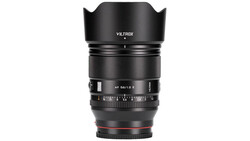
Today, brands like Viltrox, Sigma, and Tamron are producing fast APS-C primes at focal lengths that mirror the classic 35mm, 50mm, and 85mm full frame benchmarks. The Viltrox 23mm f/1.4, a Viltrox 33mm f/1.4, a Viltrox 56mm f/1.4 are sharp, fast, and light. Bergreen also points out that zoom options like APS-C equivalents of the 24-70mm and 16-35mm ranges now exist with f/2.8 apertures, meaning you can build a complete, capable system without the bulk or cost of a full frame kit. The Sony a6000 gets a personal mention, a 12-year-old camera whose images Bergreen still loves, largely because it lived by the front door and got used constantly.
That last point connects to one of the video's stronger arguments. The best gear is what you actually take with you. A compact APS-C kit that fits in a small bag gets grabbed more often, and more shooting time is what actually builds skill. Bergreen is direct about this: moment, light, and composition are what make a photo work, not sensor size. Full frame still holds real advantages for depth of field and low-light performance, and Bergreen doesn't pretend otherwise. Portrait photographers and working professionals shooting weddings or commercial jobs have legitimate reasons to stay on full frame. But the video goes further into specific scenarios where APS-C wins, the cost breakdown between building out each system, and a more pointed argument about when full frame might actually be slowing you down, all of which is worth hearing in full. Check out the video above for the full rundown from Bergreen.




6 Comments
Full Frame is a dinosaur. The excessive cost and MASSIVE lens ecosystem are entirely unnecessary and offer very marginal benefits in very limited use cases. And APSC isnt the destination. M43 is because its produces excellent image quality, offers extraordinary computational benefits, has an extremely small lens ecosystem at a significantly reduced cost, has far far better IS and durability than nearly all.systems. And is crazy easy to carry about. And performs excellently in virtually all use cases. The marketing canard that FF is the necessary way to go does a profound disservice to photographers and needs to die an overdue death.
In the olden days a medium format camera offered a massive improvement in quality over 135mm. There was nothing to discuss, it was so obvious.
But in the modern digital era its anotherstory. The differences between m43 and full frame are a simple marketing ploy designed to sell us all another load of gear to lug around.
Whoever said "Paul Strand or Alfred Steiglitz took ok photos. But just imagine how much better their photos would be if they had the latest camera?"
I hope stacked sensors will make their way to APS-C more. A Sony A6700 with a stacked sensor would be pretty nice.
Where all started to get better no matter either Full Frame or APS-C was when camera makers went Mirrorless when Canon and Nikon entered the full-frame mirrorless market in 2018 vs Sony was there in 2013 going from APS-C to full frame mirrorless. Even today most think only Canon or Nikon even when they went mirrorless all previous owners had to give up the mirrored cameras but the huge lens collections just to go mirrorless.
The big key to remember about the APS-C mirrored cameras is they where about the same size as a 35mm full frame also the ISO range was very limited on either as a max of 6400 or extended to 12800. But as I had the 2010 Canon T2i to me noise was handled very well, even looking back at the old images things are sharp and my night captures show little noise problems. To me it is just the pixel size of an image either of.
The biggest point is no one and i mean no one looking at an image of either full frame or APS-C will be able to see the difference but for the coverage of each image. Also no one using a APS-C even really looks at the mm conversion just what is seen in the eye piece.
Even when I went to Sony in 2014 editing software by todays standards is like caveman days even with the $25 Capture One pro SW that was a hook to buy not even as great but was/is on par with Lrc options of today.
But for me the use of a full frame lens or also a APS-C lens is just a button press for either or. A key item to have (for me) is the 2013 APS-C E 10-18mm (15-27mm in 35mm) f/4 OSS lens that i used and still use that can be used in FF mode from 12-18mm (12-18mm if you remove the rear light shield and do not use its tulip light limiting devise), the point is the full frame Sony FE 12-24mm f/4 G and f/2.8 GM both big and heavy did not come out till 2017 first meaning I had the perfect Astro MW before anyone But also in 2017 with the 12-24mm no one either Canon or Nikon had a 12mm also. A win for Sony users then. Also an add is the 12-24mm lenses require external filter holders and the big glass filters if wanted were the E 10-18mm has up front treads for filters if wanted.
Like i say it is the coverage of the image and no one will even know the type camera used.
If for another compare that many landscapers want is the Fujifilm medium format (\(43.9 \times 32.9\text{mm}\)) in the GFX Series 102MP for high-resolution bigger than full frame even. Where the sensor is X-Trans vs Bayer green verses with maybe better color.
But again neither image of any will one tell the Sensor and size. It is all about what you prefer and use the most!
1. 2016 A7SM1 Voigtlander Heliar-Hyper Wide 10mm f/5.6 Aspherical Lens getting more in a frame yes FF on a A7SM1 but more than the post cards in the store.
2. Again more in a frame in 2017 A7RM2 + FE 12-24mm f/4 G editing out in hotel lobby Canon and Nikon users could not believe the coverage of the image.
3. Surprise look back at Canon T2i image 2014 April before going Sony the Canon EF-S 10-22mm f/3.5-4.5 USM yes also can do Astro MW capture.
4. Sony A7SM1 + FE 16-35mm F4 ZA OSS just out playing with different lenses for a couple of dark nights.
The point if not telling would you be able to tell even the f/# /sensor or even care? It is the image in the end!
Sorry but I'm not going to give up my 45 mp full frame with plenty of stops of dynamic range. I have no issue with some wanting to go to APS-C or M4/3 or whatever. That's a personal choice just as mine is the opposite. That said, there have been many articles about going to smaller cameras over the last few months and for some reason I tend to think its deliberate. As FF cameras sales looks to be shrinking the camera makers and those in the media who may be infleunced by them are suggesting moving away from full frame and go smaller and hopefully maintain or increase revenue. This is similar to their push that you must have a hyprid camera that shoots video else wasting your money.
Zach Arias "Crop or Crap" from 11 years ago: https://youtu.be/PHYidejT3KY?si=0bXoMipYhLjHt74K