
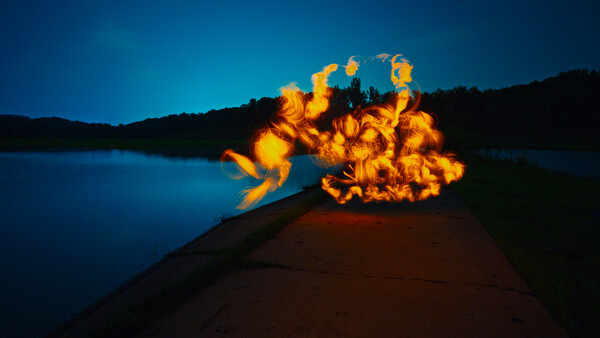
They say nothing good happens after midnight—clearly, they’ve never tried photographing it. When the world goes quiet and city lights hum against the dark, something magical awakens. The night becomes your studio, the stars your light source, and the silence your companion. While others sleep, photographers step into an open world alive with mystery, color, and adventure.
Night photography is both a purely technical pursuit for photographers and a meditative experience. There's nothing quite like standing in an open field, under a sky full of stars, and feeling a warm summer breeze. While many are asleep, waiting for sunrise, night reveals a whole new world for photographers to explore. Though often seen as challenging, night photography becomes more manageable with some knowledge and patience, allowing creativity to flourish and unlock this unseen world. Apply these tips, and you'll become a master of night photography.
Painting With Time
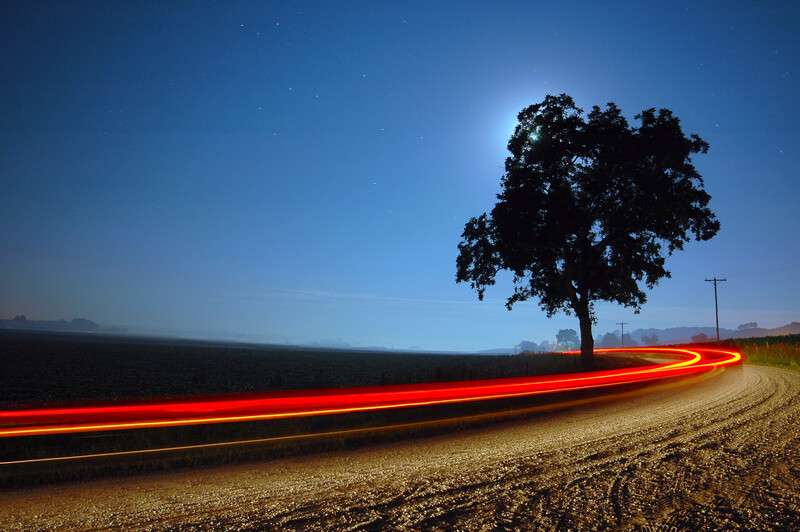
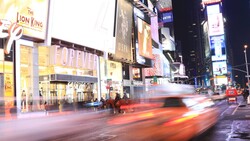
Long exposure photography is a technique that keeps the camera’s shutter open for seconds to minutes to capture more light and motion.
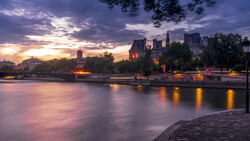
Slowing down your shutter transforms how the camera sees the world. We are so accustomed to using a fast shutter speed to freeze action that we forget we can go in the opposite direction to bring the night alive, allowing us to blend things our eyes cannot commonly perceive. Moving water turns silky smooth, vehicle taillights become colorful streaks, and clouds stretch into soft ribbons. Night photography isn't just about technique; it's also about intent. We are not just capturing what was there, but also making the viewer feel. You are shaping light, blending time, and deciding how motion can be translated into emotion.
Tools, Not Rules
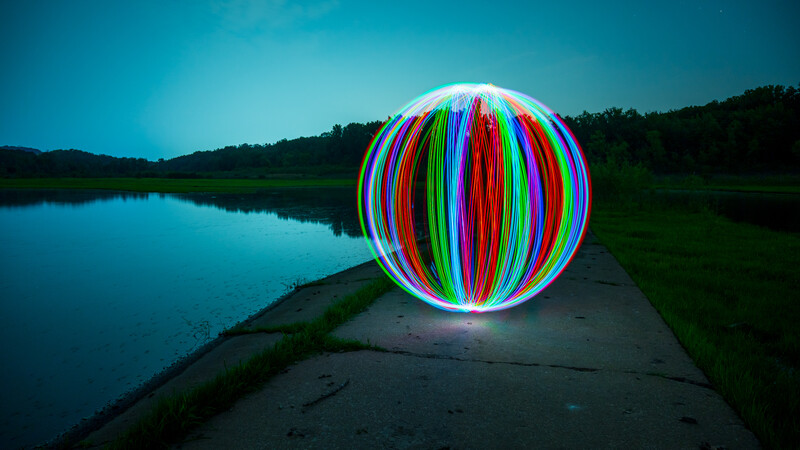
The foundation of great night photography is the tripod. Without the tripod, it won't happen. Even with today's stabilization technology, we can’t hand-hold extremely long exposures. One thing that I do like about the tripod is that it slows you down, allowing for more intentional photographs to be created. A slight amount of camera shake can ruin a perfectly composed photograph. This is where having a great remote release for your camera, or simply using your camera’s timer, comes in handy. This will allow you to keep your hands off the camera when firing the shutter and hopefully prevent the camera from moving during the exposure.
Which lens should I be using? That is up to you and what you are trying to capture. If you're trying to capture a grand scenic landscape, a wide angle lens is a good choice. If you're trying to isolate the subject, a telephoto lens lends itself well; this will also add some depth of field compression to the image. Now, the most important: aperture. Select a lens with a wider aperture. This will allow more light to enter and fall onto the camera’s sensor, enabling a lower ISO, which in turn yields a better low-light image. I prefer to use an f-stop from f/1.4 to f/4. As long as you have a tripod, you can enter the world of night photography; it is as easy as that!
Technical Simplicity, Artistic Freedom
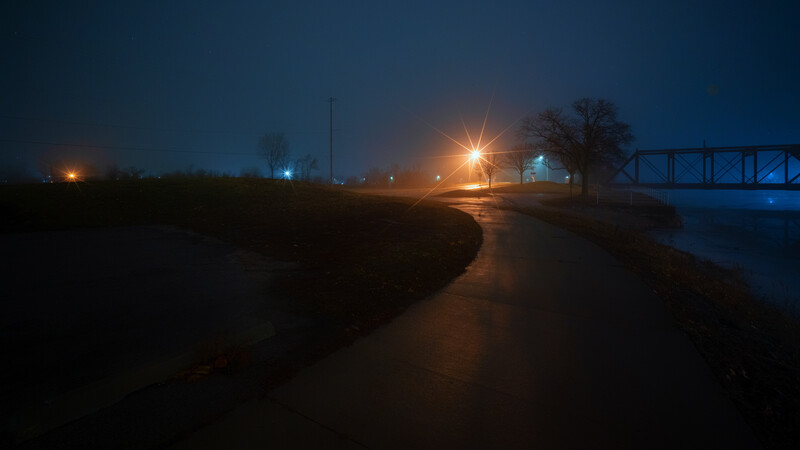
When it comes to settings, everyone seeks the perfect formula; however, there is no universal secret. It's all about experimenting and discovering what works best for you. But is there a reliable starting point for initial exposure? Below is where I like to start, and then I adjust my settings accordingly to capture what I can photograph.
- Shutter Speed: On average, I start around 10 to 20 seconds. Then, based on the initial exposure, I'll begin to fine-tune my settings.
- Aperture: I typically use f/2.8 to f/4, although f/8 to f/11 also yields good results. You'll start to see a starburst effect around f/8 to f/11.
- ISO: In today's world, I do not worry too much when it comes to noise, as there are so many ways to neutralize it in post-processing. I start around ISO 100–400. Why add another post-processing step if it’s not necessary? And I am not afraid to go up to ISO 6400.
- Focus: Either autofocus or manual focus will work, but be aware that sometimes it's too dark for autofocus and it will fail to focus.
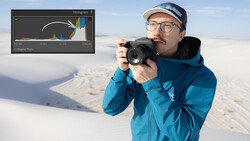
- Image Quality: I use raw so I can have maximum control of the image in Lightroom and Photoshop. Now, you will need editing software that supports reading raw files. JPEG files are fine; just remember to ensure your exposure and white balance are correct.
- Manual Mode: I recommend using manual mode so you can control all aspects of the exposure, including shutter speed, aperture, and ISO. Other exposure modes will also work if you're not comfortable shooting in manual mode.
Seeing in the Dark
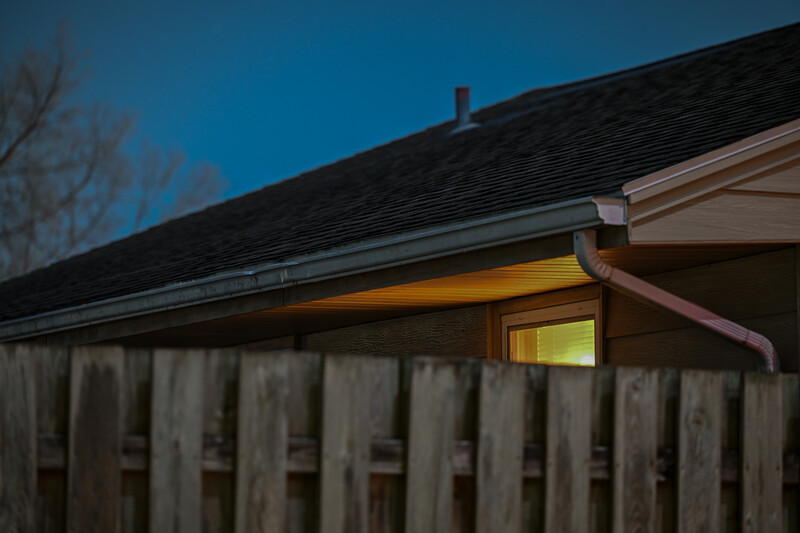
It can be tough to see your scene at night, but there are ways to overcome this with a bit of planning. Go out during the day to scout out your locations. I like to show up before it gets dark on the night I am shooting. It makes it safer to walk to the area, and I can get used to navigating my way back in the dark. I also like to carry a flashlight, which helps me get back in the dark, but if the camera is struggling to autofocus, I can light up the part of my scene where I am trying to focus. My Nikon Z 8 features buttons that illuminate, allowing me to see in low-light conditions. If your camera does not have this feature, find a flashlight with a red filter, as this will not interfere with your night vision.
Waiting for the right balance between ambient light and darkness will yield excellent results, typically during twilight. Be on the lookout for anything that may be moving: vehicles, clouds, water, and stars all work well as elements in the photograph. Movement within the image allows for things your eyes naturally do not see.
Embracing the Magic
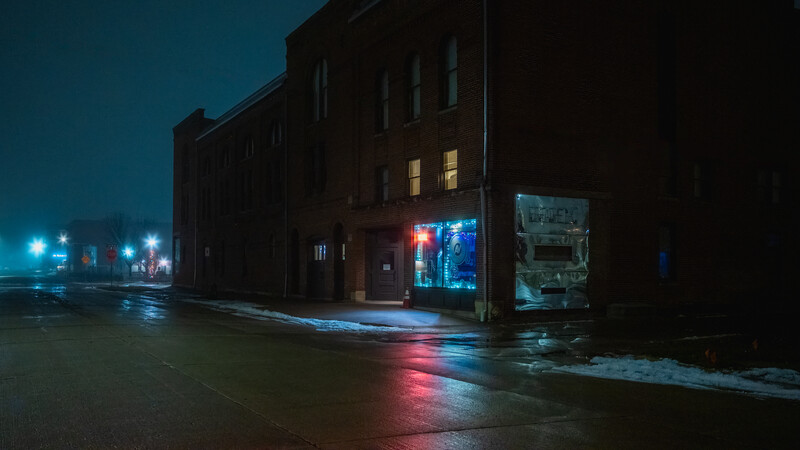
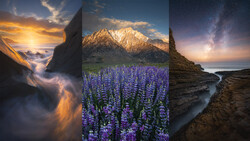
By allowing action and motion in your long exposure images, you introduce elements of interest into the image. Long exposures introduce the aspects of time that other scenes do not. While the world moves around us, and the camera stays still, that tension creates beauty in our images.
- Water: Turns to silk, creating a delicate artistic feel.
- Clouds: Become streaks in the sky, adding a dreamlike effect and showing streaks of time.
- Stars: Tracing the Earth's rotation.
- Empty Streets: Reveal a feeling of mystery. With extremely long exposures, if elements are moving fast enough, they will not record on the sensor, making them virtually invisible.
When Darkness Tricks You
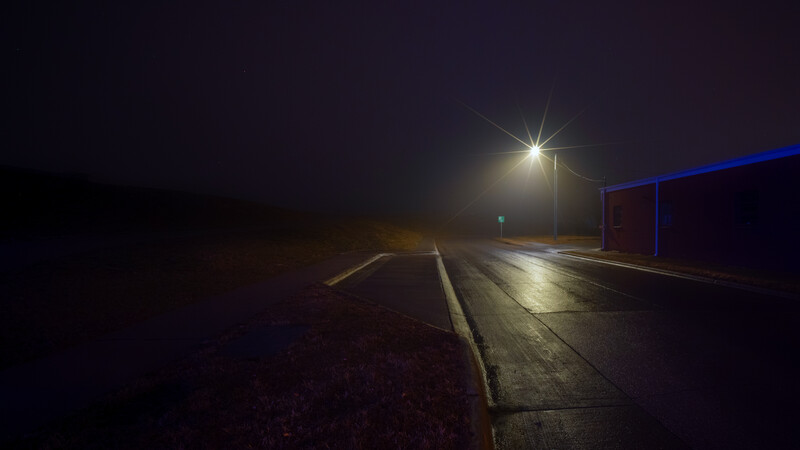
Darkness has a bag full of tricks it can throw at you at any time. If you understand that they can creep up during your shoot, you can easily handle the situation and move on to creating photographs again. But if you are willing to tolerate a little chaos occasionally, the night does not give up its beauty easily.
- Overexposure From Nearby Lights: This is the biggest culprit for spoiling long exposures. The longer we expose our camera’s sensor, the greater the chance we have of blowing out all the detail in the highlights. I like to expose for the highlights, but you can also take varying exposures and easily blend them in Photoshop.
- Lens Fog or Dew: On summer or fall nights, when we pull the camera out of our bag, depending on the temperatures, our camera could be warm in a cold environment or vice versa. The front of the lens starts to fog up. Allow the camera to acclimate to the weather conditions before removing it from its bag.
- Battery Drain: On a cold fall or winter night, the cold is the enemy. Beyond fogging issues, battery issues arise. Make sure to keep your batteries against your body in your coat so the heat can help reduce the loss of charge.
- Safety: Be mindful of where you are going and let someone know where. Better yet, take someone with you, especially if you're in highly populated areas. Theft of photographers’ gear is always on the rise, and safety should be paramount. I rarely go out at night by myself. The second person can also be a lookout for anything suspicious.
These are the most common issues with long exposures; knowing how to tackle them makes for a much better experience in the field. Remember, to tackle them, you also need to prepare and have additional gear, such as a lens cloth in your bag or extra batteries.
The Reward
There is something about standing in silence, hearing the hum of a streetlight or the distant rumble of passing cars, and capturing what our eyes cannot fully see. It may come with late nights and early mornings, but the rewards are endless, as well as the possibilities. In a fast-paced world, it teaches patience, observation, and trust in your process. All these newly learned skills will also translate to your other images, making you a better photographer.
In the End
If you have never tried long exposure photography or you haven't been out for a while, pick up the camera and try it for yourself. Experiment, fail, and return; this can be the process for long exposures. Remember never to give up. Once you figure it out, you’ll become addicted. Night photography reminds us that beauty doesn’t vanish with daylight—it just hides, waiting for those willing to look a little longer.
Join the Fstoppers community for free
-
Post comments and join in the discussions
-
Browse the site ad-free
-
Share your work and get featured in the community
-
Compete in the photo contests for fun and prizes
No comments yet