
The way most photographers talk about sensor size gives the game away. There is a ladder in their heads. Phone at the bottom, then the little compacts, then Micro Four Thirds, then APS-C, then the promised land of full frame, and you climb it as you get more serious, upgrading rung by rung until you arrive. Buying a full frame body is treated as a graduation. You were an enthusiast on a crop sensor; now you are a real photographer.
That ladder does not exist. It is a story the industry tells, and it survives because it is convenient for selling cameras, not because it describes how formats actually work. The belief that every photographer should be working toward full frame rests on a category error about what a format even is, and once you see the error, the whole hierarchy falls apart.
A Format Is a Set of Tradeoffs, Not a Score
A sensor format is not a quality rating. It is a package of compromises tuned for a certain kind of work. Make the sensor larger and, all else equal, you can gain total-light headroom, easier shallow depth of field, and often more dynamic-range flexibility, and you pay for it in size, weight, cost, and the physical bulk of the lenses that have to cover the bigger area. Make it smaller and you reverse every term: you lose some low-light headroom and some background blur, and you often gain effective reach, portability, depth of field, speed, and system affordability. Neither direction is up. They are sideways moves along a set of tradeoffs, and which one is better depends entirely on what you are trying to photograph.

This is the part the ladder hides. It presents a multidimensional set of tradeoffs as a single vertical axis, as if more sensor were simply more good. But a wildlife photographer who needs a 600mm field of view handheld in the field is not making a compromise by choosing a smaller sensor. They are choosing the format that is actually better for the job, because the smaller format gives them that narrower angle of view from a shorter, lighter, cheaper lens, and often more pixels on a distant subject for the weight and cost. High-resolution full frame bodies can narrow that gap when cropped, since a 50-megapixel full frame file cropped to the same field of view still holds real detail, but they usually do so at much higher body and lens cost. Calling the smaller-format choice a lower rung is not a description of image quality. It is a failure to understand the work.
The Tell: Full Frame Is Itself a Compromise
Here is the fact that should end the argument on its own. If larger sensors were simply better, and the goal were to climb toward the biggest one you could afford, then full frame would not be the summit. Medium format sits above it, with a sensor substantially larger than full frame, often more resolution, deeper tonal files, and the ability to produce very shallow rendering when paired with the right lenses. By the ladder's own logic, no full frame shooter has arrived at anything. They are parked one rung below the real top, and the medium format shooter is parked below the next format up, and so on with no end.
Nobody actually believes this, which is the point. The full frame photographer who insists crop sensors are for amateurs does not spend their evenings feeling inadequate next to a Fujifilm GFX shooter. They understand, when it applies to them, that medium format is a specialized tool with real downsides in speed, cost, and bulk that make it the wrong choice for most work. That understanding is correct. It is also the exact reasoning that dismantles their view of crop sensors. Full frame is not the top of a ladder. It is one more compromise in the middle of a range, chosen by people whose work happens to sit where its tradeoffs pay off, and declined by people whose work does not.
Where the Myth Actually Comes From
None of this belief is an accident, and understanding its sources makes it easier to set down.
The most powerful source is history. The 35mm film frame was the dominant format for generations, so when digital sensors the same size arrived, they inherited the name full frame and the aura of the professional standard that 35mm carried. Sensors smaller than that were defined by what they lacked, cropped, less than full, and the language itself, still used every day, treats the 35mm frame as the reference point that everything else is measured against. We describe a crop sensor's lenses by their full frame equivalent, never the reverse. The vocabulary bakes the hierarchy in before anyone has made an argument.
Marketing did the rest. Full frame carries higher prices and more revenue per sale in the interchangeable-lens market, so there is a permanent commercial incentive to frame it as the destination, the thing you graduate to, the mark of seriousness. The upgrade path is the business model. A photographer who believes they must eventually buy full frame is a photographer who will keep spending, and the industry has no reason to correct the belief.
The Formats Professionals Choose on Purpose
The strongest evidence against the myth is simply looking at what working professionals actually shoot, because a great many of them choose crop formats deliberately, not as a stepping stone.
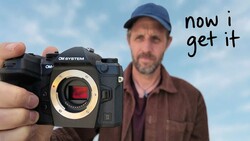
Wildlife and bird photographers lean heavily on smaller sensors for the reach. An OM System OM-1 Mark II, launched at roughly $2,400 body-only, gives a Micro Four Thirds shooter a 600mm field of view from a compact 300mm lens, with stabilization rated at 8.5 stops and electronic-shutter bursts up to 50fps with continuous AF/AE, or 120fps with AF/AE locked, depending on mode and lens, in a kit light enough to carry all day in the field. In high-speed action work, that camera overlaps with professional-oriented bodies like the Fujifilm X-H2S, and it costs hundreds to thousands less than high-end full frame action and hybrid bodies like the Sony a1 II and Canon EOS R5 Mark II, in one of the very genres full frame is often assumed to own. For a sports or wildlife shooter, the smaller sensor is not the compromise. The heavy, expensive full frame rig needed to get comparable field coverage often is.
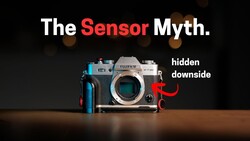
Macro photographers choose smaller sensors for the deeper depth of field and in-camera focus stacking. Travel and documentary photographers choose them for weight, because the best camera is the one you actually brought. Many video shooters are comfortable with crop formats, especially Super 35/APS-C and Micro Four Thirds, because deeper focus, lighter lenses, and effective reach can be advantages rather than drawbacks. And plenty of stills professionals shoot APS-C simply because it is enough: a 40-megapixel Fujifilm X-T5 out-resolves many popular full frame bodies, in a smaller, cheaper, lighter package, with a deep native lens system built specifically for the format rather than borrowed from full frame.
That last point matters more than it looks, because the format decision is inseparable from lenses. A smaller sensor with the right native lens for the genre is often a better professional system than a larger sensor with the wrong lens options, and a format is only as good as the glass actually available for the work you do. None of these photographers is waiting to graduate. They have matched the format, and the lenses, to the work, which is the only decision that was ever worth making.
Where Full Frame Genuinely Is the Right Call
An honest version of this argument has to say plainly where full frame earns its place, because it often does, and the point is not that the format is overrated. It is that it is a tool, not a trophy.
Full frame is the right call when you shoot in genuinely difficult light and need the low-light headroom, when your living depends on the shallowest possible depth of field for a certain portrait or wedding look, when you need very high resolution paired with the dynamic range a larger sensor delivers, or when a client, agency, or photo desk explicitly requires a particular file standard, camera system, or capture format that a full frame body is built to meet. In those situations the format's tradeoffs line up with the work, and the extra cost and weight buy something the job actually needs. That is exactly the right reason to own one, and it is the same kind of reasoning that leads a wildlife shooter to Micro Four Thirds or a landscape shooter to medium format. Choose the format because its compromises fit your work. That principle points toward full frame for some photographers and firmly away from it for others.
The Ladder Has No Top, and the Bottom Is Rising
The hierarchy is being squeezed from both ends, which makes working toward full frame an even stranger goal than it already was.
From above, medium format has grown more accessible and continues to sit beyond full frame, so the ceiling the ladder implies was never real. From below, the smallest sensors are climbing fast. Phones now produce professionally usable images in conditions that would have demanded a large sensor a decade ago, not because their tiny sensors defeated physics, but because computational photography, stacking many frames and processing them intelligently, extracts far more from a small sensor than its size alone would suggest. The same computational techniques are appearing in dedicated cameras. The practical gap between formats is narrowing for a growing share of real-world work, which means the one number the ladder is built on, sensor area, explains less about final image quality every year.
A photographer who spends years and a great deal of money climbing toward full frame is chasing a destination that is neither the top of anything nor as decisive as it was when the belief formed. The sensible move is not to climb. It is to step off the ladder and look at the landscape.
What to Actually Aim For
If full frame is not the goal, something else has to be, and the honest answer is that the goal was never a format at all. It is the ability to make the pictures you want to make, reliably, in the conditions you actually work in. Sometimes that points to full frame. Very often it points somewhere else, and the photographer who understands that will spend their money on the format that fits the work, and on the lenses, lighting, and skill that matter far more than sensor area ever did.
Work out what you photograph, and in what conditions, and let that choose the format. The photographer who does this is not on a lower rung than the one who bought full frame reflexively. They are simply holding the right tool, which is the only thing a camera was ever supposed to be.
Figuring out where your own work actually sits is the harder part, and it is worth more than any format decision. Understanding what different genres demand is exactly the groundwork in The Well-Rounded Photographer: 8 Instructors Teach 8 Genres of Photography, and the question of what actually turns a skill into a living, which was never the size of your sensor, is the subject of Making Real Money: The Business of Commercial Photography.

Join the Fstoppers community for free
-
Post comments and join in the discussions
-
Browse the site ad-free
-
Share your work and get featured in the community
-
Compete in the photo contests for fun and prizes
6 Comments
Stop calling 35mm format “full frame”. Nobody referred to it that way in the film era. The current use is entirely a product of the digital camera makers’ marketing efforts to upsell APS buyers.
Maybe we should go back to calling them "miniature cameras". 😉
Honestly, reading old camera magazines on the Internet Archive, it's striking how debates over the role of 35mm in a camera ecosystem where Real Professionals shot larger formats (there's a great mid century photo showing a gaggle of press photographers with their Graflexes, plus one outlier with a Leica) resembles contemporary discussions of smaller sensors vs 35mm.
(Including probably, something that rhymed with this piece. 🙂)
Why is this every 4th post on every damn photography site? Haven't we got past this? Pick the hardware you need for the results you want. There's literally a thousand blog and news pages explaining this. Honestly I'm bored of photog magazines already, it's constantly recycled articles.
I’m a working pro who started digital photography with an APS-C camera and then moved to fulll frame. My first full-frame camera, a Canon 5D, was fine at the time, although its low-light capabilities were limited. (I’m being generous here.) I used full-frame cameras for over a decade, and gave them up for most purposes over a year ago in favor of Fuji APS-C cameras. I had several reasons: first, the physical size and weight of the larger cameras were a burden for event work. A 5D Mk III on each shoulder with a 24–70 f/2.8 on one, a 70–200 f/2.8 on the other gets tiring on a 6 hour (or sometimes longer) shoot day. Lift that 70–200 a couple of hundred times over the course of a day and your forearm will feel it. Do that two days in a row, and your forearm will need icing and a long rest. I don’t chase bokeh or really shallow depth of field, so that aspect of a larger sensor doesn’t mean much to me. Image quality? At least as good as the Mk III in all light. I don’t shoot product for print advertising, and if I did I’d probably rent mediium format. For the world I live and work in, APS-C is more than enough to get the job done. And it is a job.
Medium Format starts at 645.
Thanks for this, Alex. The idea that a format is a package of compromises stayed with me. In February I seriously considered moving up to medium format, then concluded my X100vi was plenty. Your piece helped me understand why: the useful question isn't which sensor is biggest, but what kind of photography one actually practices. Mine, slow and contemplative, wasn't on any list, so I wrote a short piece trying to name it: https://lucelenta.art/blog/the-nameless-genre