
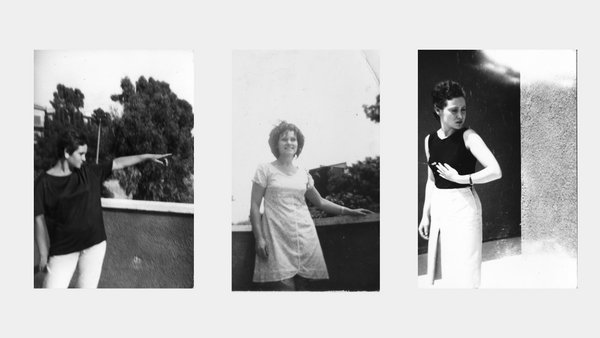
Photography has always occupied a curious position. It can be art, journalism, testimony, or obsession. But before any of that, it is memory made visible. And nowhere does that become more apparent than in the family photograph.
A while ago, I asked my parents if I could borrow a selection of old prints from the family archive. My intention was straightforward enough: to edit them, scan them, and preserve them digitally. What began as a simple archival exercise quickly became something much more meaningful.
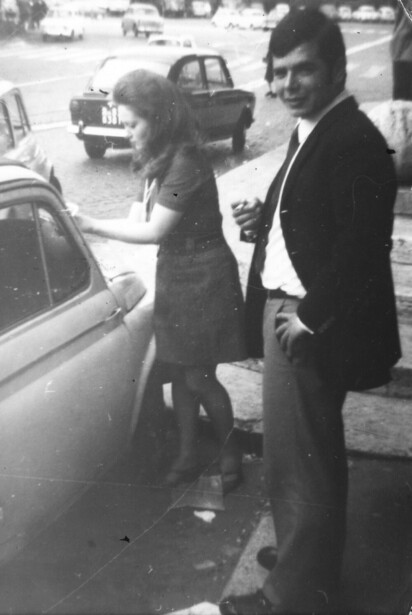
Among the photographs was one that stopped me immediately. It had been taken during my parents' very first date. There they were, young, stylish, entirely unaware of the years ahead. They could not possibly have imagined that decades later, their son would study that frame not only as family history, but as a photographer.
That is one of photography's quiet miracles. It preserves moments long before anyone understands their significance.
Family photographs are rarely made with ambition. They are not created for exhibitions, awards, or social media. They are often imperfect, spontaneous, and unconcerned with artistic legacy. Yet time grants them a value no carefully constructed portfolio can replicate.
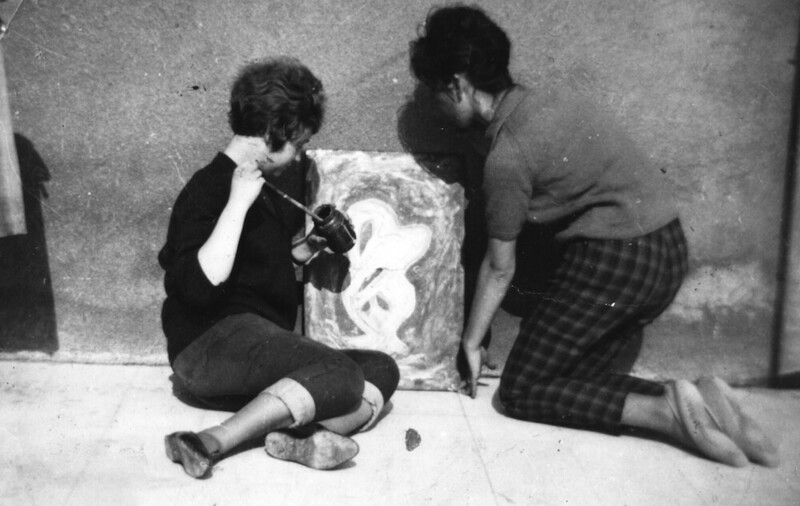
Susan Sontag once wrote that photographs furnish evidence. Family photographs furnish something deeper. They furnish identity.
Looking through these prints, I found myself captivated by details beyond the obvious subjects. My father's posture. My mother's effortless elegance. The clothing, the hairstyles, the automobiles, the architecture. Entire worlds linger quietly in the background. Every photograph contains more history than the photographer intended.
This is why family archives matter so profoundly. They do not simply document people. They document eras.
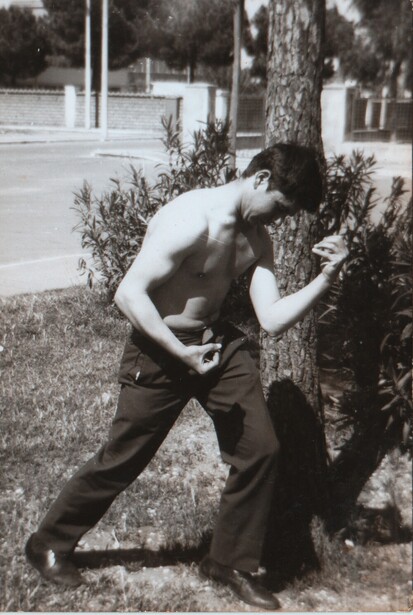
A single snapshot can reveal social customs, fashion, class aspirations, and even the visual language of an entire generation. What may seem ordinary today becomes invaluable tomorrow.
As photographers, we often spend enormous energy pursuing significance. We search for projects, concepts, and recognition. We travel far, sometimes overlooking the extraordinary archive already waiting at home.
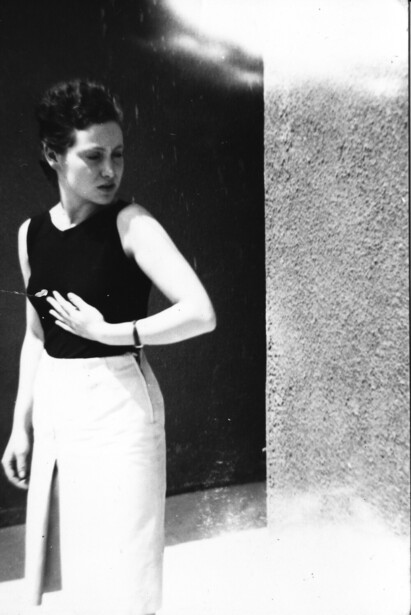
Editing family photographs presents its own peculiar challenge. Emotional attachment can easily interfere with judgment. To make selections, I had to temporarily step away from my role as son and approach the work as a photo editor. That distance allowed me to appreciate the accidental brilliance often found in vernacular photography.
The vertical framing. The unintentional shadows of the photographer. The gestures frozen between performance and authenticity. In some frames, there is even a faint echo of street photography, long before anyone would have called it that.
But their greatest strength lies elsewhere.
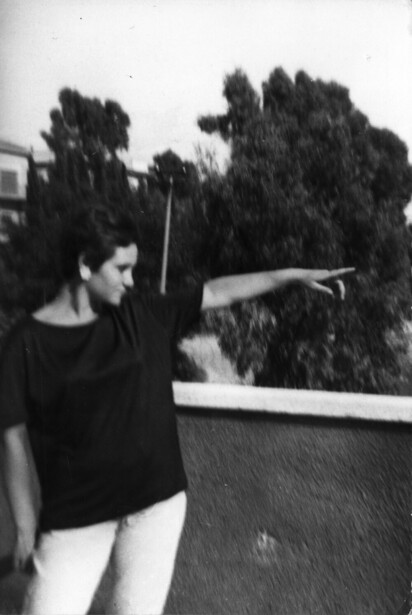
These photographs are irreplaceable not because they are rare, but because they are personal. They are fragments of lives that shaped my own. They remind me that photography's highest purpose is not always artistic expression. Sometimes, it is simply preservation.
In an era where images are produced endlessly and forgotten almost instantly, the family photograph feels increasingly precious. It survives hard drives, changing platforms, and the ruthless speed of digital culture.
It waits patiently.
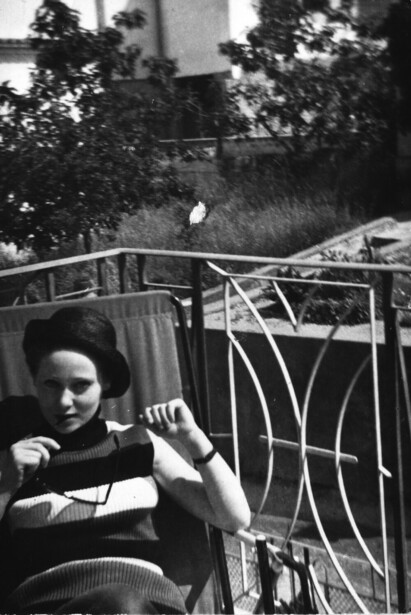
Long after trends have faded and cameras have become obsolete, these photographs will continue to speak. To children, grandchildren, and perhaps generations beyond them.
Photography, after all, is our most effective weapon against disappearance.
Your most important photographs may never hang in a gallery. They may never go viral. They may never be seen by strangers at all.
But one day, someone you have never met may hold them in their hands and discover, within those small rectangles, the story of where they came from.
That is legacy.
That is photography.

Join the Fstoppers community for free
-
Post comments and join in the discussions
-
Browse the site ad-free
-
Share your work and get featured in the community
-
Compete in the photo contests for fun and prizes
11 Comments
When archiving my 55+ years of photography I was surprised at how much of it, pictures of people that I know and pictures of my family were the ones I cared about. I found very few of the photos of things or scenics worth keeping.
It's interesting how time becomes the ultimate editor. We spend years photographing all kinds of things, yet when we look back decades later, the pictures that seem to matter most are often the ones containing the people we loved and shared our lives with. I've found that photography becomes less about the subject itself and more about preserving connections and moments that would otherwise fade away. Thank you for sharing that perspective.
Your perspective really hit home for me, in my early 70s.
Yes, I think there is magic by looking memories through the photographs. Sometimes in this era we tend to forget this: approaching the images as something to scroll down on instagram or any other social hub. For this reason I think also the print is still a different kind of experience.
My father taught me photography (eons ago). He always said : take a few photos of your car ... in 20-30 years you'll be glad you did. Been photographing my cars ever since ... with my grandchildren now :-)
What a nice tip here, Guy. I love this comment that relates immediately with the real sense of photography. Because yes, many times photography is about family, relationships and yes, even cars!
All those years go by in a hurry. My first car was a 1968 Plymouth Fury III, but I have hardly any pictures of it, none of the entire car itself. A 2001 Trans Am was my favorite. By the early 2000s, I had gotten serious into digital photography and have too many pictures of everything.
My grandfather (1892-1951), must have been a real technology geek. Apparently Kodacolor prints were first sold in January 1942. I have a binder full of pictures (mostly black and white but some in color) from around that time. I also had his 16mm motion picture film from the early 1940s which I converted to digital... films of me celebrating Christmas at age one.
I also have quite a few professionally made black and white portrait photographs from the 1940s of my mother in her 20s that are still in pretty decent shape. The Kodacolor prints are badly faded but I've pulled out the color in Photoshop. Even though the digital files could theoretically last forever, if and when they're converted to new digital file formats, I'm reprinting some of the photos on archival paper.
I am so happy to see this work shared here, Ed. That is exactly the reason why i started to offer my writing on fstoppers: having the opportunity to interact with other photographers and build community through interesting discussions. Thanks for sharing these photos here.
I also have a lot of questions about my parents Photos. I have a few answers now but I remember asking when I was young and they just said “oh don’t worry about it”.
I can name the people in most of the photos, and I can get a lot of information from census reports. I even have the shipping manifest of the ship my grandfather traveled to America on in 1910. What I will never find is the reason why he left Eastern Europe at age 18 and decided to move to New York. I've read a lot of history about the current events from that time in what is now western Ukraine (Austria then, Polish before that), much of which was leading up to World War One. I even asked my aunt when she was in her 90s, but nobody could ever explain why he came to this country.