The camera in your bag right now, the one built for sweeping vistas, might already be a capable wildlife machine. Landscape and wildlife shooting used to demand two completely separate kits, but that line has blurred to the point where the same body and a long zoom can do both jobs well.
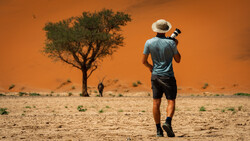
A landscape shooter who kept running into animals on location, Andy Mumford walks through everything he picked up photographing wildlife over the last three years, from polar bears in East Greenland to oryx in Namibia and arctic foxes in Iceland. His starting point is the gear convergence. Wildlife once meant fast bodies with strong high-ISO performance but modest resolution, while landscapes called for slower, high-resolution cameras with wide dynamic range. Modern cameras now combine both, pairing high resolution and wide dynamic range with fast frame rates, sharp autofocus, and cleaner files at high ISO. Add a zoom like a 100-400mm or a 200-600mm, useful for both genres, and a landscape kit turns out to be a strong wildlife kit too.
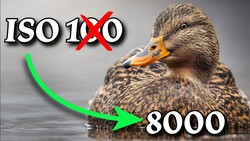
For settings, Mumford shoots with the lens wide open at its fastest aperture and controls shutter speed manually, so he can push it up for fast-moving animals or ease it down for slower ones. He sets ISO to auto with a ceiling, roughly 3,200 in decent light or at dusk, and 6,400 when he needs faster shutter speeds. On focus, he uses subject tracking with back-button focus, which lets him hold focus on a specific point and reacquire an animal that ducks behind a bush and reappears. He sticks with a single focus point placed on the eye rather than eye-detection autofocus, since a scene with multiple animals gives the camera too many eyes to choose from. Noise-reduction software has improved enough that a slower zoom and a higher ISO now produce clean, usable results, which is the whole reason this crossover works.
Mumford breaks the act of shooting animals into three levels: seeing the animal, photographing the animal, and actually capturing a good image of it. The first two are easy. The third takes patience, since most animals conserve energy and spend their days doing very little. You wait for a lion to lift its head, for cubs to play, for any behavior that connects a viewer to the animal, and you often reposition the vehicle to get an angle where the animal looks toward the lens. He's honest about the mental overload that comes with excitement. After tracking a cheetah all day, the adrenaline made him forget composition basics he'd never skip on a landscape, like scanning the edges of the frame to catch a clipped ear or the rear end of a zebra creeping in behind his subject.
Eye-level shooting is the technique worth stealing here, and it connects to a broader shift in how wildlife images get made outside of professional circles. Getting the lens down to the animal's eye level throws the foreground soft and builds a gentle gradient toward the subject, the look that separates a snapshot from an image that stops people. From inside a vehicle you sit too high, so Mumford dangles the camera out the side, composes on a tilting LCD, and lowers it toward the ground, always with a wrist strap wrapped tight and a guide's approval. That single trick, plus varying your framing between tight portraits and wider shots that show habitat, is exactly what turns a scattered set of animal photos into a wildlife portfolio with range. It's the same instinct landscape shooters already have for sense of place, applied to a moving subject.
Light does the rest. An animal the same color as its surroundings, or lying in shade to escape the heat, flattens out and loses contrast even with a shallow depth of field. Mumford looks for light falling on the face, repositioning to find animals turned toward the sun or catching side light, because that's what draws the viewer's eye to the subject. He closes on the advice that has nothing to do with settings: put the camera down sometimes and just watch. The mental effort of composing and dialing in exposure can swallow a once-in-a-lifetime moment, and you don't want every memory of a place to be about wrestling with your gear.
Watch the full breakdown in the video above to see Mumford's field examples and the rest of his composition approach.
Join the Fstoppers community for free
-
Post comments and join in the discussions
-
Browse the site ad-free
-
Share your work and get featured in the community
-
Compete in the photo contests for fun and prizes
1 Comment
That video was pretty good. Wish I were able to take a trip to those areas and spend some time taking photos of wildlife.