Blurry shots, cluttered frames, and flat edits are among the most common issues that show up in landscape photography workshops, and they persist even among people who've watched dozens of tutorials.
Coming to you from Mads Peter Iversen, this practical video covers the landscape photography mistakes Iversen sees most consistently during his workshops. One of the first issues he addresses is failing to check sharpness in the field. Autofocus and image stabilization have improved dramatically, but Iversen doesn't trust either one. After every shot, he enlarges the image and checks from center to corner before moving on. Wind, slight focal length shifts, refocusing errors, and ground vibrations can all ruin a frame, and none of them are obvious on a small camera screen at a glance.
Iversen also walks through a framing principle that a lot of people get wrong: keeping the edges of your composition clean. Anything visually heavy near the edge of a frame, a standalone tree, an animal, or especially a half-cropped subject, pulls attention away from where you actually want the viewer to look. He suggests imagining an inner rectangle sitting about 10 to 15% inside your frame. Visual clutter between that inner rectangle and the actual edge of the image is almost always a problem. Related to this, he points out that shooting too tight around your subject creates a different set of issues: a claustrophobic feel, lost context, and competing focal points near the edges that leave the center of the frame feeling empty. A Tuscany example in the video makes this concrete, showing how a slightly tighter crop and some cleanup in post turns a busy, unfocused image into something deliberate.
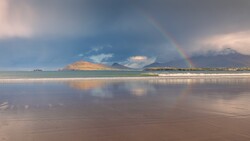
The light section of the video is worth watching in full. Iversen is direct about the hierarchy: light matters more than gear, more than technique, and more than post-processing workflow. The difference between a flat midday shot and one taken when light breaks through clouds or rakes across a landscape at a low angle isn't subtle. It changes the color, depth, and dimension of the entire scene. Iversen's point isn't just that golden hour is nice. He's saying that waiting for genuinely interesting light or atmospheric conditions is a strategic decision that should shape how and when you shoot. The before-and-after examples in the video make a strong case for it.
He also covers editing, specifically the mistake of skipping it or leaving it to in-camera JPEG profiles. Raw files are flat by design. They capture maximum information so you can shape the image yourself. Relying on a "landscape" or "neutral" preset in your camera still involves someone else's interpretation of your scene, and it removes your ability to correct exposure or control how the final image looks. Iversen frames editing as an opportunity rather than a chore, and the point about developing your own style through editing practice is one that doesn't get made enough. There are additional mistakes and techniques covered in the video that go beyond what's here. Check out the video above for the full breakdown from Iversen.


Join the Fstoppers community for free
-
Post comments and join in the discussions
-
Browse the site ad-free
-
Share your work and get featured in the community
-
Compete in the photo contests for fun and prizes
No comments yet