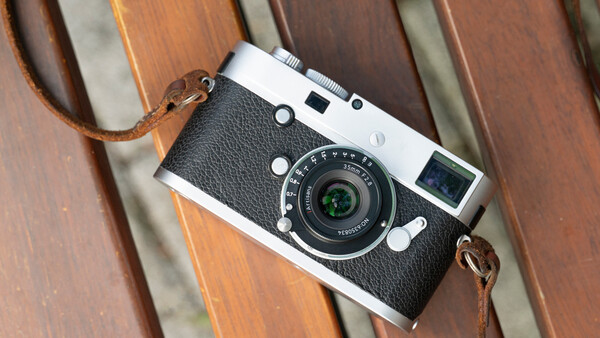
There’s something surprisingly novel about making a new lens for a system that predates the governments of many modern countries. The Leica Thread Mount (LTM, also known as the M39 mount), born in the early 20th century wasn’t designed for firmware updates, autofocus motors, or clinical perfection. It was designed for walking. For looking. For getting close enough to feel like you were part of the scene rather than observing it from a safe distance.
The first Barnack cameras were designed to be small enough to fit into a coat pocket, to use 35mm film - then a novel idea, as most consumer-level cameras still operated with medium format film. It was a tool for street shooters, before the concept had really entered the public mind.
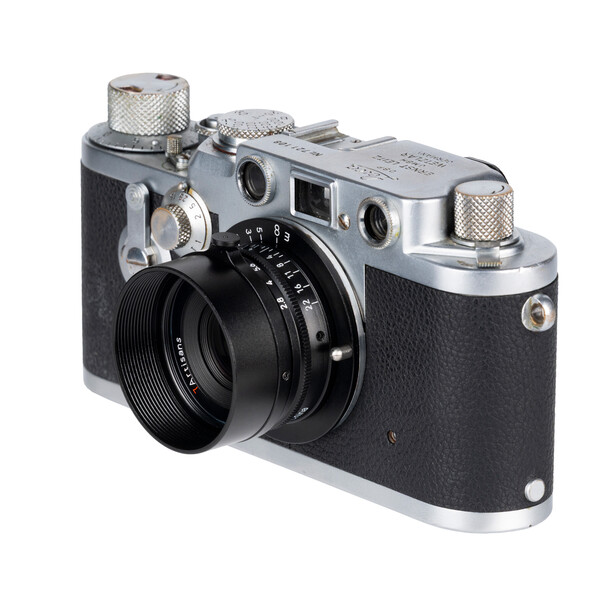
And yet here we are, in 2026, with 7Artisans releasing a brand-new 35mm f/2.8 lens for that same mount; a mount that first saw daylight nearly a century ago. If that sounds like nostalgia, it is. But it's also something more practical: a recognition that not everything old is obsolete. As I've written before: everything old is new again.
The 35mm focal length has long been called the "human eye," not because it perfectly matches our vision, but because it feels right. It's how a street looks from the other side of it; how a conversation looks when you're standing just close enough to hear it. It's the lens you leave on the camera when you don't want to think about lenses. I've long kept my 35mm lens as my "every-day carry" bit of glass. When I'm not on assignment, and I don't want to carry a traditional 24-70/70-200 kit, a 35mm is typically what fills my bag.
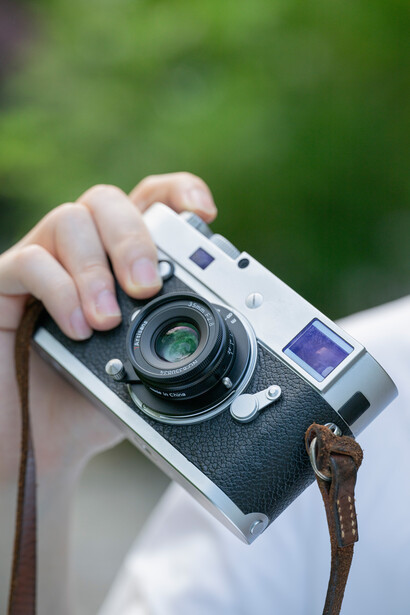
Back in the so-called golden age of rangefinders, 35mm lenses weren't just tools, they were small, almost improbably small. Pancake lenses, they called them. Slim enough to turn a camera into something you could slip into a coat pocket and forget about until the moment mattered. That idea—photography as something lightweight, immediate, and unburdened—has been slowly eroded by the modern obsession with performance. Lenses got bigger. Sharper, sure. But heavier. More deliberate. Less invisible.
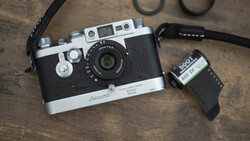
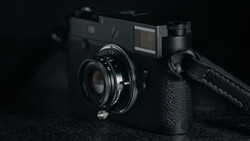
Physically, it's about as minimal as it gets: roughly 20 mm thick and weighing in at 88 grams. Mounted on a small rangefinder body—something like a Barnack-era Leica or even a modern digital M—it nearly disappears. That's a design choice with consequences. A lighter camera gets carried more. A camera that gets carried more makes more pictures.
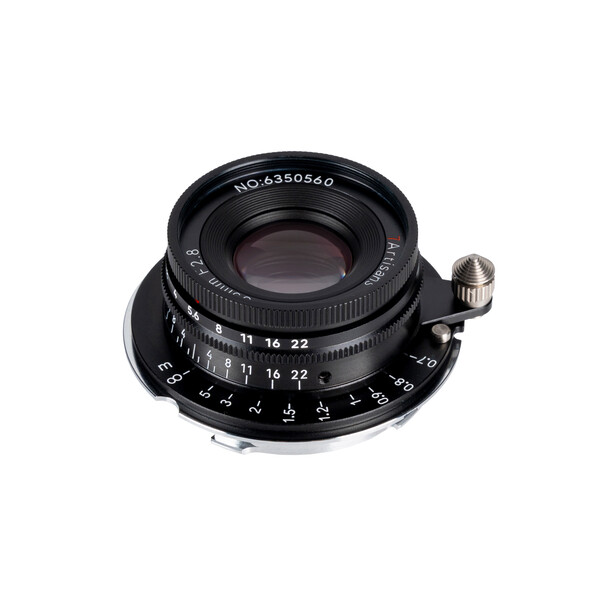
Under the hood, the lens uses a double Gauss optical layout: seven elements arranged in five groups. It's a classic configuration, one that has powered everything from mid-century standards to some of the most revered lenses ever made. What's different here is the execution: modern manufacturing tolerances applied to an old idea. The result, at least on paper, is a lens that holds onto some of the gentler rendering characteristics associated with earlier Leica glass while maintaining contemporary expectations for sharpness across the frame. That's not to say soft; sample images suggest a modern lens that maintains sharpness at the center, but doesn't cross the border into clinical. Whether that holds true to the production models remains to be seen.
If the marketing language is to be believed, distortion is kept under control as well. Quoted at under one percent, which matters more than you might think for a lens that will likely spend its life pointed at city streets, building lines, and human faces.
The aperture tops out at f/2.8. Not particularly fast by today's standards, where lenses seem to compete in fractions of a stop, but fast enough. Fast enough to work into the early evening. Fast enough to separate a subject from its background without turning the world into abstract blur. There's a kind of discipline in that limitation; a reminder that not every problem needs to be solved by opening the lens wider.
There's a particular kind of photographer this is aimed at. Not someone chasing resolution charts, pixel peeping, or edge-to-edge perfection at 400%. Pair it with an old screw-mount body and you're stepping into a lineage that runs back to the earliest days of 35mm photography. There's something about being able to pair a lens produced in 2026 and a camera from 1930 that I find… I don't know. Appealing isn't the right word, but it's close enough. It's not going to magically make you a better photographer or make the process any easier, but still. Maybe sometimes I'm just a big hipster nerd.
There's also the question of "look," that endlessly debated, often misunderstood quality that photographers chase. 7Artisans is clearly aiming to echo the rendering of earlier Leica lenses: subtle falloff, a certain softness wide open, a gentler transition between focus and blur—while tightening things up just enough to meet modern expectations. Whether it succeeds will ultimately come down to how it behaves in the real world, not on paper. Marketing language doesn't always align with the final production model, so it'll be interesting to put this to the test out in the real world. The marketing images I've seen to date remind me of the rendering capabilities of the older 35mm f/3.5 Summaron. While lenses like the Leica Summaron 35mm f/3.5 were built as practical tools of their time, the new 7Artisans 35mm f/2.8 LTM revisits that same compact, double Gauss philosophy. Both share an emphasis on portability, natural rendering, and the understated perspective that defined early rangefinder photography, even if they arrived there from very different eras. The result isn't a direct translation, but a contemporary lens that echoes the character—and restraint—of its mid-century predecessors.
But the intent is clear: not to recreate the past perfectly, but to reinterpret it. Maybe that's the point.




Join the Fstoppers community for free
-
Post comments and join in the discussions
-
Browse the site ad-free
-
Share your work and get featured in the community
-
Compete in the photo contests for fun and prizes
No comments yet