
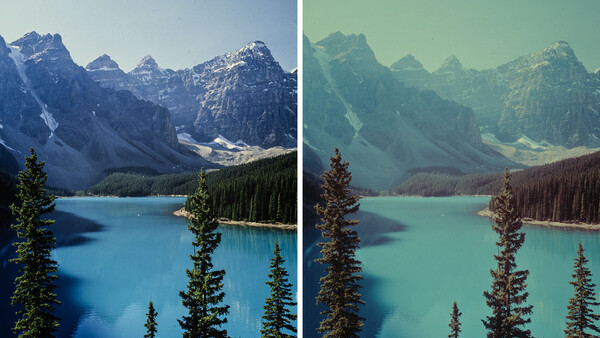
Some say film photography is better than digital. Film has a more organic, natural look. Shooting with an analogue camera is a better experience and a purer form of photography. Others say digital photography is better because computer technology makes photography easier. You can shoot more frames and focus quicker, and experiment more by shooting more without the need for a second mortgage. Buckle up, this might get ranty.
In recent articles, I mentioned I’ve gone back to film photography again. I said I believe it’s easier to understand and learn the principles of photography on an old film camera because there are no buttons, dials, or menu functions to distract and confuse you. This caused a huge debate in the comments and made some people angry. If it were the Middle Ages, I’m sure I would have ended up being burnt at the stake for sharing these opinions that are nothing short of heresy. And this is the key word—opinions. I share my opinions here, not facts, just opinions. We all have them, and clearly, we all want them known. Sadly, though, some people mistake their opinions for facts and insist they are right. That’s when the problems really kick off.
So if you’ve decided to continue reading this article, dear reader, be warned it is laced with more opinions—and some facts too. Luckily, I’ve figured out the difference and will hopefully make this clear.
Some Background
Our opinions are often formed from our experiences—at least, they certainly should be. When it comes to film photography vs. digital photography, I have 40 years of experience, starting with learning photography on a basic film camera at college.
I spent the first 20 years shooting on film—35 mm and medium format cameras, from faster black-and-white negative to slower transparency. I must have shot hundreds of thousands of film photos during that time. I started out learning on a used Nikon I picked up at the local camera store, made in the 1970s. I loved that camera, and still have it. Recently, I dusted it off and took it out to play. I made a vlog about it, which you can watch here.
By the late ’90s, I had purchased a Nikon F5—their flagship camera at the time, and one of the best modern film cameras ever made, in my opinion. I also had a Bronica ETRS for bigger client projects where photos being reproduced on large posters and store displays were required. Both of these cameras allowed me to get the photos I needed and earn a living. I also shot for fun, as photography has always been both work and play. But then it all changed—along came digital technology.
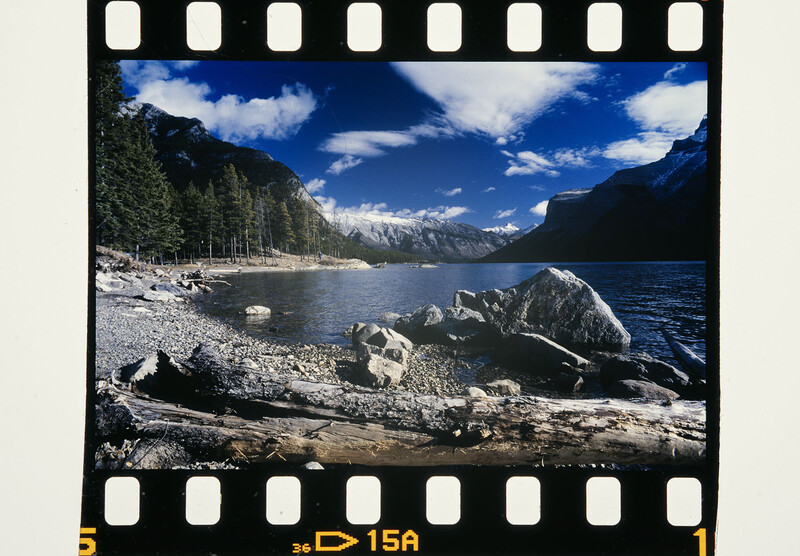
The first few years of digital cameras were of no interest to me. I had a Nikon D200, which was terrible in low light, and then a D300, which was a little better. It wasn’t until 2008 that I was really happy with the results of a digital camera for all the types of photography I was doing. That camera was the Nikon D700. I still have it and use it. It’s fabulous.
So I shot on film for 20 years and now digital for 20 years. I had no bias; a camera was always just a tool that allowed me to transfer an idea to paper, or more recently, a computer screen. Whether shooting in studios or on locations around the world, I simply chose the right tool for the job and gave it no further thought. Photography was simple; life was good.
I Started To Hate Digital Technology
Maybe hate is a strong word—maybe it’s the wrong word. Digital technology has made life so much easier for photographers. I’ve undoubtedly benefited from that. I think I have more of a love/hate relationship—a Richard Burton/Liz Taylor kind of deal.
The ability to see how a photo might turn out before you press the shutter is incredible. The ability to see a histogram to make sure you don’t clip highlights is very useful. The ability to focus track fast-moving subjects for sport and wildlife photography is a game-changer.
But it all gets a little ridiculous. Small tweaks and changes keep getting added, and yet another new camera model is created. Sometimes a newer model is not as good as previous models, and there is often no real reason to upgrade. But we’re persuaded into thinking there is. Camera models are turned around so quickly it seems the quality of manufacturing has declined too. Cameras and lenses have become plasticky and cheap-feeling, and they break easily.
Recently, I decided it was time to replace my trusty Nikon Z6. I’ve had it for eight years, and bits have been falling off from so much use and abuse. It’s my workhorse, and I love it. It does everything I need it to do for all the genres of photography I do both for work and pleasure. Having a strap lug break off means I can’t have it around my neck when I travel, and I need a camera with a neck strap.
The sensible me figured if I love the Z6 so much, then buy another Z6. They can be picked up for around $750 now, which is great value. But then the smart me thought, I do more video for clients now than I do photography. So if I get the Z6 III with its incredible new video capabilities, I would not only have a great photography camera but the perfect backup camera to my Z9 for video projects. Smart thinking, huh? It turns out it wasn't. I got the Z6 III, and four months later, I wished I had gotten a replacement Z6.
Sure, it’s a great B cam for video, but all the new tech, from a photography point of view, is not needed—for my requirements, anyway. It’s also made the camera bigger. The fold-out flippy screen is terrible for photography compared to the Z6 screen. Little Brittney might like it for recording her makeup reel for TikTok, but little Simon finds it bloody annoying and impractical, particularly when using a camera strap. And then there’s the partially stacked sensor. It’s the same 24 MP sensor as the Z6, but those engineering techy types at Nikon bolted on a faster processor, making autofocus and processing snappier. I don’t need that, and I’m sure, with their attention aimed toward speed—because that gives the marketing boys and gals something to work with—the Z6 III’s image quality is compromised. The Z6 III’s image quality and dynamic range are no better than the Z6’s, from what I can tell.
The point is, image quality reached its pinnacle years ago, so now we’re being convinced we need faster focusing or improved video—or more silly program modes like black and white and built-in color presets called “recipes” (recipes, my arse) in case we can’t figure out how to move a few sliders in Lightroom.
Today, I’m back with the beaten-up Z6 a lot of the time, but have less money in my bank account. Yup, a little ranty there, folks.
Photography YouTube Influencers
Worse than the ever-improving technology in a digital camera are those little buggers who keep hyping it up and trying to convince us to part with our hard-earned cash and buy one, just so they can make a commission or fee from doing so. These guys call themselves professional photographers. Most of them are just professional snake oil salesmen. Maybe I need a separate article about this to say how I really feel?
We need more conversations about creativity and why we take/make photos, not about buying new gear. We need to understand a new camera is not going to make us a better photographer—practicing and experimenting is. Time is our answer, not money. We need to see more and spend less.
The Computers Are Taking Over
As much as digital cameras allow us to experiment more and potentially create incredible images, I find that because cameras are loaded with so many features, many people new to photography are overwhelmed. Too much choice can be confusing and actually block creativity. So many new photographers don’t take time to really understand photography and how a camera's basic functions like aperture, shutter speed, and exposure control actually work—because they don’t need to. I’ve known people to buy a new camera, get frustrated at how much there is to figure out, and simply say, “Sod it, I’ll leave it in fully auto mode.” Your photography is then created by luck, not skill. That’s like trying to make a living by buying a lottery ticket every day instead of learning a skill and getting a job.
Understanding shutter speeds, apertures, and exposures was once the cost of entry into the world of photography. It got you through the door. Now there is no door—just walk on in with a camera you picked up on Amazon, with a fully charged battery. You can now blindly rely on the technology to do all the work for you. Is this a bad thing? If you want to become more than a mediocre casual photographer and make wonderful creative photographs, I think it is. But this is just my opinion.
My Relationship Today With Digital Cameras
Digital cameras have become hybrid cameras—a tool that allows you to create photos and video. These cameras undoubtedly have their uses. As someone who shoots both photos and videos for work, they are amazing. But what about those who just want to pursue a love of photography and aren’t interested in videography? Only Hasselblad and Leica make pure photography cameras. Unfortunately, these are professional tools and/or luxury items, the price of which cannot be justified for the majority of us. A few other brands are trying to create that retro photography experience, but no one has got it quite right just yet—possibly Fujifilm with their X100 series is close.
If I take my client work hat off—which I’m doing more and more these days—as a passionate photographer who has lots to say artistically and plenty of personal projects to work on, a new digital hybrid camera isn’t ticking any boxes for me or getting me excited about wanting to own one. I’m using a six-year-old cropped-sensor Nikon Z50 for hiking trips, an eight-year-old Z6 for travel and street photography, and more recently, I’ve turned to my 17-year-old Nikon D700 for many urban and landscape projects. Black-and-white photography is my biggest passion, and I bought a Leica Q2 Monochrom two years ago for that. Its simplicity allows me to use it like an old film camera. The drawback for many would be its fixed lens.
I often get asked what the best all-round digital camera is to buy, and I’ve given this a lot of thought. What would I buy? What if I didn’t need a Nikon Z9 and Z6 III for video work? Well, my old Nikon D700 is almost perfect, but it’s only 12 MP. That’s fine for most things, but I’ve found 24 MP is the sweet spot for all my needs. This means the best all-round camera I would choose is a Nikon D800 from 2012, with 36 MP. The D850 from 2017 has some improvements in quality apparently, but that’s getting into rather boring pixel-peeping territory for me. The D800 does everything I need it to. If only it were smaller and lighter. It’s hard to find the perfect camera, but this one is close. What I love about this camera is it’s an F mount, so I get to use all my lovely old Nikon lenses on it—proper lenses, not the delicate focus-by-wire plastic crap Nikon makes today. Actually, there is another more modern camera I recommend: the Nikon Z5. An absolutely fabulous 24 MP mirrorless camera. It’s an underrated bargain. The challenge is finding good lenses for it, though. The Z-mount f/4 24-70mm is a good option, but my preference is to use older manual-focus primes that are built like tanks and have some character to them. It's good to see brands like Voigtländer make Z-mount options now. If I didn't have vintage Nikon glass, I'd be looking at their superb range of tough metal helicoidal lenses.
Leica Doesn’t Let the Market Dictate What They Do
I can understand why Leica cameras are becoming increasingly popular. A Leica M digital camera is the nearest thing to a traditional film camera experience—actually, it’s the nearest thing to the perfect camera.
With a Leica M, you are once again forced to learn the principles of photography, and you have to actually do some work and contribute something to the process to get your photo. You don’t have a load of silly distracting buttons and dials, just things you actually need: a shutter speed dial, an aperture ring, and a distance scale on the lens. You have to manually focus. Yes, there’s a little tech inside if you need it, but most photographers choosing these cameras don’t need it. Leica says this on their website: “Rangefinder cameras that deliberately don’t offer everything that’s technically possible, but rather remain limited to what’s photographically useful.” That nails my thoughts perfectly. They also state, “Photographers are empowered to capture the very essence of a moment, unburdened by technological distractions.” I often wonder if technology being added to cameras is nothing more than a pissing contest between engineering and marketing departments at the different camera companies. It’s all about them, not the photographer. My wise old granny said to me once, “Just because you can do something, doesn’t mean you should.” She could have worked at Leica.
Yes, a Leica camera and one or two wonderful Summicron or Summilux lenses are cost-prohibitive to many of us—unless we still have a healthy liver or kidneys to sell. But in the long term, once you buy a Leica you won’t need another camera for many years—maybe never again. And think of the savings from not buying film and having it processed!
I have to wonder—why on earth isn't Nikon or Canon playing on their heritage and making digital versions of their wonderful 1960s rangefinders? Imagine if they took the Leica approach and made a simple, high-quality rangefinder, free of plastic, that provided a simple photography experience? I'd wager they wouldn't be able to keep up with demand.
Back To Film Photography Then?
With all I’ve said about digital technology, and how it gets in the way of photography, is it any wonder I dusted off my old simple Nikon EL2 and have started running film through it once again? I made a video about my first outing with the camera and stated how much I like the feel of holding something simple and solid. I said how much I like the tactile experience of using something mechanical, of understanding it and being in control of it, and how much the shutter noise and film advance winder sound makes me happy. Someone said in the comments, “It's 2025. Give up on the film crap. It does not look better. Shooting film because the shutter sounds cool? Who cares what the shutter sounds like.”
Well, DA Photography from Canada, I appreciate the comment, and thanks for the great T-shirt idea. Does anyone want to buy a T-shirt that says, “It's 2025. Give up on the film crap. It does not look better”? I might just get that made!
I do agree with DA, though, that film photos don’t look any better than a digital photo. You can achieve a film look digitally if you know what you’re doing. Using a vintage lens with character on a digital camera, over a perfect and sterile modern digital lens, can make a difference too. Film photography for me is about the experience, the nostalgia, and the way the physical process makes me feel. I’m a huge believer that gear really doesn’t matter—until we find something that we want to pick up and use, and enjoy holding. Then it matters very much.
Possibly the biggest appeal, particularly with older film cameras, is the craftsmanship that went into making the camera. Same with lenses also. I enjoy holding something that’s been skillfully made by hand, by an expert craftsman, using the finest quality components. An old camera is like owning a vintage Rolex—you can’t help but appreciate its heritage, quality, and beautiful design both inside and out.
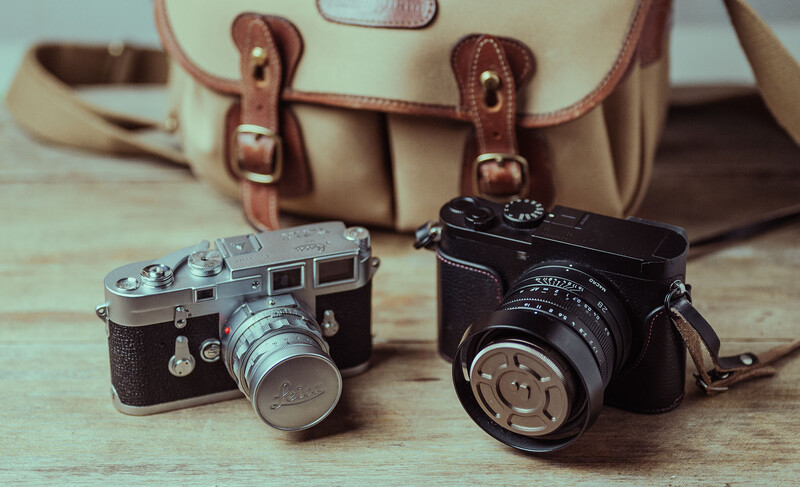
To that end, I just purchased a 70-year-old Leica M3—a mechanical masterpiece. It’s made with brass, even the cogs are brass, and the 1956 lens I bought for it is solid brass and glass. Come on! The experience of using that is next level. I’ll do a separate article on it, if you’re interested.
My Solution To My Film vs. Digital Dilemma
Let’s be clear—this is my solution, not the solution. I enjoy the experience of using a film camera. More specifically, an older film camera with nothing but a shutter speed dial and a manual-focus lens with an aperture ring and distance scale. But this is not always practical, and film is expensive.
A digital camera does make life easier for many scenarios. When it comes to street and travel photography, with my Q2M or Z6 I can easily shoot 400–600 frames in a day. I would go bankrupt if that was shot on film.
My solution, at the time of writing this article, is to go out with two small cameras. For black-and-white photography, I take my Leica Q2M with its 28mm Summilux. And I also have my Leica M3 with a tiny Summicron 50mm lens, loaded with HP5+ film.
I have the best of both worlds. I can shoot digital and get shots quickly and easily, without worrying about cost. And when I see an opportunity to slow down and really enjoy the experience, I can pull out my M3 and shoot some film.
For color photography—which admittedly I’m doing less of these days—I take one of my Nikons, preferably with some vintage glass. I’ll typically choose just one lens: a 20mm, 28mm, or 35mm. And the other camera in my bag is the Leica M3, or maybe my Nikon EL2, with a roll of Kodak Portra 400.
I am finding I shoot maybe just 4–5 photos on film on most outings, so a roll will last for a month or so. No great expense there. If I don’t take the M3, I’ll grab the 50mm Summicron and pop it onto a Nikon with an adapter. This works really well.
There are only two things a digital camera gives me over a film camera—other than saving on film costs. The first is the ability to program a zoom-in/out function on one of the camera’s buttons, because I use manual glass. My old tired eyes need some help to focus, so zooming in to fine-tune the focus is a huge help. It’s interesting to note that the viewfinder on the M3 is huge—better than any other Leica rangefinder—and the focus patch is easy to see and use. So is the split focus screen on my old Nikon. I don’t need additional help on either of these cameras to set perfect focus. But I need help on a modern digital camera, despite being able to adjust the diopter. Old analog OVFs are better than modern digital EVFs—interesting.
The second thing I love with a digital camera is the ability to have a histogram in the EVF or on the screen. I prefer to shoot manually, so seeing the exposure so easily means I can adjust the shutter or aperture dial instantly. I really love that.
Summary
There is no one solution, or right solution. If you like film and manual cameras, go that route. If you like the convenience and speed of digital technology, go that route. There is no better solution—just the right solution for you. So long as you enjoy what you do, and it makes you happy.
So it turns out, after lots of playing this past year, I’m very happy enjoying the best of both worlds.
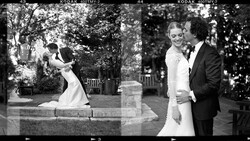
Oh, FYI—the main image alludes to showing a digital photo next to a film photo. They are both film. One was processed digitally, ironically, to look more “film-like.” It's all about the end image, not how it was created.

Join the Fstoppers community for free
-
Post comments and join in the discussions
-
Browse the site ad-free
-
Share your work and get featured in the community
-
Compete in the photo contests for fun and prizes
161 Comments
I shared some of his struggle, and posted a long reply. Modern Digital vs. using a Nikon Zf with manual lenses was my solution!
I know of many people who bought the Zf and put a lovely old school helicoidal manual lens on it to enjoy the best of both worlds. It's a fabulous set-up, i'm envious!
Isn't this more about having fun? Some people just enjoy the whole process of choosing the correct film, using equipment with more limited but more tactile functionality and then the magic of developing your own photos. I remember this. I wouldn't give up the convenience of digital now, but I do remember the fun.
The quality, sharpness, perfect exposure and color accuracy.. these are things usually only the person taking the photo notices. People looking at images you've created might notice if you miss focus, or over-saturate an image in post, but that's about it. They pay far more attention to the composition and content.
it's all about having fun, otherwise why bother? I use the latest digital tech for client work, but want to have fun when I shoot for myself... which is most of the time these days.
I'm in the process of reading your article, but had to stop and comment on your reference to "...Richard Burton/Liz Taylor kind of deal."
Made me laugh as I thought, how many younger people will actually get the reference, perhaps film students...but I doubt my 30s and 40s year old kids would... I hope I'm wrong, though, so much of my life was influenced by the 60s - 80s it seems a shame the younger generations are in the now...but that's a whole different discussion.
I realized this would mean nothing to most people reading the article, lol. I guess I'm getting old.
I asked "an AI Search" for a modern day analogy for this and it came up with "Bennifer" (Ben Affleck and Jennifer Lopez) type of relationship and "Kimye" (Kim Kardashian and Kanye West).
I almost said "WHO?" lol!
I'm getting old, too!
Okay, all you oldtimers... Elizabeth Taylor was married eight times. Name the famous actor or actress who was married more times than that. No fair cheating. If you know the answer to that without looking it up, you can claim geezer status.
I guess I don't get geezer status - my guess was only married eight times,,,,and last time I checked eight is not more than eight!
I was asking the question if anyone knows the name of the actor or actress who was married more than eight times... without looking the answer up on Google. The person to whom I'm referring was married nine times and was most active in movies and television in the 1950s and 60s.
My happy medium is to ignore most of the automated features in my digital cameras, shoot in manual and with manual lenses. Yes having a histogram is handy but I certainly don’t get trigger happy with my digital camera, coming home with hundreds of photos to cull through. Finding decent compositions to photograph takes time and patience and I naturally take it at a slower pace. I’m lucky to come home some days with 20 photos and will be even luckier if just one of those grabs my attention. I can also turn off the rear screen but can find it handy for lower or higher shots whilst still being able to frame it exactly as I want - no shoot from the hip guesswork.
There is no right or wrong here regarding the camera people choose to use but lazy stereotypes about film being ‘in the moment’ and ‘slowing you down’ whilst digital is ‘quantity over quality’ and ‘doing all the work for you’ do get quite irritating. We can definitely slow down on digital and take our time if we want to.
The issue in this discussion - like in many others - is that people are vehemently discussing what they believe is "best" when nobody defined the criteria of "best". Without such an upfront alignment, any of these discussions is pretty pointless...
There is no "best" that works for everyone. For some, well, maybe they just like shooting film. But a working pro at a sports event? Yeah....no.
A few of us actually have defined what is best, by saying what is most important to us.
The author says that the photographic experience is most important to him, and so he bases what is best on that.
I have said that examining the final results are most important to me, and I base what gear I think is best on that.
What is most important to you, and what do you primarily base your gear evaluations on?
I have come to the conclusion for a while now that mega pixels and a larger sensor are just pointless and a waste of money for my amateur photographer. It's all about capturing an image for me, composition, looking for interesting subjects. I am fed up with having to decide what lens to use and have sold all my DSLR gear and MILC gear and gone back to using a Olympus Stylus 1 and a Lumix FZ200. Both are small sensor cameras, that's not a problem for me, I can still get the images I want and with built in longe range zooms, I can concentrate on my images rather than worry about my gear. I am not interested in high tech gear or film cameras, I just want to enjoy taking photos.
Very well articulated!!!
Your struggle with digital and film is understandable. I got a new Nikon FTn back in 1974. I still have it, but it has shutter bounce after putting thousands of rolls of Tri-X through it.
After 3 different APC Nikon DSLR's and a D850, I got a Z50 to test mirrorless. Soon after, I got a Z6ii and loved the quality. I then traded my D850 for a Z8. I sorta missed my classic B&W film experience, so I bought a Zf and sold my Z6ii. I dabbled with my Z50 with the Pancake Z 26mm f/2.8. I loved the 39mm focal length, but it was still feeling like "digital." Then I started using vintage glass and buying modern manual lenses.
When I got a 40mm f/1.2 Voigtlander to mount on my Zf, I was reminded of my old photography days of Tri-X. Manual focus, ISO Dial, shutter speed dial, and a lens with an aperture ring changed everything. Focus confirmation with a green box or with a zoom to 200% made it easy to focus accurately. My experience was so good, I almost made the jump to a Leica Q2 Monochrom, but after months of soul searching, I got the Voigtlander 28mm f/1.5 instead. My Zf is my daily shooter now mostly set to B&W Deep Tone Monochrome. I feel like I have a film camera, but without having to drop off the film for processing!
Thanks for sharing your thoughtful, well organized thoughts!
My father was a combat photographer in World War II. He shot a handheld 4 x 5 fixed. Focus fixed exposure camera. After the war, he didn’t pursue professional photography, but was an excellent amateur. I picked up one of his twin lens reflex cameras when I was eight years old. I shot try X. Then I used my fathers minolta SLR and shot Kodachrome 64. Great film but very insensitive to over exposure and crazy expensive to process.
Are the WW2 photos from your father published anywhere? I would love to see them.
Yes. On B26.com. There is is a directory of service people. Look for Wilson Riedy. B26.com is a website dedicated to the flyers of the Martin B26. My father was a photographer on 56 bombing missions to France, Belgium, Netherlands and Germany. He won a commendation from George Patton for The bombing run photo with 4-500 lb bombs and the target bridge in the background. He flew 2 missions on D-Day
I have a book of over 60 bomb damage assessment photos contact printed 4x5. One shows the Messerschmidt Me 262 jet fighter. I will upload them to B26.com
Thank you.... The bomb picture is fantastic. Wish there were more pictures and stories. I can't think of too many more harrowing experiences than a bombing run over Germany. Why did he stay around for 56 missions? He must have had the opportunity to come home after 25.
He volunteered for the duration of the war. He could have come home after 25. He was Never injured. Scared shitless most of the time; the Army Airforce had the highest attrition rate of all of the services. Most crew were dead or injured after 14 missions. They flew in horrible weather. Many bombers crashed after taking off when climbing and circling to get into formation. Bomber and fighter crash sites are still being found in southern England. Once they crossed the channel and the bombadier sighted the target they could not deviate their flight path in spite of flak or German fighters. My father bailed out when he misinterpreted the pilots call of “Bombs Away” as “Bail Out”. They were trained to immediately follow orders even if they questioned them. If pilot feels that bailing out is necessary the plane is mortally wounded. The chances of bailing out of the B26 when it is spinning or out of control are very low. When his chute opened he saw the plane flying back to England “straight and level”. The plane had taken enemy or had no mechanical problems. No other crew bailed out. Fortunately he landed in Allied occupied France. It did take him a week of hitch hiking to return to base. His crew nicknamed him Geronimo and teased him mercilessly. Apparently Geronimo was what paratroopers called out when parachuting.
Personally I find the ZF a bit to big and weighty for my liking although fully appreciate why people would love using it. I use a Sony A7C II with a Voigtlander 40mm f1.2 and find the size of that camera makes it feel film like to me, if not in looks plus the lack of manual dials. I also shoot in full manual and don't use any automated features which helps with the experience too.
As some have already noted, it really is silly to debate which is better - just like which piece of art placed in a gallery is better? It comes down to personal preferences. However, this all being said, as it relates to film based photography, as film does possess a certain aesthetic value - or can we say - beauty - that sets it apart from digital based photography. Another aspect is the mostly hands-on (mind-dependent) workflow that many artist photographers want to experience when composing with film, regardless of the cost and / or the time it takes from exposure to the final print. In other words, it is a very deep and concerning, if not also, extremely interesting discourse to engage.
Though the article is appreciable, I suggest the author has covered a lot of ground in just one article and I also suggest perhaps three articles could have been made from this one, if only to help focus attention to some of the opinions and facts being presented. Thank you.
Lance A. Lewin - Fine Art Photographer/Independent Researcher
I agree, there is no "better". Yes i covered a lot of ground in this one article. I didn't give it much thought to be honest, I just sat down and wrote out what I was thinking one morning. I'm not a writer, i'm a photographer, who is passionate about all aspects of photography and creativity. I'm enjoying writing these opinion pieces, and encouraging discussion. I believe we should discuss these topics because social media can be so blinkered and biased. I'm trying not to be biased, just share thoughts based on my experience.
I welcome any suggestions for future article topics, so feel free to make suggestions for things you'd like to see discussed. Thanks for your comment Lance.
Simon wrote:
"I welcome any suggestions for future article topics, so feel free to make suggestions for things you'd like to see discussed."
Simon, I would really enjoy, and maybe even benefit from, and article about composition, primarily from the camera position (a.k.a. "point of view") perspective. This would necessarily be an image-heavy article in which you show many different ways in which the same thing can be photographed at the same time, in the same place, in the same conditions. You would show the subject small in the frame from a very close distance, small in the frame from a long way off, large in the frame from 12 inches away, large in the frame from 20 feet away, shot with a 12mm lens, shot with a 600mm lens, shot in a way that showcases rimlight around it, shot front-lit with no shadows at all, shot side-lit, aligned with a super dark, almost blacked out background, shot with a light airy background, with extremely shallow DOF, and a very deep DOF.
Basically show the same thing in the same place at the same time, a static subject, from every conceivable camera position, every conceivable position relative to the ambient light, every conceivable focal length, every conceivable camera-to-subject distance, etc., etc., etc.
Such an article would actually take a lot of work and a lot of time. Like dozens of hours, if done properly and thoroughly. But it would be immensely beneficial to others, as it would help them to expand their artistic vision and open their eyes to all of the different possibilities that are available to them when they set about to photograph something.
We did something like this at a camera club event a few years ago. The assignment was to pick one subject and photograph it ten different ways. At the following meeting we projected the images on a large screen and discussed how each view was different, how perspective changed the relationship between elements in the picture, how the choice of aperture and lens focal length changed the image, and so on. A kind of do-it-yourself version of what you're suggesting. Most people could make the obvious two or three pictures, but getting to ten was where the education takes place.
What you describe is what photography is all about. Photographers who actually want to improve and learn will treasure such activities and push themselves to make the most of them. Why stop at 10 images?
I chose an old abandoned car in a grass field for my subject. I was running out of ideas after about five exposures, although I think I might be more creative now with my more recent emphasis on close-up photography and shallow depth-of-field as an artistic influence. Try it and see if you stall before 10 images.
Ed,
That is certainly a subject with a lot of unique and different image-making options. I agree that doing some close-up work with it could yield some good stuff! My eye is drawn to the door handle and in my mind's eye I am envisioning some macro images that are so close they only show a small portion of that handle, and it is shot at such an angle so as to make some unique and dynamic abstract compositions. A macro shift lens or a tilt-shift lens would make for some especially interesting possibilities.
I am also looking at the side of the door with the blue paint contrasting with the rust, and wondering what some zoom blur images of that detail could possibly look like. Or maybe instead of zoom blur, some longer exposure ICM camera twist images.
Well Tom, this is a very good idea. Yes, it could potentially be a huge project. If I attempted it, i would need to make a video for my YouTube channel too I think.
I suppose I could find a location nearby, and tackle it in stages. Thanks for your input, definitely food for thought.
To each his own.
Unless you are getting paid for your photography or insanely rich or kust love burning money digital easily beats film.
One can shoot digital and it doesn't cost a dime. Shoot film and process it costs a fortune for a day's worth of shooting.
I have better ways to spend discretionary money than film and processing.
Totally went digital when it became good enough and a cameta cost less than a car.
Sold my darkroom for a song.
Never looking back.
I understand your point of view, and agree. That's why I only shoot few frames each time I head out, and prefer my digital camera for most of what I do.
Luckily, black and white film is cheap(ish), and it's also easy to process and scan at home.
I love the Richard Burton/Liz Taylor analogy :-)
I didn't catch that analogy. Was it in the article, or in the comments?
It's in the article, in the section "I Started To Hate Digital Technology":
"Maybe hate is a strong word—maybe it’s the wrong word. Digital technology has made life so much easier for photographers. I’ve undoubtedly benefited from that. I think I have more of a love/hate relationship—a Richard Burton/Liz Taylor kind of deal."
I've always had a love for the film look and manual process of shooting film ever since my high school photography class back in 1999. After that I've shot nothing but digital up until awhile back when I got a film camera for cheap. The only problem was the cost involved- you average more than $1 per image when calculating the cost of the film, developing, and digitalizing. That's a lot!
This is where Fujifilm came into play. Their bodies offer the analog controls and through tweaking film sims you can get a look that's close enough to your favorite films to be content with the results without any additional editing. No, the colors aren't exact but it's good enough to satisfy my needs and saves me a lot of time and money.
A digital camera that looks and operates like a simple film camera is the answer, and Leica do a good job of this too. And Nikon's Zf impressed lots of folks also. FujiFilm have some great models, if only they would make a full-frame version.
I would bet we will see more retro cameras launched over the coming year or two. Hopefully, not loaded with tech that distracts and tries to take control.
I have used film as a primary means of expression for forty+ years, and though I do use a digital when color is a part of the subject of the photograph, my default is to use film, in a large, cumbersome, heavy slow, inconvenient camera. I dunno, maybe penance for some long forgotten offense, that is a joke; BTW. I have said for many years that I want the images I offer to have my literal DNA on them. Having said that a concession has to be made by saying that any image I present on the worldwide interweb has to become a digital file before it can be shown to the whole world around; and that is my hope. In the end photography is not about the toys/equipment used. And it isn't about the media used to show those images. It's about the communicating of ideas, and unless an idea is communicated I would question whether the person is showing me something that is a part of the makers soul, or just another imitative derivative "snapshot". I do believe that a very good thing to do though for any digital photographer that is very serious about their photographic work as a long term endeavor should get a film camera and use it until they are very comfortable with it, and know how the internals work. Knowledge is knowing that they work. Wisdom is knowing HOW they work, and WHY they work. By that I don't mean taking the camera apart but understanding what an f-stop is, why they are called that and a rough understanding of the mathematics behind them. Understanding how the shutter works, for instance, did you know that when you use a 1/2000th of a second that the shutter time isn't actually 1/2000th of a second? How ASA works etc. While digital is very useful, and a very potent tool, it also has made "photographers" lazy. That's because using film is expensive, and we learn to plan our photographs carefully. Just my thoughts, and my opinions. The opinions expressed herein may not be the opinions of network on which they are presented.
I completely agree Nathan. The thing that saddens me the most about photography on the interweb is the amount of lazy photographers who don't want to put in the work to really learn. Then there's the trend to take and post photos that are all about the film stock look, and have nothing to say or communicate. Snapshots without soul, as you say.
When we see the results of our efforts, knowledge, and skills, we also appreciate photography as an art form more. When we've done nothing more than set a "recipe" in the camera, or drop a color preset onto a photo in post, and have nothing to communicate—then photography becomes a worthless pointless commodity.
Today's photographer has less patience--today's PERSON has less patience; he's less willing to wait for results, endure inconvenience, etc. His thinking is naturally tuned to computers and of course digital cameras in phones, etc. He is also less likely to print anything, and so his frame of reference will not necessarily be that of an exquisitely turned out darkroom print; more likely it will be an image on monitor or tablet, and he is likely to engage in a bit of pixel-peeping. The divergence in experience and perspective will be even greater where black and white imagery is concerned.
These are different media, and it's not simply a question of one being faster and the other forcing deliberation. One can shoot fast and recklessly with film and slowly and deliberately with digital if one chooses. But the image rendering is different, the result of radically different color generation technologies. The difference is readily seen when samples are compared directly. In broad terms, the film image will have softer gradations and edges and gently rolled-off highlights; colors more varied and nuanced but less vivid and punchy. Film grain may be visible unless the format is large enough and degree of enlargement is small enough, or very fine-grained film I used. Color in digital camera images is more "primary," simpler, more "cheerful.". This is a result of Bayer-array interpolation ("demosaicing") and aggressive signal processing and filtering. Digital images look enhanced, super-real. For many today this is preferable, and certainly attention-getting, but it may not be as suitable as film for more nuanced subjects, whether they be portraits or old buildings, delicate clouds, etc.
But any comparisons of image quality and characteristics, apples-to-apples, does require employing the best tools and execution in each media. A 35mm transparency would be a poor choice for comparing film with a 40 MP digital camera, as too many factors would have to be accounted for--dynamic range grain, etc. A color or black and white negative of medium or large format, printed or scanned with skill, scenes of varying subjects and color and luminance range would be useful. THAT will be instructive. And I assure you, if you have any degree of discernment, you will notice differences. That does not mean you will care enough to choose one over the other.
Nice article. Your final list of preferred hardware in "My Solution To My Film vs. Digital Dilemma" is still quite long and a little complicated. I understand. For me, it gets even more complex when I add pinhole cameras to the mix, and I have three to four to choose from.
Mike Chay wrote:
"Today's photographer has less patience--today's PERSON has less patience; he's less willing to wait for results, endure inconvenience, etc."
Nathan McCreery wrote:
"While digital is very useful, and a very potent tool, it also has made "photographers" lazy."
So, digital has caused photographers to become lazy and impatient. Hmmmmmm.
In the genre I shoot, wildlife, this is not necessarily the case. For me personally, it is not the case at all. Digital has actually caused me to work more and to work harder for the wildlife shots I get. And digital has also caused me to be more patient and to wait longer for the shots I get.
How so?
I love clean images with very crisp fine detail. With film, such images are only possible when shooting in certain conditions. If it is a heavily overcast day I know that no matter what I do, I will not get the kind of image that I want if I am shooting film, so I will not bother to go out trying to find wildlife to photograph. I do not want that impressionistic image that shows so-called "mood" because of blurriness caused by subject or camera motion. I do not want to see any grain because there was no grain in the scene that I was looking at in real life. I want images that show exactly what was really there, in all of it's super fine detail. With film, I can only get the technically excellent image that please me when conditions are near perfect, so I only bother to shoot or work at photography when those conditions are present.
With digital, I can get the kind of clean, crisp images that please me even when it is heavily overcast. Even when it is raining lightly. Even when the sun set 20 minutes ago and it is almost night time. So I spend so much more time out there working my subjects, or searching for subjects to shoot, because I know that satisfying images are possible. I get up earlier and get out there to shoot earlier in the morning because I know that I can get a magazine cover image even 30 minutes before sunrise. I can capture that running deer even under the heaviest overcast, and resolve every hair on his face crisply .... so I stay out there in the field working my craft all day long because the digital gear makes satisfying images possible. Whereas on those low-light days, if I shot film. I would have been home sipping coffee and hot chocolate and napping instead of being out there shooting.
When someone drives 1,250 miles to a place where the deer are, and then spends every day out there on the roads and trails, searching for deer to photograph, from well before sunrise every morning to well after sundown every evening, for 30 days straight, how in the world can you call that photographer lazy or impatient? Such remarks demonstrate ignorance as to what a wildlife photographer actually puts himself through in order to get his photos. I drive for 1,250 miles, blow the whole year's savings on travel and lodging, hike the trails every day for hours and hours, in wind and bitter cold and snow and rain, for 30 days straight ....... and some dare to say that I am lazy because I want the camera to focus the lens instead of needing to focus it myself? Seriously?
You shoot in a very niche genre Tom. And that genre tends to be older folks. You're looking at things through a very specific lens, excuse the pun, and maybe aren't exposed (another pun?) to the wider world of photography.
In that wider world—generally speaking—people are becoming lazy, learning less, and relying on technology. This isn't an opinion it's a fact. I come across it firsthand all the time. Without the wish to sound ageist, the majority of photographers looking for shortcuts are younger folks. Us older folks have learnt our skills over decades—before technology was around to lend a helping hand— and had to learn skills.
Many new to photography are driven by peer pressure, because having a cool camera is seen as a fashion accessory and something that opens up a door to an interesting creative community. Who wouldn't want to be part of that? I'm not criticizing this, it's reality and if people are happy then that's great.
So when you read comments about technology making photographers lazy, it's not aimed at you and your genre Tom, so don't take it personally.
Thanks for the response, Simon.
Blanket statements bother me because they are aimed at everyone and everything, even when it is not the intent of the writer to do so. If a writer of a statement doesn't say, within the statement, that exceptions exist, then, when taken literally, it means that no exceptions exist.
This is why qualifying words such as "usually" "most" "often" "many" "can" "almost all" "tend to", et cetera, are so damn necessary. Without any such qualifiers, statements literally are blanket statements, even when the writer does not mean them that way.
I, and others like me, read things according to the actual words that are used, and the literal, clinical, definition of those words. We do this instead of interpreting the words through a nebulous filter of what we think the writer probably meant. If everyone would use precise wording in all instances, then there would be very few times when their statements would be misinterpreted. The way to ensure that what one writes will not be misinterpreted is to write in such a way that no interpretation is necessary.
In normal everyday conversation, I often correct people, and they often reply, "you know what I meant." To this I reply, "Well, if that is what you meant, then why didn't you say it that way?"
Actually pretty incorrect.
what is incorrect?
"Digital has actually caused me to work more and to work harder for the wildlife shots I get. And digital has also caused me to be more patient and to wait longer for the shots I get." That's you, and I get it. However that is not the norm.
F-Stoppers will not allow me to delete. Thus this is here.
What is it that you want to delete? I would rather see whatever it is that you now want to delete, than a message saying that you are unable to delete something ...... lol