
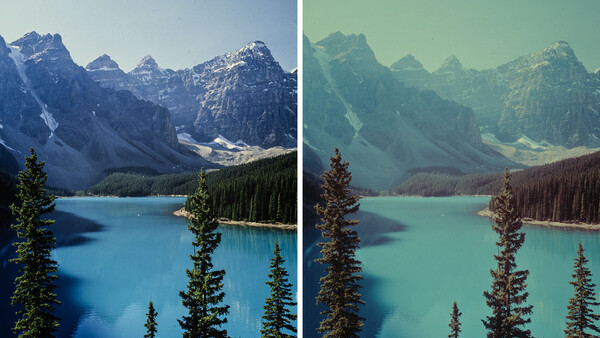
Some say film photography is better than digital. Film has a more organic, natural look. Shooting with an analogue camera is a better experience and a purer form of photography. Others say digital photography is better because computer technology makes photography easier. You can shoot more frames and focus quicker, and experiment more by shooting more without the need for a second mortgage. Buckle up, this might get ranty.
In recent articles, I mentioned I’ve gone back to film photography again. I said I believe it’s easier to understand and learn the principles of photography on an old film camera because there are no buttons, dials, or menu functions to distract and confuse you. This caused a huge debate in the comments and made some people angry. If it were the Middle Ages, I’m sure I would have ended up being burnt at the stake for sharing these opinions that are nothing short of heresy. And this is the key word—opinions. I share my opinions here, not facts, just opinions. We all have them, and clearly, we all want them known. Sadly, though, some people mistake their opinions for facts and insist they are right. That’s when the problems really kick off.
So if you’ve decided to continue reading this article, dear reader, be warned it is laced with more opinions—and some facts too. Luckily, I’ve figured out the difference and will hopefully make this clear.
Some Background
Our opinions are often formed from our experiences—at least, they certainly should be. When it comes to film photography vs. digital photography, I have 40 years of experience, starting with learning photography on a basic film camera at college.
I spent the first 20 years shooting on film—35 mm and medium format cameras, from faster black-and-white negative to slower transparency. I must have shot hundreds of thousands of film photos during that time. I started out learning on a used Nikon I picked up at the local camera store, made in the 1970s. I loved that camera, and still have it. Recently, I dusted it off and took it out to play. I made a vlog about it, which you can watch here.
By the late ’90s, I had purchased a Nikon F5—their flagship camera at the time, and one of the best modern film cameras ever made, in my opinion. I also had a Bronica ETRS for bigger client projects where photos being reproduced on large posters and store displays were required. Both of these cameras allowed me to get the photos I needed and earn a living. I also shot for fun, as photography has always been both work and play. But then it all changed—along came digital technology.
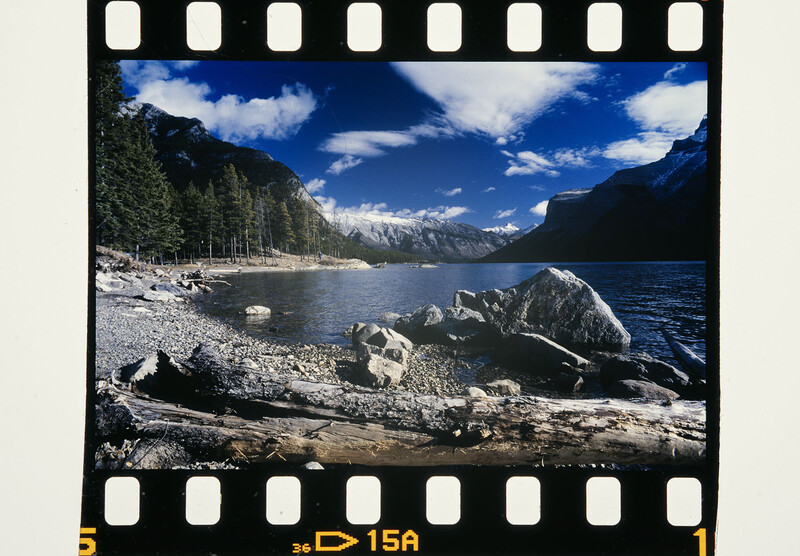
The first few years of digital cameras were of no interest to me. I had a Nikon D200, which was terrible in low light, and then a D300, which was a little better. It wasn’t until 2008 that I was really happy with the results of a digital camera for all the types of photography I was doing. That camera was the Nikon D700. I still have it and use it. It’s fabulous.
So I shot on film for 20 years and now digital for 20 years. I had no bias; a camera was always just a tool that allowed me to transfer an idea to paper, or more recently, a computer screen. Whether shooting in studios or on locations around the world, I simply chose the right tool for the job and gave it no further thought. Photography was simple; life was good.
I Started To Hate Digital Technology
Maybe hate is a strong word—maybe it’s the wrong word. Digital technology has made life so much easier for photographers. I’ve undoubtedly benefited from that. I think I have more of a love/hate relationship—a Richard Burton/Liz Taylor kind of deal.
The ability to see how a photo might turn out before you press the shutter is incredible. The ability to see a histogram to make sure you don’t clip highlights is very useful. The ability to focus track fast-moving subjects for sport and wildlife photography is a game-changer.
But it all gets a little ridiculous. Small tweaks and changes keep getting added, and yet another new camera model is created. Sometimes a newer model is not as good as previous models, and there is often no real reason to upgrade. But we’re persuaded into thinking there is. Camera models are turned around so quickly it seems the quality of manufacturing has declined too. Cameras and lenses have become plasticky and cheap-feeling, and they break easily.
Recently, I decided it was time to replace my trusty Nikon Z6. I’ve had it for eight years, and bits have been falling off from so much use and abuse. It’s my workhorse, and I love it. It does everything I need it to do for all the genres of photography I do both for work and pleasure. Having a strap lug break off means I can’t have it around my neck when I travel, and I need a camera with a neck strap.
The sensible me figured if I love the Z6 so much, then buy another Z6. They can be picked up for around $750 now, which is great value. But then the smart me thought, I do more video for clients now than I do photography. So if I get the Z6 III with its incredible new video capabilities, I would not only have a great photography camera but the perfect backup camera to my Z9 for video projects. Smart thinking, huh? It turns out it wasn't. I got the Z6 III, and four months later, I wished I had gotten a replacement Z6.
Sure, it’s a great B cam for video, but all the new tech, from a photography point of view, is not needed—for my requirements, anyway. It’s also made the camera bigger. The fold-out flippy screen is terrible for photography compared to the Z6 screen. Little Brittney might like it for recording her makeup reel for TikTok, but little Simon finds it bloody annoying and impractical, particularly when using a camera strap. And then there’s the partially stacked sensor. It’s the same 24 MP sensor as the Z6, but those engineering techy types at Nikon bolted on a faster processor, making autofocus and processing snappier. I don’t need that, and I’m sure, with their attention aimed toward speed—because that gives the marketing boys and gals something to work with—the Z6 III’s image quality is compromised. The Z6 III’s image quality and dynamic range are no better than the Z6’s, from what I can tell.
The point is, image quality reached its pinnacle years ago, so now we’re being convinced we need faster focusing or improved video—or more silly program modes like black and white and built-in color presets called “recipes” (recipes, my arse) in case we can’t figure out how to move a few sliders in Lightroom.
Today, I’m back with the beaten-up Z6 a lot of the time, but have less money in my bank account. Yup, a little ranty there, folks.
Photography YouTube Influencers
Worse than the ever-improving technology in a digital camera are those little buggers who keep hyping it up and trying to convince us to part with our hard-earned cash and buy one, just so they can make a commission or fee from doing so. These guys call themselves professional photographers. Most of them are just professional snake oil salesmen. Maybe I need a separate article about this to say how I really feel?
We need more conversations about creativity and why we take/make photos, not about buying new gear. We need to understand a new camera is not going to make us a better photographer—practicing and experimenting is. Time is our answer, not money. We need to see more and spend less.
The Computers Are Taking Over
As much as digital cameras allow us to experiment more and potentially create incredible images, I find that because cameras are loaded with so many features, many people new to photography are overwhelmed. Too much choice can be confusing and actually block creativity. So many new photographers don’t take time to really understand photography and how a camera's basic functions like aperture, shutter speed, and exposure control actually work—because they don’t need to. I’ve known people to buy a new camera, get frustrated at how much there is to figure out, and simply say, “Sod it, I’ll leave it in fully auto mode.” Your photography is then created by luck, not skill. That’s like trying to make a living by buying a lottery ticket every day instead of learning a skill and getting a job.
Understanding shutter speeds, apertures, and exposures was once the cost of entry into the world of photography. It got you through the door. Now there is no door—just walk on in with a camera you picked up on Amazon, with a fully charged battery. You can now blindly rely on the technology to do all the work for you. Is this a bad thing? If you want to become more than a mediocre casual photographer and make wonderful creative photographs, I think it is. But this is just my opinion.
My Relationship Today With Digital Cameras
Digital cameras have become hybrid cameras—a tool that allows you to create photos and video. These cameras undoubtedly have their uses. As someone who shoots both photos and videos for work, they are amazing. But what about those who just want to pursue a love of photography and aren’t interested in videography? Only Hasselblad and Leica make pure photography cameras. Unfortunately, these are professional tools and/or luxury items, the price of which cannot be justified for the majority of us. A few other brands are trying to create that retro photography experience, but no one has got it quite right just yet—possibly Fujifilm with their X100 series is close.
If I take my client work hat off—which I’m doing more and more these days—as a passionate photographer who has lots to say artistically and plenty of personal projects to work on, a new digital hybrid camera isn’t ticking any boxes for me or getting me excited about wanting to own one. I’m using a six-year-old cropped-sensor Nikon Z50 for hiking trips, an eight-year-old Z6 for travel and street photography, and more recently, I’ve turned to my 17-year-old Nikon D700 for many urban and landscape projects. Black-and-white photography is my biggest passion, and I bought a Leica Q2 Monochrom two years ago for that. Its simplicity allows me to use it like an old film camera. The drawback for many would be its fixed lens.
I often get asked what the best all-round digital camera is to buy, and I’ve given this a lot of thought. What would I buy? What if I didn’t need a Nikon Z9 and Z6 III for video work? Well, my old Nikon D700 is almost perfect, but it’s only 12 MP. That’s fine for most things, but I’ve found 24 MP is the sweet spot for all my needs. This means the best all-round camera I would choose is a Nikon D800 from 2012, with 36 MP. The D850 from 2017 has some improvements in quality apparently, but that’s getting into rather boring pixel-peeping territory for me. The D800 does everything I need it to. If only it were smaller and lighter. It’s hard to find the perfect camera, but this one is close. What I love about this camera is it’s an F mount, so I get to use all my lovely old Nikon lenses on it—proper lenses, not the delicate focus-by-wire plastic crap Nikon makes today. Actually, there is another more modern camera I recommend: the Nikon Z5. An absolutely fabulous 24 MP mirrorless camera. It’s an underrated bargain. The challenge is finding good lenses for it, though. The Z-mount f/4 24-70mm is a good option, but my preference is to use older manual-focus primes that are built like tanks and have some character to them. It's good to see brands like Voigtländer make Z-mount options now. If I didn't have vintage Nikon glass, I'd be looking at their superb range of tough metal helicoidal lenses.
Leica Doesn’t Let the Market Dictate What They Do
I can understand why Leica cameras are becoming increasingly popular. A Leica M digital camera is the nearest thing to a traditional film camera experience—actually, it’s the nearest thing to the perfect camera.
With a Leica M, you are once again forced to learn the principles of photography, and you have to actually do some work and contribute something to the process to get your photo. You don’t have a load of silly distracting buttons and dials, just things you actually need: a shutter speed dial, an aperture ring, and a distance scale on the lens. You have to manually focus. Yes, there’s a little tech inside if you need it, but most photographers choosing these cameras don’t need it. Leica says this on their website: “Rangefinder cameras that deliberately don’t offer everything that’s technically possible, but rather remain limited to what’s photographically useful.” That nails my thoughts perfectly. They also state, “Photographers are empowered to capture the very essence of a moment, unburdened by technological distractions.” I often wonder if technology being added to cameras is nothing more than a pissing contest between engineering and marketing departments at the different camera companies. It’s all about them, not the photographer. My wise old granny said to me once, “Just because you can do something, doesn’t mean you should.” She could have worked at Leica.
Yes, a Leica camera and one or two wonderful Summicron or Summilux lenses are cost-prohibitive to many of us—unless we still have a healthy liver or kidneys to sell. But in the long term, once you buy a Leica you won’t need another camera for many years—maybe never again. And think of the savings from not buying film and having it processed!
I have to wonder—why on earth isn't Nikon or Canon playing on their heritage and making digital versions of their wonderful 1960s rangefinders? Imagine if they took the Leica approach and made a simple, high-quality rangefinder, free of plastic, that provided a simple photography experience? I'd wager they wouldn't be able to keep up with demand.
Back To Film Photography Then?
With all I’ve said about digital technology, and how it gets in the way of photography, is it any wonder I dusted off my old simple Nikon EL2 and have started running film through it once again? I made a video about my first outing with the camera and stated how much I like the feel of holding something simple and solid. I said how much I like the tactile experience of using something mechanical, of understanding it and being in control of it, and how much the shutter noise and film advance winder sound makes me happy. Someone said in the comments, “It's 2025. Give up on the film crap. It does not look better. Shooting film because the shutter sounds cool? Who cares what the shutter sounds like.”
Well, DA Photography from Canada, I appreciate the comment, and thanks for the great T-shirt idea. Does anyone want to buy a T-shirt that says, “It's 2025. Give up on the film crap. It does not look better”? I might just get that made!
I do agree with DA, though, that film photos don’t look any better than a digital photo. You can achieve a film look digitally if you know what you’re doing. Using a vintage lens with character on a digital camera, over a perfect and sterile modern digital lens, can make a difference too. Film photography for me is about the experience, the nostalgia, and the way the physical process makes me feel. I’m a huge believer that gear really doesn’t matter—until we find something that we want to pick up and use, and enjoy holding. Then it matters very much.
Possibly the biggest appeal, particularly with older film cameras, is the craftsmanship that went into making the camera. Same with lenses also. I enjoy holding something that’s been skillfully made by hand, by an expert craftsman, using the finest quality components. An old camera is like owning a vintage Rolex—you can’t help but appreciate its heritage, quality, and beautiful design both inside and out.
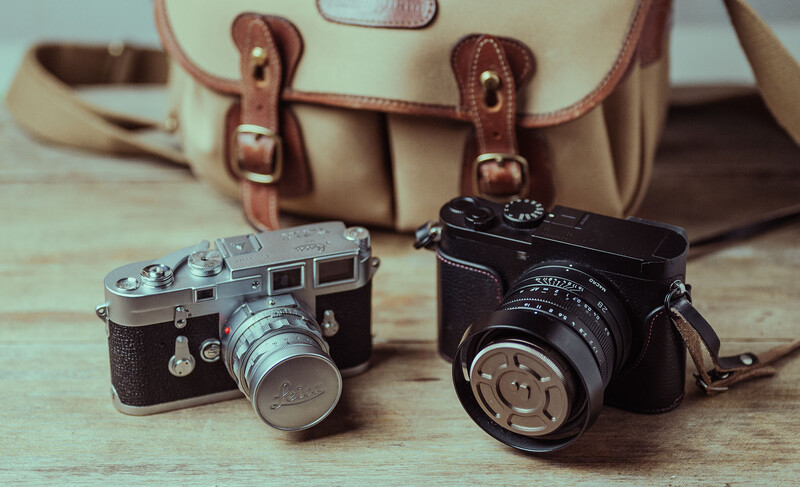
To that end, I just purchased a 70-year-old Leica M3—a mechanical masterpiece. It’s made with brass, even the cogs are brass, and the 1956 lens I bought for it is solid brass and glass. Come on! The experience of using that is next level. I’ll do a separate article on it, if you’re interested.
My Solution To My Film vs. Digital Dilemma
Let’s be clear—this is my solution, not the solution. I enjoy the experience of using a film camera. More specifically, an older film camera with nothing but a shutter speed dial and a manual-focus lens with an aperture ring and distance scale. But this is not always practical, and film is expensive.
A digital camera does make life easier for many scenarios. When it comes to street and travel photography, with my Q2M or Z6 I can easily shoot 400–600 frames in a day. I would go bankrupt if that was shot on film.
My solution, at the time of writing this article, is to go out with two small cameras. For black-and-white photography, I take my Leica Q2M with its 28mm Summilux. And I also have my Leica M3 with a tiny Summicron 50mm lens, loaded with HP5+ film.
I have the best of both worlds. I can shoot digital and get shots quickly and easily, without worrying about cost. And when I see an opportunity to slow down and really enjoy the experience, I can pull out my M3 and shoot some film.
For color photography—which admittedly I’m doing less of these days—I take one of my Nikons, preferably with some vintage glass. I’ll typically choose just one lens: a 20mm, 28mm, or 35mm. And the other camera in my bag is the Leica M3, or maybe my Nikon EL2, with a roll of Kodak Portra 400.
I am finding I shoot maybe just 4–5 photos on film on most outings, so a roll will last for a month or so. No great expense there. If I don’t take the M3, I’ll grab the 50mm Summicron and pop it onto a Nikon with an adapter. This works really well.
There are only two things a digital camera gives me over a film camera—other than saving on film costs. The first is the ability to program a zoom-in/out function on one of the camera’s buttons, because I use manual glass. My old tired eyes need some help to focus, so zooming in to fine-tune the focus is a huge help. It’s interesting to note that the viewfinder on the M3 is huge—better than any other Leica rangefinder—and the focus patch is easy to see and use. So is the split focus screen on my old Nikon. I don’t need additional help on either of these cameras to set perfect focus. But I need help on a modern digital camera, despite being able to adjust the diopter. Old analog OVFs are better than modern digital EVFs—interesting.
The second thing I love with a digital camera is the ability to have a histogram in the EVF or on the screen. I prefer to shoot manually, so seeing the exposure so easily means I can adjust the shutter or aperture dial instantly. I really love that.
Summary
There is no one solution, or right solution. If you like film and manual cameras, go that route. If you like the convenience and speed of digital technology, go that route. There is no better solution—just the right solution for you. So long as you enjoy what you do, and it makes you happy.
So it turns out, after lots of playing this past year, I’m very happy enjoying the best of both worlds.
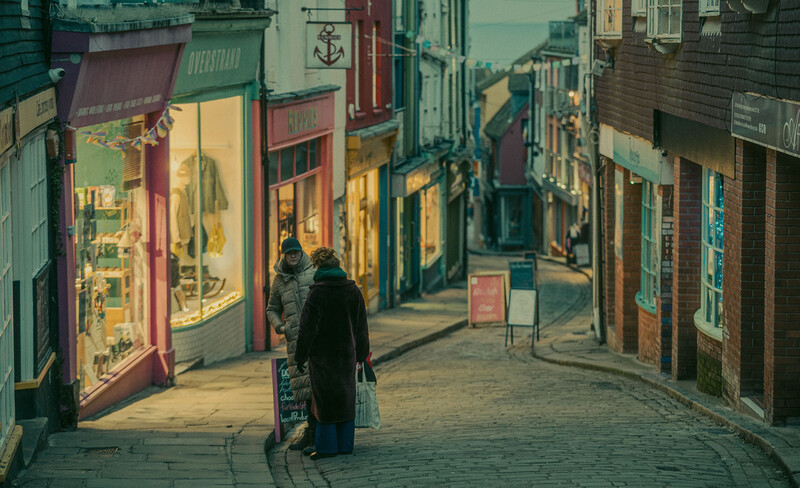
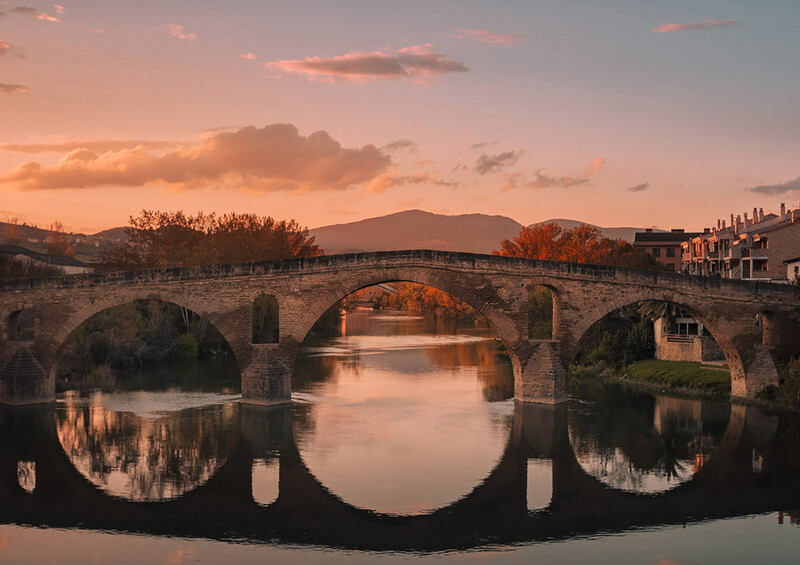
Oh, FYI—the main image alludes to showing a digital photo next to a film photo. They are both film. One was processed digitally, ironically, to look more “film-like.” It's all about the end image, not how it was created.
Join the Fstoppers community for free
-
Post comments and join in the discussions
-
Browse the site ad-free
-
Share your work and get featured in the community
-
Compete in the photo contests for fun and prizes
161 Comments
It was repeat of the earlier comment that got there by accident.
thank you for clarifying, appreciate it
In the context of the discussion around the article, a question came to mind: where is the boundary between laziness and common sense?
It’s often said that young professional photographers (among whom I count myself, though sadly not by age) ignore the basic skills of photography. But in my view, no matter how advanced automation becomes, it’s impossible to ignore the fundamentals. On the other hand, complicating one’s training with outdated practices—such as flawlessly determining exposure “by eye”—seems pointless. It’s like mastering a manual gearbox just to end up driving an electric car. (At least no one has seriously suggested taking up horseback riding, though I’ve even heard such advice.)
What do you think a beginning professional in photography really needs to know, and how can one separate that from personal reflection on one’s own experience and learning?
I can start:
- Exposure
- Lighting
- Focusing and DOF
- ...
Strictly my observation. There is wisdom and common sense . When working in a commercial workspace we have to work quickly, since usually our fees are based on a day rate, and we need to make the very most of time on location, the front end, and be as expeditious as possible on our computers. In terms of the three factors you mentioned, Exposure - Lighting - Focusing and DOF, none of these can be ignored in the interest of time or anything else. Because as these factors are given less sway, the more the image will be less than satisfactory. I don't think that any of these can be diminished in importance. It's only that the methods of arriving at a good conclusion have changed. For instance in working with film, and I BTW, use large format cameras so my procedures may be different than someone using a 35mm or Hasselblad type camera, so I try to be very precise about exposure, and the other factors you mention. But it takes no more time to determine the best exposure very precisely than it does to be casual about it. And it takes only a little more time using a Digital camera to place the exposure precisely using the histogram. And also, no competent film worker determines exposure by eye alone. We use meters that are very precise tools. (BTW, this comment is not meant to be confrontational, only a discussion. I say that because I tend to be more direct than many people and some see it as a confrontation.)
Common sense dictates getting the best you can while you can. Laziness becomes when someone sets a five or seven exposure spread on the HDR setting. Then making a digital exposure spray and moving on. But in reality that's no different than the common practice with small format camera workers that bracket everything. In my teaching career I never allowed students to bracket since I wanted them to learn to make very precise exposure decisions.
I can only add that buying a light meter turned out to be incredibly useful for me in terms of understanding how light works and achieving proper exposure. Although at first glance it seemed like a rather silly idea, given that the camera already has everything built in.
That is a very interesting observation. I have four handheld meters. Two digital Soligor one degree spot sensors, a Pentax Digital spot sensor and a Gossen SBC meter, and I use a Canon 6D and Canon 5D MkIII. I am sure there's an explanation that I am not familiar with but the meter reading from my Canon cameras and the meter reading from my handheld meters are never in synch with each other, so while the digital cameras work perfectly in their proper arena, their reading when translated over for use in my large format film cameras are completely different and I could not rely on the digital cameras for a meter setting if my handheld meters were not available. BTW, I am not an equipment collector. I kept the extra meters for use in my workshop program where participants commonly showed up with a meter they didn't understand. For instance there was a guy that showed up recently with a Sekonic meter that was absolutely unusable because it had too many modes and dials. So I always carry an extra camera system, several extra tripods and extra meters.
When I went to college to study photography the things that were taught first, the things that we really needed to know, were:
– What are you trying to say or communicate?
– How can you best say it?
– How can the lighting and composition work to enhance what you have to say and the story you're telling?
– What focal length might be best to do this?
– How do you bring your own personality and creativity into the photo to make sure it catches attention and stands out?
The camera is just tool. Once we figured out the creative decisions above, then it was a case of getting the right things in focus and expose correctly.
A camera should be invisible and not interfere with the act of taking a photo, in my opinion. And we should be in control of it and know how it works to get the desired results for our vision.
I drive an automatic car, have done for years. it's less hassle, right! But last year on vacation, the only rental available had a manual gearbox. Lucky me, for having learnt to drive in a manual car.
Having now bought a camera without a light meter, I find knowing what exposure to set by eye rather useful! 🙂
Simon, I want to print this comment of yours out and post it in public places that are frequented by photographers and other artists. It is by far the most enlightening comment I have read anywhere on the internet for months!
Very kind of you to say Tom 🙏🏼
I’m very glad I received this response — it’s exactly what I was waiting for.
And I began my study of photography precisely from this point: from meaning and storytelling.
In my view, the camera — whether digital or film — is a very simple tool, requiring far less training compared to many other professions. It’s not surprising that the role of a camera operator is often valued less.
But the moment you step away from the camera as a tool, another life begins. The work is not about picking up a camera and taking a shot. Some work with their feet, others create entire worlds. The form doesn’t matter as much because the time is invested in analysis, in searching, in waiting, even in provocation. Does the technical side matter here? Or the kind of tool? Only to the extent that it doesn’t ruin the result (of course, I’m simplifying the situation for clarity).
Not this year, but within a year, AI will produce a better image of a deer, a peach, an abstract, or anything else. But meaning will remain with the photographer — the one who can operate with any tool.
Bang on! At college we discussed setting apertures and shutter speeds in a few hours one day, and didn't talk about it after, because it wasn't what made a great photo over a mediocre photo. We needed to learn it and understand it, and them move on.
When we look at the incredible work of photographers from the 50s and 60s or earlier, their camera didn't come between them and what they saw and wanted to capture.
They set their shutter seed and aperture based on the light conditions, often pre-focused their lens, and that was it. There was nothing to do or think about, other than pressing the shutter at the decisive moment. I've been playing with old cameras from the 50s to enjoy that freedom. But of course, you can do that with a digital camera and manual lens too.
That’s why my main lens is manual. It’s part of the process that brings not only income but also incredible joy.
But when turning to history, we shouldn’t forget that what you were looking at were the best photographs of the 50s and 60s. There are just as many now. The difference is that back then, there was nowhere to show the bad ones. But that doesn’t mean there were fewer of them. There were just as many bad photographers with terrible photos as there are today — they just never made it beyond family albums.
Very true!
You are so right, Alvin! We undeservedly romanticize the past, because the only things from the past that we judge it by are those few timeless excerpts that remain. If we judged the past as a whole, and the present as a whole ..... I think the present would hold up pretty well.
Alvin Greis asked:
"What do you think a beginning professional in photography really needs to know, and how can one separate that from personal reflection on one’s own experience and learning?
I can start:
- Exposure
- Lighting
- Focusing and DOF"
--------------- --------------- ---------------
Exposure is just a technical thing that can be changed later, so we should have cameras do that for us so that we can use our brains to do the things that actually matter, the things that photography and art are actually about.
*Personally, I am now shooting everything in full manual mode, but that is because the dial mode on my camera busted and I am literally stuck in manual. But I will admit that needing to set my exposure manually does cost me a frame or two every now and then. It takes about a second, or maybe a second and a half, to change either the shutter speed, the ISO, or the aperture, and often, that second is something that I do not have, and the shot is gone by time I adjust my camera accordingly. So I often come back from an outing with, say, 450 perfectly exposed photos, but I could have had 455 or 457 or whatever, if I had a camera that would just do the exposure itself and not require me to bother with it. It hurts that I am not coming back with every frame I possibly could. I am a hoarder by nature, and as such, coming back with 457 perfectly exposed photos of a deer is more satisfying - makes me happier - than coming back with 450 perfectly exposed photos of a deer. My objective is to create as many solid images as is humanly possible, not just to make one excellent image. Most other photographers have different objectives than I do, and therefore they may not mind missing a shot every now and then, so they are okay with having to do the exposure settings themselves.
Lighting is essential to the aesthetic of the final image, and is subjective in nature, and can't really be altered sufficiently in post, so there is great value in learning about how different kinds of light effect the mood and feel of the image. Ideally, a photographer should become so familiar with light that he/she is able to "read" the ambient light of any scene, and know exactly how to use that light to communicate the mood and feel that one wants to show in the image.
Focusing and DOF .... focusing is like exposure, just a technical thing that the camera should do for us, so that we can use our brains for the more creative and artistic aspects of photography. Once we know what we want to be on the plane of sharpest focus, we should be able to hand off the actual focusing of the lens to the camera.
DOF is different than focus, as it is more qualitative and subjective in nature. Hence, depth of field is something that the photographer should know inside and out. Photographers should be able to "read" a scene or a subject to know exactly what all he/she wants in focus, what he/she wants out of focus, and knows just how blurry he/she wants those out-of-focus areas of the frame to be. And knowing what DOF one wants is only half the job - the other half is knowing one's gear and how it renders objects that are not on the plane of sharpest focus, and knowing it for every combination of camera-to-subject, subject-to-background, and camera-to-background ratios that exist in every scene that one will ever shoot.
Twice in this comment I have used the word "read" in a way that may be different than what some of you are familiar with. I used it to mean "visually assess". The two times I used it to mean "visually assess" I put it in quotes, so that no one would be confused by my alternate use of the term.
You’ve described everything very professionally, thank you. But what I want to emphasize is the photographer’s skill of “reading” and “visually assessing.” Absolutely true. Yet this skill has no direct relation to the camera or its technical features. It is the ability to see, while, of course, knowing the potential of one’s equipment. But what if that potential is limitless?
I agree. Have you heard of the Sunny 16 rule. It works like a charm when you are outside. ☀️
I never heard about sunny days. I'm from Finland.
Have you heard of the rule? It even works on cloudy days
Of course, I’ve heard of it. But I didn’t find this rule useful for me. Correct exposure is not the same as the right one.
Not sure I know what you mean. Correct-right. How do you define the difference?
'Technically correct' or 'right (true) in expressing the intention' — and those two things are not always the same
When it comes to the idea that digital has caused photographers to become lazier, I wonder .......
Are photographers really lazier overall? Or are they just taking effort that used to be put into the technical part of things and using that same amount of effort in other ways, such as learning new editing techniques, working the point of view and camera position more, or shooting more images from different angles and using different settings, and then spending more time going through the images, simply because there are so many more to go through than there were with film.
I mean when I shot film it would take all of 2 seconds to find the best image from a photoshoot, or one minute to select the dozen best images from said shoot. Now, with digital, if I spend 6 hours shooting wildlife, it takes me at least an hour to look through all of the images and make decisions about which one is ever so slightly better than the dozens of very similar frames. Scrutinizing all of these images is a job in itself, so there is no laziness involved because I am working.
Laziness is when I sit back with a beer and binge on Netflix for 5 hours straight. Laziness is when I nap and doze off instead of sitting at the computer working on images.
Laziness is NOT bypassing one type of effort so that one can perform another type of effort instead.
I mean if a guy does not pressure wash his house this weekend, but repairs his crumbling sidewalk instead, he is NOT LAZY. Likewise, if a young photographer does not sweat over getting all of the exposure settings just right, but spends that mental energy on shooting from more unique angles and composing the scene in different ways, that photographer is NOT LAZY. They are just working hard at different things.
One huge aspect of being lazy with digital, is shooting something without a lot of thought or skill, and buying a trendy color preset and applying it. Is see this a lot. AI editing and color grading is doing a huge part of the work, and most of the time it's simply putting lipstick on a pig, because the image is unremarkable to start with.
No thought, nothing new to say, no skills being used. Just using software to try and make something half decent. That's lazy.
Yes I agree, if someone is behaving as you suggest, then that is certainly laziness.
BUT ..... that kind of person would have been lazy with film, too, wouldn't they?
I mean, laziness is far more a product of someone's core character than it is a product of what tools and resources they have available to them.
I suggest that these people being so lazy with digital would NOT have worked hard to understand and learn all the nuances of photography if they were using film.
Do you agree, or disagree, or partially agree?
I agree laziness is down to someone's core character.
The thing with all the tech that does things for you, is the temptation to rush and cut corners—because you can—is right there. Like eating junk food because it's there, and it will save time over using quality ingredients and taking time to cook. But your health suffers.
Back in the film days I came across lazy photographers, but they still had to take time to learn photography and understand their camera. Their laziness was lack of effort in the creative expression and intention department.
I asked Google Gemini AI what it thought of this question: “Are digital photographers lazier than film photographers?”
I've enjoyed the conversation. I am an expert on the subject of laziness, been working at it for years, so you should have simply asked me to settle this argument. I decided, however, to let Google do the thinking and writing a response so I could take the lazy way out.
As a totally amateur photographer, who used AI to provoke more conversation in this thread, and who understands laziness, (and hard work), I've enjoyed reading the comments and conversations here, too!
But isn't there some merit in the phrase, "Work smarter NOT harder!" ?
I do struggle with all the fancy features the cameras I own have. I do not know how to use all of them either...but I do try to understand and use the basics, (exposure triangle, composition, lighting, focus and DOF). After the first year in AUTO mode (2017) I've managed to stay in MANUAL mode primarily, with a few times trying to learn the advantages of being in either APERTURE or SHUTTER modes.
Additionally, I would like to think. that this website with all it offers has helped me to improve as a photographer, the opinions shared, and fantastic work displayed, have played no small part in that improvement, which I think is evidenced by images I've posted.
Hmmm, I don't think I mentioned Post Production...but I will say I've never been a fan of using someone else's presets...besides, I usually don't like the look, plus, I'd probably feel like it was "plagiaristic" and feel the need to give them some sort of credit!
The subject has sort of veered away from just photography to life in general. That's great. I was getting a little tired of the film vs. digital debate. Junk food, beer and long naps got my attention. I think my smart-meter, generally speaking, hit its peak at about the 8th grade, so working harder was more of the variable which I could control. My North Star for working smarter or harder was written in a book called “The 4-Hour Workweek” by Timothy Ferriss. The book contains valuable insights for people who would rather do something other than work a job or run a business 50-60-70 hours a week.
As has been said by other writers, in other articles, about other subjects… it’s not a binary argument. Most people show sides of both lazy, and whatever the opposite would be; not-lazy, I suppose. I’ve been self-employed for 46 years, if you count what I’m doing now as work, so I’ve never had to meet the expectations of an employer. Of course I’ve had to meet the expectations of customers, and I’ve had to work hard at times, but could be totally lazy at times. The lazy part seems pretty natural. I was good at it. I could have earned more money had I traded a little laziness for harder work. But as they say, you can’t take it with you, and nobody has starved around here. Since it’s so difficult for me to even put the label of lazy or not-lazy on myself, I can’t see how anyone could regard another person as lazy, much as less a whole community of either film or digital photographers.
By the way, you were on the right track... Zsa Zsa Gabor was married nine times. "When asked how many husbands she had had, she used to say: You mean other than my own?"
Wow - a rare case in which AI is actually right on the money!
I expected that you would think so. Thanks for the reminder to go grab a beer.
That's a reason I don't trust AI. Because it gathers people's opinion from across the web and posts based on their statements. It has no ability to think - but then most people don't use that capability anyway. It can only observe people's opinions and make a summation of that. So if the primary opinion across the web was that the earth was flat, the man in the moon was green cheese and Columbus actually fell of the edge of the earth it would spit those things out as actual fact when in reality they are fallacies based on flawed information. So in this case I reject AI as a legitimate source of information.
Since I came out of the much-hated world of business consulting, I can say with some authority that, in a business context, I have yet to meet people lazier than photographers — with some pleasant exceptions, of course.
They don’t do marketing, they don’t improve their craft, they don’t build brands, they don’t try to understand their buyers, they don’t want to be unique. They don’t want to create their own product and develop it. And yet they complain about clients and about how everyone looks the same.
Isn’t that laziness?
It's not laziness for the most part, it's being unaware that these things are required. Isn't it the same for anyone who wants to turn a passion into a business? Particularly creative types, they don't understand business.
Years ago I owned a creative agency, and many photographers approached us looking for work. There were some who were very mediocre photographers but brilliant at selling themselves and marketing. And others who were brilliant photographers who were terrible at selling themselves. The mediocre ones thrived.
Neither were lazy, they just put their efforts into different things. There's no point being a hard-working photographer looking to build a business, putting all effort into creating unique images that are stunningly brilliant, if you can't sell them.
You’re absolutely right. Many people simply forget that commercial photography is, above all, a service. And the reliability of a partner is valued more highly than their talent — unfortunately, perhaps.
Some of that is not due to laziness. It is due to not enough accurate information. As I told a good friend. Making a great photograph is easy. Finding a way to market it effectively is a seemingly impossible battle. The big problem is that in order to market effectively it requires a bit of luck - right place, right time - and a budget larger than most shooters have access to. I have been at this a long, long time and the most daunting challenge I have is being effective in getting in front of people with the means and the want to place my work where it will be profitable. And that's the challenge.
Luck is needed everywhere, so it’s best to leave it out of the equation.
I’d also add that the business side hinges not on making a lucky image or great photography, but on making the necessary one. As in any other business. There’s nothing wrong with that.
To me, that’s the difference between an amateur and a professional. The desire to earn money with photography is defined by the desire to do what’s needed — and to do it well. That’s a challenge too — but a challenge to oneself.
And without good knowledge those choices cannot be made. In this environment it is extremely difficult to get good knowledge. That's why it is that when young men and women tell me they want to go into photography and ask what courses they should take I always say to get a degree in business and specifically marketing and accounting. Those of us that think like artists will always have a struggle. At the point where I entered the field that knowledge wasn't being taught anywhere unless you went to business school or studied business. Even now there are numbers of people that purport to teach that, make you #1 on the internet etc. and it's nothing but a con job. Photographers get dozens of texts and e-mails everyday that are nothing more than an attempt to part me from the money I have worked hard for. Marketing and sales are the single most difficult hurdles. And my business was doing okay until our idiot governor shut down all "non essential" business for a year, which killed my portrait business. So I am not lazy. I was just presented with a barrier that could not be overcome, and I have had to redirect, and at a certain age that is just a lot more difficult.
Let me qualify my earlier statement about being lazy. What I meant by that is that in this digital age people are more willing to be sloppy in their work habits thinking that a computer will straighten out their mess later - which it might be able to do. Digital has allowed people to do work as a "(P)rofessional" when they haven't yet learned the fundamentals, so they bracket like crazy, spray and pray.
You’ve captured the essence very precisely, I think. Laziness is just the saving of time. Saving in one area and reallocating it to another doesn’t mean someone is lazier. It simply means processes change. Laziness in one place is balanced by diligence in another.
Right!
So we should be very careful about labeling photographers as lazy, whether collectively or individually.
A photographer may neglect many aspects of their craft/profession, but put an enormous amount of time and effort into another aspect of their craft/profession, so they are actually not lazy at all.
Hey, Simon... if you're getting paid by the number of comments, do we commenters get a cut out of your check? The article is standing at 135 comments before I click the "post" button. And this subject is basically redundant with the last film vs digital article of yours that garnered 104 comments. You really touched a nerve... great work. You're the best!
😊 🙏🏼 I've always believed if people take the time to comment on an article, or one of my YouTube videos, I will take the time to respond and engage in a meaningful conversation. But the response to this article has been insane, and I can't keep up! Apologies to anyone who I have not responded too.
Re: getting paid from number of comments. Let's just say I might be able to afford another roll of HP5 Plus this month!
This is a most admirable quality to have. Thank you for being the way you are!
Great thoughts! I even agree with your opinion. ;-)
You are absolutely right. Gear matters less than we think, or rather, than the industry wants us to think.
But that is exactly the reason why I use a modern digital camera (currently the Z5) and wonderful, sharp Nikon Z lenses with less character and sterile image quality. Using AF and AE allows me the quick reaction time I need and offers precision. Postprocessing in Lightroom allows me creatively selecting and editing my images to get the look I want in each situation. I need the reliability of modern cameras and the flexibility of modern editing. It allows me to do the main task, i.e., to shoot interesting stuff in interesting ways. I could not imagine to go back to the burden of having a 36 roll of film with no way to check if my manual settings really worked.
You really shot hundreds of thousands of transparencies? Where are they now? How much did that cost? I have enough of them to be a burden, and threw away a multiple already.
I have to say, I believe the Z5 is one of the best cameras on the market today. Excellent value, fabulous performance. I have the Z6 as my main workhorse, which shares the same sensor. it's possible to use like a manual film camera, if using with a vintage lens and adaptor.
I have been a photographer for 41 years now. The first 20 years I shot on film. mostly transparency, a mix of 35mm and 120, as it was for commercial projects and trannies gave much better results over negs. Yes, I have thousands, all stored in filing cabinets. I talk about this in an upcoming article, as I have noe figured out a good way to convert them to digital and start to share them.
Enjoyed reading this article. My wife reminds me when I used to say that I would never go to digital photography. I mostly shoot bird photography now and I would never go back to film for that but a few times in the past I walked thru New York City with my old Canon A1 shooting film and loved the process. This camera is now my daughters. I had also used the Nikon F5 and loved it as it was built like a tank and I did forensic photography for the Fire Department New Your ages ago. Thank You for this article and enjoy.
Ah, I still have my F5, amazingly good camera! it does make sense to shoot wildlife digitally. Thanks for taking time to comment, appreciate it!