Choosing between a 35mm and 40mm prime lens sounds like splitting hairs, but if you shoot in tight spaces, near cliffs, or anywhere you can't step back, that small difference in field of view can determine whether you get the shot or go home empty-handed. James Popsys has spent years shooting 40mm primes across multiple systems and recently started questioning whether 35mm deserves a longer look.
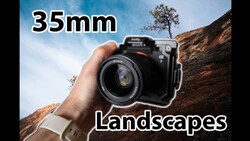
Coming to you from James Popsys, this thoughtful video follows Popsys through two consecutive shooting days on the coast, first with a vintage Leica Summicron 35mm mounted on a Leica SL3, then with the Sony 40mm f/2.5 on a Sony body. The goal isn't a gear comparison. He's specifically tracking one thing: how often each focal length leaves him wishing he had more or less room in the frame. That's a more honest test than a resolution chart, and the results push him toward a real conclusion about which focal length he'll use as his default starting point on zoom lenses going forward.
Popsys has owned or shot extensively with a Ricoh GR IIIx, a Hasselblad XCD 55mm, a Fujifilm GFX 50mm, a Leica Q3 43, and a Panasonic 20mm for Micro Four Thirds, so his preference for the 40mm range isn't casual. His argument for 40mm has always been that it shows the world without optical tricks and forces you to work harder for interesting compositions. The 35mm challenge is that it offers a small but meaningful escape hatch in situations where you physically can't move back. Whether that escape hatch is a crutch or a practical tool is something he works through on camera.
He also makes a practical buying recommendation worth considering if you're choosing between the two focal lengths as a prime: buy the 35mm. On a high-resolution body, you can crop in to simulate 40mm, but there's no equivalent move in the other direction. Content-aware fill in Photoshop exists, but it's not the same as having the actual frame. He also shares a habit he's built around zoom lenses, including a literal line drawn with correction fluid on the zoom ring, that reframes how you think about focal length discipline entirely. That part of the video is worth watching on its own. Check out the video above for the full rundown from Popsys.





Join the Fstoppers community for free
-
Post comments and join in the discussions
-
Browse the site ad-free
-
Share your work and get featured in the community
-
Compete in the photo contests for fun and prizes