
Starting your photography journey can be intimidating. The market is packed with models that all promise professional results, but what beginners really need is a tool that feels welcoming while still having the horsepower to grow with them. A good first camera should be straightforward, reliable, and versatile, without leaving you boxed in once your skills improve. Here are the best choices.
Canon EOS R10
Canon’s EOS R10 is a compact mirrorless that delivers a lot of performance for its size. Built around the RF lens system, it gives beginners access to a growing lineup of glass, from affordable kit zooms to pro-grade primes. The camera itself feels reassuring in the hand, with the familiar Canon button layout that has long been praised for its intuitiveness. Autofocus is quick and sticky, even with moving subjects, and the burst shooting speed puts it ahead of many competitors in its class. It’s a camera that feels capable without ever feeling overwhelming.
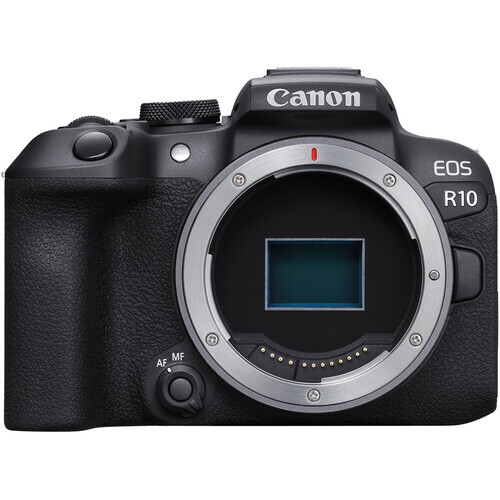
Key Specs
- 24.2 megapixel APS-C sensor
- 15 frames per second with mechanical shutter, 23 fps electronic
- Dual Pixel CMOS AF II with subject recognition
- Oversampled 4K video at up to 30 fps, 60 fps with crop
- Fully articulating touchscreen for flexible composition
Why it’s great for beginners: New photographers often want a camera that’s forgiving when they’re still learning the ropes, and the R10 delivers. The autofocus makes action and candid shots far less stressful, while the clear menus and touchscreen controls keep the learning curve manageable. At the same time, it leaves room to experiment with manual modes and faster shooting once confidence grows. Because it shares a lens mount with Canon’s higher-end cameras, investing in the R10 also means you can build a system that lasts. It’s a gateway into the Canon ecosystem that doesn’t feel like a compromise.
Nikon Z fc
The Nikon Z fc is proof that design can inspire as much as performance. Styled after Nikon’s legendary film cameras, it combines modern electronics with top-mounted dials for shutter speed, ISO, and exposure compensation. This makes it feel more tactile than many other beginner cameras, giving new shooters a physical connection to the fundamentals of photography. Beyond the nostalgia factor, the Z fc is equipped with a solid sensor, dependable autofocus, and video features that make it relevant for today’s creators. It’s a beautiful blend of past and present.
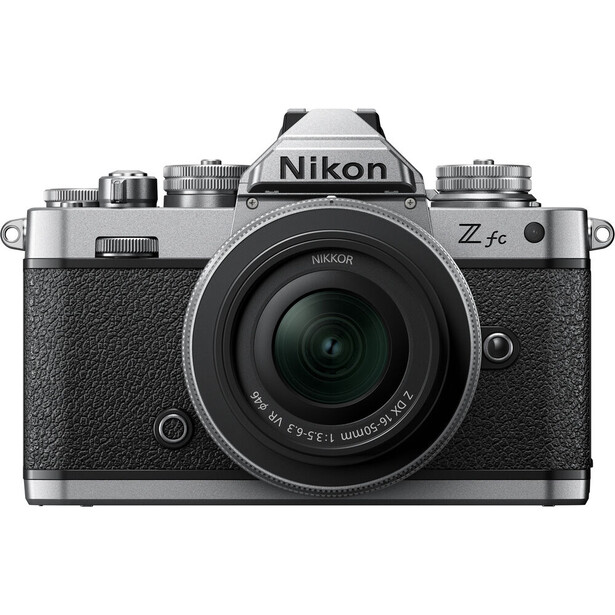
Key Specs
- 20.9 megapixel APS-C sensor
- 11 fps continuous shooting
- Eye- and subject-tracking autofocus system
- 4K video recording up to 30 fps
- Vari-angle touchscreen for stills and video
Why it’s great for beginners: Learning photography is easier when the camera encourages you to interact with it, and the Z fc does exactly that. By turning actual dials, you start to understand how changes in exposure settings affect the final image. At the same time, the autofocus is fast and accurate enough that you don’t need to worry about missed shots while you learn. The retro styling isn’t just for looks; it creates an emotional connection that makes you want to take it out and shoot. For beginners who value both function and form, this camera offers a rewarding experience that grows with you.
Olympus OM-D E-M10 Mark IV
The OM-D E-M10 Mark IV is Olympus/OM System’s most approachable mirrorless, and it shines as a small but mighty option. Its compact Micro Four Thirds body is easy to carry all day, yet it hides features that are typically found on more advanced models. Chief among these is in-body image stabilization, which helps counteract camera shake and makes handheld shooting less intimidating. The camera is light, stylish, and designed for portability without cutting corners on performance. For beginners who want something unobtrusive but capable, it’s an appealing choice.
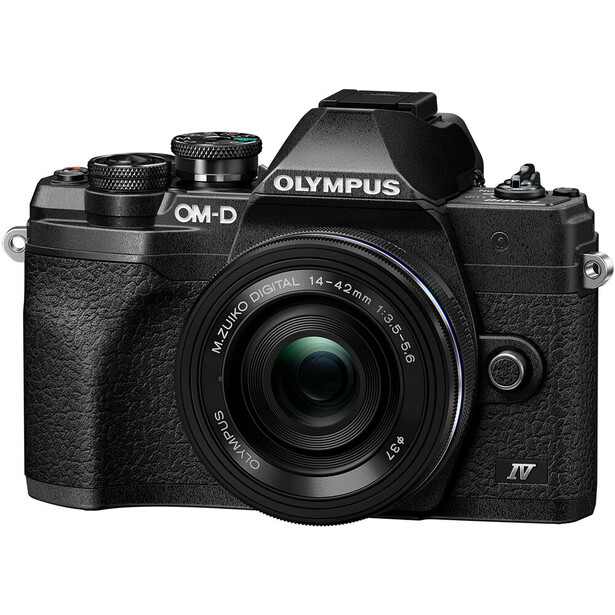
Key Specs
- 20.3 megapixel Micro Four Thirds sensor
- 5-axis in-body image stabilization
- 8.7 fps continuous shooting
- 4K video at 30 fps
- Flip-down touchscreen for selfies or low angles
Why it’s great for beginners: Stabilization makes an enormous difference when you’re still learning how to hold a camera steady. It means your first attempts at low-light shots or longer exposures are less likely to be blurry, which builds confidence quickly. The small size also makes it less of a hassle to carry, encouraging you to bring it along instead of leaving it at home. Thanks to the Micro Four Thirds mount, there’s also a wide range of affordable lenses, making it budget-friendly to expand your kit. It’s a camera that supports experimentation without punishing mistakes.
Sony ZV-E10
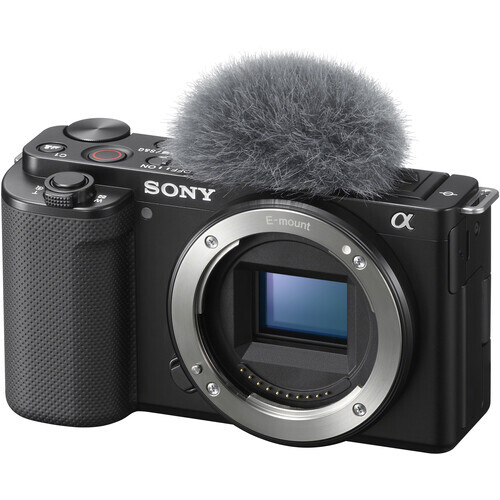
Sony designed the ZV-E10 with video creators in mind, but it doubles as a very capable stills camera. The body is compact and lightweight, with a side-hinged screen that makes it ideal for vlogging or self-portraits. Autofocus is class-leading, locking onto eyes and subjects with a level of accuracy that takes pressure off the shooter. It also includes creator-focused tools like a built-in directional microphone and a one-touch “background defocus” feature that makes it easy to achieve cinematic looks. It’s a camera that makes the technical side of content creation feel straightforward.
Key Specs
- 24.2 megapixel APS-C sensor
- Real-time Eye AF and subject tracking
- 4K video at 30 fps, 1080p up to 120 fps
- Fully articulating screen with side hinge
- Integrated directional microphone with windscreen
Why it’s great for beginners: Beginners who want to explore both photography and video will appreciate how approachable the ZV-E10 feels. The autofocus system nearly eliminates the anxiety of missing focus, while the flip screen makes experimenting with new angles second nature. It's simple, creator-focused features help you produce polished results quickly, which can be motivating when you’re just getting started. Since it shares Sony’s E-mount system, you’re also buying into one of the most extensive lens ecosystems available. It’s a beginner camera that doesn’t just teach you; it pushes you to create more.
Nikon Z30
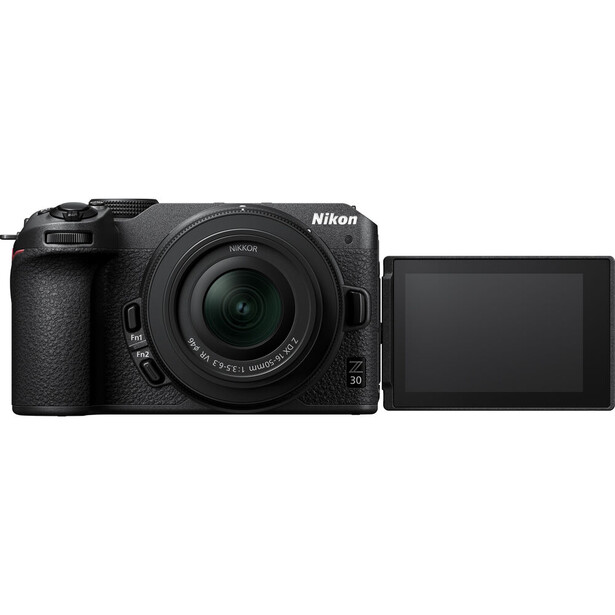
The Nikon Z30 is a compact, affordable mirrorless designed squarely for beginners, particularly those interested in hybrid content creation. Unlike most cameras, it skips the electronic viewfinder altogether, relying entirely on its LCD screen. This choice makes the body smaller and the price lower, while still leaving the essentials intact. The APS-C sensor is capable of producing sharp, detailed images, and its video features are well-suited for entry-level vlogging. It’s a streamlined tool that focuses on what beginners actually use.
Key Specs
- 20.9 megapixel APS-C sensor
- 4K video at 30 fps
- Continuous autofocus with subject tracking
- Side-hinged vari-angle touchscreen
- Compact, lightweight design without viewfinder
Why it’s great for beginners: The Z30 is especially easy to pick up for anyone coming from smartphones. The screen-based shooting style feels familiar, and the menus are laid out to minimize confusion. Removing the viewfinder also reduces bulk and cost, making it one of the most affordable ways into Nikon’s mirrorless system. Despite its simplicity, it still delivers the image quality and autofocus performance Nikon is known for. Beginners looking for a no-nonsense entry point into photography and video will find it a welcoming starting line.
Fujifilm X-M5
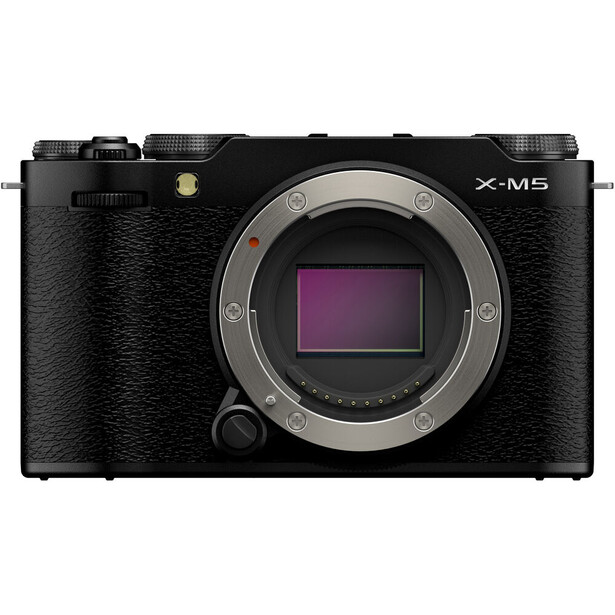
Fujifilm’s X-M5 is a compact powerhouse that mixes high-end imaging with a beginner-friendly form factor. Its APS-C sensor is high resolution, delivering detailed stills and clean video, and it’s paired with Fuji’s much-loved film simulations. Those simulations let you explore different looks straight out of the camera, from rich monochromes to nostalgic color palettes, without touching editing software. The camera also includes advanced features like 6K video, yet remains approachable thanks to Fuji’s user-friendly interface. It’s a tool that feels equally at home in the hands of a casual traveler or an aspiring artist.
Key Specs
- 26.1 megapixel APS-C sensor
- Up to 20 fps burst shooting
- 6K video at 30 fps, 4K at 60 fps
- Electronic shutter up to 1/32,000 s
- Fuji film simulations for creative styles
Why it’s great for beginners: The X-M5 helps beginners see the creative possibilities of photography right from the start. Film simulations encourage you to experiment with style and mood, teaching you how color and tone shape storytelling. The compact size makes it forgiving to use, even when shooting handheld in challenging light. At the same time, it offers performance that rivals more advanced models, meaning it won’t be obsolete once your skills improve. For new photographers who want to jump in creatively rather than technically, it’s an inspiring place to start.
Conclusion
The best beginner camera is the one that makes you want to keep shooting. Each of these cameras simplifies the technical hurdles while still leaving space for growth, ensuring that your first step into photography is one you’ll look back on with pride.
Join the Fstoppers community for free
-
Post comments and join in the discussions
-
Browse the site ad-free
-
Share your work and get featured in the community
-
Compete in the photo contests for fun and prizes
8 Comments
Every year, several people who are wildlife enthusiasts tell me that they want to start photographing the wild animals and birds that they see when afield. They ask me what camera they should get. Just had two more of these requests within the past 3 weeks.
Even though they have never done any kind of serious photography before, they are picky!
They want to be able to fill the frame with tiny birds and they want to get photos that look perfect when printed at really big sizes and because it's wildlife that they'll be shooting they need to be able to shoot in very low light and still get spectacular image quality so that they can see every hair and feather segment resolved clearly and crisply. And they always have a maximum budget of $600 for everything - camera, lens, memory card, spare batteries, etc.
I honestly do not know what to tell them when they ask me what gear they should buy to get started with. So instead of telling them what they should do, I tell them what I would do if I were in their shoes.
Alex, because of the information you have given us here in this article, I will have better advice for these folks. Thank you for that. Much appreciated article.
"...maximum budget of $600 for everything..."
Much more precise than what I usually hear: "Something that won't break the bank."
Well people usually don't tell me any budget until after I suggest something, and then they tell me that whatever I suggested is way too expensive and that they can only spend $600 (or $400, or $800, or whatever the case may be for each person).
In there past there were a number of kits that had the potential to enter somewhat into the realm of wildlife photography. For example, many entry level DSLR kits would have an 18-55 VR and a 70-300 VR lens kit, and ones like the D5500 and D5600 kits would be in the $600-700 range when there was a sale.
The issue is that the camera bodies were often heavily crippled in ways that went beyond the hardware. For example, they would lock users out of AF calibration, which often meant that for distant subjects, you would have to use contrast detect in live view if you wanted good sharpness because the entry level gear also had looser tolerances. While they wouldn't be getting birds in flight or anything that high speed, if something was standing still for a few moments then they were quite capable. Now, you are lucky to get a camera body without a lens for $1000.
While there is the used market, often many people just starting out are not fully prepared for it since it requires extensive testing and and time commitment to handle RMAs when needed. It can be especially challenging when a user faces an issue and they cannot properly tell if it is a skill issue or a hardware issue. For example, a friend of mine who disliked DSLRs, developed that dislike because he spent hundreds and got worse photos then his smartphone, and the reason was that his camera was consistently back-focusing and he blamed himself. To make matters worse, when he finally realized it, Nikon wouldn't help because it was not far enough out of spec for them to do a re-calibration.
Basically with Nikon, if a entry level camera has the point of focus effectively within almost any part of the DOF of the desired subject distance, then they consider it good enough.
I just got asked for a beginner camera.
My advise is to get a Sony a6400 with the 16-50 kit lens. (Where I live, a A6400+kit is 849€.)
My reasoning is that it's so small and light that beginners will actually take it with them. And we all know that the best camera is the one you have with you - so make sure that the camera you buy is one you're willing to carry along.
I also advise to get the SEL35F18. It's a reasonable bright lens with a standard focal length, plus it has optical image stabilization. (For just 359€ it can count as "nifty-fifty")
That's a great starter kit for just a little above 1200€.
.
PS: Used prices are almost the same as new.
I'm of the opinion that recommending APS-C sensors in a lens format that also covers Full Frame is a recipe for G.A.S. and opening up Newbies to Marketeer lead dissatisfaction.
Huh? APS-C sensor bodies perform BEST with lenses that are designed to cover a full frame sensor. Why? Because the far edges and deep corners of the frame are just as bright and crisply resolved as the center. No nasty vignette! Dark corners are so darn ugly and we can avoid them by using FF lenses on crop sensors.
Not wholely true, see some of Christopher Frost's lens reviews.
I also don’t see any marketing departments of camera brands, telling customers that their APS-C cameras are better than their Full Frame ones.
So the marketing pressure will lead to G.A.S. for impressionable newbies.