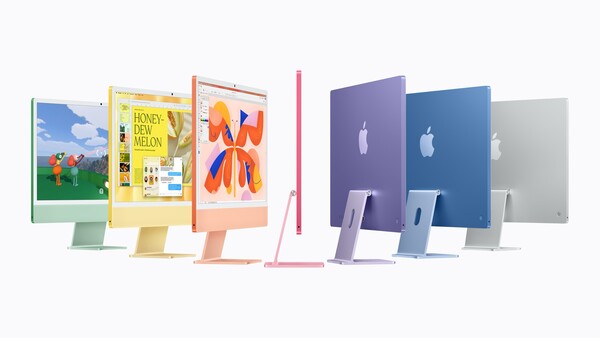
Apple today announced a new iMac with the M6 chip, starting at $1,499 for a model with a 10-core CPU and 10-core GPU. Pre-orders open tomorrow, October 28, and the first machines arrive Friday, November 6. For photographers, the chip is a real step up, but the screen hasn't changed, and the cheapest model gives up a few things the old one had at the same price.
What's New Inside
The M6 chip first showed up in the Mac mini back in August (we covered the chip itself here), and now it's in the iMac. According to Apple's announcement, the top model gets a 12-core CPU and a 12-core GPU, two more cores each than the outgoing M4 iMac. Each GPU core now has its own Neural Accelerator, there's a new "Dual 16-core Neural Engine," and memory bandwidth goes up to 170GB/s from 120GB/s.
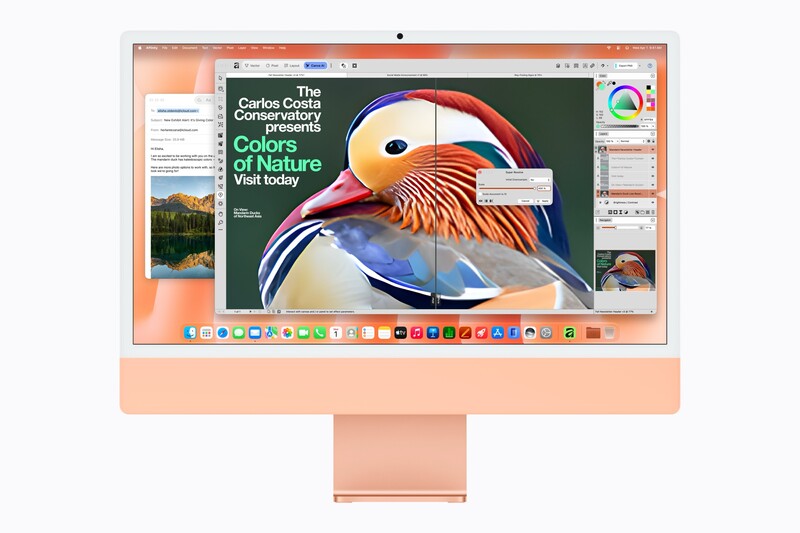
Apple says that adds up to as much as 2x faster graphics than the M4 for photo editing in Affinity, SSD read and write speeds up to 2x faster, and on-device AI up to 5x faster. Those are Apple's numbers, and Adobe hasn't published anything for the M6 yet, so wait for real-world tests before you count on them. Still, GPU speed and memory bandwidth are what Lightroom's AI Denoise and masking tools and Photoshop's heavier filters lean on, so that's where you'd expect to feel the difference with big raw files.
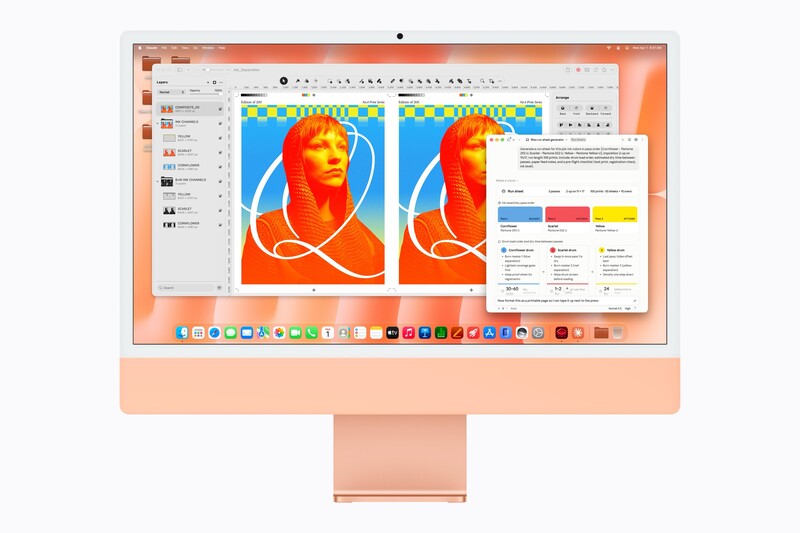
Video editors get the same Media Engine as before, with hardware support for H.264, HEVC, ProRes, and ProRes RAW, plus AV1 decoding.
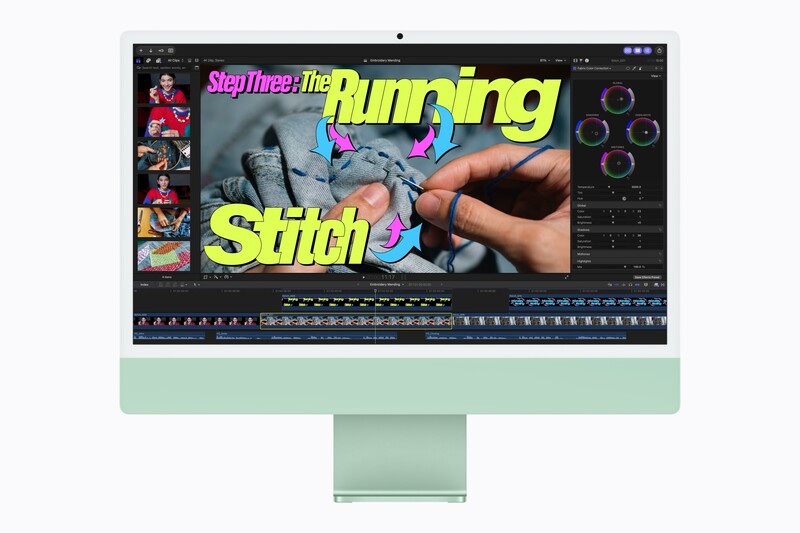
Connectivity gets a refresh, too. The iMac now has Wi-Fi 7 and Bluetooth 6, and Ethernet jumps from Gigabit to 2.5Gb, which helps anyone pulling files off a NAS. The ports are still Thunderbolt 4, not Thunderbolt 5. The 12-core model can drive two 6K external displays, while the 10-core model can drive one.
The Display Is the Same
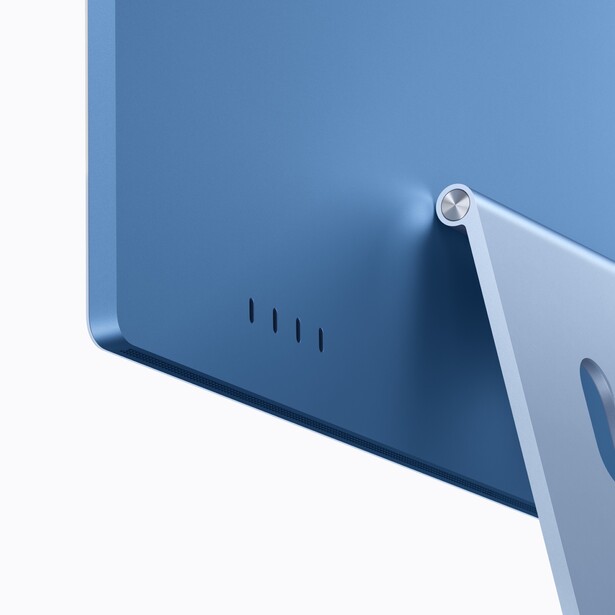
If you were hoping for a better screen, this isn't the update. The 24-inch display is the same 4.5K panel as before: 4480 by 2520 pixels at 218 pixels per inch, 500 nits, P3 wide color, and True Tone, according to Apple's spec sheet. There's no HDR mode and no jump in brightness. The anti-glare nano-texture glass option carries over, but only on the 12-core model.

Old iMac vs. New iMac
Here's how the new model compares with the M4 iMac from 2024, model by model:
- CPU: up to 10 cores on the M4, up to 12 cores on the M6
- GPU: up to 10 cores on the M4, up to 12 cores on the M6, now with a Neural Accelerator in each core
- Neural Engine: 16-core on the M4, "Dual 16-core" on the M6
- Memory bandwidth: 120GB/s on the M4, up to 170GB/s on the M6
- Memory and storage: unchanged, 16GB up to 32GB and 256GB up to 2TB
- Display: unchanged, 24-inch 4.5K at 500 nits with P3 color and an optional nano-texture finish
- External displays: unchanged, up to two 6K monitors on the top model
- Ports: unchanged, two or four Thunderbolt 4 ports depending on the model
- Ethernet: Gigabit on the M4, 2.5Gb on the M6
- Wireless: Wi-Fi 6E and Bluetooth 5.3 on the M4, Wi-Fi 7 and Bluetooth 6 on the M6
- Starting price: $1,299 for the 8-core M4, $1,499 for the 10-core M6
Prices and the Catch at $1,499
There are two models. The $1,499 version has a 10-core CPU, 10-core GPU, 16GB of memory, 256GB of storage, and two Thunderbolt ports. It comes with a Magic Keyboard without Touch ID, Ethernet is an add-on, and it tops out at 24GB of memory and 1TB of storage. The $1,699 version moves to a 12-core CPU and 12-core GPU, four Thunderbolt ports, built-in 2.5Gb Ethernet, and Touch ID, and it's the only one you can configure with 32GB of memory, 2TB of storage, or nano-texture glass. Education pricing is $1,449 and $1,599. Apple's store hadn't posted the prices for memory, storage, or nano-texture upgrades at the time of writing.
Here's the catch. The M4 iMac started at $1,299 for an 8-core model, and that model is gone. The old $1,499 iMac also came with four Thunderbolt ports, Gigabit Ethernet, Touch ID, and the nano-texture option. The new $1,499 model has none of those, so getting the same extras now means spending $1,699. You do get a faster chip for the money, but it's effectively a $200 price increase at both ends of the lineup.
The bigger limit for photographers hasn't moved: memory still maxes out at 32GB. That's plenty for most Lightroom catalogs, but if you regularly build huge Photoshop composites or stitched panoramas, a Mac mini with more memory and a separate monitor is still the more flexible setup.
Should You Upgrade?
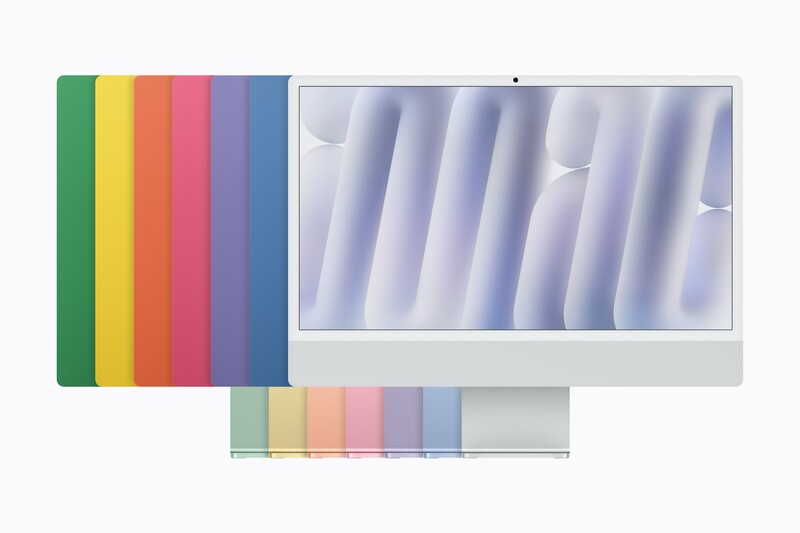
If you're on an Intel iMac, this is a huge jump. Apple claims up to 18x faster performance than the most popular Intel model, and up to 3.3x faster graphics for photo editing in Affinity than the M1 iMac. If you bought the M4 iMac, you have the same screen and the same memory ceiling, so there's little reason to switch. The new iMac comes in the same seven colors: blue, green, pink, yellow, purple, orange, and silver.
More Coming Tomorrow
Apple also announced a 14-inch MacBook Pro with M6 today, and there's more to come. Apple is holding a hands-on "Pro and Tell" event for the press tomorrow, October 28, at 10 a.m. Pacific in Los Angeles. MacRumors reports that Bloomberg's Mark Gurman expects a high-end MacBook Pro with an OLED display that could launch as soon as November 6, and rumors suggest it may also be the first Mac with a touchscreen.





Join the Fstoppers community for free
-
Post comments and join in the discussions
-
Browse the site ad-free
-
Share your work and get featured in the community
-
Compete in the photo contests for fun and prizes