
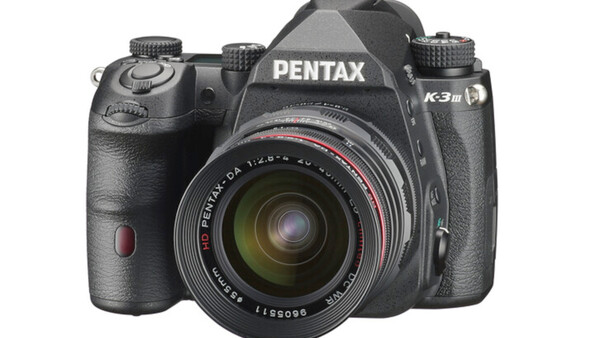
In 2025, Pentax is no longer shaping the mainstream camera conversation. Canon, Nikon, Sony, and Fujifilm dominate the industry’s attention, while Olympus has reinvented itself as OM System and Panasonic has carved a strong reputation with its video-centric shooters. Pentax, meanwhile, has taken a quieter path. Instead of chasing trends, it has remained stubbornly dedicated to DSLRs, releasing incremental updates while others pour resources into mirrorless innovation. To outsiders, it looks like Pentax is stuck in the past. To insiders, that refusal to change is the very reason they remain loyal.
On paper, Pentax looks like an anachronism. Their market share is tiny, their technology often lags years behind competitors, and their lack of a mainstream mirrorless system makes them irrelevant in many professional contexts. And yet, a core group of devoted Pentaxians refuse to switch. They defend their cameras passionately online, celebrate every firmware update as if it were a major launch, and speak about the brand with an almost spiritual reverence. This is a puzzle worth unpacking: in a market where pragmatism usually wins, why does Pentax inspire such enduring devotion?
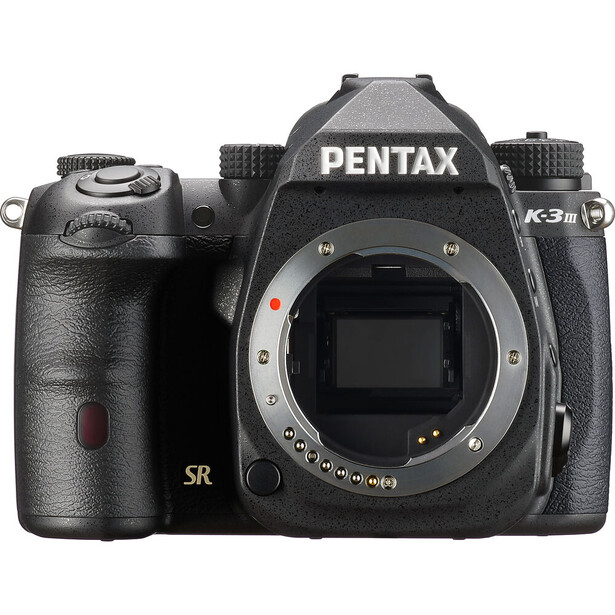
Legendary Glass: The FA Limited Legacy
If you want to understand Pentax loyalty, start with the lenses. The FA Limited series — the 31mm f/1.8, 43mm f/1.9, and 77mm f/1.8 — is as close to sacred text as camera gear gets. These primes, designed during the film era, were never meant to be clinical tools that win lab tests. They were designed with rendering in mind, with an emphasis on how images feel rather than how they score on charts. Pentax shooters often describe the look of these lenses in emotional terms: a certain glow, a sense of depth, a way of painting light that makes images distinctive even decades later.
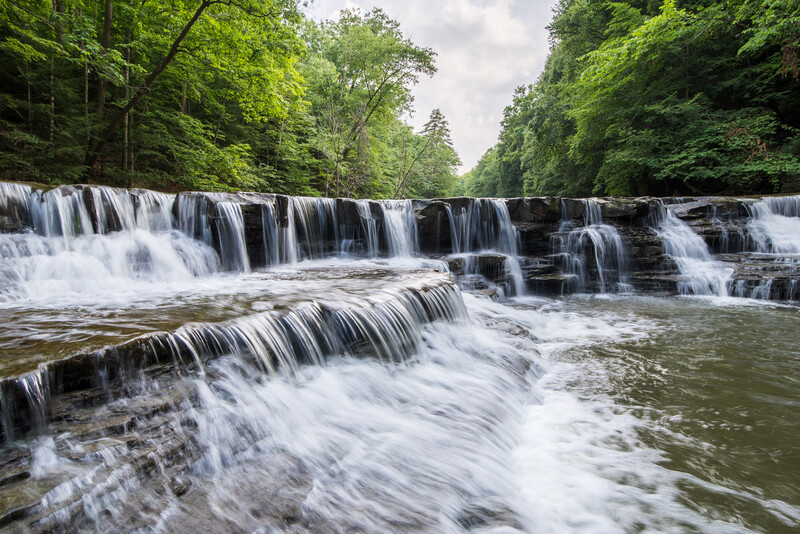
The psychological effect of these lenses cannot be overstated. Photographers form attachments to glass in a way that often outlasts bodies, and Pentaxians are especially prone to this. Many will keep a 77mm Limited in their bag for decades, not because it is the sharpest lens on the market, but because it has become part of their creative identity. That identity is tied to Pentax itself, creating a feedback loop of loyalty: abandon Pentax, and you abandon the tools that make your images feel like your own. That is a powerful reason to stay, even as the market evolves around them.
Rugged Bodies That Last Forever
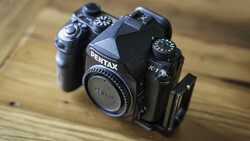
Pentax’s cameras may lack the speed of a Canon R3 or the computational tricks of an OM System OM-1 Mark II, but they excel in one category that builds deep trust: toughness. From the K-5 to the K-3 to the full frame K-1 (a camera I'm a big fan of), Pentax DSLRs have been known for their weather-sealing and durability at price points where competitors often cut corners. Pentax’s identity as the camera brand you can take out into the rain, snow, or dust without fear is not just marketing fluff; it is a lived experience for many of its users.
This matters because ruggedness is symbolic as much as practical. In an age where many consumer electronics feel disposable, Pentax cameras feel built to last. They don’t have the slick lines or featherweight designs of mirrorless competitors; they have heft, grip, and solidity. To Pentaxians, this reinforces the idea that their cameras are tools, not toys. It makes them proud to pull a weather-sealed body out in harsh conditions, knowing it won’t fail. Reliability becomes part of the brand’s emotional currency.
That sense of ruggedness carries cultural weight, too. Pentax shooters often see themselves as outdoor photographers, hikers, or travelers who don’t want to baby their gear. Carrying a Pentax signals that you value resilience over flash. Even if the autofocus system lags or the video features feel ancient, the fact that the camera still works flawlessly after years of abuse builds an unshakable bond. It is not the kind of loyalty you can generate with megapixel bumps or AI gimmicks. It is forged in trust and durability.

The OVF Holdouts
Pentax’s most controversial decision has been its refusal to move to mirrorless. In an era where every other manufacturer touts electronic viewfinders with blackout-free shooting, live histograms, and augmented overlays, Pentax insists that optical viewfinders are irreplaceable. For many observers, this looks like denial: a failure to adapt that explains the company’s shrinking relevance. For Pentaxians, though, it is a principled stand, and one that defines their identity as photographers.
There is something undeniably romantic about the OVF. Looking through glass at the real scene, unmediated by pixels, connects photographers to the moment in a way an EVF never can. The real light is hitting your eye. Pentax has leaned into this difference, framing itself as the last bastion of “authentic” photography. While competitors chase technical dominance, Pentax appeals to experience. Loyalists believe they are preserving something fundamental about photography by refusing to let go of the OVF, and that conviction becomes part of their cultural identity.
This strategy has costs: it leaves Pentax behind in live view autofocus, eye tracking, and hybrid video features. But it also sets them apart. In an industry where every new release feels like a slight variation on the same formula, Pentax offers something different. That difference may not win new customers in droves, but it resonates deeply with the faithful. Being an OVF holdout becomes a marker of belonging to a tradition, a way of saying, “I value how it feels to see, not just how fast the camera can calculate.”
Nostalgia and Identity
Perhaps the most powerful force behind Pentax loyalty is nostalgia. Pentax was once a giant, with film cameras like the Spotmatic and K1000 shaping entire generations of photographers. The K1000, in particular, became the quintessential student camera, a durable and affordable workhorse that introduced countless beginners to the craft. That history creates a reservoir of goodwill and memory that carries through to 2025. Owning a Pentax today isn’t just about specs; it’s about staying connected to that lineage.
For older shooters, sticking with Pentax is about continuity. They may have learned on a K1000 or an ME Super and simply never saw a reason to switch. For younger shooters, Pentax carries a different kind of cachet: it’s niche, retro, and countercultural. Choosing Pentax is a way to opt out of the Canon-Sony-Nikon mainstream, to declare that you value quirk and heritage over hype. That sense of identity is reinforced in forums, communities, and user groups where Pentaxians encourage one another and celebrate their shared difference.
There’s also a psychological power in owning something “outsider.” Pentax shooters often frame themselves as underdogs, proud to stick with a brand that refuses to play by the same rules. This tribalism isn’t unique to Pentax, as every brand has its loyalists, but it is particularly strong here because Pentax’s market position is so precarious. To stay is to make a statement, and that statement becomes part of a photographer’s sense of self.
The Price of Niche
Of course, loyalty comes with costs. Pentax is far behind in autofocus, video, and mirrorless development (or the existence thereof). Its lens lineup is narrower and older than those of competitors, and its bodies often feel years out of date. For professionals in fast-paced genres like sports or video, Pentax simply isn’t viable. That is the trade-off of being niche: the things that make Pentax unique also keep it from growing beyond its small base.

This boutique positioning has its risks. Pentax could fade further into obscurity, becoming more of a historical footnote than a living brand. But it also gives Pentax a unique voice in a homogenized industry. In a way, being niche is what gives Pentax its cultural power. If they tried to be Canon or Sony, they’d be crushed. By staying Pentax, they retain a loyal audience who doesn’t want what everyone else is selling.
Conclusion: Why Pentax Matters Anyway
In 2025, Pentax’s importance isn’t measured in sales or market share. It is measured in loyalty, identity, and cultural meaning. Pentaxians are not just camera users; they are part of a movement that values durability, tradition, and individuality over raw technical dominance. They remind the rest of the industry that photography is not only about megapixels or AI autofocus, but also about how a camera feels, how it connects you to history, and how it shapes your creative identity.



Join the Fstoppers community for free
-
Post comments and join in the discussions
-
Browse the site ad-free
-
Share your work and get featured in the community
-
Compete in the photo contests for fun and prizes
26 Comments
I guess I am a die hard fan of Pentax.
I shoot exclusively with Pentax cameras, the K1mii, K20D, P30T Film camera, and the ME Super. Grew up handling Dad's Honeywell Spotmatic. I have shot several track meets, the Blue Angels, and a rodeo with the K1mii, K20D and ME Super, and hope to get some youth soccer in yet this fall. At 2.5 frames per second, the power winder on the ME Super seemed a bit slow, but produced excellent black and white images of the rodeo and the high jump. The K20D produced excellent color images of the rodeo with the Tamron 18-200, and the K1mii excellent images of the pole vault and long jump, and tack sharp images of the Blue Angels (along with about 40 shots of the back of peoples phones trying to capture images of aircraft at 300+ MPH). Action photography does not seem a problem with the gear, although some thought and anticipation are useful.
The legacy of lenses from Pentax was an important factor when I purchased the K1mii. I still use lenses from my early film days, and occasionally take the old Spotmatic lenses on a field trip, at this point that is sixty years of gorgeous glass.
One last item, if I wanted to shoot video, I would use a proper tool for the job, not one of the best still cameras being made.
I regularly shoot boat racing racing with my K-3 III and DFA 150-450mm lens.
Seems like the reason most Pentax users give for using Pentax is that they've always used Pentax.
The reasons that I stuck with Pentax when moving to digital from film was mainly the compatibility of the lenses I already owned. Changing brands would easily have doubled the cost of the new camera. I already knew that the camera had the features I wanted.
"Pentax shooters often describe the look of these lenses in emotional terms: a certain glow, a sense of depth, a way of painting light that makes images distinctive even decades later."
We often read similar statements about certain items of kit from time to time, but I've yet to see side-by-side images to really nail this mysterious rendering thing.
Ah my sweet Pentax, how sad it is to watch you waste away….
I kept my set of Three Amigos, but my K-1 was re-homed a while back to pay for other toys. MZ-S and LX is where it’s at for me these days.
I sometimes think about what things could’ve been like had Pentax joined the L-mount and launched a retro mirrorless camera and K-mount AF adapter just in time to ride the vintage camera nostalgia wave. Sadly that opportunity is shrinking in the rear view mirror now.
It's a bit op a pity that an article singing the praise of Pentax lenses as one of the important reasons to stick to the brand, only mentions the body the showcased pictures were made with, and not the glass...
Nice article. I’ve never used Pentax but I do have a soft spot for them. I don’t want to switch but if all my gear got lost , for landscape photography they would definitely be on my short list.
You've forgotten the close knit(ish) community that is far more invested in the photographs than the tech. I had the pleasure of Pentax survey with an engineer in a one on one Teams session to get feedback a few years back. It used to be that you needed to learn your trade or craft, took a while, typically measured in years. A Pentax K-1 or K-3 will take you from being a fresh student to a competent trade or craftsman, a reliable companion beside you.
Maybe I'm an anachronism, but I mostly shoot 100 iso B&W using my 40+ year old Canon Ftb and my almost as old Pentax 67. Digital is okay, I suppose, but mirror less is, in my opinion, a dead end. I don't see what problem it solves or how it advances photography.
Love the 67! Keep thinking about getting one but then I look at my Blads and think maybe I should reign myself in.
Mirrorless cameras are just digital cameras, so if you already exclusively shoot B&W film on decades-old manual focus cameras then it makes sense that you wouldn’t be drawn to them. Whatever draws you to photography is obviously being served by what you’re doing.
It’s a bit wild to consider mirrorless cameras a dead end though, given how you’ve acknowledged yourself as an outlier. They’re just the latest evolutionary step in digital photography and photography in general, and it would seem that many millions of people do see the use in them. Some folks are hardcore film, some digital only, some like myself like both. Life is beautiful.
If you like vintage lenses and their looks then mirrorless is the way to go. I got a R7 so I could use old L39, R, FL and FD lenses as well as old Pentsx, Nikon and many other lenses as well as my EF/EF-S lenses. Those EF/EF-S lenses ALL work 100% on R bodies.
And yes, I have acquired some interesting vintage lenses that without a mirrorless R7 wouldn't be available for me.
I use FD and FL lenses. . .on my Canon FTb-QL. I carried it for 28 months in Libya and Syria even though the US Navy had equipped me with a perfectly serviceable Bessler TopCon Super D. Having a backup never hurts when you're that far from civilization.
I wish pentax would go Mirrorless, maybe join the L mount alliance and also build a pk to L mount adapter. I switched to Nikon this year my new Z6II is great, but I can't stop wishing for a Mirrorles K1 with more lens options. A mirrorless Pentax would be great.
👀
Jokes aside, I’m right there with you. Imagining a mirrorless K-1 with a Sigma 14mm F1.4 and Astrotracer… sigh.
Hello I'm Jonathan and I'm a Pentax addict.
For me it was mostly about the glass and the strong tradition of lens backward compatibility. Even now on my K-1 I can even still use 50 year old Super Takumar screw mount lenses (and boy do some of those have a unique look).
Although more recently I use more modern DFA lenses most of the time (to avoid lugging too many primes around - and second hand I could now afford them), I still love using my FA 31 / 43 / 77 limited lenses for outings for a different and appealing "look". IMO the FA 43 is underrated (as long as its a good copy) and its a very universal focal length (not to mention super small).
I also think the K-1 was a great camera when it was released - an almost perfect landscape camera IMO. But its not as fresh as it used to be. There are rumours of a K-1 MkIII but no hints of a release yet LOL.
As much as I still like the optical viewfinder, I actually do hope that Pentax releases a mirrorless camera (with K mount adaptor at least) because I think modern mirrorless systems do offer some advantages and it might help expand the user base. Ricoh does do small mirrorless cameras (GR series) and while they don't have the best AF in their class they are cracker little cameras (when travelling light I have a GRIIIx that goes with me everywhere and it delivers some great shots!) - so its not quite as big a stretch as some think. Maybe a K2 some day?
This article expertly captures the vibe of Pentax. I own both its “current” flagships(K3iii and K1ii) and they never get used for pro work because they’re not the right choice for high speed low light one-chance-to-nail-focus moments. But I still love them for their near intangibles and, let’s be honest, nostalgia for youthful days using their excellent film bodies and lenses.
I actually find the worst part of owning Pentax is all the rabid fans who keep trying to argue it’s a viable system for newbs. You see it everyday on their forums: people doing a disservice to young photographers saying Pentax is somehow on par with big players. It’s a novelty brand now: like buying a vintage car to drive on weekends not a daily tool, but I’m happy we all have the brand to augment the clinical boring tools used for work.
There’s definitely some blinders on with some Pentaxians, but I feel like it’s diminished somewhat the last few years. Maybe not on PentaxForums but for sure out and about on articles such as these. Nearly 10 years on from the release of the K-1, and with entire calendar years passing with no significant releases… maybe people are seeing the writing on the wall? Retreating back to their safe havens to share close-up photos of flowers taken with this-or-that Super-Takumar.
Who knows? But whatever new photographers are coming into the system, I’d imagine it’s not enough to keep up with attrition.
Edit: lol John Williams. Triggered?
You know, you’re totally right. Pentaxians in the wild are more chill lately and likely now owning 2-3 systems… the rest keep to themselves, occasionally getting worked up about clickbait rumours of K1IIIs in the Pentax Forum echo chamber.
LOL at your edit…
They might’ve decreased in number, but I guess they’re still out there 😂
@ Pat Terson, It's very possible to use Pentax gear for professional gigs, depending on the gig. Not all professional jobs require 4K video, focus-peaking, blasting fast AF, Eye-control, 10,000 focusing points etc. As a matter of fact, I have taken my Pentax K-5 II to various paid gigs no problem.
However, I must admit that other brands have a more robust support/repair/maintence system, which is important when it comes to shooting professionally. My clients often say to me "there is something about your pictures that make them stand out, but I can't explain why ?" Pixie Dust !.
However, other brands are starting to catch up. For example, I sometimes get so-called "Pixie Dust" and 3D rendering from my Canon gear. Someone once told me "it's not good to love anyone too much". This is the problem with some Pentax die-hards, while their enthusiasm might help Pentax/Richo's bottom-line, it might also make them lackadaisical.
The reason i chose Pentax is because of some features their cameras have over others. They are small, well built, weather sealed and all the buttons are logically placed. Pentax cameras are perfect for Travel due to these features. Unfortunatelly, I don;t have any deep historical ties to the brand such as my great, great grandfather owned a Pentax, however this 'was' the first camera I used as a Paid photographer, if you can call that nostalgic.
Ser Pentaxiero (Pentaxian) es como ser Atlético
Some of us just go out and shoot what we have fun with!!! I've learned over the years to learn your equipment. Don't depend on fancy built-in stuff to do it for you. I have friends who shoot all the different brands. No one really cares about what you shoot, just the end product. Shot with Pentax.
I started off with the Pentax Spotmatix F, and if I could afford film processing now, I'd probably still use it sometimes. At that time - and at this time - there is more value I feel, than in the bigger names. Back when I was a young fella, wielding the Pentax with a 135 mm lens, gave me a certain area of authority when few people walked around with a camera. So much so that I somehow managed to seamlessly cross a police line in order to get some shots of a rather dramatic scene featuring tear gas, shots fired (before I arrived on the scene) and house set on fire from the tear gas canister. So yes, nostalgia plays a role; the Pentax line is kind of like my first girlfriend that I will always remember fondly - except the camera has never cheated on me, 😆.
Decades later, after I finally could afford a K5 , with the promise that, via an adapter, I could use my old film lenses, I got back that feeling that the camera was an extension of me. All the electronics, menus, automation, baffled me at first and I still find that shooting in manual mode - been the way I learned - usually gives me better results. Although my old lenses and adapter did not last long- I was glad to get Pentax and Sigma lenses for the K5 and 3.
So, so far, the Pentax cameras, including the k3 now, represent value to me, represent part of me when I'm out and about. And there's one thing that many other people don't seem to like - the heft. These things are solid. I joke that if I'm ever mugged while holding a Pentax camera, I will have, in my hand, an effective bludgeon to fight back with. And the fit in my hand is perfect for both shooting and fighting.
One thing that frustrates me is that when there is an article on photography, they often mention every major brand. Never Pentax. Which, is a shame because the value is there and there is just something different, but there will be many people reading those articles who won't even recognize the name. It's also difficult to find a retailer carrying the brand. And lately, it's become a very difficult to find third party suppliers for my Pentax cameras.
I've used Pentax for going on 35 years. I've owned other cameras from Canon, Nikon, Fujifilm, and Sony. But Pentax is where I've primarily invested my time and money (north of 50 lenses, and 20 film and digital bodies).
The one thing your article doesn't dwell on long, and is possibly the biggest reason many of us Pentaxians stubbornly refuse to give up on the brand is; Image Quality. There have been lots of cameras released since the K1 in 2016, with all kinds of bells and whistles. But there have been few, if any with the kind of "show stopping" increase in image quality that would convince me to sell my cameras and lens collection to switch systems. Features may sell cameras, but if you are looking for a tight definition of Pentax philosophy; "Photographers make pictures".
I've tried newer cameras with much lauded "improved" auto focus. Cameras with faster burst speed, quicker buffer writes, eye detect AF. And each time I come back to "What is this new camera and lens going to give me that I don't already have?" so far the answer has been "not much".
I know I'm not the typical gear head chasing the latest and greatest. I still shoot a K1000 regularly, and have most recently been exploring Nikon's F mount lenses on an F100 of all things. My latest camera purchase is a D600. My point simply is, it's not like high end cameras and lenses in the past 20 years inherently took bad pictures. Most of the new features the camera industry has focused on might flatten the learning curve slightly or may promise smaller bodies (at the same time fast lenses for the new mounts have gotten absurdly large). But dramatic improvements in image quality? Not that I've seen. But, that's just my opinion.
All that said, if Pentax does finally release the K1 MKIII...they can have my money.
The two shots below were taken with my K1. One was with a $50 lens I bought on a whim (FA 28-105mm F4-5.6). The other with a $650 lens I'd been wanting for 25 years (FA* 80-200mm F2.8 ED).
There is still a lot of fun to be had in the past.