

In the autumn of 2013, if you walked into any professional photography studio, sporting event, or wedding venue, you'd see a sea of black cameras with red rings and gold badges. Canon's 5D Mark III and Nikon's D800 weren't just cameras, they were symbols of serious photography. Their size, their weight, their distinctive mirror slap, these were the sounds and feels of professional work. The camera industry had a natural order, and everyone knew their place in it. Then Sony dropped a bomb.
On October 16, 2013, Sony announced the a7 and a7R, the world's first autofocus full frame mirrorless cameras with electronic viewfinders. They were tiny compared to the reigning DSLRs. They looked almost delicate next to a 5D Mark III. And the photography establishment, particularly Canon and Nikon, looked at them and saw a toy.
It would take five years for Canon and Nikon to realize they weren't watching a cute experiment. They were watching their entire business model become obsolete. By the time they scrambled to respond in 2018, Sony had built a commanding early lead that reshaped the market (one Canon and Nikon are only now beginning to reclaim). This is the story of how two of the most dominant companies in photography slept through a revolution happening right in front of them.
The World Before the a7: Canon and Nikon's Iron Grip
To understand why the a7 was so revolutionary, you need to understand just how completely Canon and Nikon dominated professional photography in 2013. It wasn't close. Between them, they controlled roughly three-quarters of the interchangeable-lens camera market, and an even higher share among professionals. Their supremacy was built on decades of lens development, marketing, and ecosystem lock-in.
If you were a working pro, you shot Canon or Nikon. Period. It didn't matter that Pentax made great cameras or that Sony already had some interesting offerings with their A-mount system inherited from Minolta. Those were fine for enthusiasts, but professionals needed the massive lens catalogs, the support infrastructure, and frankly, the credibility that came with having a 1D X or D4 around your neck.
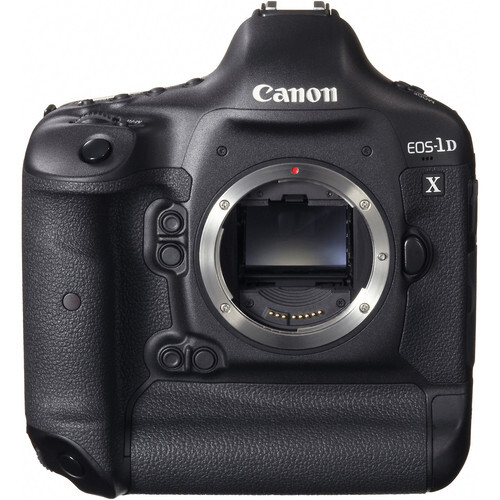
Both companies had experimented with mirrorless technology. Canon had launched the EOS M in 2012, and Nikon followed with the Nikon 1 series. But tellingly, both systems used smaller sensors (APS-C for Canon, and the even tinier 1-inch sensor for Nikon). The message was clear: mirrorless was for consumers, tourists, and hobbyists. Professionals needed real cameras. Big cameras. DSLR cameras.
Sony's Secret Weapon: Years of Strategic Preparation
Here's what Canon and Nikon missed: the a7 wasn't a sudden gamble. It was the culmination of years of strategic moves that flew under their radar.
In 2006, Sony acquired Konica Minolta's entire camera division, gaining decades of optical expertise and the foundation of what would become their A-mount system. While Canon and Nikon dismissed this as Sony buying their way into a market they didn't understand, Sony was actually building the foundation for something bigger.
By 2010, Sony was experimenting with SLT (Single-Lens Translucent) cameras like the a77 and later the full frame a99 in 2012. These cameras used a fixed, translucent mirror instead of a flipping mirror, which meant they already had full-time phase-detect autofocus during video and used high-resolution electronic viewfinders. Sony was perfecting the EVF experience and thinking computationally about imaging while Canon and Nikon remained committed to optical viewfinders.
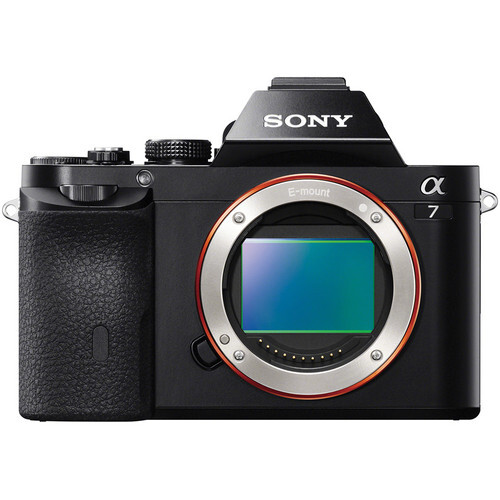
The a7 wasn't from nowhere. It was the calculated fusion of their full frame sensor technology from the A-mount line and their proven mirrorless E-mount system from NEX. And here's the kicker: Sony wasn't just a camera maker. They were (and still are) the world's leading image sensor supplier. Many of Nikon's best DSLRs used Sony sensors. This vertical integration gave Sony an R&D advantage that Canon and Nikon simply couldn't match.
October 2013: The Revolution That Nobody Saw Coming
When Sony unveiled the a7 and a7R at a press event in Tokyo, the specs seemed almost impossible. A full frame sensor (the same size as a 5D Mark III or D800) in a body that weighed just 474 grams without a lens. That was less than half the weight of Canon's flagship. The a7 was so small you could almost hide it in a jacket pocket.
But Sony wasn't just miniaturizing. They were fundamentally rethinking what a camera could be.
The key innovation was Sony's existing E-mount with its remarkably short 18 mm flange distance, compared to 44 mm for Canon's EF mount and 46.5 mm for Nikon's F mount. This technical detail sounds boring, but it was actually the secret weapon that would crack open the entire industry.
See, Canon and Nikon's mounts were designed decades before, when cameras needed space for a mirror to flip up and down. That mirror was essential (it let you see through the lens optically). But it also meant the lens had to be mounted far from the sensor, and that distance was locked in forever.
Sony's mirrorless design eliminated the mirror entirely. With nothing flipping around inside, lenses could sit much closer to the sensor. And here's where it got interesting: while you can't mount a short-flange lens on a long-flange camera, you absolutely can mount a long-flange lens on a short-flange camera with a simple adapter.
Suddenly, with adapters like the Metabones, you could mount your entire collection of Canon L-series glass on a Sony body (and the autofocus actually worked, at least to a degree). Nikon lenses could be adapted too, though autofocus performance lagged behind until better adapters arrived. Vintage Leica lenses from the 1950s? Perfect. The Zeiss glass you loved but could never afford a body for? All of it worked.
Sony had done something remarkable: they'd built a professional camera system that didn't need decades of lens development because it could simply borrow from everyone else's decades of lens development. Your investment in Canon or Nikon glass wasn't a reason to stay with those brands anymore (it was a reason to try Sony).
But the adapter story was just the beginning. The a7 was fundamentally a different kind of imaging device. It had an electronic viewfinder that showed you the final exposure before you took the shot. No more chimping (reviewing your LCD after each frame to check if you nailed the exposure). With the EVF, what you saw was what you got.
Sony also brought their deep expertise in video and broadcast imaging (honed through decades of making Handycams, XDCAM cameras, and CineAlta cinema cameras) directly into the a7 line. While Canon and Nikon were still building refined optical instruments with some electronic components, Sony was building a computer that happened to take photographs. The difference would prove decisive.
The Giants' Miscalculation
In the boardrooms of Canon and Nikon, the a7 wasn't seen as a threat. It was seen as an oddity, maybe even a validation of their own strategy.
Look, they reasoned, Sony tried to build a "professional" camera and had to make it tiny because they couldn't compete with real pro bodies. Pros don't want small cameras. Wedding photographers need the battery life that only a big body provides. Sports shooters need the ergonomics and durability of a weather-sealed DSLR that can take a beating. And nobody (absolutely nobody) was going to abandon their investment in Canon L-glass or Nikkors to buy into an unproven system with limited native lens options.
This dismissal was built on three fundamental assumptions that seemed unshakeable at the time:
First, they believed size was a feature, not a bug. Canon and Nikon had spent decades marketing the idea that a professional camera should be substantial. The grip should fill your hand. The weight should telegraph quality. A camera that looked too small, they believed, made you look like an amateur. Wedding clients wanted to see a "serious" camera. Sports teams wanted to see the lenses they recognized from ESPN broadcasts.
They completely missed that professional photographers didn't actually love carrying 15 pounds of gear on a six-hour wedding shoot. They didn't enjoy the back pain from hiking with dual-body setups. They tolerated the weight because they had no choice. Sony had just given them a choice.
Second, they believed their lens ecosystems were unbreakable moats. Both companies had massive lens catalogs built over decades. Canon had over 70 EF lenses. Nikon had over 90 F-mount lenses. Photographers had invested tens of thousands of dollars in glass. The conventional wisdom was that this created overwhelming switching costs (nobody was going to abandon their lens collection to start over).
Third, they were protecting legacy businesses. This was especially true for Canon. They had built a successful Cinema EOS line (expensive video cameras for professional filmmakers). They had deliberately crippled the video capabilities of their DSLRs to avoid cannibalizing those high-margin cinema camera sales. The 5D Mark III could shoot beautiful video, but it had a recording time limit. It overheated. It lacked features that Canon's engineers could easily have included.
Sony had no such legacy to protect. They could put their best video tech into the a7 without worrying about killing another product line. So they did. And when hybrid shooting (photographers who also shot video) became the norm rather than the exception, Sony was ready. Canon was still protecting their cinema line.
The evidence of how badly Canon and Nikon misjudged the moment? Look at what they were actually doing during this period. Canon continued developing the EOS M system with its APS-C sensor while simultaneously planning a separate, incompatible full frame RF mount for the future. This split focus divided their R&D resources. Nikon pushed the Nikon 1 with its 1-inch sensor. Both were positioning mirrorless as consumer-grade technology, something for people who didn't need a "real" camera.
They saw the market Sony was actually pursuing (professional full frame mirrorless) and decided it didn't exist. Classic Innovator's Dilemma.
The Five-Year Desert: 2013 to 2018
For five years, Sony had the entire full frame mirrorless market to themselves. Not because the market was small, but because Canon and Nikon had decided not to compete in it.
And Sony didn't waste that time. They iterated relentlessly.
In 2014, they released the a7 II, following Olympus's pioneering work on IBIS by bringing 5-axis in-body stabilization to full frame for the first time (a feature that made every lens you owned, adapted or native, effectively stabilized). In 2015, they launched the a7R II with a groundbreaking 42-megapixel sensor and improved autofocus. In 2017, the a7R III kept the 42 MP resolution but added dual card slots, much better battery life, faster AF, and improved handling.
Sony's early lens lineup wasn't perfect (many of their initial E-mount lenses were criticized for being soft, slow, and expensive). But in 2016, they launched the G Master series, starting with the 85mm f/1.4 GM, and the quality gap closed dramatically. Third-party manufacturers like Sigma, Tamron, and Zeiss, seeing where the market was heading, committed to the E-mount with their own lineups of high-quality glass.
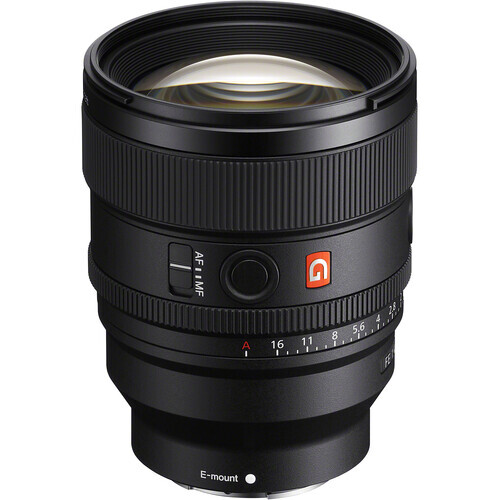
But the most important release came in February 2018: the Sony a7 III. If the original a7 was the proof of concept, the a7 III was the refinement that would become the default choice for a generation of photographers.
The a7 III was spectacular. It had 693 phase-detection autofocus points covering 93% of the frame. It had Eye-AF that could track a subject's eye even when they turned their head. It delivered 10 fps burst shooting with continuous AF tracking. It had dual SD card slots for backup and overflow. It shot oversampled 4K from the full width of the sensor at 24p (1.2× crop at 30p). And at launch, it cost just $2,000 body-only (undercutting the Canon 5D Mark IV [released in 2016] by nearly $1,500).
For working professionals, especially those doing hybrid photo and video work, the a7 III was a revelation. You could shoot a wedding ceremony at 10 fps with Eye-AF, ensuring every frame was tack sharp, then immediately switch to 4K video for the reception. The image quality was stunning, and the body simply disappeared during use.
Sony wasn't just selling cameras anymore. They were selling a complete, mature system that could handle any professional assignment.
The Panic: Canon and Nikon's 2018 Response
In September 2018, Canon and Nikon finally responded. Canon announced the EOS R system. Nikon announced the Z6 and Z7. Both were full frame mirrorless cameras designed to compete directly with Sony.
On paper, they looked competitive. The EOS R had a 30-megapixel sensor and Canon's excellent color science. The Z7 had 45.7 megapixels and Nikon's legendary build quality. Both companies made a big deal about their new mounts (the RF and Z mounts, respectively), which would enable better optical performance than even their legendary DSLR lenses.
But when reviewers and professionals actually got their hands on these cameras, the gaps became obvious. These weren't competitors to the a7 III, Sony's third-generation camera. They were competitors to the original a7 from 2013. Canon and Nikon had spent five years watching Sony iterate, and they'd responded by essentially building what Sony had built half a decade earlier.
The EOS R launched with only a single SD card slot. For wedding photographers, event shooters, and anyone who couldn't risk losing files to a corrupted card, this was a dealbreaker. The a7 III had two. The EOS R's autofocus, while good, couldn't match Sony's 693-point system or sophisticated Eye-AF. And most damningly, the EOS R's 4K video had a severe 1.7x crop factor, turning your wide angle lenses into normal lenses and making the camera nearly unusable for serious video work.
Nikon's Z6 and Z7 were better in some ways (the Z7 in particular had a gorgeous sensor), but they too launched with single card slots and an autofocus system that felt a generation behind Sony's. More importantly, both Canon and Nikon launched their new systems with tiny lens lineups. The EOS R launched with just four native RF lenses. The Z system launched with three.
Yes, both companies offered adapters for their legacy DSLR lenses. But this was Sony's strategy from 2013, except Canon and Nikon were doing it five years later without the benefit of having spent that time building out native mirrorless glass.
The market spoke clearly. The a7 III became one of the best-selling cameras of all time. Working professionals who had been waiting to see what Canon and Nikon would do bought Sony cameras instead. YouTube was suddenly filled with videos of Canon and Nikon shooters making the switch.
The Aftermath: A Three-Way War
To their credit, Canon and Nikon learned quickly. By 2020, Canon released the excellent R5 and R6, which fixed most of the EOS R's problems and added impressive features like 8K video and dual card slots. Nikon released the Z6 II and Z7 II with dual card slots, then later the spectacular Z8 and Z9, which proved they could build world-class mirrorless bodies that competed directly with Sony's flagship a1.
Today, the mirrorless market is engaged in a brutal three-way war. Canon's R5 Mark II, Nikon's Z9, and Sony's a1 are all phenomenal cameras that can compete on nearly every metric. Canon has been exceptionally aggressive, and recent market data shows they've caught up to (and in some regions surpassed) Sony in new full frame mirrorless sales.
But here's what Canon and Nikon can't get back: those five formative years from 2013 to 2018. Sony used that time to build an ecosystem that's still the most comprehensive in full frame mirrorless. They have one of the most extensive native lens lineups. They have the strongest third-party support from manufacturers like Sigma and Tamron. Most importantly, they won an entire generation of photographers who entered the professional market during those years and built their businesses on E-mount.
Rental houses like LensRentals report that Sony mirrorless gear remains among their most-rented cameras. In fact, in 2024, Sony tied with Canon on the company's top 20 most rented list, with each company occupying four spaces with their camera bodies. YouTube creators and Instagram photographers (the new generation of image-makers) still overwhelmingly choose Sony for their first professional system. That's the power of getting there first.
Canon and Nikon aren't going away. They're too big, too well established, and frankly, their recent cameras are too good for them to fail. But they lost something irreplaceable: they lost five years. Five years where third-party lens manufacturers built their strategies around E-mount. Five years where the industry narrative shifted from "Sony is trying to compete" to "Canon and Nikon are trying to catch up."
The Lesson: You Can't Sleep Through a Revolution
The Sony a7 story isn't just about cameras. It's a masterclass in disruption and the dangers of incumbent thinking.
Sony understood something that Canon and Nikon didn't: the camera market was undergoing a fundamental transformation. It wasn't just about moving from mirrors to mirrorless. It was about moving from optical instruments to computational photography. From single-purpose cameras to hybrid tools. From systems built on legacy technology to platforms designed for the future.
Canon and Nikon were building better horse-drawn carriages. Sony was building automobiles.
The tragedy for Canon and Nikon is that they had every advantage. They had the brand recognition, the dealer networks, the marketing budgets, and the decades of optical expertise. If they had taken Sony seriously in 2013 and responded in 2014 or 2015, this story might have ended very differently. Sony is a massive company with plenty of profit from other divisions, and it's entirely possible they would have exited the camera and lens market entirely.
Instead, Canon and Nikon waited. They protected their legacy businesses. They assumed their customers would stay loyal. And they woke up in 2018 to find that the market had shifted beneath their feet.
Today, if you walk into a professional photography studio, you'll still see plenty of Canon and Nikon gear. But you'll also see a lot of Sony cameras with those distinctive orange GM lens rings. The sea of black and red and gold has been joined by black and orange. And while Canon and Nikon have built excellent cameras that can compete technically, they're still fighting to reclaim the cultural and ecosystem momentum that Sony captured during those five critical years.
That's the cost of sleeping through a revolution. Not necessarily losing the war, but spending a decade fighting to win back ground you should never have lost in the first place.




Join the Fstoppers community for free
-
Post comments and join in the discussions
-
Browse the site ad-free
-
Share your work and get featured in the community
-
Compete in the photo contests for fun and prizes
25 Comments
Sony did the most to embrace a wider range of lenses while offering a decent range of features. They also targeted the entry level with cameras that avoided many of the issues of the DSLRs from Nikon and Canon in the price range.
For example, with many entry level cameras, e.g., Nikon D5xxx and D3xxx series, and the Canon equivalents suffered from both lower manufacturing tolerances and intentional firmware crippling that exasperated those issues, this moved many people towards mirrorless platforms since on-sensor phase detect didn't need calibration to deal with imperfections in the alignment of the phase detect module as well as the pellicle mirror position.
In the case of Nikon, the AF calibration cost was present in every DSLR they made, including their most entry level ones. The difference is they removed user access to it in anything lower end than the D7xxx series. This lead a wide range of issues that essentially drove away an entire generation of users, especially since Nikon will not perform warranty service to recalibrate the AF unless it was out of spec by a massive margin. This largely meant tat someone could end up with a 24 megapixel camera that has less subject sharpness and detail then the camera in their smartphone.
One example I used in the past, was this, Nikon considers that within tolerances for their D5xxx and D3xxx cameras. Since budget lenses including their 35mm f/1.8 g DX has significant LoCA, it effectively means that a camera body that is back focusing to that extent, would be unable to use such a lens, since whatever the focus locks on, will be sent well into the LoCA zone of its DOF.
The example image that i attached, had the object placed at the 60mm line on the ruler.
If you were lucky enough to find a working copy of their service center software that wasn't loaded with malware, then you could connect the camera to your PC, and just tweak the values of each phase detect point to correct the focus issue, but even those were short lived since workers stopped leaking new versions, thus people on a D5300 or D3200 or newer, simply couldn't get a new enough version to support their camera.
If someone is in such a situation, and were out of the return window, then their only option, was to get 3rd party lenses that worked with a lens dock so that you can compensate for the camera body within the lens. But that would still be a large investment for some, and they may rather cut their losses and instead move to a platform without those issues.
Most people tend to stick with a platform that treated them right at the entry level, and supported then throughout their move to higher end gear.
Many who encountered the Nikon and Canon entry level issues, became early adopters of Sony's mirrorless cameras.
For me, the shift started around 2013 not with Sony, but with Panasonic, when I realized I could get my 1Ds MkII's image quality from Micro Four Thirds in a much smaller, more travel-friendly package for way less money. Eye-detect focus and a WYSIWYG viewfinder left my DSLRs behind. Shot MFT exclusively for event work and travel for seven years before moving to Sony FE five years ago.
All of that is fine and dandy, but I am a working photog stiff and my Nikon DLSR D780's are working just fine. Getting about 2500 exposures on a charge. Built like a tank (weighs like one too). When Nikon comes out with weight saving lenses to go with their fine Z line I might consider.
Virtually every prime lens in the Z line is lighter than the F mount lenses. Especially the long primes, they are much lighter than the F mount lenses.
Alex, thank you for the piece. It is about cameras, but the strategy works everywhere, even for the photo business.
Sony and Panasonic have to be pioneers because they do not have the background that Canon and Nikon have. But the speed of new tech depends a lot on how a company sees its brand. Sometimes being first is risky. It is more important to watch how the technology will develop and to launch it not first but in the right way. In a safe way. The second point is to prepare buyers. Do not create demand from zero. Wait until everyone wants such a camera.
Sony, Panasonic, and Leica are experimenting. Nikon and Canon are waiting so they can take ready customers in the mass market.
Stories like this are always very engaging.
You'd probably enjoy Geoffrey Moore's books, "Crossing the Chasm" and "Inside the Tornado". They're all about the bell curve of technology product adoption.
Moore would call Nikon and Canon "laggards" or "sheep" and Sony, Panasonic, Olympus, and Fuji "innovators" or "mice".
Exactly, this is what I meant. Though not Moore, but Everett Rogers and his innovation adoption curve: not about the innovations themselves, but about the speed at which they are adopted.
The user menus on Sony cameras are still a nightmare today. When will we see a (r)evolution in this area at Sonys cameras? Just as Canon and Nikon were once trapped in their DSLR cage, it is now Sony that is afraid to break out of the chaos.
I side-by-side an A7RIV and an A7RV, and I find that the revised menus are much easier to navigate and more logically laid out as compared to the old system.
What specifically do you find to be a nightmare about them and how would you have them change it?
I've used nearly every camera brand. None of the menus would win any design awards. Right now I own Sonys with both the old and new UI. Besides the cartoonish colors of the new UI, it isn't really any easier to find functions. Every camera I've have ever used has a few menu features that seem completely illogical.
Best practice is using the custom buttons and My Menu functions to make your most used functions faster to access. All camera menus are so complicated nowadays that it is a waste of time scrolling through looking for things more than once.
Of course, there is no menu design that would be perfect for everyone. But if you put aside any reservations you may have about Hasselblad or Leica and just take a closer look at their menu design, you will notice significant, positive differences.
Humans are creatures of habit and get used to many things over time, even unnecessarily convoluted settings menus. But why does it always have to be that way? The designers of the two brands mentioned above prove that there is another, more efficient way.
Yes, Canon and Nikon were slow to the mirrorless game and Sony took the lead. However, as someone who's shot all three (Canon, Sony and Nikon), I can honestly say that, for the most part, it's not the camera brand or camera these days b/c all of them are great. When I hear the old arguments about who's better, I just chime it with my 2 cents worth and just let them know that if you can't get a descent picture or video out of today's cameras (even as far back as 10 years ago), it's no the gear.
That said, I do prefer the Canon bodies (ergonomically) over Nikon and Sony. Maybe it's b/c I started with Canon with their 20D and progressed to the 7D, 7D II, 5D, !DX II and then the R5, R6 II and R5II and I'm just used to that form factor. I hear a lot of people say this menu system or that menu system is confusing etc. Again, I tell them, if you use a product on a regular basis, yiou get familiar with things or even just set up your Favorites menu and go from there. If you're jumping from system to system, then yes, things can get a bit confusing at times. Which is one of the reasons I just shoot one brand (oh and the fact that it's way too expensive to have great glass for 3 brands LOL).
Exactly. I've switched from Canon to Nikon because I just like Nikon colors better, but there was nothing wrong with my Canons. I loved those cameras, too.
I'm the exact opposite, I like the Canon colors better. But I did enjoy shooting that D850 and D500 when I had them.
Actually Sony only ate Nikon's lunch. Canon still outsells Sony including the mirrorless arena.
While Nikon has fallen precipitously to only 11% of the market. While Canon has actually enlarged the distance between them and Sony recently.
That's because Canon offers entry level cameras for less than $500 on the DSLR side and less than $600 on the mirrorless side, while Sony does not. The cheapest camera on the Sony side is $900 (without promos) and its their vlogging camera. If you look at their non-vlogging camera, their "entry level" starts at $1700, pricing a lot of people out of the Sony market.
I know its business and market share and sales is what is important, but the article was more about the innovation. Sure Canon can sell a bunch of Rebel series to mom's who want to take pictures of their kids, but technology wise that isn't a flex.
I worked at a camera store and I can confirm this. You get volume sales with low-cost products (lots of mums and aunties buying R100s), and Sony isn’t participating in this market. That’s why Canon’s always focused on their total market share and Sony’s always focused on their $$$ share or full-frame mirrorless market share. They choose the metric that makes them look the best.
But at the end of the day those boasts are for shareholders. I don’t get why photographers bother to pay attention to that never mind proselytizing about it.
It reminds me of being 12 and arguing with my classmates how Nintendo was better than PlayStation.
You don't even have to work at a camera store to know that's where most of the Canon sales are. If you go to a kid's sporting event, a botanical garden, or zoo, its usually Canon Rebels with kit lenses. My first camera was a Canon Rebel XT....granted, it was basically Canon or Nikon back then and I didn't like the Nikon gold ring lol.
Thanks for the history from the side of businesses BUT it is us the Hobbyist that went Sony back in the beginning. Back then we ere bracketing and using HDR programs to get more but all images were cartoon like back when i started with the Canon T2i in 2009 at $850 for the camera and two kit lenses and having to use Canons Software for editing that disappeared when the T4i came out. Remember PS and Lr both cost $800 each and for each full update only big companies could afford software to edit.
I lived this history as a hobbyist using computers that cost $1500to $2000 about every three years also.
Does anyone remember the hooks that Sony put into the package 1. Capture ONE for $20 that was like forever then, 2. On Camera Apps that cost less than if you bought the external gear to do the work example Digital Filter with presets for sunrise/sets but you could also program your own areas for sky and ground and a 3rd you picked next the work was done in camera with results in RAW or jpeg or both, I used for Astro Milky Way over lit towns or cities many more apps.3 yes the adapters for Canon film FD lenses and RF lenses that we had bags of and i could get more at estate sales free just for asking about.
Those days you learned about cameras on book store selves and magazines and Sony had a store in a Orlando Fl. mall where I bought my A7SM1 due to it would bracket 5 at +/- 3EV and it's high ISO but knew little till use.
Another find was in 2015 with the APS-C E 10-18mm f/4 OSS that Trey Ratcliff showed in a review that could be used in Full Frame mode on a Sony at 12mm -18mm (18mm if you remove the rear light shield) two year before even Sony came out with a 12-24mm f/4 non OSS/IS.
In 2017 bought the A7RM2 and the FE 12-24mm F/4 on a trip to Arizona and a stop at Antilope Canyon where on a day tour I was so worked up I forgot the plate for my tripod but went in anyway where there were all others with two Canon or Nikons with users on tripods doing long exposure, but try and fine out I did one capture and it looked great hand held then I did 3 at +/- 2EV all looked great again hand held and my clicking worried the others for i was on my back looking up on my belly between others and able to look over all.
a few other things Bright Monitoring that you can assign to a button. The A7M3 was one of the first to have ISO Invariance meaning you could capture a low ISO image dark image but in post increase exposure my 5 stops and get and image of ISO 12800 with way less noise. Noise reduction software was very bad just a few years ago years ago even Capture ONE Pro Software!
If there is light Sony can capture without a flash even with the A7RM2
Not mentioned so much is when Canon and Nikon went mirrorless the photographers and companies had to get rid of the lenses also so a big hit money wise all around.
1. A month after buying used a Canon Film FD 100-300mm lens to capture a setting lunar eclipse Oct. 2014
2. Sony E 10-18mm in full frame mode and due to it being OSS used a lot on the A7SM1
3. Getting more in an image than others and hand held with the A7RM2 and the FE 12-24mm f/4 as a other photographer asked that saw my image on back of my camera.
4. The A7RM3 and the FE 12-24mm f/4 G The Dark Throat of the Grand Canyon in 2017 single capture looking down at Bright Angel Trail, you can see flashlights of hikers coming from the north rim a day and night hike.
I recall being lectured by DSLR users not to go with E-mount because when it dies off my lenses will be practically worthless.
Well, Sony had a reputation for abandoning innovative systems almost as soon as they appeared. The A series of FX cameras with translucent mirrors is a prime example. In hindsight, it appears that Sony was willing to try new things and dump systems that were extremely flawed. That was a good thing.
Yes, let's hand it to Sony for its incredible innovations that drove development of the mirrorless market. My primary system is Nikon, but due to the availability of excellent E2Z adapters, I'm using some of the best lenses that Sony has to offer with my Nikon Z bodies.
But is Sony getting complacent? The phenomenal E-mount lenses and selection, has me tempted to buy back into the Sony ecosystem. But Sony offers no body for less than $3k (actually, $5k) that doesn't have horrific rolling shutter or a burst rate greater than 10fps. The forthcoming A7V is rumored to get 15fps when competitors are offering bodies that provide 30-40fps with fairly fast sensor readouts.
Obviously, in 2025, fast sensor technology isn't hard to match in the $2k-$3k segment, so is Sony just protecting its A9 and A1 lines from lower-cost bodies? If so, Sony could start losing the advantages that it enjoyed due to its pioneering efforts. That would be both ironic and sad indeed.
The contemporary issue is not about Sony's bought technological revolution in camera technology, it's more about the fact that those who chose to adopt mirrorless cameras, or namely Sony's, thought this is how photography works and looks. So you bought a Sony camera and now you simply think you're a photographer? Contemporary photography that have been shot for many decades past were using a SLR, or DSLR. Historically, in photography classes, the equipment used and were borrowed were mainly Canon and Nikon. But you had TO LEARN how to operate a camera and fundamentally understand how to shoot, as well as how to operate in a darkroom. When taught photography, the materials were a SLR or DSLR, Kodak Portra and Ilford paper. Great that Sony created a paradigm shift for the legacy brands. But since now Canon and Nikon have finally started making mirrorless cameras, there's no reason to say Sony, Canon or Nikon are better than each other. Trust me, anyone who could finally own a Canon or a Nikon thought this was the more approachable way to photography than being able to afford medium format, a Leica, or god forbid a Hasselblad. Someone that learnt how to use a specific camera equipment will choose to stay with it permanently because of its ease of use, its colour fidelity and maturity.
Again another excellent insightful article! (even for me who doesn't own Canon, Nikon nor Sony gear).
As mentioned elsewhere, it wasn't Sony but Olympus and Panasonic that pioneered and mostly developed the mirrorless camera. But Sony became a direct competitor of Canon and Nikon in the full frame arena.
Sony also fell victim to the complacency of their dominant position in portable audio players like the Walkman and Discman. They were an also-ran in the early MP3 player era (among long-forgotten competitors like the Diamond Rio and Creative Nomad), and later had their lunch eaten by the Apple iPod.
Sony was smart when they built upon the photo business they bought from Konica-Minolta. Rather than try to compete directly with Canon and Nikon (which hadn't worked for K-M), they concentrated on mirrorless, leveraging their expertise in sensors and consumer electronics, and let the third parties build out the lens offerings. This allowed them to "fly under the radar" of the big guys until the industry was ready for a shift.
As an APS-C shooter--and 40+ year Canon fanboi--Canon had nothing else for me when I lost faith in my 7D Mark II around 2020. I replaced it with a Sony a6400, which had great AF and worked perfectly with all of my adapted EF lenses. Even though I now use a Canon R7 as my main rig, I still love the a6400, and I use it often when I want a smaller and lighter kit.