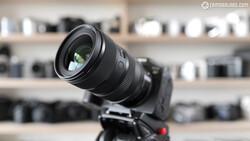
f/2.8 vs f/4: Is the difference worth the upgrade? Let’s see how Mark Denney thoroughly investigates a long-standing debate among photographers: whether the premium price of a fast f/2.8 lens is truly justified over a more affordable f/4 lens, especially for landscape photography where apertures are typically closed down.
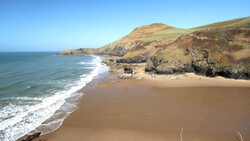
In landscape photography, when capturing wide vistas, a narrow aperture is usually required to achieve a significant depth of field, ensuring that everything from front to back is in focus. This reduces the need for a wide-open aperture like f/2.8, which is mainly useful in astrophotography. Many of us also face a budget constraint because a lens with f/2.8 tends to be expensive.
In this video, Mark Denney, a well-known landscape photographer and YouTuber, discusses the advantages and disadvantages of these lenses and shows us results with wide angle images of the same scene taken seconds apart. Using identical settings such as ISO, aperture, and shutter speed, Mark compares the corners, center, and background elements to determine which lens performs better.
While you'll need to watch the video to see the results yourself, the conclusion resonated with me the most. Mark asks a question and shares his opinion on cost versus benefit. His comments offer food for thought for those still undecided. For more than double the price of an f/2.8 lens, are the benefits worth it for you as a photographer? Are you planning to print your images at large sizes? Will someone be examining every pixel? Or can you, or even the client, tell the difference with the naked eye while admiring a decent-sized image printed side by side?



Join the Fstoppers community for free
-
Post comments and join in the discussions
-
Browse the site ad-free
-
Share your work and get featured in the community
-
Compete in the photo contests for fun and prizes
9 Comments
Good video but let's keep in mind that it pertains to only two specific Nikkors, and may not apply to other lenses or brands. For example, if you compare the Sony 20-70 f4 to their 24-70 2.8 would the results be similar?
And MY classic favorite was the Nikkor 50mm f1.4 . When doing hand-held wedding portraits the ability to work close while blowing the background out of focus was invaluable. On location photography adds so many uncontrollable background objects that distracts from the shot that can be blurred, centering attention to the subject.
The Pixurman
I would have been nice to see a comparison done in low light conditions e.g. in the forest. Photographing a waterfall for instance, with both lenses at F4 and the F2.8 lens at F2.8 to see how they compare. This is precisely the situation I am considering purchasing a F2.8 lens for. I can use my F4 for everyday shots.
I would have been nice to see a comparison done in low light conditions e.g. in the forest. Photographing a waterfall for instance, with both lenses at F4 and the F2.8 lens at F2.8 to see how they compare. This is precisely the situation I am considering purchasing a F2.8 lens for. I can use my F4 for everyday shots.
Three words... Portraits, portraits, portraits.
Yes, F2.8 is worth it ($$$$) for full frame (FX) sensors over F4 for portraits and othe cases where throwing the background into less focus is needed.
Me? 64 year old Nikon owner since high school in 1977. Everything from the Nikon F film camera to the Nikon D850 FX DLSR.
Not sure what this proves. Depends on the lens, also why f11?
What a stupid clickbait video! Just go and shoot in low light conditions and you will have the answer.
Comming from the film days, where the loss of ight could cause you to stop shooting and pack it up for the day, I tend to lean to fast lenses. Their light gathering capacity come in handy in dim areas. I usually won't go above f2.8 unless I have to. Fast lenses are usually bigger, heavier and more expensive, but not necessarily better than slow lenses. These days with flexible ISO values that you can change as you please, fast lenses are not as important. I purchased a Canon 70-200 F4(which I love) for about half the price of Canon 70-200 F2.8 after the latter lens was stolen. The pictures come out about the same with the F4 being slightly sharper than its more expensive cousin. However, I still miss that extra stop of light and the Bokeh that it produces.
Seems like the difference would present when you want to photograph a subject and have some nice background Bokeh. (Not necessarily just in portraits, but in a few scenarios) Another pointed the difference may also come out more when the light went down low. But for shooting just landscapes, measuring the difference would be harder.