
Among the many AI-powered image enhancement tools, the one we show in this article is the first to come close to a one-click solution for print preparation, with nearly no additional cleanup required.
I'm always looking for ways to improve the quality of my photos, especially for print. The prints I create are not only meant to be viewed at a distance. I want viewers to get up close and explore the many details in my photos.
Because I cannot afford one of the fancy medium-format cameras with 100 MP sensors, the maximum print size I can produce is usually limited to 36", and even this is already stretching it and requires a lot of detail work on my photos. For five years, I have been shooting with a Canon EOS R5, and I'm not planning to switch any time soon.
But I still want the ability to print even larger from time to time. Yet the interpolation required when upscaling to 48" and beyond usually reduces the detail in my photos to a point I'm not comfortable with. At that size, a canvas print still works because of its inherent structure, but a print on smoother materials usually won't—at least for me.
In the past, I tried to mitigate this problem by using Topaz Gigapixel AI or Topaz Photo AI. But those tools haven't improved in recent years, despite many advancements in computer vision. They continue to produce unnatural results littered with artifacts. So, whenever I used them, I had to do additional work on top to remove artifacts and clean up flaws the software introduced across several parts of the image.
You can still achieve a result superior to that of regular Adobe Photoshop upscaling and sharpening, but it usually requires a lot of work. Even the introduction of Topaz Upscale and Topaz Sharpen directly in Photoshop doesn't make using this software any better. On the contrary, it removes the option to fine-tune the results and often produces oversharpened, pixelated images.
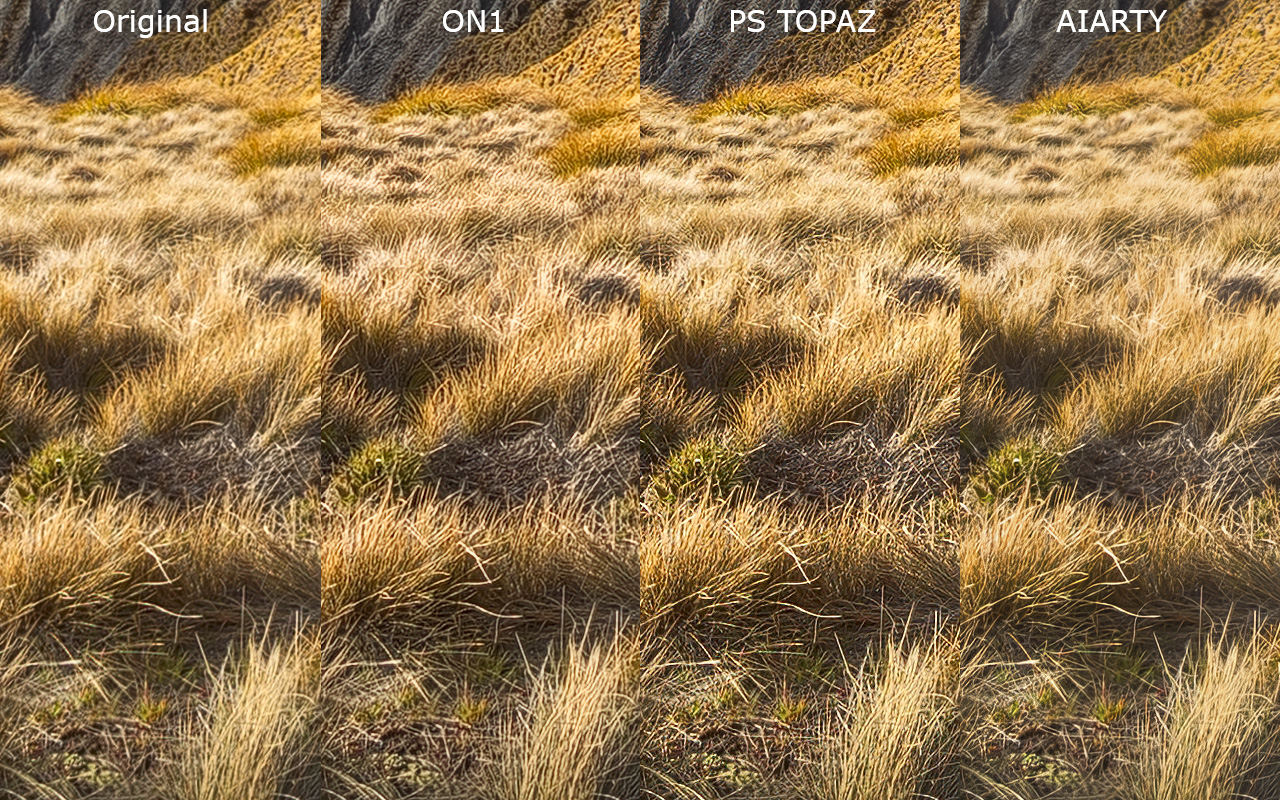
Aiarty
Thankfully, I tested the Aiarty Image Enhancer. At first, I was skeptical and thought of it as yet another AI upscaler—slow and prone to producing unnatural results.
In the past, only two AI-powered tools have convinced me: DxO PureRAW and Lightroom AI Denoise. Now, Aiarty is the third tool on this list. It convinced me with the first image I processed with it and continues to do so again and again.
By now, I have tested it with around 50 photos, including cityscape, landscape, and wildlife. And 80% of the time, I don't do any cleanup on top of it because the results are free of artifacts, and the details and sharpness Aiarty adds to my photos look natural.
In the feature video, I share several examples and compare Aiarty with similar software from Topaz and ON1. But I also want to highlight my findings in this article.
Ideal Use Case
The ideal use case for the Aiarty Image Enhancer is print preparation. If you already have high-quality images to start with, you can use the Aiarty Image Enhancer as a one-click solution to scale and sharpen them to your desired output size.
As long as you don't upscale beyond 1.5 times the original resolution, you'll need nearly no additional work. If you go beyond it, add some additional sharpening on top. In the video, I really push the limits of Aiarty by upscaling by nearly a factor of three. With this increase, the result will not be perfect, so you should avoid such use cases. The software has to interpolate heavily and make up details where none exist. The results still look more natural than what I could achieve with Topaz Upscale in Photoshop, though.
But if you must perform large upscalings, Aiarty is still your best bet.
Image Resque
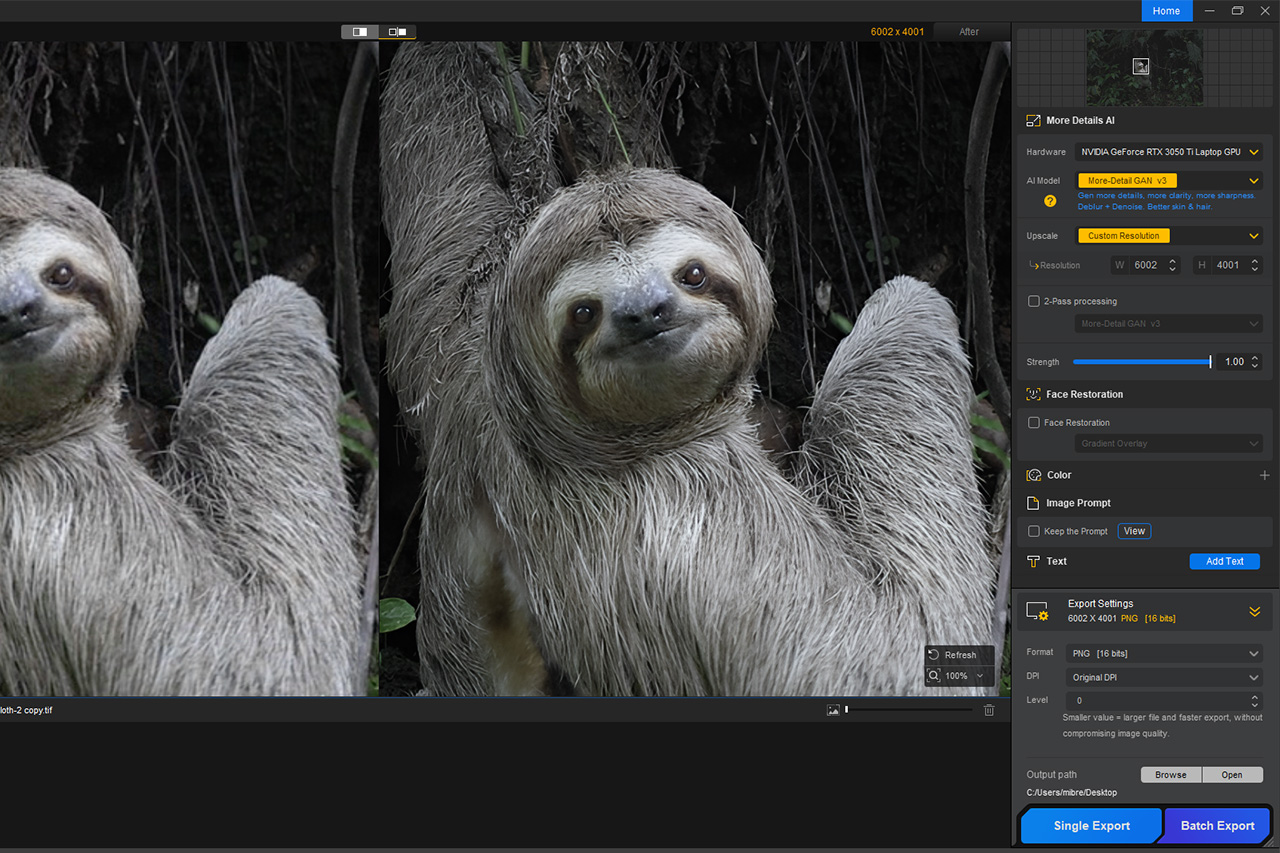
To a point, Aiarty can also rescue slightly blurry or pixelated photos. For example, I took a frame from a video I recorded in Costa Rica of a sloth climbing some vines in the jungle. I really regret not taking photos instead of capturing video, but thanks to Aiarty, I could turn this 4K video frame into an image I can now print up to 24".
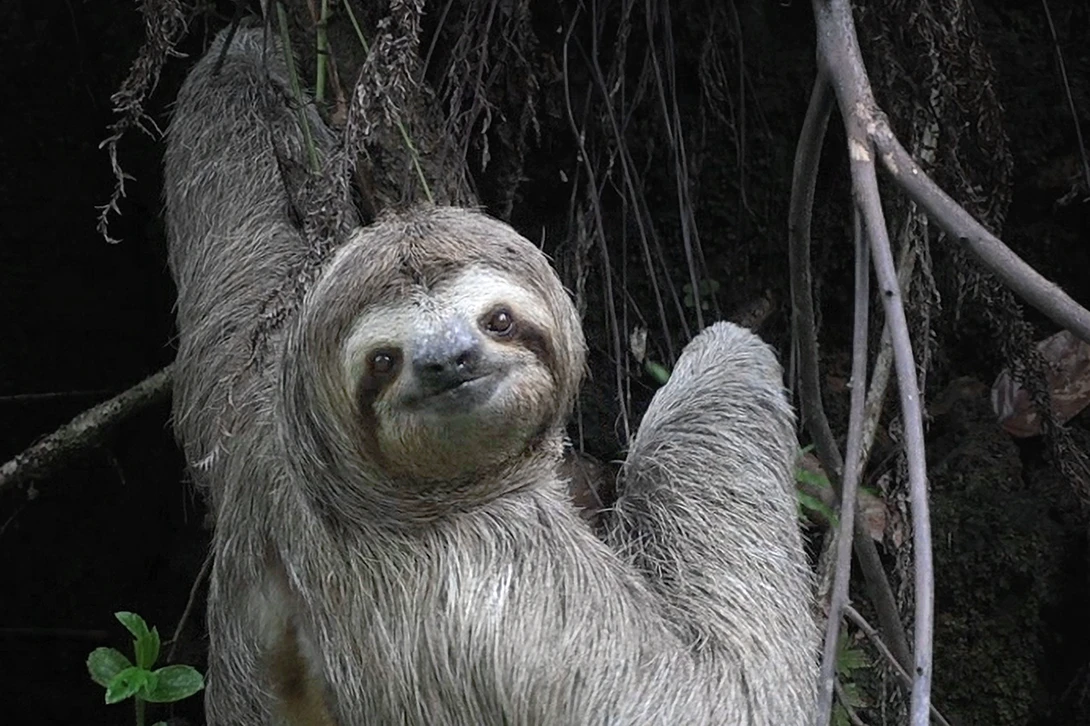
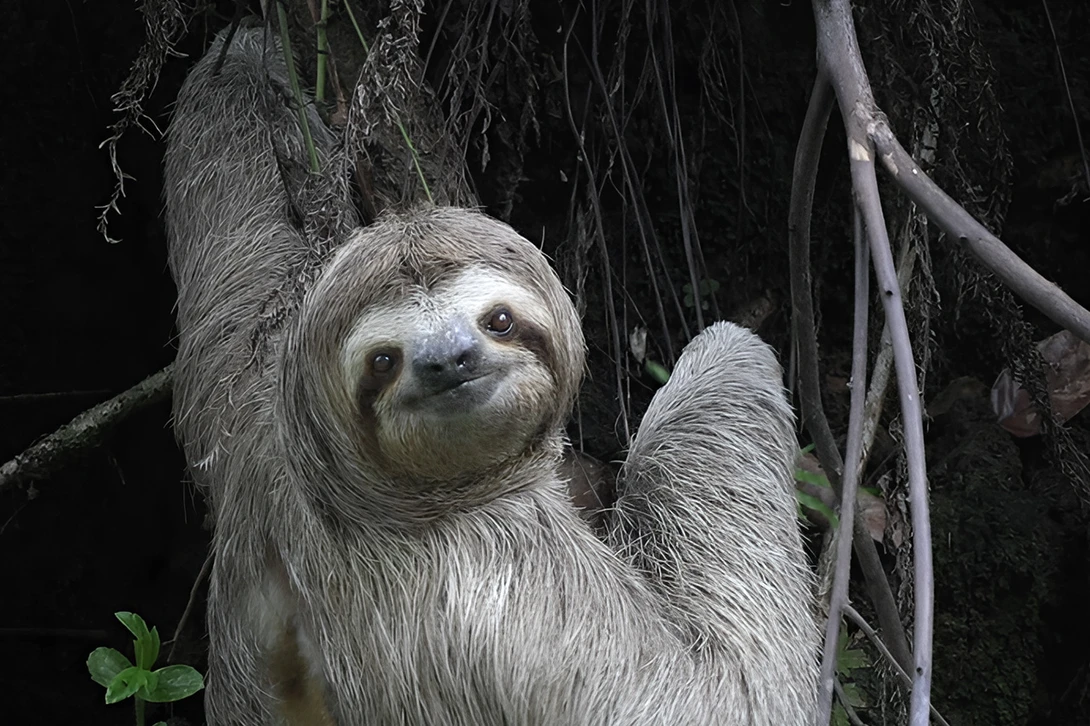
In the past, I tried to improve this image's quality with other software, but only now have I achieved a result I'm comfortable with. In the before-and-after comparison, you see that the photo shows less pixelation and more detail after upscaling to 6,000 px width with Aiarty.
Features
The Image Enhancer comes with a clean interface. You can drag and drop the images you want to process into the main window area, then select one of the models on the right. There, you can also choose a scale multiplier or a custom size for upscaling.
If you leave the upscale setting at 1x, Aiarty will still process your photo, removing pixelation and other artifacts and increasing detail and sharpness where appropriate. I noticed that the sharpening is selective and applied at different strengths depending on the detail already present. This way, you get an image with uniformly high quality. It also works well if your image is already sharp to begin with. Here, Aiarty will reduce sharpening fringes at high-contrast edges.
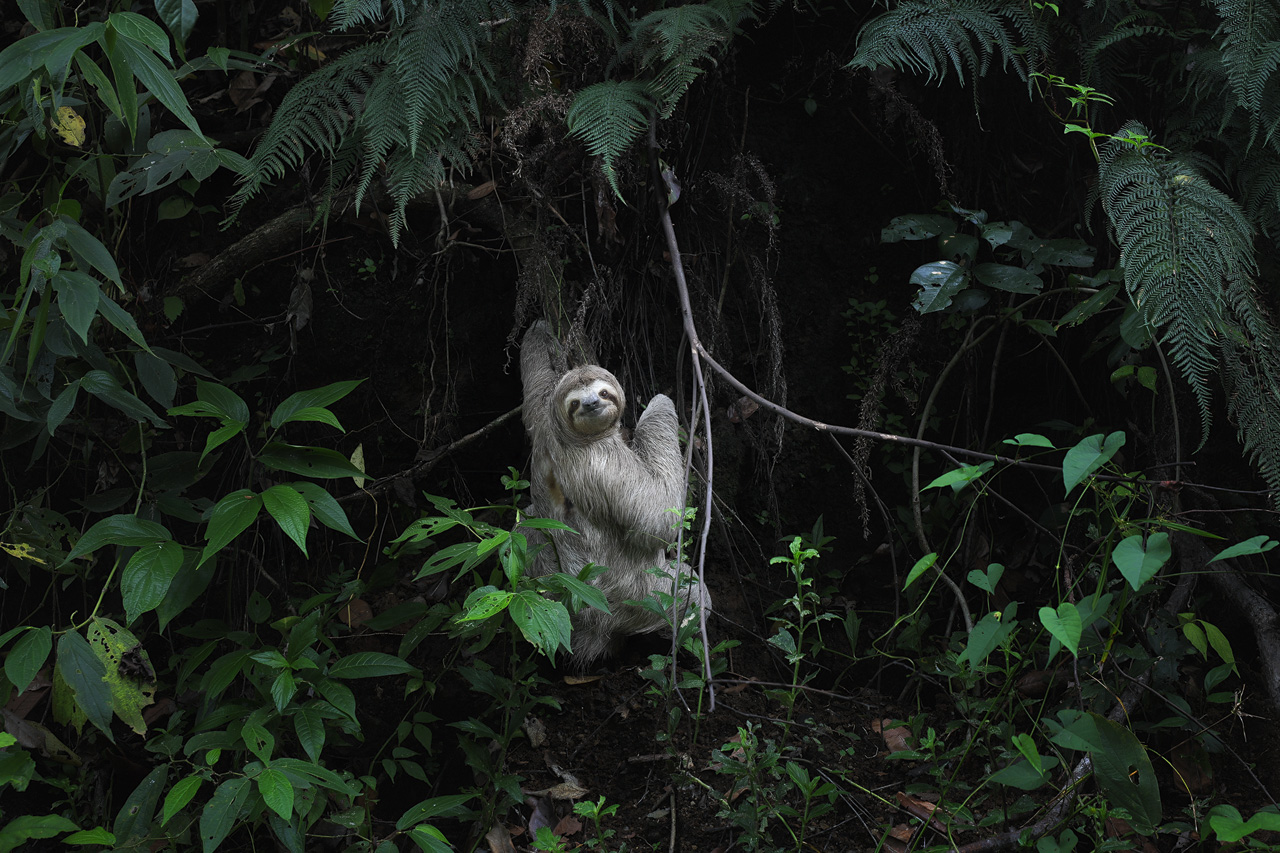
My favorite model to work with is the "More-Detail GAN v3." I use it on nearly all my images during print preparation now. If an image contains a bit more noise, I go with a "2-Pass processing" approach, which combines two models. Here, a combination of "Real-Photo v3" and, afterward, "More-Detail GAN v3" does a good job.
You can read more about the different models and when to use them here. You'll also find information on other settings, such as the "Max Tile Size." I haven't yet experimented with it, and I usually use a large size for smooth results. Performance will benefit if your hardware allows it.
You'll also find a "Face Restoration" setting in the panel on the right. I don't use it for my landscape and cityscape photos, but if you do portraits, it can further improve your results.
The "Color" settings are added for convenience if you don't want to switch to another software afterward. I recommend using Photoshop for color and contrast work, though, because Aiarty is currently limited to working with 8-bit.
This is currently a drawback of the software. As input, Aiarty only supports 8-bit sRGB images. If you use other images, they will be converted. I talked to the team at Aiarty, and it is something they plan to improve in the future by adding more input options.
But if you use the image enhancer, as I do, at the end of your editing workflow for print preparation, it doesn't matter as much. I usually reduce the bit depth at this stage anyway and don't do further editing afterward.
Conclusion
You can currently purchase a lifetime license of the Aiarty Image Enhancer for just $99. While the current models included are already great, the lifetime license will provide you with future improvements and, hopefully, even better results. Compared to the pricey subscriptions of some of the contenders, this is a very reasonable price.
Considering what the software can already do with the version 3 models, I cannot wait to see the next evolution. Especially if they increase the size of their training datasets or create specialized models for different genres of photography, we should see even better results in the future.
I hope they continue with their current approach and keep things natural. It may not be sufficient to magically turn a blurry 8 MP image into a photo rivalling the detail of a medium-format camera, but that's beside the point. Companies that focus on this often produce software that yields unnatural results across the board, even when only slight upscaling is required.
It's why Aiarty currently stands out to me as software that fits the workflows of professional photographers. They usually don't want to turn pixel garbage into masterpieces. They are looking for ways to speed up their workflows while improving the quality of photos that are already good. And this is what Aiarty excels at.

Join the Fstoppers community for free
-
Post comments and join in the discussions
-
Browse the site ad-free
-
Share your work and get featured in the community
-
Compete in the photo contests for fun and prizes
12 Comments
Like the way my photos come out of my camera or phone, I never do more to a photograph than I could do in a darkroom. AI is destroying photography. AI takes out the character of an image. As Sir Oliver Cromwell said to his painter "Paint me warts and all"
we get it, grandpa. You are old and dont like change lol
I downloaded the app but surprised to see there is no option to install as a plugin for Lightroom or Photoshop.
Frist Proof that it is not the camera but the Software that makes the image! I am a fan of other SW to edit an original image that is external to the one you are using. But I must say even Lrc is coming up fast. From the day of getting rid of dust spots, YEH, and noise it was in the past a real tuff job. The noise thing remember when every one said take 10 images (no camera NR) stack and use a program to sort things out. It was dead and hot pixels but Camera NR took care of that. I went Back to a night of MW images where i did the 10 image then did the one shot with Camera NR the single image won. Well sort of, it was 2015, the one thing one (me) failed to read about is when you bracket NR is turned off for those long exposures. So I like to go back to that nights images with the red and white dots every where and all three images (HDR) bracketing 3 at +/- 1EV. Lrc does a great job of NR of all three images and then using the HDR makes a great clean image of the combined images.
Most of us hobbyist have lived the SW get and check it out, yep have about four I do for each image with and select the winner from there. One little fact to remember you can edit an image and get a result in a program then wait a day or more and edit it again in the same program you will never get the same result then comes the use of many programs in and out of the main chances even less ability to come out with the same final image. i am not a pro and i get to play. I feel at home behind the camera seeing what others do not BUT I love to relax with editing way better use of time vs playing video games.
I believe the best eye opener also is to capture not only in a preferred setting BUT also use the Auto mode and compare for both you pay for it use it as an education both night and day capture.
Also go back to those 2010 and around images in the past compare your old finals to using today newer editors and bring back to life some of the old.
About the final printing if you use a printer that your main post uses ask what they do to make great prints I love poster size swapping out every week!
Like the saying " A Camera is like a box of Chocolates " Play time is not only in the capture but the editing fun time for all.......
1.-2. A7SM1
3. A7M3 not knowing what camera setting just asked if i could....
4. T2i Bracketing with Promote Control at an anniversary dinner
Aiarty is one of the worst A.I. enhancers available.
All the examples on their page look horrible, like CGI, no realism whatsoever.
Might as well create an A.I. image from scratch if you use that tool.
I guess you have not tested their latest version, nor watched my Video, nor read my article ;-) give it a try with their free Version. For me it works great
I agree with you 1000%. Trying to get a refund after purchasing yesterday is a real hassle.
I'm trying the app but once you drag and drop an image it looks blurred in the "before" window.
Yes, the original preview is blurry which sucks a bit. But I never use it for comparison. I always drag the photos into Photoshop afterwards for real comparison. I hope they fix their preview.
In my opinion, the fact that software dedicated solely to enhancing image definition intentionally blurs the input makes me lose all trust in the developer—regardless of the results, which are also quite questionable. Thanks anyway! and We definitely agree that Topaz is unusuable.
Did the reviewer receive any compensation for this review ? Maybe I didn't see it, but it don't remember seeing it. If not mention, it would surely make a difference in the reviewer reputation
It's not a payed review.
But I was able to get a code to use the Software beyond the trial period, because I wanted to test it for longer before creating a Youtube Video. There was no obligation for writing this article, though. I just wrote it later because the Software works for me.
Now, if I didn't like the Software, having the license code would be pretty worthless, right ;-) So interpret it as you like, I always do honest reviews. But I agree, if there was money involved beyond just being able to use the product, the incentive might be different. Haven't done any of those reviews though.