
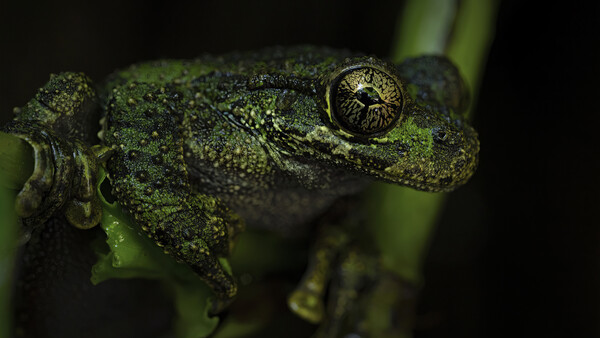
Photography has become one of the most important tools for nature conservation. Our images can help us learn about wildlife species and can also inspire our audience to join existing conservation efforts. This is certainly not an easy task, especially when many animal species fall victim not only to myths and fears, but also to what humans label as "ugly" for failing to meet certain beauty standards.
Photography, however, allows us to look from different perspectives and gradually shift paradigms about animals as misunderstood as reptiles and amphibians. However, creating strong photographs of these animals, whether to aid conservation or to simply inform the public about them, is not always easy. They are elusive, often small, and quick to escape. Their seasonality also presents a challenge: herpetofauna sightings are most common during the rainy season, with encounters being rare throughout the rest of the year.
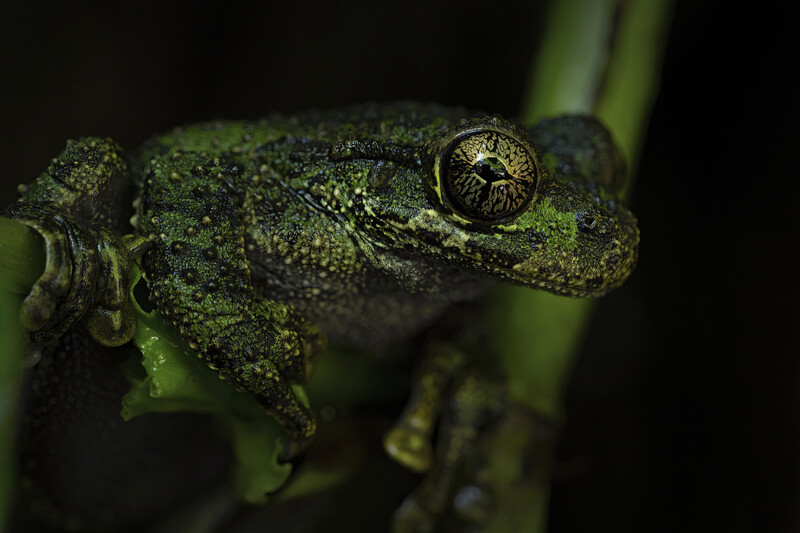
Because of this, some photographers passionate about herpetology resort to questionable techniques, forgetting that for nature and conservation photography to truly help species rather than become another threat to their survival, the well-being and safety of the animals must always come before the desire to capture an image. In this article, I will explain how to achieve ethical photographs of reptiles and amphibians.
Handling Amphibians and Reptiles and Keeping a Safe Distance
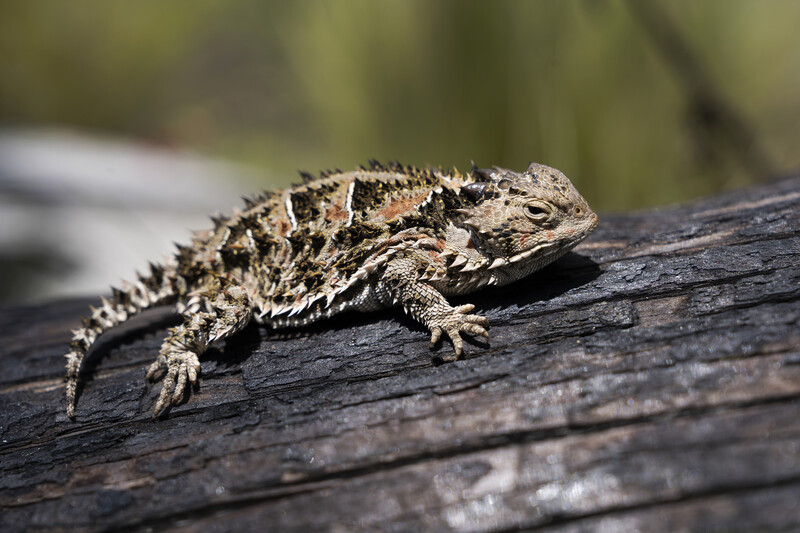
Earlier I mentioned how elusive these animals can be, especially the smaller ones. Others, like snakes, are sometimes found in crevices or dark areas that complicate photography. For this reason, many enthusiasts physically move them to achieve better lighting and more photogenic backgrounds.
Ethical guidelines state that handling wildlife should be avoided as much as possible. When photographing herpetofauna, some degree of handling may at times be unavoidable, but what is widely considered unethical is excessive manipulation or forcing wild animals to pose. Handling must always be brief, performed by experienced hands, and done in a way that minimizes stress. Our photographs should be taken as quickly as possible to avoid harming the animal.
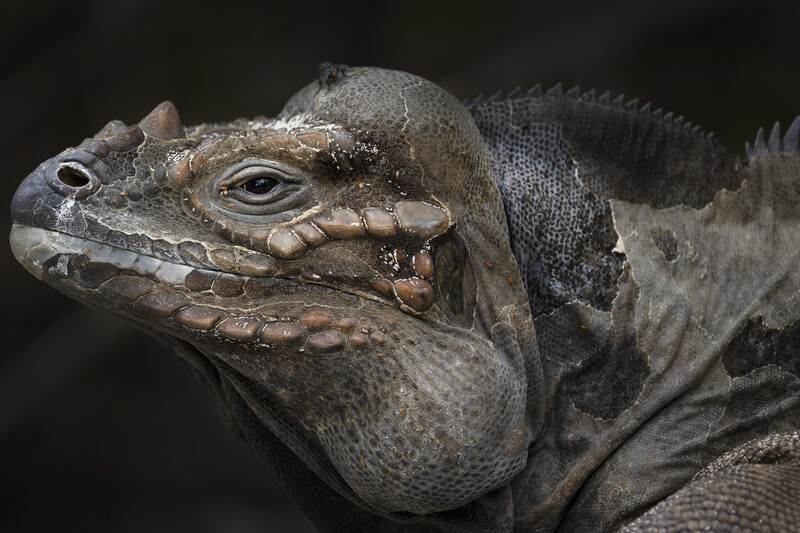
This is why I recommend using sharp zoom lenses with fast autofocus. They allow you to obtain well-focused images and experiment with different focal lengths while keeping a safe distance when necessary. You can use either a macro lens or even normal zoom lenses for this task.
For species such as crocodiles, caimans, and venomous snakes (animals you should never approach for safety reasons), I recommend a telephoto lens. I use the Sony FE 200–600mm f/5.6-6.3 G OSS. A telephoto is also ideal for photographing small, nervous animals from a distance, allowing for intimate, detailed portraits without invading their space.
Study Your Subjects
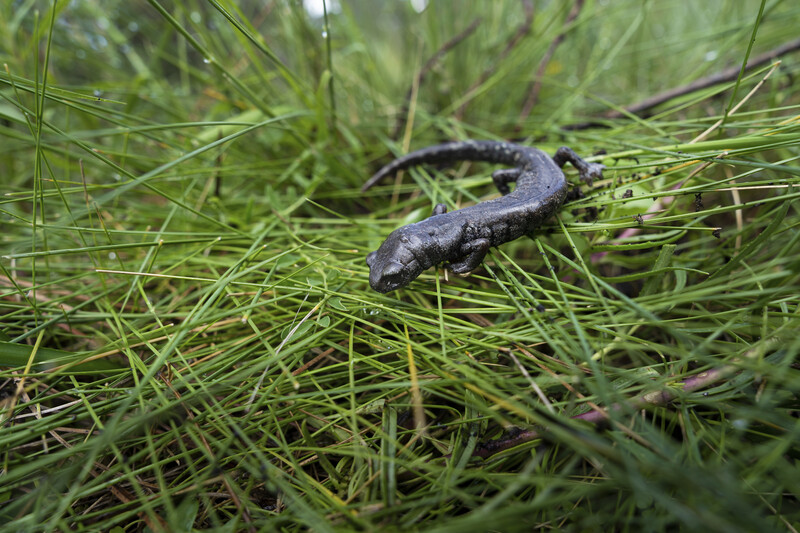
To work quickly and ethically, it's essential to study your subjects beforehand. This applies to any wildlife species: learning about their biology and ecology will help you behave appropriately and increase your chances of successful encounters.
With amphibians such as frogs, toads, and salamanders, prior study is critical. These animals must never be touched with bare hands. They breathe through their skin, and contact with human hands can transmit infections that may be fatal. Some frogs are also toxic, and simple contact can seriously harm the photographer.
Amphibians (and some reptiles) are sensitive to light. Flash photography should also be kept to a minimum while keeping sessions short. If additional light is needed, continuous light sources such as a ring light or a low-powered flashlight are safer options to consider, as low-intensity continuous light is much less aggressive than a flash.
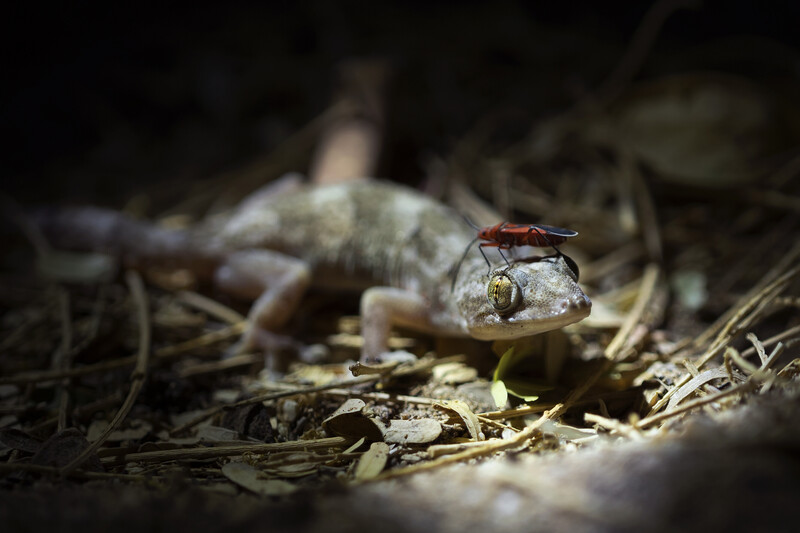
Prior study will also teach you that these animals are easier to find in the morning, around 9 or 10 a.m., when the sun begins to warm them up. Being cold-blooded, they seek heat to start their day, making them calmer and less likely to flee, which often eliminates the need for handling.
Zoom lenses again provide versatility and safe proximity, while macro lenses are excellent if the animal allows close approach. For nocturnal species, fast lenses with wide apertures are the best choice.
Master Your Gear
Knowing your gear inside and out allows you to work quickly and reduce the animal's stress. Remember: to them, we are predators. Our mere presence is stressful. Handling adds more stress even when guided by experts, so efficiency is key. If the animal wants to leave, let it go. Never chase it.
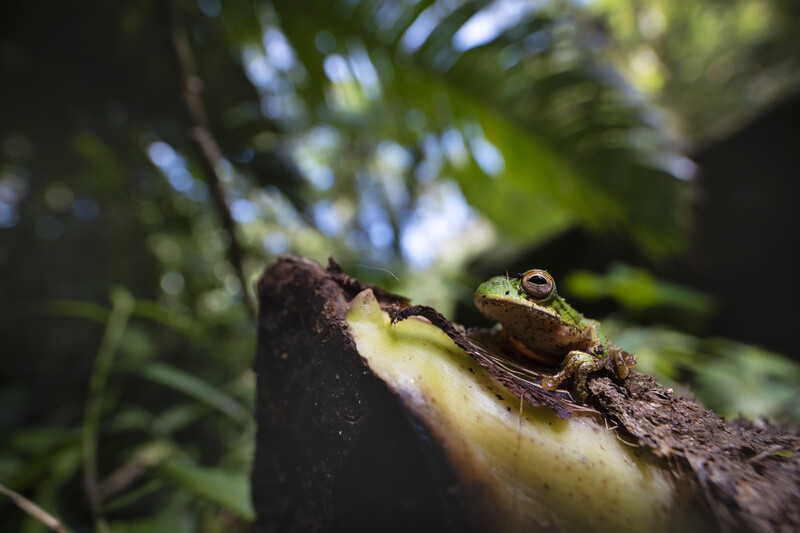
Using wide focal lengths and narrower apertures is popular in herpetofauna photography because it shows the habitat along with the subject. The challenge is getting close enough without zooming. Deep technical knowledge helps you choose focal length, aperture, shutter speed, and ISO quickly and effectively. If you'd like to deepen your skills across multiple genres, including wildlife, The Well-Rounded Photographer: 8 Instructors Teach 8 Genres of Photography is a great resource.
Reptiles and amphibians rarely require very fast shutter speeds. I typically work with speeds between 1/50s and 1/250s. ISO depends on ambient light. Strong sunlight or continuous lighting often allows you to set an ISO of 100 or lower.
Experiment with unusual angles and compositions. If you're above your subject, try a high-angle shot. Use natural elements like vegetation, logs, or the terrain itself to build authentic scenes. I also love using a wide angle macro lens like the Laowa 15mm f/4 Wide Angle Macro to show my subject alongside the surrounding environment.
Avoid Artificial Sets
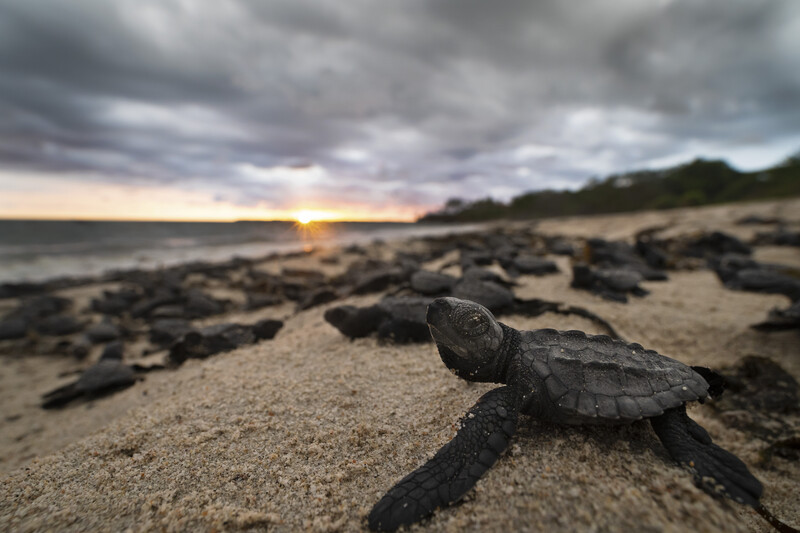
Some photographers build elaborate artificial sets using flash, mirrors, and staged lighting. This should be avoided. Such setups create stress and potential danger for amphibians especially. Also, some of the most prestigious nature photography publications and competitions reject heavily manipulated scenes. Beyond harming animals and ecosystems, staged images mislead audiences and encourage unethical behavior. Instead, work with the environment your subject naturally inhabits. This also helps audiences learn about ecosystems that are fascinating in their own right.
In conclusion, the three most important aspects of photographing reptiles and amphibians are respect and ethics, knowledge of your subjects, and mastery of your gear. Don't be discouraged if you don't get the best shot immediately. Wildlife photography depends as much on luck and animal behavior as it does on skill. And remember to never force animals to be photographed. Finally, captive individuals deserve the same ethical considerations.
2 Comments
I haven't had many chances to photograph reptiles or amphibians beyond if I get lucky and see one in the yard or wooded area while looking for something else.
Toads are usually more willing to sit still long enough for a photo, though one thing that may be needed one day, would be if there were safe recreational facilities that reptiles and amphibians could freely visit have fun, e.g., any video games, they might like to play, along with some snacks/ treats, as currently they never seem to smile.
This is a great practical guide for a little talked about corner of the photo world. I've not done much reptile work outside of a few stray alligators here and there down in the Gulf. Awesome photos, btw.