
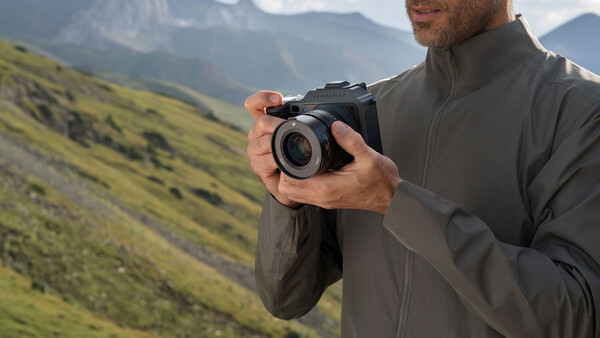
There was a time, not so long ago, when medium format digital photography existed in an entirely separate universe from the rest of the camera market. It was a universe populated by wealthy commercial photographers and the occasional landscape obsessive who had saved for years to afford a system that promised marginally better image quality than what everyone else was using. Not anymore.
The cameras cost as much as a used car, the lenses cost as much as the cameras, and the autofocus systems were so primitive that you were better off manually focusing anyway. If you wanted to shoot above ISO 400 without your files dissolving into a grainy mess, you were out of luck. If you wanted to track a moving subject, you were really out of luck. Medium format was for tripods, strobes, and subjects that held perfectly still. With the GFX100RF and Hasselblad's renaissance, the "studio only" stigma is officially dead.
In 2026, you can walk into a camera store and buy a 100-megapixel medium format body for less than a Nikon Z9. You can shoot it handheld at shutter speeds that would have been unthinkable five years ago. You can track eyes, detect faces, and follow subjects across the frame with autofocus systems that finally work the way photographers always needed them to. The transformation has been so complete and so rapid that we need to acknowledge what is actually happening here: medium format is no longer a specialty format for specialists. It is becoming the new standard for photographers who prioritize image quality over frame rate.
The Price Collision Nobody Saw Coming
Let's start with the numbers, because the numbers tell a story that marketing departments have been slow to acknowledge. The Fujifilm GFX100S II currently sits at around $5,700. The Sony a1 II runs about $7,000. The Nikon Z9, which has been on the market long enough to occasionally see discounts, sits at $5,200 currently. These are the flagship cameras from the major full frame manufacturers, the absolute best they have to offer in terms of resolution and hybrid capability.
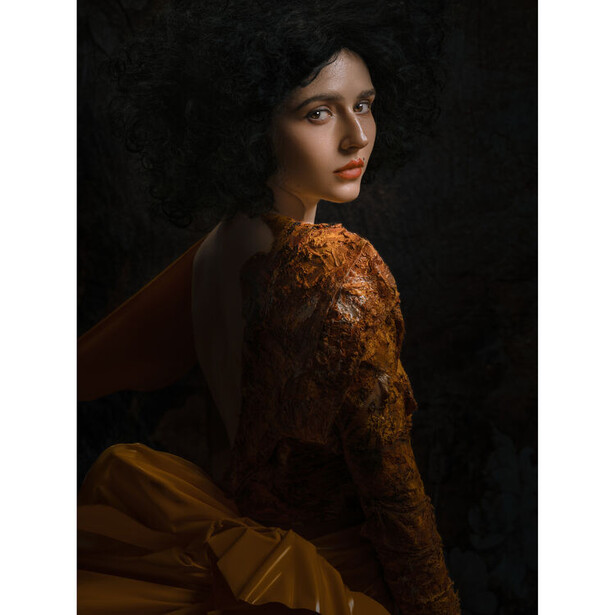
Now obviously, I'm comparing cameras meant for wildly different purposes here, but the point is not to say they compete in the same genres, but rather that the traditional barriers to medium format adoption have always been cost and speed and the cost barrier has largely collapsed. The speed barrier remains, but it only matters if speed is what you need.
Hasselblad
For decades, Hasselblad cameras occupied a strange position in the market. They were objects of genuine reverence, cameras that photographers dreamed about owning, systems that carried the weight of history and the Apollo missions and every iconic fashion photograph ever made. However, the autofocus systems on Hasselblad's digital cameras lagged so far behind full frame cameras that many photographers simply focused manually. You bought a Hasselblad for the files it produced, not for the experience of shooting with it.
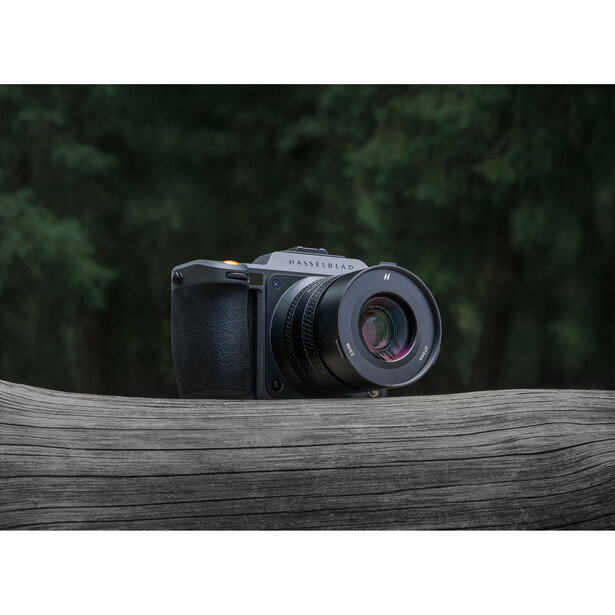
The Hasselblad X2D II 100C changed that calculus entirely. Hasselblad committed to phase detection autofocus, and they went further by integrating a LiDAR system that assists with focusing in difficult conditions. The result is a camera that can actually track subjects, that can nail focus on a bride walking down an aisle, that can keep up with the reasonable demands of working event and portrait photographers. Combined with in-body image stabilization rated at 10 stops, the X2D II has effectively killed the notion that Hasselblad cameras belong exclusively on tripods in controlled environments. Are you going to shoot sports with it? No. Is it vastly more versatile than older models? Yes.
This matters because Hasselblad has always represented the aspirational peak of the medium format world. When Hasselblad was slow and awkward, the entire format carried that stigma. Now that Hasselblad has proven that medium format can be responsive and handheld and genuinely usable in dynamic shooting situations, the perception of the entire category shifts. The X2D II is not just a better Hasselblad. It is proof of concept that medium format has finally grown up.
The GFX100RF and the X100 Effect
Fujifilm has spent the last several years watching what happened with the X100 series and taking notes. The Fujifilm X100VI became one of the most sought-after cameras in the world not because it offered the best specifications or the most features, but because it offered a specific vision of what photography could be. It was compact, beautiful, and deliberately limited in ways that encouraged a particular kind of shooting. It became a lifestyle object as much as a photographic tool. People who had never considered themselves serious photographers suddenly wanted one.
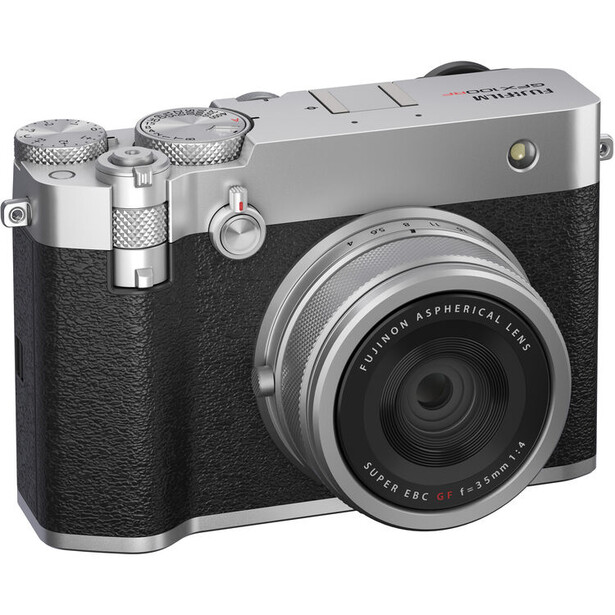
The Fujifilm GFX100RF represents Fujifilm's attempt to translate that same energy into the medium format world. A fixed lens rangefinder with a 100-megapixel medium format sensor is not a camera designed for maximum versatility. It is a camera designed for photographers who have a clear vision of what they want to shoot and how they want to shoot it. The inclusion of dedicated aspect ratio controls that can switch to an XPan panoramic mode and a leaf shutter that enables flash sync at any speed suggests that Fujifilm is targeting street photographers, travel shooters, and documentary artists who want the absolute best image quality in a body they can carry all day.
Where Does Medium Format Go From Here?
The current trajectory of medium format development points toward several likely futures, some of which could reshape the entire camera market.
The first and most significant possibility involves third-party lens support. TTArtisan, Mitakon, and Venus Optics have already demonstrated that it is possible to manufacture high-quality autofocus lenses for the Fujifilm G mount at prices dramatically lower than Fujifilm's own offerings. The existence of these lineups proves that the technical barriers to third-party manufacturing have fallen.
The next logical step is Sigma entering the medium format market. Patent filings suggest that Sigma is at least exploring medium format optical designs, and the company has built its entire reputation on providing professional-quality lenses at more accessible prices. If Sigma releases an Art series for G or Hasselblad X mount, the last remaining barrier to medium format adoption effectively disappears. Right now, building out a comprehensive medium format lens kit still requires a significant investment. A Sigma 45mm f/2 Art for GFX would change that equation overnight.
Medium format cameras from Fujifilm and Hasselblad are optimized for situations where image quality is the primary concern. Portraits, landscapes, architecture, fine art, and editorial work belong in this lane. These cameras sacrifice speed for resolution and sensor size, and that trade-off makes perfect sense for their intended use cases.
The interesting question is what happens to the full frame cameras stuck in the middle of their format. High-resolution full frame bodies like the Sony a7R V and Canon EOS R5 Mark II have traditionally served photographers who wanted more resolution than a sports camera but more speed than a medium format system. As medium format autofocus improves and prices continue to drop, the value proposition of these middle-ground cameras becomes harder to articulate, especially if more affordable lenses start to appear. They offer neither the raw speed of the dedicated sports bodies nor the sensor size and resolution of medium format. They exist in a shrinking space between two increasingly attractive alternatives. To be clear, I don't think medium format is going to render them extinct anytime in the near future, but it may start cutting into their slice of the pie.
Beyond the hardware trends, there is a cultural shift happening that may prove equally significant. Medium format is becoming normalized in professional circles where it was once considered exotic or impractical. Wedding photographers are showing up to venues with GFX systems. Editorial teams are spec'ing medium format for magazine covers that would have been shot on full frame five years ago. Commercial studios that once reserved their Hasselblads for special occasions are now treating them as everyday workhorses. This normalization creates a feedback loop that accelerates adoption. As more professionals use medium format in visible, high-profile contexts, the format loses its mystique and gains legitimacy as a practical choice rather than an aspirational one. Rental houses are stocking more medium format bodies. Assistants are learning the systems. Retouchers are adapting their workflows to handle the larger files. The infrastructure that supports professional photography is quietly reorganizing itself around the assumption that medium format is a normal option, not a special one.
Video as the Unexpected Frontier
Video on medium format cameras has historically been an afterthought at best and a gimmick at worst. Early GFX models offered video recording primarily so that spec sheets could include the feature, not because anyone expected serious video work to happen on those bodies. The autofocus was too slow, the rolling shutter was too severe, and the workflow was too awkward for anything beyond occasional experimentation.
That is changing faster than most observers expected. The GFX ETERNA 55 Cinema Camera is built specifically for video work. Hollywood has demonstrated through cameras like the ARRI Alexa 65 that larger sensors produce a distinctive "prestige" look that audiences associate with high-end cinema. Hybrid photographers and indie filmmakers are taking note.
The next generation of medium format cameras will almost certainly prioritize video features more aggressively. Open gate recording modes, improved autofocus during video capture, and anamorphic support for shooters chasing that widescreen cinematic aesthetic are all likely additions. The market for photographers who also shoot video continues to grow, and medium format manufacturers cannot afford to ignore it. Fujifilm in particular has shown a willingness to push the hybrid capabilities of its GFX system, and there is every reason to expect that trend to continue. In a world moving increasingly toward the expectation that every professional camera be a competent hybrid model, this will be important.
The Question You Should Be Asking
The traditional advice for photographers considering medium format has always focused on whether they could justify the expense. Can you afford the bodies? Can you afford the lenses? Can you afford the storage for all those enormous files? For most photographers, the answer was no, and the conversation ended there.
That framework no longer rules all decisions. The bodies cost the same as or less than flagship full frame alternatives. Third-party lenses are making glass increasingly affordable. Storage has become cheap enough that file size is barely a consideration. The expense argument has lost some of its force.
But if you are a portrait photographer, a landscape artist, a commercial shooter, an architectural specialist, or anyone else whose work prioritizes image quality over burst rate, the value proposition has started to invert. Medium format offers more resolution, more dynamic range, shallower depth of field at equivalent apertures, and that ineffable quality that comes from capturing light on a larger piece of silicon. It is becoming competitive with full frame on price. The autofocus finally works. The stabilization makes handheld shooting viable. The tripod-only era is over.
Medium format has escaped the studio. It is in the streets now, in the mountains, at weddings, on location with editorial teams. The fortress has fallen, and the new reality looks remarkably like what full frame photographers have been enjoying for years, just bigger and better and increasingly affordable. The tipping point is drawing near.



Join the Fstoppers community for free
-
Post comments and join in the discussions
-
Browse the site ad-free
-
Share your work and get featured in the community
-
Compete in the photo contests for fun and prizes
27 Comments
The sensor used to be the most expensive component in a camera. Hence the birth of APS-C and Four Thirds formats. Sensor costs have continued downward for 20 years. Pixel density will hit a ceiling at some point soon. The only way to further improve performance is on larger sensor areas. MF could be a viable solution for those who only want to shoot stills.
You may wish to explore the excellent video function of the gfx100ii
Hey Alex ..what is next will be a tilt shift sensor that includes pixel shifting .. Olympus will be in the fire front over Sony..the sheep will follow
Love these types of articles Alex.
When I made the switch from Nikon to Canon in 2024. I seriously considered an X2D. Ultimately the want to have video capabilities swayed me to Canon. Fast forward a year later and I stumbled on a Hasselblad store in London and finally got to hold an X2D and I can honestly say I had zero buyer’s remorse over going with Canon. I truly cant explain why; because the form factor of the X2D logically seems like it should be perfect. It just didn't feel right/natural in my hands. I’ve never had that reaction to any Nikon or Canon SLR/Mirrorless ever.
That's so interesting; I absolutely love how the X2D feels in my hand. Different strokes, I supposed. So glad you enjoyed the article!
I was entrenched with Fujifilm x series cameras after switching over from a Nikon d850 but I did miss the low light performance and the biggest sensor... But I loved Fuji colour science so hello gfx... I love my 50sii and 100 si II both have a purpose in my kit now... any image quality with all due respect to a Z8 user blows it away it's not even close it's not even a conversation and I hired a Z8 for a weekend before I bought my gfx and it's chalk and cheese for image quality but for performance ..sure faster auto focus... but I make the 100s ii work for auto focus no issues...15 weddings later..90% hit rate. It actually focuses better than my Fuji xt5. The thing about medium format is the image quality and once you've seen it and played with a file or two you can't unsee what you've seen.. Yes it's expensive but the 100s Which is slightly slower focusing is such a good value camera now If you weren't shooting fast moving objects I would buy that over a full frame camera without even blinking Stick the 35 to 70 kit lens on it and you have a camera Will take amazing pics. The thing is medium format is tricky to use in certain situations so you do need to know what you're doing it's not a camera that you can just pick out of the box and start shooting you will need to learn it like all camera systems and there are some compromises but overall it's a brilliant system and I certainly won't be going back to full frame. I'm currently wanting to buy a Q3 just for a small setup that would be the only full frame camera I would want to buy.
As far as I recall, anything smaller than 60mm or 6cm, on one side of film since the 1950s was never called medium format.
64 year old photographer since the days I built a home darkroom at 15 in 1977. I have owned and used cameras from 4x5 inches down to 110 and Kodak Disc formats including a Bronica ETR-S 6x4.5cm system, every major brand of 35mm film (but mostly Nikon from F to FtN to F2, then pairs of Nikon DX digital from the D40 6MP to D300 DX 12MP and Nikon FX from the D700 to D800 46MP.
When 8x10 inch sheet film was the norm, 4x5in was medium format. In about the 1950s as 35mm film became more common, 120mm roll film became the new medium format.... some 70 years ago.
Since about the 1950s, Medium Format has been known as 120mm/220mm film yielding 60mm on one side of a negative or positive image (or 6cm) with the other side at 6x4.5cm, 6x6cm, 6x7cm, 6x9cm or perhaps wider for specialty panorama type cameras.
I detest any mention of mere 40-45mm being called medium format and I consider such labeling as false advertising and is the only reason I do not buy them.
Well, the image size on a 120 medium format film is actually 56mm high, not 60mm
And 135 format film was never call "full frame". You had large format (4x5, 8x10), medium format (120/220) and small format (135, 126). Ansel Adams called his 35mm Contax a "miniature camera".
Times change. The digital 44x33 sensor is a lovely thing to be enjoyed
Generally anything larger than 135 format (24x36) was considered medium format. There was some crossover but film stock like the now defunct 127 format were medium format but not 6cm wide. Small format films was generally in spools (cassettes) medium format in rolls and large format in sheets. Just to confuse things different parts of the world grouped them slightly differently.
There were other small format films besides 135 but it and 6cm rolls became so dominant that eventually medium format became 6cm (56mm actually) 24x36 became small format and the rest were mostly relegated to history.
In a way the old descriptions of small, medium and large format are as silly as calling 24x36mm sensor full frame. Or Fujifilm calling the GFX large format.
You're 100% right, 6x7 is a visible improvement in image quality
I think a large majority of photographers have higher megapixel cameras than they actually need.
In some situations 100 mp is called for but if you are doing a high volume of images it just takes so much extra storage and increases processing time for not that much higher image quality unless your making a huge print. www.markschoenfelt.com
MF is not the new FF.. FF is FF.
Firstly Alex, thanks for the article, enjoyed reading it!
To me those that switch to medium format because of the hype, or do it without a clear functional reason for the additional detail are compromising too much in other areas; size and weight of the camera & lenses, bust speeds, highspeed subject tracking, pre-capture, and transfer & editing speeds and so on. Many of these are a function of the larger pixel counts and will therefore always be behind cameras with fewer pixels to readout and process.
Over 20+ years I've moved through 400d, 40D, 6D, 5Dmk3, R6, R6ii to R5, and while it's occasionally nice to see a little more detail when cropped 100% or more, in reality in the ~9+ months I've had the R5 there are perhaps only 2-3 pictures that would not have been keepers without the additional resolution. With the majority of pics viewed on screen or printed, the final resolution differences are almost imperceivable and don't change the feelings you experience when looking at the final edited pictures.
For the average professional shooter, ultra high resolutions are IMO a crutch for not having the right lens attached, or correct framing in the first place. Only to be used in a pinch when you get caught out, not relied on.
It likely comes down to whether you're the person who says come over and look at my camera gear, or the person who says come over and look at the pictures I've taken.
What I always miss in discussions like this is the long-term impact. It's rarely mentioned: the follow-up costs and the environmental impact! You need faster computers, more storage, and therefore more energy, which leads to higher CO2 emissions. How big is the CO2 footprint of a cloud system today, and how big is it supposed to become? It's perfectly understandable that certain genres require a certain image quality. The problem is, at least 90% of all semi-professionals and serious amateur photographers don't need that. But they're precisely the ones thoughtlessly creating the long-term consequences.
Have a nice (thoughtful) weekend, everyone.
I don’t use cloud storage. Big files make it slow and it only takes one loss of files to not trust it. So I store all my images locally. In 25 years shooting digital, that’s a lot. But my home/studio is basically run 100% on solar and batteries. So I have no issues with straining the resources of our little blue ball.
Nice article Alex, well, i left photography long time ago and it is only a hobby, i keep planning to return back but i try first to replace and upgrade my old gear first, and i can't decide what i really should take, it is between quality and price, if i want to replace like 3 or 4 bodies and including a medium format there it will cost me a big really big fortune, so i have to decide if it is worth it to get back into photography or to upgrade my old gear, my old gear is including Hasselblad H4D-60 which has sensor even larger than current mirrorless medium format with 3 lenses, also i still hold on Sony A7R, as Canon i still have 1DX and 1DsIII/1Ds2/5D, those are full frames i kept using in the past for years happily, i am thinking to sell them and get only one full frame body as i don't need 4, also i am getting fast cameras for sports and wildlife-birding, so i will try hard my best to end up with three cameras only, for fast cameras i know which ones, for stills slow focus i am pendulum between A7r5 and Fuji GFX, the only funny thing is if i decide on one and i get it then Sony or Fuji just decide to make a newer model after i buy current model.
Unless its cheaper and lenses lighter, it wont be easy.
Now, almost everyone got a phone with 50mp or 200mp, so basic 12mp is good enough now.
Pro cameras are mostly about better quality amd focus, while apsc is mobile, ff is more professional, while mf is quality beast but super pricy and cannon heavy if mf lens are attached.
Problem is mainly price/weight/lens-availability.
If it becimes cheaper with many lens, it coyld serve as great addition to ff in your backpack.
Will be heavy load tho.
For selling landscape photography to commercial installation art buyers, you can't have enough resolution. More is always better, especially if you're comparing native resolution to relatively poor quality phone resolution or gimmicky stuff like pixel shifting. My 36-megapixel D800 enlarges okay to about 30x45, but 40x60 on paper starts to fall apart. And art buyers for places like hospitals are always looking for large wall murals. I can't remember how many times I've been asked if my pictures will work for a nine or ten foot high mural.
Obviously people don't typically press their nose up against that size print and examine detail. Nevertheless, I'll be happy to take more pixels. As an older person, semi retired, the price for a medium format camera is a little hard to justify. But if I were a lot younger, I'd buy a couple of them. Indeed, the cost of technology in the eighties was extraordinary. I paid almost $7000 for the first 300 dpi Apple Laserwriter printer. You can't possibly appreciate how cheap technology is today without having experienced the seventies, eighties and nineties. At least by the year 2000, we were starting to get technology that was actually useful from a production standpoint.
I’m stuck in APSC land. 24 megapixels is it for me. My professional work ended in 2007 with film, the darkroom part ended in 1998. I retired in 2018. Sometimes I dream about the thousands of hours I spent in a darkroom. I miss it a little. I can’t even justify spend more money. I also miss doing something that few people could do well. In the end most or all of my work will be lost to the dustbin of time.
A very enjoyable read and some of the comments are interesting as well. For me, medium format is the realm of near image perfection in terms of image resolution, color space, and dynamic range. When used appropriately for non action subjects the end result can be more than outstanding. Full format is now the world of "hybrids" where some differentiate quality if they have open gate or not. If your into video or fast action, fine but don't continuously argue that medium format is not necessary and 12 or 20 megapixels is good enough. I don't own a medium format camera - yet. The only issue I have right now are the few lens choices and their cost. But over time, I expect that to change in the positive direction.
Thanks Alex, very interesting article! and indeed some equally interesting comments as well. My first post here, so ... be gentle with me!
Descriptions for formats do indeed change over time, wholeplate, half plate and quarter plate were the norm back in the days of coated glass, and also still used as common print sizes until relatively recently.
The 35mm format was also historically referred to as "half frame" when 72 exposures were crammed onto a roll of film (Olympus Pen ...perhaps?, my memory is not what it used to be), so applying the term of "full frame" has historically always been somewhat relative.
Environmental considerations looking at CO2 in the modern world are interesting, particularly when compared to some film processing chemicals used in the past, including Potassium Ferrocyanide and would you believe ... Uranium Intensifier!! Who ever said photography was risk free ...
I've always thought what we do with our toolkit, is perhaps more important than the tools themselves, so my current dilemma on how best to get back in the saddle, will no doubt have me focussing on the benefits of Nikon / Sony / Fuji for some time to come.
This is a nice thoughtful article. I’m new to this forum, but I’ve called myself an amateur photographer for almost 50 years now, and I’m amused about what people think they “need” in regard to a camera today.
For ages, we didn’t have autofocus, or frame rates faster than 3-5 per second, or usable ISOs above 400, or other such things - even for wildlife and sports photography. Great photography doesn’t require any of those things. It benefits more from great thinking.
Sure, things like an Z9 have democratized results in action photography. But they’ve also made photos whose point is to capture a particular microsecond just that much less special.
I used to have a large set of Canon professional gear. I stopped using it when the iPhones pro came out. I determined what I wanted in my commodity photography, and that was - and still is - an iPhone.
But I sold all my Canon equipment and now have an X2DII 100C, specifically for recording scenes with detail on special occasions. I won’t use the Hassy for taking thousands of photos - maybe only 2-5 photos an daylong outing. Photos that mean something, at least to me. Photos that are suited for the format, the resolution, and the lens.
But history tells me that if my skill is good, I can capture anything with it - even sports and birds. It just so happens that I don’t have such skill, or a desire to develop it.
Well, I suppose if you're not shooting sports, wildlife and other fast moving subjects, then yes medium format is the way to go. But that X2D II is slooooow - 3 FPS. That's pretty much good for portraits and architecture and maybe some slow moving events. IMO full frame mirrorless is still the way to go, cost wise and function wise. But I do love the internal storage of the Hassleblad.
Well I said that I would never dump my DSLR for mirrorless. I had the canon 5DSR with 50 megapixels. Life was good. Then, I saw the Fujifilm GFX 100s which is also mirrorless. The rest is history. I have a medium format camera that feels like a full frame. The 103 megapixel raw files are beautiful right out of the camera. Editing is more like finishing rather than building. I do predominantly landscapes, but this camera, with the 500mm prime (more like 400mm on a full frame), is good for shooting birds occasionally. I have toyed with purchasing the 100s II because of its 7 frames per second as a 2nd body. I am having nothing but fun with this camera. I did keep a 5DSR body plus my 70-210 and 100-400 L lenses which I use occasionally.
Medium format and flagship models are still in the realm of retirees and trust fund babies. Even with the lower cost of the Fuji GFX 100S II , it's easy to hit the $10k mark with a couple of lenses added to the kit.
Yeah if you're not making money out of your gfx system it's an expensive kit I do really well in a small photography business that turns over about 45 to 50k a year plus my day job so I can afford it but if you're not turning over money with your gfx system wow you've either got a lot of money lying around. I invested in this system after doing really well with a couple of landscape contracts in my local area and what that meant was selling about 30,000 worth of framed prints to a few businesses like lawyers doctors and things like that so I did really well and then I reinvested that money into gfx did I need to probably not but has it paid dividends absolutely
Great article. I agree that third-party lens support would be a game changer. Although I'm not aware of any third party lens manufacturers offering "high-quality autofocus lenses for the Fujifilm G mount". I can only see manual focus glass, certainly in the UK. If I've missed something please let me know!