

The skills that made you valuable in 2020 are now automated. Here is what matters now.
The job title "photo editor" is not disappearing. But if you printed out the job description from 2020 and compared it to what the role actually requires today, you would barely recognize it as the same profession. The transition from darkroom to Photoshop took the better part of a decade. The transition from manual editing to AI-assisted editing took roughly 18 months. That compression of change has left a lot of talented people scrambling to understand where they fit in a workflow that no longer needs many of the skills they spent years developing.
Here is the uncomfortable thesis: technical execution is now table stakes in many situations. The new core competencies are taste, judgment, and orchestration. Editors who understand this distinction will thrive. Those who do not will find themselves competing against software, and that is a competition no human wins on speed or price.
What AI Took Over (and Why Fighting It Is Pointless)
Let me be direct about what the machines do better, or at least more efficiently, than you now. Masking and selections that once took 45 minutes of careful brush work now take three seconds. AI denoising outperforms manual noise reduction techniques in nearly every scenario. Basic retouching like blemish removal, skin smoothing, and eye brightening happens with a single click. Culling through a shoot to flag keepers, duplicates, and technical failures happens faster than any human could scroll through thumbnails. Batch consistency across hundreds of frames is now automated to a degree that would have seemed like science fiction five years ago.

The New Core Competency: Taste
If execution is automated, what remains? The first and most important answer is taste. In editing terms, taste is the ability to know what an image should feel like before you touch a slider. It is the internal compass that tells you when a photo is finished, when the mood is right, when the color grade serves the story rather than distracting from it.
AI optimizes toward average because it was trained on millions of images and average is its default destination. When you ask an AI tool to enhance a portrait, it pushes the image toward a statistical mean of what enhanced portraits look like. The result is often technically competent and creatively dead. A competent editor in 2026 has a point of view that exists before the edit begins. They know whether they want the shadows lifted or crushed, whether the skin tones should run warm or cool, whether the overall feel should be clean or textured. This vision cannot be prompted. You cannot type "make it look like my visual voice" into a text box and expect the machine to understand.
Here is a practical way to think about it: give two skilled editors the same raw file and access to identical AI tools. They will produce different results. The difference between those results is taste, and taste is what clients actually hire you for, whether they articulate it that way or not.
The New Core Competency: Judgment
Taste tells you where you want to go. Judgment tells you when to override the algorithm to get there. AI suggestions are optimized for approval, meaning they are designed to produce results that the broadest possible range of users will find acceptable. Acceptable is not the same as excellent. Acceptable is not the same as right for this specific client and this specific use case.
Judgment means recognizing when technically correct is creatively wrong. The AI might produce a perfectly exposed, perfectly white-balanced, perfectly noise-free image that completely misses the moody, underexposed, grain-heavy look the project actually calls for. Judgment is knowing when to ignore the machine's helpful suggestions.

In client work, judgment also means understanding what the client actually needs versus what they said they wanted versus what the AI interpreted from a vague prompt. The client who asks for images that "pop" is not giving you useful technical direction. Your judgment about what that means for their brand, their audience, and their specific project is irreplaceable.
The New Core Competency: Orchestration
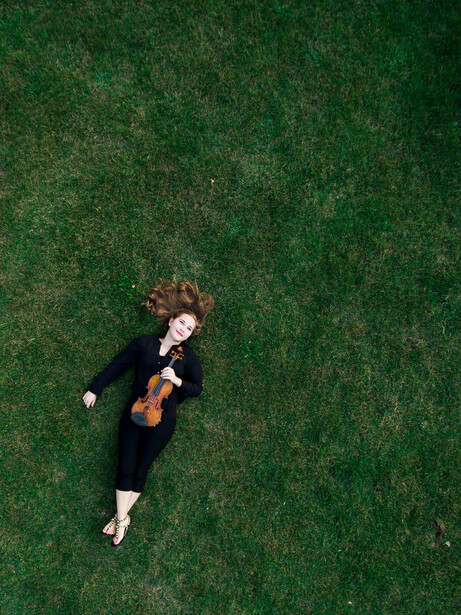
The competent editor in 2026 is a composer, not a first-chair violinist. The value is no longer in personally executing every edit. It is in knowing which tool to deploy for which task and in what order. This is orchestration, and it is a genuinely new skill that did not exist in meaningful form before AI tools reached their current capability.
Prompt engineering turns out to be a real skill with significant variance in outcomes. There is a substantial difference between typing "remove background" and typing "isolate subject from busy urban environment while preserving motion blur on passing traffic and maintaining realistic edge detail on hair." Both prompts go into the same tool. They produce meaningfully different results. The editor who understands how to communicate with AI systems extracts more value from them.
Beyond individual prompts, orchestration means workflow architecture. It means building systems where AI handles the volume work and the editor handles the decision points. It means knowing when to use which tool, in what sequence, with what settings, to achieve results that neither full automation nor full manual work could produce as efficiently. And critically, it means quality control. Someone still has to check the machine's work, and that someone needs to be fast, systematic, and sharp-eyed enough to catch problems before they reach the client.
Spotting What AI Still Gets Wrong
A competent editor in 2026 has specifically trained their eye to catch AI failures, because AI fails in predictable ways that clients will absolutely notice even if they cannot articulate why something looks off. The too-perfect skin problem is endemic: AI often smooths toward plastic, removing texture and dimensionality in pursuit of an idealized smoothness that no human skin actually has. The result sits firmly in the uncanny valley, recognizably artificial in a way that reads as cheap rather than polished. This is precisely why understanding the fundamentals of skin retouching remains essential. Courses like Skin Retouching for Beauty, Fashion, and Portrait Photography teach the underlying principles that help you recognize when AI has gone too far and how to correct it.
Reflection errors plague AI-generated and AI-modified images. The software does not understand the physics of the scene, so it generates reflections that fall at impossible angles or omits reflections that should exist. Temporal inconsistency appears in batch edits where the AI treats each frame as an island, creating jarring shifts in color or exposure across a sequence that should feel continuous. Generative fill produces artifacts that become obvious once you know what to look for: wrong shadows, impossible geometry, repeated patterns that reveal the synthetic origin of supposedly photographic content.
The editors who thrive are the ones who have cataloged these failure modes and check for them systematically. This is a new skill. Five years ago, you did not need to be an expert in identifying AI artifacts because AI artifacts did not exist at professional quality levels. Now you do.
Skills That Became More Valuable, Not Less
Amid all this change, some traditional skills have actually increased in value precisely because AI cannot replicate them. Color science is chief among them. AI can match a look, but it generally cannot invent one. Someone has to establish the visual language for a project, the palette and the grading choices that define how the work will feel. That initial creative act remains entirely human.
Client communication has become more valuable because the gap between what clients can articulate and what they actually want has not shrunk. If anything, the ease of AI editing has raised expectations while doing nothing to improve clients' ability to express their vision. The editor who can translate vague feedback into concrete action remains essential.
Three Editors Who Adapted
The abstractions become clearer with concrete examples. Consider three editors who have successfully navigated this transition, each in a different genre.
The first works primarily in wedding and portrait photography. She stopped doing batch color correction manually about two years ago. Instead, she invested time in building custom AI profiles trained on her own editing style, effectively teaching the machine to produce a first pass that reflects her aesthetic rather than a generic one. She refused to outsource final skin retouching because her clients pay specifically for her look, and that look requires human judgment at the detail level. The AI handles the volume. She handles the signature.
The second works in commercial and product photography. He stopped doing background removal entirely; there is no version of that task where his manual work outperforms current AI tools. He reallocated that time to composite planning and creative direction, the upstream decisions that determine whether the final image succeeds. He refused to let AI handle hero image color grading because brand consistency requires human oversight at that level. One slightly off color grade can cascade into an entire campaign that feels disconnected from the brand's visual identity.
The third works in editorial and documentary photography. She stopped doing initial culls manually, using AI flags as a first pass. But she reviews every reject, because in documentary work a technically flawed image can still be the most important frame in the sequence. She refused to use generative fill entirely because editorial integrity is non-negotiable in her genre. The common thread across all three is simple: they reduced time on mechanical tasks and reallocated it to decisions only they can make.
The Uncomfortable Truth About Who Gets Left Behind
There is no gentle way to say this: editors who only ever learned the technical button-pressing are now competing against software that presses buttons faster and cheaper. The editor whose primary value proposition was knowing all the Photoshop shortcuts is in serious trouble. The editor who has a distinctive eye and uses AI to execute that vision faster is thriving.
What makes this particularly difficult is how it affects emerging talent. The old path to competence ran through years of mechanical repetition. You learned to see by doing thousands of edits. You developed taste through volume. That pathway is closing. The new path to competence requires developing taste before you have years of mechanical repetition to build it, and frankly, the industry has not figured out how to create that path yet. This is a genuine crisis for the next generation of editors and photographers, and pretending otherwise does not help anyone.
A Skills Audit
The following questions are worth asking yourself honestly. Can you articulate your editing style in words specific enough to guide someone else or a machine? When was the last time you overrode an AI suggestion because you knew it was wrong? Do you spend more time making decisions or executing them? Can you spot AI artifacts in someone else's work? Do clients hire you for your speed or your eye? Have you built any custom AI workflows trained on your own preferences? Can you explain why two technically correct edits feel completely different? When AI delivers a good enough result, do you ship it or push further? Do you understand color science well enough to establish a look from scratch, or do you rely on presets? If AI editing tools doubled in capability tomorrow, would your value to clients increase or decrease?
That last question is the one that you should consider the most. If more powerful AI makes you less valuable, you are building your career on a foundation that is actively eroding. If more powerful AI makes you more valuable because you can execute your vision faster and spend more time on the creative decisions that matter, you are positioned for what comes next.
Conclusion
The job is not dying. The job description is. Editing speed is no longer a differentiator because everyone has access to the same tools. The value now lives entirely in the decisions made before and after the automation runs. The editors who spent years developing taste now deploy AI as an execution layer beneath their creative vision. The editors who only learned execution are discovering that execution is now a commodity with a price approaching zero.
The question for every working editor is not whether to use AI. That question has been answered by the market. The question is whether you have something to say that AI cannot generate on its own. If the answer is yes, the tools available to you have never been more powerful. If the answer is no, no amount of technical skill will protect you from what is coming.






Join the Fstoppers community for free
-
Post comments and join in the discussions
-
Browse the site ad-free
-
Share your work and get featured in the community
-
Compete in the photo contests for fun and prizes
No comments yet