
Most night photographers use ultra-wide angle lenses when night falls. And for good reason. If they are photographing the Milky Way, it arcs over a wide expanse of sky. But night photographers shouldn’t sleep on these three lens categories, which can crank up your creativity.
The following lenses offer amazing creative opportunities and can help separate your photography from the pack. Even better, they're often great to pull out of your camera backpack when you're feeling stuck or need a creative jolt.
I'll list a few examples of each. However, you'll not only want to find something that fits your camera mount, but you’ll also want to explore further options within each category.
Fisheye
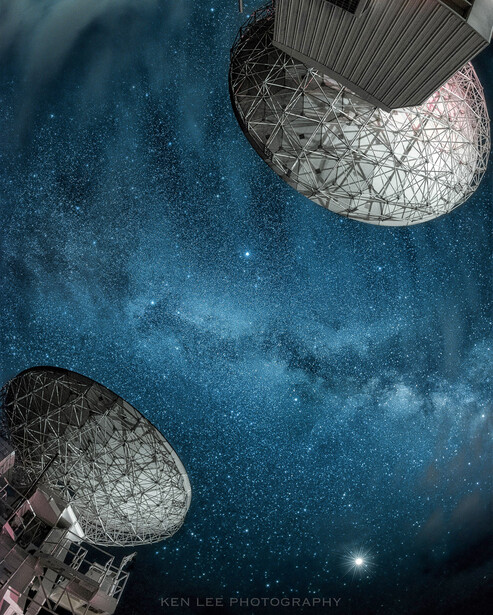
I mentioned above that most night photographers use ultra-wide angle lenses. The focal length for these is typically around 15–20mm. But if you keep going wider and wider, you can get a lens that is capable of producing a 180-degree fisheye view. Fun, eh?
Even better, many fisheye lenses are fast lenses, capable of opening to as much as f/2.8—perfect for capturing the Milky Way or stars as pinpoints.
But best of all, many of them are also inexpensive while still capable of producing sharp, high-quality images.
I use a Rokinon 12mm f/2.8 fisheye lens on my Nikon D750 DSLR (discontinued), which has an F-mount lens. But there are numerous fisheye lenses on the market with wide apertures with various kinds of mounts to fit your camera, including the TTArtisan 11mm f/2.8 Fisheye and the Venus Optics Laowa 8‑15mm f/2.8 FF Zoom Fisheye.
Long Lenses
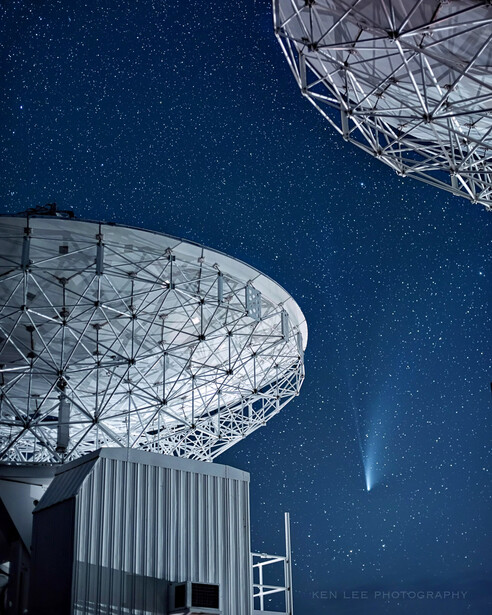
Now we'll go in the opposite direction from fisheye lenses and that sort of thing. We'll talk about long lenses. Most photographers regard long lenses as being 70–80mm or more. However, given that we typically use ultra-wide angle lenses, I'll fudge a little and include a 50mm lens as well as longer focal lengths.
Obviously, if you are doing deep-sky astrophotography, you're most likely already using long lenses, or possibly a telescope. But we're discussing night photography generally here, including astrolandscape, Milky Way, star trails, and other kinds of night photography.
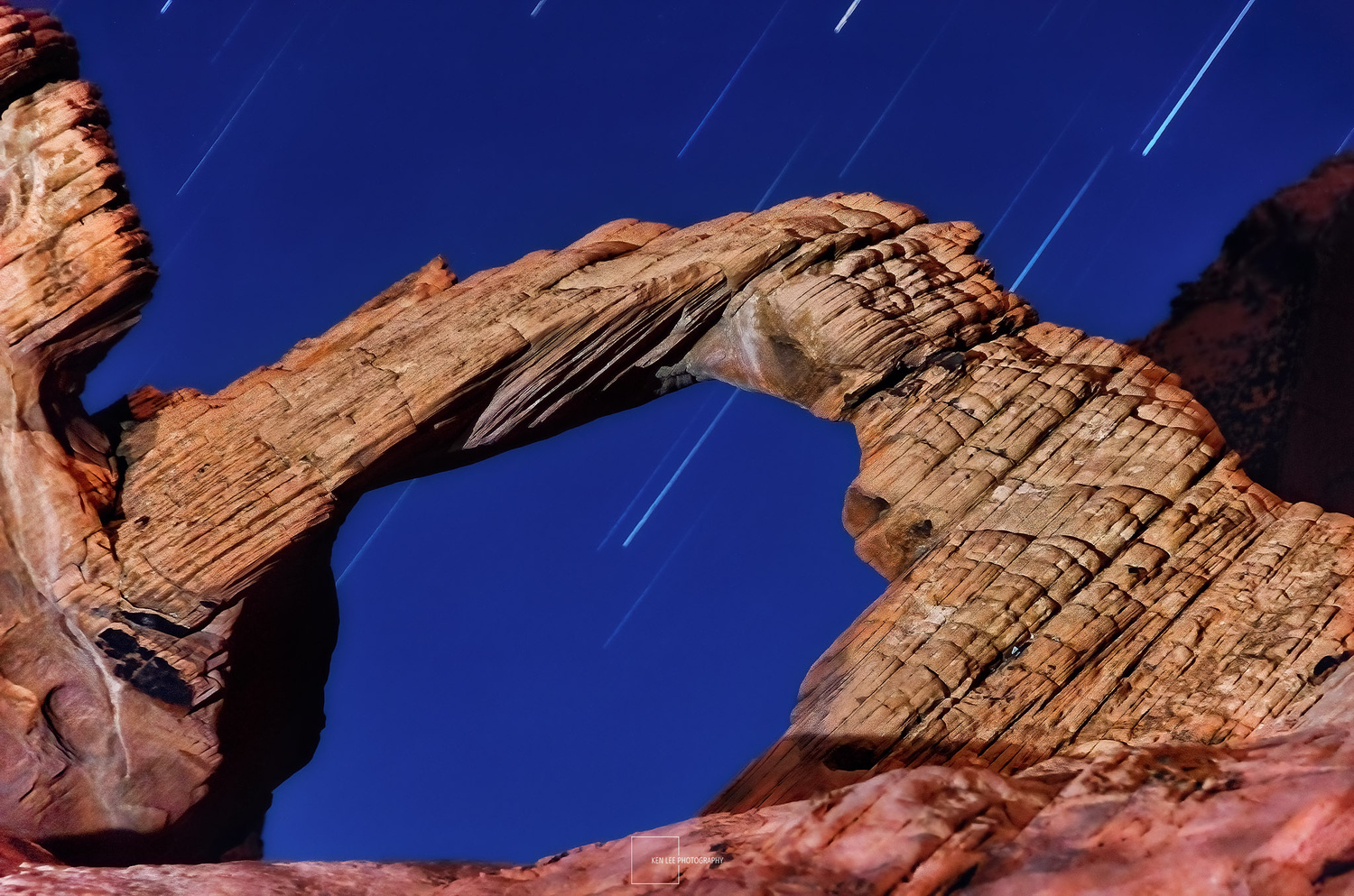
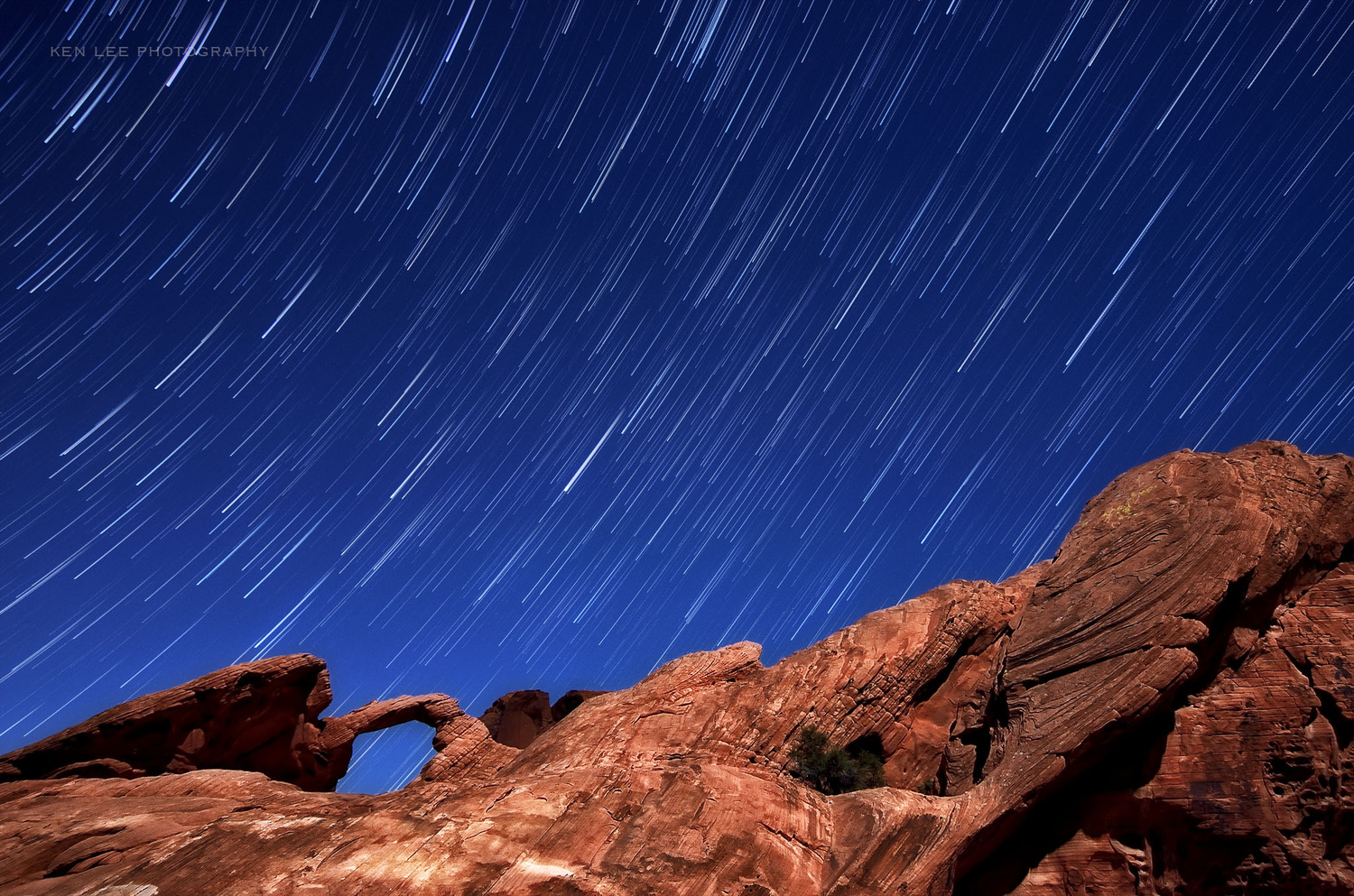
When photographing star trails, a longer lens will produce longer, more dramatic trails in a shorter amount of time. Of course, the more you zoom in on the stars, the less circular those trails will appear—even if you're facing Polaris or the Southern Celestial Pole.
On my Pentax K-1 DSLR, I use a 28-105mm f/3.5-5.6 zoom lens. On my Nikon D750 DSLR, I use a Nikon AF-S DX NIKKOR 18-300mm f/3.5-6.3G ED VR Lens.
Lensbaby
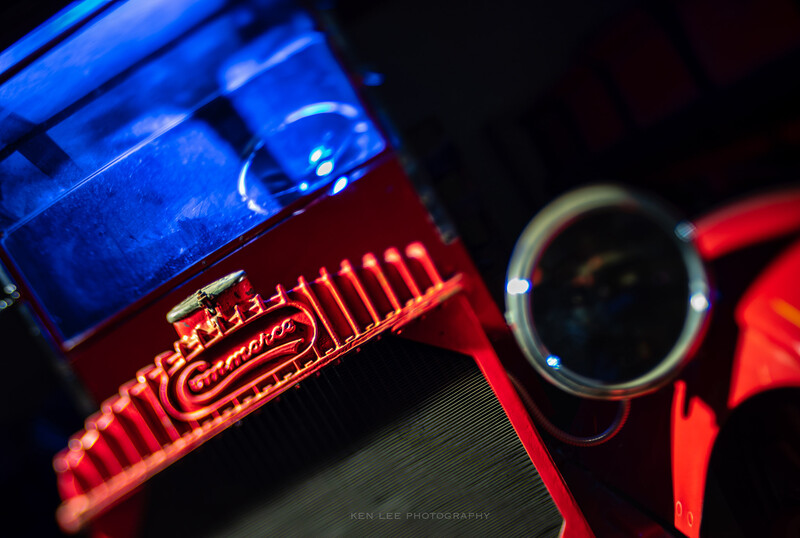
There are a number of Lensbaby lenses that offer a chance for experimentation and fun, all with manual control. That's what these lenses are all about.
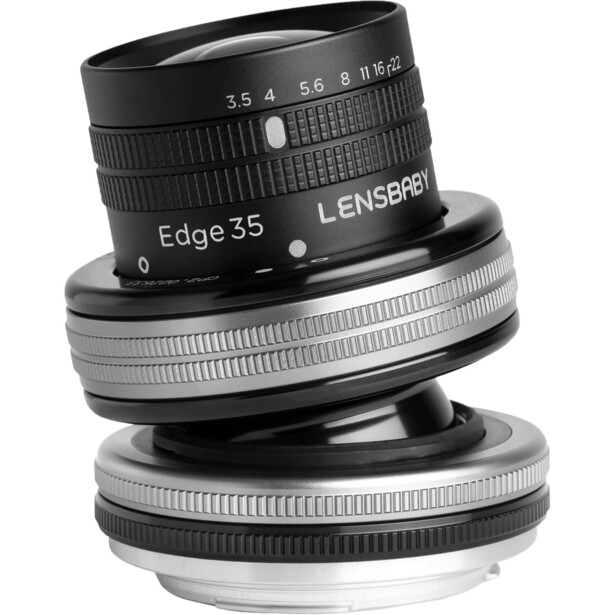
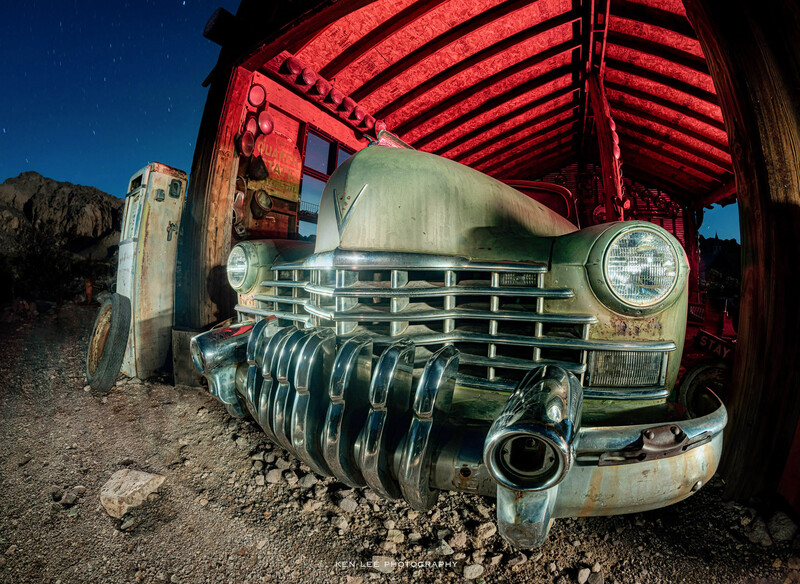
I'll focus on the Lensbaby Composer Pro II with Edge 35 Optic, but you should know that Lensbaby is always issuing new, fun lenses. The Edge 35 Optic, which is what I grab for most, uses a Composer Pro II mounting system, which accepts various optics from the Optic Swap System. You physically tilt and move the optic within the mount, creating a wide range of creative effects. This movement changes the angle of the focus plane relative to the sensor, allowing the focus plane to run diagonally or vertically through the frame rather than just horizontally.
The Edge 35 lens features a flat-field design for sharp, accurate rendering, and its unique optical design also enables producing a dramatic slice of focus surrounded by a smooth, blurred border. And the more you open the aperture, the stronger and more pronounced the blurring effect.
The Edge 35 and some of the other Lensbaby lenses are somewhat challenging to focus at night. Sometimes, it's better to stop down to something like f/8 to aid in focusing, then change the aperture back to a wider opening to bring some of the blur effect back, if that's what you want.
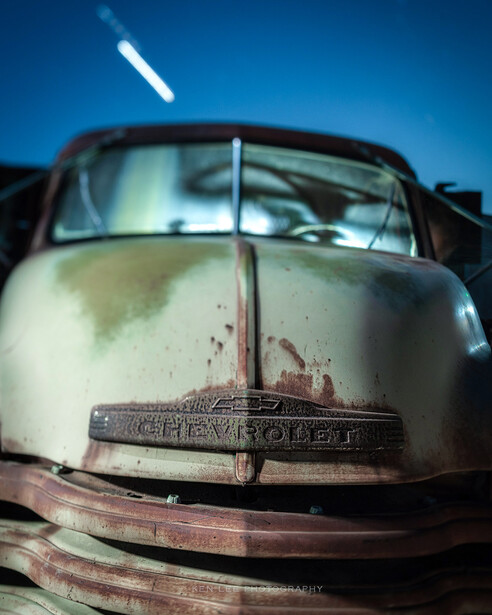
If you really want to go further, Lensbaby can be a true “gateway lens.” It often leads photographers toward other unusual optics, including tilt-shift lenses, Soviet industrial lenses (such as the Helios-44 or Jupiter-9), Lomography lenses, the Mir-1B 37mm f/2.8, and many other character-rich options. These lenses tend to produce distinctive bokeh, swirls, and unconventional blur.

Down, Down, Down the Rabbit Hole
For some of you, I've probably just sent you down a rabbit hole that will take many hours.
There are countless lenses to explore, both vintage and modern. If you're looking for new and experimental designs, Kickstarter can also be an interesting place to browse. But just remember… Kickstarter is not a store.
Feel free to share the fascinating lenses and eBay finds you discover, along with the night photographs you create using them.


Join the Fstoppers community for free
-
Post comments and join in the discussions
-
Browse the site ad-free
-
Share your work and get featured in the community
-
Compete in the photo contests for fun and prizes
4 Comments
Great article Ken. Now you have me searching the internet for the Lensbaby 35 Edge. I'm guessing it wasn't make in a Pentax mount.
Thank you very much! I do really like that lens quite a bit. And yes, I am happy to report that mine IS a Pentax mount.
You mention that the MW is in an arc across the sky! Ok, depending on using ant ultra wide like a 10mm or 12mm you will not get the Arch. if aiming say directly east with the Galactic center at the southeast you will get the trail in the stars completely horizonal. You need to do panorama and can do a single layer panorama using of most any wide lens from 10mm to 50mm or more in portrait view getting the wider up and own image. The wider you can get away with a single row capture of 200+ degrees in as little as 90 secs even recommending using in camera NR and moving to your next point of capture during the camera NR when using a panorama rig with a stepper at the base of the rig, meaning just capture move to next during NR and at the end capture the next. A panorama rig will also help with multi row panoramas with longer like the 50mm or more. Remember doing multi row you will have to also use a tracker of sorts that will move with the sky movement keeping all captures easy to mend together in post also a single capture before and after to use as a for ground image.
Some info on just using a single row capture and a ultra wide lens and a reason to use it during the months of February to August is the get more stars above the arch in post with an end image of merged images with a look of a normal 3:2 image and not a panorama long horizonal and sort vertical in post.
As far as lenses yes you can use the new 10mm lens (that is like the old fish eye lenses) for a one capture panorama looking that will have a top and bottom BUT with a horizonal trail of stars. If using a 10mm lens in a panorama make sure to know and use the correct setting for the lens in the stepper degree setting for a 12mm setting is way different than the 12mm as well as 14mm and the merge software (not mentioned here that will be needed) each lens and and degree setting will make post very hard. It is very hard to find on the WWW to find the recommended degree settings per lens MM. a 10mm is like 45 degree setting. just saying.
I would also recommend a super light weight lens that can be used in 12mm vs the huge and heavy if you are a Sony user FE 12-24mm F4 G and F2.8 GM . The 2013 Sony APS-C E 10-18mm (15-17mm in 35mm) that back in 2015 Trey Ratciff did a review showing that it could be used in Full Frame mode at 12mm but I found that if you removed the rear light shield also at 18mm and just marking each spot with a red glow in the dark pin you can use from 12-18mm. When doing a panorama either just a top a panorama rig but again if using in on top of a tracker also you want something very light on top.
Playtime again what is the differences between using a wide angle and a long lens when doing a panorama? The ultra wide or a what is called a wide, everything 24mm and less mainly do not require that you preform the parallax chore at night under the stars. Depends on what you have in the foreground with a long lens and the merge of images in post.
What has to be remembered when doing long lens MW panoramas is that you will be doing more than one row like tow or more sometimes three and in post you will want to blind all together. What is the call to do a long lens pano?, getting a closer image getting more detail and sharpness but of what the stars or of the sprite in the sky. I like doing single rows with the widest, Why?, I like to run and capture and not stand in one place for hours for there are so many foregrounds and the MW is the same all season. Another thing you do not have to go out in the dark out west and play with the snakes and other things fighting frost on your lens.
The first image you may think is a pano but not, it is the angle, and also is not a manual capture but just using Aperture mode meaning you can capture under the lights even with a single capture. So now think about places closer and even lit foreground, Playtime is closer now! A7SM1 2016 before the 12-24mm's, 6400, f/2.8, 25s using the Rokinon 14mm, no LC for awhile but you wait and see/play later. But look it is sharp with clarity mainly Pegasus has all its colors and the sky has its color even with the ground has orange mercury vapor lights, they are for the hatchling turtles to go into the water no go to land you can even pick this area playtime!
2. do you really want to play with all that in the dark?
Edwin, thanks for your comment!
When I mention that the Milky Way arcs over a wide expanse of sky, I mean that quite literally. I do not mean in your photo; I mean that it simply arcs across the sky.
I am not even talking about photographic panoramas, either. If you aim a 180-degree view fisheye straight up, you're going to get a decent amount of Milky Way in the frame. That's all.
The primary purpose of the article here is to suggest three overlooked lenses for night photography, ones that are not used nearly as much as others. From there, there are numerous variations on these types of lenses. And for some of us, that will provide hours of fun and experimentation.
The whole idea is to relax, experiment, and have fun here. We're OUTSIDE underneath the glorious stars or the moon, after all. If we are lucky enough to be able to do this, we should soak it up and enjoy it as much as we can.