
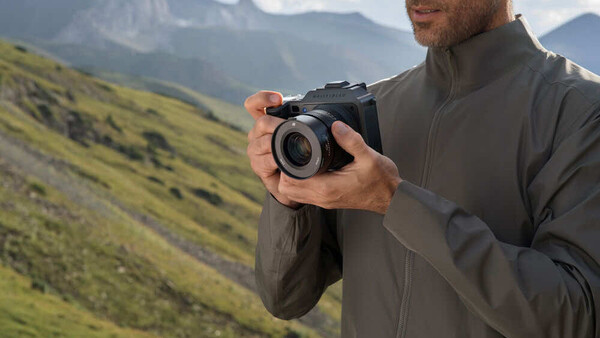
For most of digital photography's history, medium format meant one thing: a five-figure investment, a deliberate studio pace, and a tool reserved for commercial shooters whose clients paid for the absolute ceiling of image quality. The format was the opposite of mainstream by definition. It was the thing you rented for the shoot, not the thing you owned and carried.
That picture has shifted faster in the last few years than in the two decades before them. Bodies have gotten cheaper, lighter, and far more capable, to the point where a working photographer can now buy a 100-megapixel medium format camera for less than a professional sports full frame body. The question that follows naturally is whether the trend keeps going until medium format is simply a normal choice, the way full frame quietly became the default for serious work. It is a genuine question with real arguments on both sides, and it deserves a real answer rather than a headline, so it is worth taking each side seriously before landing anywhere.
The Case That It Can
Start with price, because that is where the change is most dramatic and most measurable. The trend did not start with Fujifilm; Pentax made the first serious run at accessible digital medium format with the 645Z back in 2014, a 51-megapixel body that launched around $8,500 and proved the category did not have to mean Phase One money. But it was Fujifilm that perfected the formula. When the company launched the GFX 50S II at $3,999, it undercut not just every prior medium format body but a good number of high-end full frame cameras sitting in the same showroom. The Fujifilm GFX100S II followed the same logic upmarket, launching at about $5,000 with a 102-megapixel sensor in a body roughly the size of a full frame DSLR, a thousand dollars below its predecessor's launch price, though recent retail has drifted back up toward the $5,000 to $6,000 range depending on promotions. Step up to the flagship Fujifilm GFX100 II, which launched at $7,499 and in recent retail has sat closer to $8,000 new, and you are still in the same price neighborhood as a high-resolution professional full frame body, not the separate universe medium format used to occupy. On the used market the gap closes further, with first-generation 50-megapixel bodies turning up at prices that overlap directly with new mid-range full frame gear. The five-figure barrier that defined the entire category is simply gone at the entry point.
Size and weight have moved just as far, and this is the change that surprises people most. Older medium format cameras were heavy, boxy, and slow, the kind of gear you built a shoot around and left at home otherwise. Modern bodies have shed that reputation almost entirely. The clearest proof of concept is the Fujifilm GFX100RF, a fixed-lens compact weighing 735 grams, lighter than several full frame mirrorless bodies, that packs a 102-megapixel medium format sensor into something closer to a premium fixed-lens compact than to traditional medium format. It is still a large and expensive camera, not pocketable in any ordinary sense, but the notion of a medium format body you pick up and carry without a plan was a contradiction in terms five years ago, and now it sits on a shelf with a price tag. Even the conventional interchangeable-lens bodies have slimmed down to where a GFX feels, in the hand, much like a slightly larger full frame mirrorless camera rather than a different species of tool. Not to be outdone, Hasselblad's entire medium format line, lenses and bodies, is remarkably light and portable.
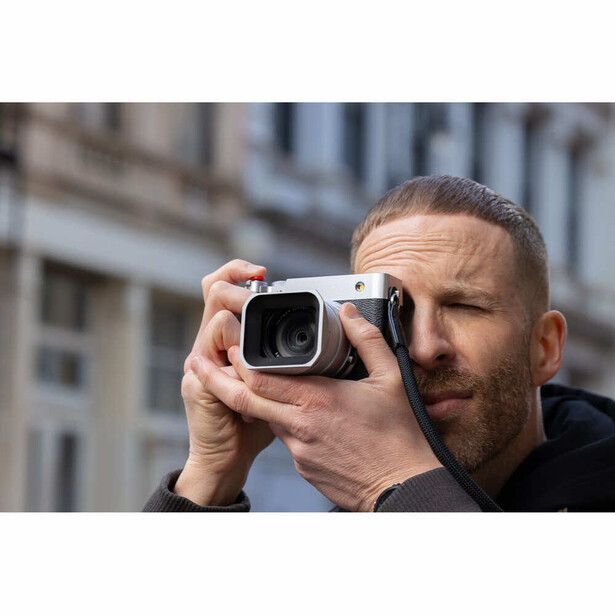
Capability has closed what used to be the most damning gap. The historical knock on medium format was that you traded everything else for image quality: autofocus that could not track a moving subject, frame rates that could not keep up with a moment, stabilization that flat did not exist. Current bodies have dismantled that complaint piece by piece. In-body stabilization now runs to several stops, making handheld shooting viable at speeds that would have guaranteed a blurred frame a generation ago. Phase-detection autofocus with face, eye, and subject recognition has arrived across the leading mirrorless systems. Hasselblad's latest body, the X2D II 100C, even brings continuous autofocus for the first time on a Hasselblad, along with expanded phase-detection coverage and LiDAR-assisted focusing, to a system that, not long ago, was effectively manual-focus-first. The format no longer forces a choice between resolution and a camera that actually functions in the field.
It is worth dwelling on why the image quality itself still matters, because it is the engine under the whole argument. The advantage of a larger sensor is not really the megapixel count, which full frame can increasingly match. It shows up in the qualities that are harder to put on a spec sheet: smoother tonal transitions, more graceful highlight rolloff, and a rendering of color and gradation in difficult light that photographers describe as almost dimensional. In contrasty situations, harsh light against deep shadow, the larger sensor holds the in-between tones in a way smaller sensors visibly struggle with. These are partly aesthetic judgments and depend heavily on sensor generation, exposure, lens, and processing, and they are most apparent in large prints, heavy edits, and commercial reproduction rather than in a web-sized image. But within those demanding conditions, the difference is the thing professionals have always paid for, and it does not go away as the price drops.
The category is also broadening beyond stills, which is its own kind of mainstreaming. The GFX100 II shoots 8K video, and Fujifilm has pushed the 44 by 33mm sensor into dedicated cinema territory with the GFX Eterna 55, a purpose-built cinema camera. At around $16,500 it is not mainstream pricing, but it does show the format moving beyond still-photo prestige use and into motion work, which expands the audience that might plausibly adopt it.
Put those threads together and the optimistic argument writes itself. If a format delivers visibly superior image quality, in a body no larger or heavier than the full frame alternative, at a price that overlaps with it, and with autofocus and stabilization that finally work, then the historical reasons it stayed niche have all been addressed. Those reasons were never about the pictures. They were about cost, bulk, and usability, and all three have moved decisively in the same direction at the same time. The trajectory is real, and pointed.
The Case That It Cannot
The counterargument starts exactly where the optimistic one conveniently stops: the lens. A camera body is only half a system, and medium format glass mostly remains remains expensive and physically large. The selection has genuinely improved, with Fujifilm's GF lineup now spanning primes, zooms, tilt-shift optics, and a teleconverter, so the old "barebones" complaint no longer holds. But it is still far narrower than the sprawling Sony E, Canon RF, and Nikon Z full frame catalogs built over decades, and the body may have reached price parity while a working kit fleshed out with three or four lenses has not. For most photographers the total system cost is what actually decides a purchase, not the body sticker alone. The math gets worse with the more boutique system: Hasselblad's XCD lenses, which build a leaf shutter into each lens to allow flash sync at any shutter speed, a real advantage for studio and strobe work, tend to run more expensive than Fujifilm's already-pricey GF glass, with that shutter mechanism adding complexity to every lens, so a complete setup climbs quickly past anything a mainstream buyer would entertain. A cheap body bolted to a costly, still-limited lens catalog is not a mainstream proposition, however attractive the body looks in isolation.
Then there are the physical compromises the cheaper, smaller bodies make to hit their price and size, because nothing comes free. The GFX100RF, for all its portability, carries a fixed f/4 lens and no sensor-shift stabilization for stills, which means low light pushes you into higher ISO or onto a tripod, cutting directly against the portability that is supposed to be its whole appeal. Reviewers who have lived with these cameras for months tend to land somewhere between admiration and genuine puzzlement about who, precisely, the camera is for: too compromised in aperture and stabilization for some professional work, too expensive and specialized for casual shooting. A tool that impresses nearly everyone while clearly suiting only a narrow slice of them is not on an obvious path to becoming anyone's default.
There is also a definitional sleight of hand worth naming plainly. The sensors in the affordable modern systems this argument is really about, the Fujifilm GFX and Hasselblad X bodies, measure roughly 44 by 33 millimeters. That is larger than full frame's 36 by 24, but it is far smaller than the 53 by 40 millimeter sensors of true high-end digital medium format, and dramatically smaller than the nominal 6 by 4.5 centimeter film the name still evokes in people's minds, whose actual image area runs larger still. The crop factor of this so-called small medium format relative to full frame is only about 0.79, which works out to a sensor roughly 68 percent larger by area, a real difference but a modest one next to the multiples that separated film formats. It is closer to the gap between APS-C and full frame than to the chasm the word "medium format" implies. Some photographers argue, with force, that 44 by 33 is better understood as a slightly enlarged full frame than as a separate format, and that the visible advantage over the best modern full frame cameras is narrower than the marketing and the megapixel numbers suggest. To be fair to the format, that advantage is most visible precisely where its audience works: in large prints, heavily edited files, commercial reproduction, and demanding light. It is far less visible in images bound for a screen or social feed. But that cuts both ways, because if the gap only shows up at the extremes, the case for switching at the mainstream weakens considerably.

Finally, and most fundamentally, the mainstream question runs into what actually makes full frame mainstream in the first place: it is the format that does everything. Full frame still owns sports, wildlife, weddings, and events, the high-volume, fast-moving work that depends on rapid burst rates, low rolling shutter for silent shooting, deep and mature autofocus, and compact fast lenses, none of which is medium format's strength even now. Those are not niche applications; they are an enormous share of why people buy serious cameras at all. A format can be the best in the world at resolution and tonal quality and still be the wrong tool for most of the paid work being shot on any given weekend. Mainstream status is won across use cases, and medium format, by its nature, competes in only some of them.
The Barrier Nobody Photographs: Files and Workflow
There is a practical obstacle that rarely makes it into the excited coverage, and it may be the most underrated reason medium format resists going mainstream: the files are enormous, and everything downstream of the shutter has to cope with them. A single 100-megapixel raw file from a GFX body runs roughly 70 megabytes compressed, around 120 to 130 megabytes lossless compressed, and over 200 megabytes uncompressed, with 16-bit and multi-shot high-resolution captures larger still. Multiply that across a real shoot and the costs cascade in a way a body price does not capture. You need faster and larger memory cards, more storage, more backup, and crucially a computer powerful enough to edit those files without grinding to a halt. The photographer who upgrades the camera and not the rest of the pipeline ends up with a slow, frustrating experience that no amount of sensor quality redeems.
This is precisely the kind of total-cost friction that keeps a format specialized. A professional shooting commercial work has already built that pipeline and bills clients for the output that justifies it. The enthusiast or generalist has not, and for them the storage and processing burden is a recurring tax on every shoot, paid in time and hardware, for resolution most of their work will never use. Mainstream adoption is not just about whether someone can afford the camera. It is about whether the whole system makes sense for how they actually work, and for most photographers the file overhead alone tips that calculation toward no.
The Competition Is Not Standing Still
The final problem for the mainstream thesis is that medium format is not descending toward an unmoving target. Full frame is climbing to meet it from below, and fast. The latest high-resolution full frame bodies have pushed past 60 megapixels while adding the stacked-sensor speed and autofocus that medium format still cannot match, and they do it at prices that sit right alongside the cheaper GFX bodies. Sony's a7R VI, announced at roughly $4,500, pairs a 66.8-megapixel stacked full-frame sensor with burst speeds of up to 30 frames per second that a medium format camera cannot approach. The Canon EOS R5 Mark II uses in-camera deep-learning upscaling to generate roughly 180-megapixel JPEG or HEIF files from a 45-megapixel capture, which is computed detail rather than native sensor resolution or true pixel shift, but it nonetheless erodes the resolution selling point for many buyers. Pixel-shift multi-shot modes, now common on full frame, let a 61-megapixel camera assemble images of well over 100 megapixels for static subjects, eating into one of medium format's signature advantages for exactly the landscape and studio work where it mattered most.
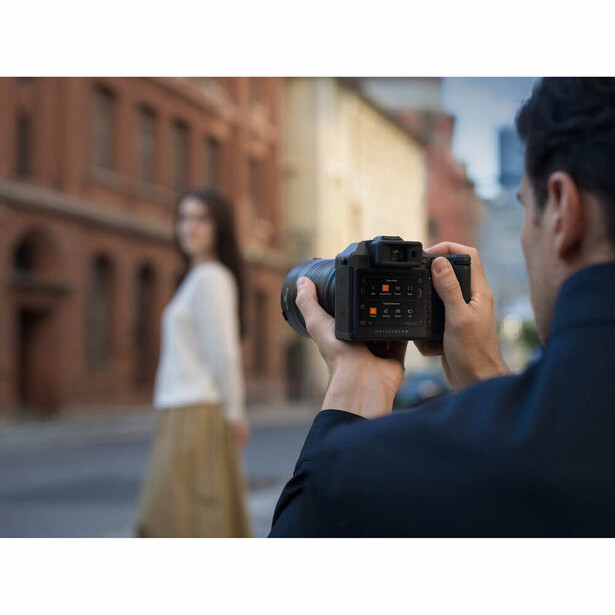
There is also a light-gathering point that cuts in full frame's favor and rarely gets stated plainly. Medium format does not automatically win the low-light or subject-separation argument, because many of the lenses that make the system portable are relatively slow. Fujifilm does offer fast GF primes, the 55mm f/1.7 and 110mm f/2 among them, but the compact zooms and fixed-lens designs that make medium format feel more mainstream tend to sit around f/4 or slower, where the GFX100RF's fixed f/4 is typical. Full frame, by contrast, is awash in compact f/1.4 and f/1.8 glass, and for the same framing and shutter speed those lenses can collect far more light than the slower portable medium format options while also yielding shallower depth of field. The larger sensor's depth-of-field advantage is real but partly offset by the slower portable lenses available for it, so the gap in low-light capability and subject separation is narrower in practice than sensor size alone suggests, and sometimes runs the other way.
The squeeze runs in both directions. Medium format is getting cheaper and smaller while full frame is getting higher in resolution and computationally cleverer, and the territory where medium format's advantage is unambiguous keeps narrowing as a result. For a photographer choosing today, a top full frame body offers most of the resolution, far more speed, a vastly deeper lens lineup, and a more manageable file size, which is an extremely difficult overall package to argue against for anyone whose work does not specifically demand the last increment of tonal quality. A format can be genuinely excellent and still lose the mainstream argument simply because the alternative is good enough for almost everyone and easier in every other respect.
Where This Actually Lands
The honest answer turns entirely on what "mainstream" is taken to mean. One caveat frames both: everything above argues from product trends, prices, bodies, specs, and workflow, because those are what can be observed cleanly. The harder evidence, actual sales share, shipment data, and rental numbers, is scarce and closely held, and "mainstream" is ultimately a market claim, not just a product-capability one. A format can have every capability box checked and still not move in volume. So treat what follows as a read of the trajectory, not a count of the units.
If mainstream means medium format becoming a normal, unremarkable choice for the photographers who prioritize image quality above frame rate and lens variety, then it is already happening, and the trend lines all run the same way. The format has crossed from rental-only to a real ownership consideration for the serious enthusiast and the working professional, at prices and in body sizes that audience could not previously justify. That is a substantial transformation, and the people marking it are not wrong to be excited.
If mainstream means medium format displacing full frame as the default for most serious photographers, the way full frame displaced crop sensors in the professional imagination, that is a far higher bar, and the lens economics, the physical compromises of the affordable bodies, the file and workflow overhead, the modest real-world sensor advantage, and a full frame segment that keeps closing the gap all stand squarely in the way. The most defensible read is that medium format is going mainstream within a lane rather than across the whole road. It is becoming the obvious choice for the photographers who were always its natural audience, and reaching them on terms they could not previously afford. That is real and significant. It is simply not the same thing as universal adoption, and the confident declarations that medium format is the new full frame are running ahead of what the evidence actually supports.
For the photographer weighing the jump, the practical takeaway is unromantic. The body is no longer the obstacle; the system is. Price the whole kit, lenses, cards, storage, and the computer to edit on, and weigh that honestly against what your work genuinely demands rather than what the sample images make you want. The resolution and the tonal quality are real. So is the question of whether you, specifically, need them, and for a great many photographers the honest answer is that full frame already clears the bar.
If you want to understand where this caliber of image quality genuinely pays for itself before committing, two resources are worth the time. (The links below are affiliate links, and Fstoppers may earn a commission from purchases made through them.) Elia Locardi's Photographing the World: Landscape Photography and Post-Processing shows the high-resolution landscape work where a large sensor and wide tonal range earn their keep, and for those weighing the commercial side, Making Real Money: The Business of Commercial Photography covers the client work where medium format has always justified its cost, and where it still most clearly does.




Join the Fstoppers community for free
-
Post comments and join in the discussions
-
Browse the site ad-free
-
Share your work and get featured in the community
-
Compete in the photo contests for fun and prizes
23 Comments
Sign me up! I don't want to carry around my rz67 anymore. It's too heavy.
Right!? I'm all for it.
Why does anyone want to carry a GIGANTIC and EXPENSIVE block anymore.
Because they are beautifully made and offer the best image quality, and just because we can. And it’s mostly a free world. I can’t afford a Hasselblad x2D (I have other priorities) but if I could, I would carry it on every photo outing.
Actually, they dont. Large format 4 x 5 or 8 x 10 sheet film offers the best image quality.
True
The day MF can compete with flagship FF in terms of burst speed, autofocus and offering telephoto lenses/cheaper third party and has models priced similarly to the A7V/R6III/Z6III, (all perfectly usable for a lot of paid work) then we can talk about the possibility of MF taking over from FF. Until then, not a chance. MF is still far too costly and limited to replace FF.
Medium format film cameras never met those specs but we shot it anyway because the results were worth it "back in the day". I don't know if the difference is that obvious today as the end use has changed.
Good, well thought-out article, Alex. Those of us who suffer from GAS (Gear Acquisition Syndrome) are tempted to jump on the MF bandwagon. Your article really helps us! I almost bought a used Hasselblad at Map Camera when I was in Tokyo last Thanksgiving on vacation. I used to own a 500C for weddings. Tony Northrup's YouTube shorts make me "want" a Hasselblad again. I "upgraded" from APS-C to FF mainly for more and better lens choices. Now, what format do I really need? I've only ever printed less than 10 images at 20x30 or larger. Out of over 800,000 images stores on my NAS. I've come to the conclusion that M43 is all I really "need", for the some of the reasons you make for FF over MF. Workflow file size, weight, and never viewing any images above a 4k monitor (Almost never printing anything) are 2 main reasons. But I love my Voigtlander lenses on FF as well as my professional class FF lenses. So I now have 2 systems, FF and M43. 4 FF bodies & 20 lenses vs. 2 M43 bodies & 4 lenses. (My GAS is nearly terminal!) I think your article may have cured my desire to get a MF. Sure, I want one. I'm a guy who bought a used 4x5 Linhoff in 1977, shot about 25 images before selling it at a slight profit. (I did produce 1 book cover to show for my short-lived ownership.) However, I'm enjoying my M43; its weight and broader depth-of-field suit me well. It's probably all I need, but I'll probably never sell my FF. My son will inherit all my equipment one day! He can figure out what he needs, and what he wants to keep. It's just easier this way.
hi Alex,
you state two issues which i disagree slightly about or would like to elaborate about :
"The math gets worse with the more boutique system: Hasselblad's XCD lenses, which build a leaf shutter into each lens to allow flash sync at any shutter speed, a real advantage for studio and strobe work, tend to run more expensive than Fujifilm's already-pricey GF glass, with that shutter mechanism adding complexity to every lens, so a complete setup climbs quickly past anything a mainstream buyer would entertain."
"The final problem for the mainstream thesis is that medium format is not descending toward an unmoving target. Full frame is climbing to meet it from below, and fast. The Canon EOS R5 Mark II uses in-camera deep-learning upscaling to generate roughly 180-megapixel JPEG or HEIF files from a 45-megapixel capture, which is computed detail rather than native sensor resolution or true pixel shift, but it nonetheless erodes the resolution selling point for many buyers. Pixel-shift multi-shot modes, now common on full frame, let a 61-megapixel camera assemble images of well over 100 megapixels for static subjects, eating into one of medium format's signature advantages for exactly the landscape and studio work where it mattered most."
this first is about the cost of Hasselblad XCD lenses being more costly than Fujifilm GF lenses. in my opinion the rendition of the XCD lenses is many cases is more pleasing than that of the GF lenses, especially the older, non V XCD lenses even though they may not quite be as sharp as the newer V lenses
the other issue is that full frame resolution does not equate to higher image quality. i have both a full frame EOS R and an EOS R5 and in indoor scenes, the 30.4 megapixel EOS R produces better image quality than the 45 megapixel EOS R5 as the R5 images have more noise.
secondly, i have had two GFX 50 megapixel cameras and currently own two 50 megapixel Hasselblad cameras. i find that i am able to recover the shadows better on the medium format sensors than on full frame sensors. also, i find that the colours of my images are better and i was told that this may be due to the higher bit depth of the images, e.g. 14 or 16 bit raw files rather that the usual 12 bit raw files of full frame cameras. even though the size of the microsites of the Canon 5D Mark iv and EOS R are almost identical to the size of the microsites of the Fujifilm GFX 50R and 50S and 50Sii and Hasselblad X1D and X1Dii, the colours and dynamic range captured by these cameras somehow seems to be better than their full frame equivalents. i do also have 45 megapixel digital cameras in the form of the Nikon D850 and the previously mentioned Canon EOS R5.
unfortunately, in relation to the Fujifilm 50 megapixel sensors, these, as well as the Hasselblad 50 megapixel sensors which are manufactured by Sony are only contrast detect and not phase detect, which should not be a problem in theory, except that in practice, the wonderful GF 55mm f1.7 and GF 80mm f1.7 lenses are unable to focus indoors in moderate lighting conditions with these 50 megapixel sensors
The EOS R and R5 shoot 14bit , with mechanical shutter anyways. Still there’s a huge difference in the amount of data between 14 and 16bit.
hi Ruud, thank you for the clarification. i was looking up raw file bit depths and realise that Apple and Samsung mobile devices capture in 12-bit and when computational photography is used, interpolate data, however in the case of the iPhone, the 12-bit data is stored in 16-bit files or containers. it does not specify whether the Samsung data is 12-bit or 16-bit after interpolation however in expert RAW the data is also stored in 16-bit containers. the XiaoMi captures 14-bit raw files according to Google. Samsung is able to bypass computational photography
hi Rudd, there is also the issue of microsite size whether the sensor is full frame, medium format, aps-c, micro 4/3's, or 1-inch, which is even the medium format 100 megapixel 44mm x 33mm Hasselblad sensors have noise issues, some say above 800 iso, so irregardless of sensor size, should the microsites be too small, noise becomes an issue
hi Rudd, and strangely, i prefer the colours of the Fujifilm x-mount x-trans aps-c sensors to the Fujifilm GFX beyer medium format sensors and think that it is because the colour science was developed with the x-trans arrays, which have different proportions of green, blue and red microsites, in mind and then reused for their beyer medium format arrays ( rather than optimised with different colour dyes but this is conjecture and hypothesis ) - i have had both x-trans aps-c and beyer medium format Fujifilm cameras
Sometimes it isn't about MF IQ or 'better shadow recovery' but practicality. For half or less than what you'd pay for a MF, you can buy a FF with still stellar IQ, much better features and a more extensive lens lineup that simply makes much more sense for a working photographer. Try shooting sports with a slow MF and a total lack of telephoto lenses.
Well that is nonsense
the GF RANGE includes an excellent 500 prime and a 250. Not sure whch planet you are living on
hi Alex,
i also owned a pre-loved Leica S (Typ 007) for a short period of time as i was amazed by the photographs from the S (Typ 006) which were on the DPreview website many years ago. i sold it off shortly after i purchased it as the manufacturing label indicated that it was rather old and i did not wish for it to deteriorate whilst i owned it. i did however like the images produced by the Summarit S 70mm f2.5 lens and might have loved it had i had more time with it.
i love Leica colours but would prefer not to downgrade from medium format to full frame and do hope that Leica could reconsider their plans as the more manufacturers there are on the field, the more choices the consumers, in this case, photographers have, and therefore the higher likelihood of finding suitable tools for their craft.
hi Alex,
i shot with my Uncle's Fujifilm GSW 690iii film rangefinder camera many years ago and as i recall, the photographs had the real medium format look of 6cm x 9cm rather than the more than full frame sensors as Fujifilm describes their GFX sensors, but medium format digital is still significantly better than full frame digital even if it is only 44mm x 33mm or in the case of PhaseOne, even larger and even more expensive.
"The Barrier Nobody Photographs: Files and Workflow"
On another forum, I noticed that many were having processing speed and storage issued that I didn't seem to have. Then the penny dripped, I was shooting m4/3 while most others were on FF. Working with four times the MP count is easy to overlook in favour of IQ. Affordable processing power, storage and internet speeds are going up in leaps and bounds, yet it remains a perennial issue. I would think that quite a barrier for going mainstream. However, as a high IQ niche product bordering on designer label, all is forgiven.
I am very attracted to MF but it's more of a "new toy" feeling. I'd love to have one and can afford it but the biggest thing for me is that shooting with a MF camera won't make me a better photographer. I'd rather learn to be a better photographer and the cameras I have now will work fine for that goal.
A thing that was missed: the small sensor size of modern MF cameras means that you can still use those old, SLR lenses. I can put the same, 50mm, f1.4, Sigma Art lens that is currently sitting on my A7III on a GFX camera with a $500 Fringer adapter. If you shoot a lot of adapted lenses, this considerably changes the math of switching to medium format (even from APS-C).
The EF Mount saves the day...again. I swear that mount is the small block Chevy engine of the photography world.
Incremental and nearly imperceptible differences separate these so-called "medium format" cameras from "full frame" (24x36mm) sensors. The same difference exist comparing full frame to APS-C, APS-C to MFT and MFT to phone cameras.
Even when I shot true medium format 45x60 and 60x70mm film, I never met a single client who could see the different compared to 35mm film format. The only people who ever "demanded" larger formats were editors and photographers themselves. Although not one could ever actually identify one over the other in a blind test.
The only reason to use a cropped "medium format" 33x44mm sensor is to make your self feel superior.
Nice article Alex, I'd love to end up having one of every format because I think the tradeoffs make for interesting experiences. I get better macro photos more easily in m43, so I like that. But then maybe I enjoy the look of 35mm more for people, maybe the I'd like shooting street more if I shot with a Hassleblad or GFX? I won't know 'til I try.
I need to work out how to afford to try.