
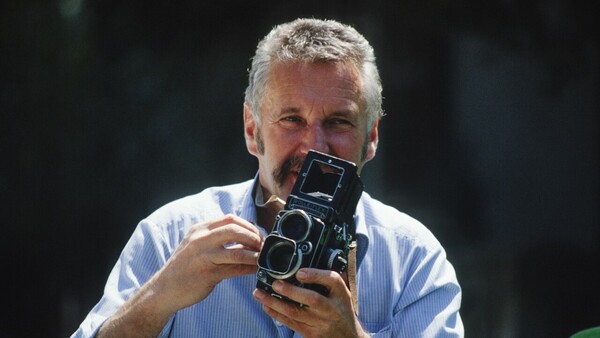
The most beautiful cameras ever made were not styled to be beautiful. They were built to work, and the beauty is what happened when the engineers refused to hide how the machine did its job. They still sit under glass in collections not because they out-resolve a modern mirrorless body, but because you cannot stop looking at them.
What ties these five together is a design honesty. The shutter dial is where your finger already rests. The proportion of the body follows the film path inside it. The materials are brass, chrome, ground glass, and leather, chosen because they lasted, not because they photographed well in an ad. Each of these cameras solved a real problem so cleanly that the solution became the shape, and the shape never went out of style.
Here is why each one still holds up, and the specific design decisions that made it permanent.
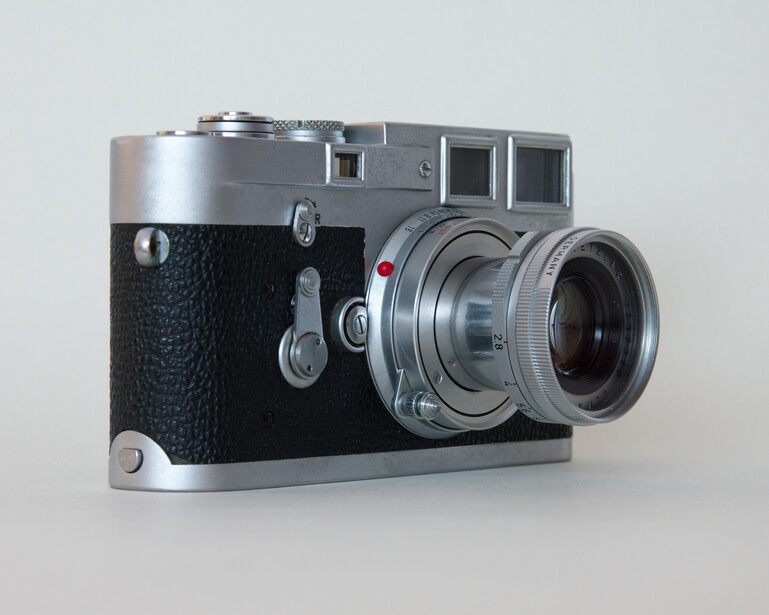
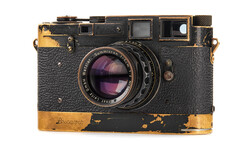
Leica M3: The Standard Everything Else Is Measured Against
Leica introduced the M3 at Photokina in 1954, and the camera reset what a small camera was allowed to be. The screw mount that Leitz had refined for decades was gone, replaced by a fast bayonet that locked a lens in a quarter turn. The two windows for framing and focusing collapsed into a single bright viewfinder with a 0.91x magnification, one of the closest any 35mm finder has ever come to feeling like an open window with the frame drawn on the air. Parallax-corrected framelines for 50mm, 90mm, and 135mm floated into view as you changed lenses.
The beauty is in the restraint. The top plate is a smooth chrome-plated brass shell, the film advance was a lever rather than a knob (a double stroke on the earliest bodies, a single stroke later), and the body wore a covering of hard vulcanite that your fingers still find grippy seventy years on. More than 220,000 were built before the run ended in the mid-1960s, which makes the M3 the best-selling M-mount Leica ever. The current digital Leica M11 keeps the same silhouette on purpose, because the proportions were right the first time.
The Rolleiflex: A Jewel You Look Down Into
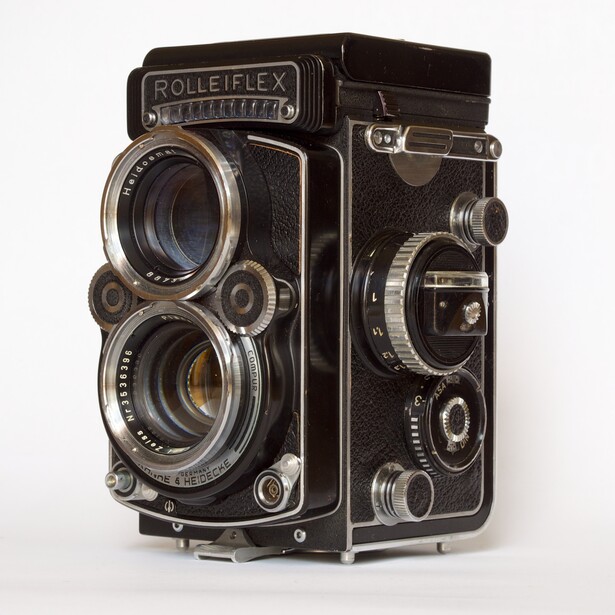
My personal pick for the most beautiful camera. The twin-lens Rolleiflex is the camera people mean when they picture a photographer looking down into a waist-level finder, elbows tucked, working quietly. Franke & Heidecke introduced the original Rolleiflex in Braunschweig, Germany, in 1928, with production and sales beginning around 1929, and the design grew out of an idea that a frequently repeated account traces to Reinhold Heidecke's time in the trenches of the First World War: the safest way to aim was to keep your head down and look into a mirror rather than raise the camera, and yourself, over the parapet. The result stacked two lenses on a tall, narrow body: a viewing lens up top that threw its image onto a ground glass, and a taking lens below that exposed the film.
The 2.8F, made from 1960 to 1981, is the one most collectors chase. It carried an 80mm f/2.8 lens, either a Zeiss Planar or a Schneider Xenotar, behind a Synchro-Compur leaf shutter, and it shot square 6x6 frames on 120 roll film, with later versions taking 220 as well. Roughly 82,800 were made across a production run lasting more than two decades. Everything about it reads vertical and symmetrical: the two glass eyes, the side focus knob under your left hand, the folding hood that pops up like a little chapel. You compose an image that is reversed left to right on the glass, which forces you to slow down and actually see the frame. That deliberate pace is half the reason the pictures look the way they do.
Hasselblad 500C: The Cube That Went to Space
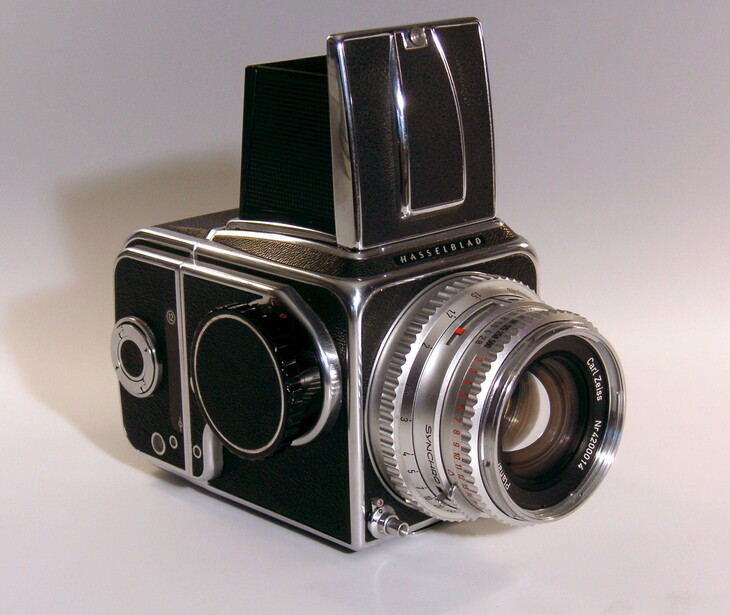
And now the favorite of many other photographers. The Hasselblad 500C, launched in 1957, is a lesson in what happens when you let the mechanism decide the form. Victor Hasselblad's team moved the shutter out of the body and into each lens, a Synchro-Compur leaf shutter built into each Carl Zeiss lens that synced with flash at every speed. That single decision made the body a simple, honest box: a square 6x6 core you could split apart and rebuild, swapping lenses, waist-level or prism finders, and film magazines at will. The visual language, the matte-and-gloss cube with its chrome winding crank, traces back to Sixten Sason, the industrial designer who also drew the first Saab car, and it stayed in production in one form or another for more than half a century.
The 500C earned its legend off the planet. In 1962, Mercury astronaut Wally Schirra bought a 500C at a camera shop in Houston, and the camera that flew was modified far more heavily than the familiar story suggests. Before launch it went through an extensive weight-saving conversion: the leatherette, the reflex mirror, the viewfinder, and the auxiliary shutter were all removed, a specially built 70-exposure magazine was fitted, and the body was finished in matte black to suppress reflections. It rode into orbit aboard Mercury-Atlas 8 as the first Hasselblad in space, and it convinced NASA to keep flying the Swedish cube: heavily modified Hasselblads shot through Gemini, while Apollo flew motorized Electric Cameras derived from the 500EL and put specialized Data Cameras on the lunar surface. The design still sells today: the Hasselblad X2D II 100C and the modular 907X system are direct descendants of that square box, the 907X still built around a detachable digital back, just as the originals swapped film magazines.
Nikon F: Beauty That Comes Entirely From Purpose
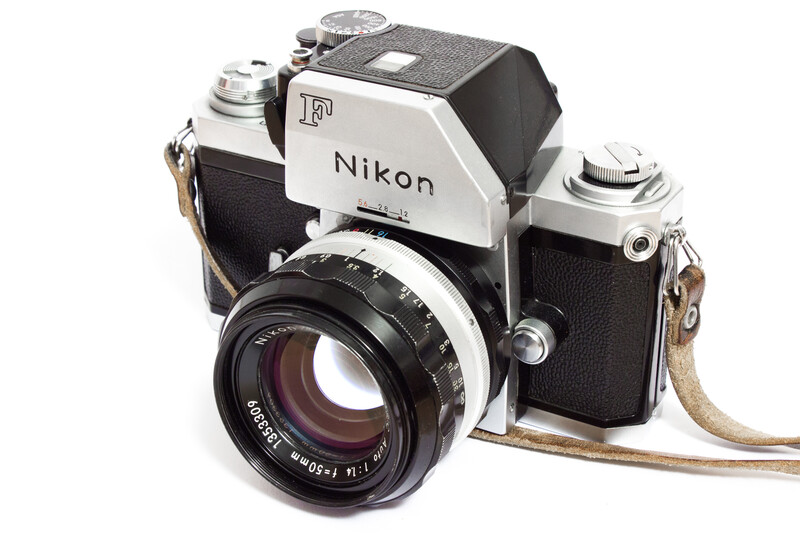
The Nikon F, shown to the press in 1959, is proof that a camera can be gorgeous without a single decorative move. Nikon built it on the bones of its Nikon SP rangefinder, then added the parts that would define the professional single-lens reflex for the next thirty years: an interchangeable pentaprism with 100 percent viewfinder coverage, an instant-return mirror, an automatic diaphragm that stayed wide open for focusing, and the F bayonet mount whose lineage Nikon still honors. The shutter used titanium foil curtains, a first for a production camera. According to Nikon's own records, the F ran from 1959 all the way to September 1973, two full years after its successor arrived.
What makes it beautiful is that every visible feature is a function you can name. The triangular prism hump is the roof of the optical path. The round dials are round because your thumb turns them. The body looks like it means to be used hard, and it was, becoming the standard tool of combat and news photographers through the 1960s and the Vietnam War. Even the name refuses to be cute: Nikon's official history says the F was taken from "reflex," while a separate oral account has associated it with head engineer Masahiko Fuketa. Either way, nobody had to be told what it was for.
Olympus OM-1: The Minimalist That Shrank the SLR
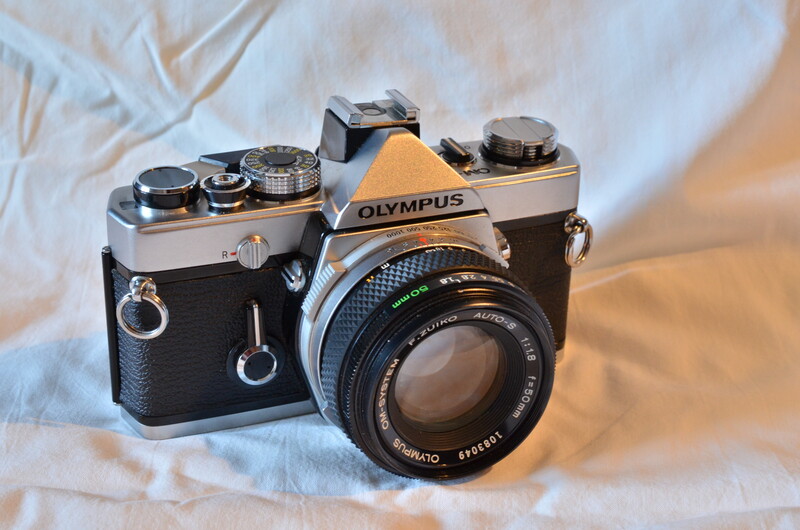
By 1972 the professional SLR had grown into a metal brick, and Yoshihisa Maitani decided that was a design failure, not a badge of seriousness. His answer debuted at Photokina that year as the Olympus M-1, until Leica objected to the M and Olympus renamed it the OM-1 the following February, after roughly 52,000 of the original bodies were already out. The initials trace back to the original M-System branding, and the M of the first model, the M-1, stood for Maitani himself; today the letters are usually explained as Olympus Maitani, a tribute to the designer. Maitani had already proven his eye with the half-frame Pen F, and the OM-1 was his manifesto: light, thin, short, and small.
It became the smallest and lightest 35mm SLR the world had seen, about 136 by 83 by 50 millimeters and roughly 500 grams, and it got there through genuinely clever engineering rather than cost cutting. Maitani moved the shutter-speed control off the top plate and onto a ring around the lens mount, which cleaned up the deck and let you keep the camera at your eye, and he gave it an air-damped mirror so the whole thing worked with a soft, expensive-sounding click. The viewfinder is enormous for the body. A camera this small is one you actually carry, which is the whole game in landscape and travel work, where the best photograph is usually the one you were light enough to go get.
Why the Shape Outlived the Film
The thread running through all five is that the designers trusted the mechanism to be the ornament. Nothing is bolted on to look modern, so nothing looks dated. That is exactly why the current wave of retro bodies, from the dial-covered Nikon Zf to Hasselblad's square digital backs, copies the knurling and the top-plate dials of cameras that stopped being manufactured decades ago. Set any of these five next to a slab of black polycarbonate and you understand why people keep them on the shelf, loaded or not.
Lead image Comet Photo AG (Zürich) ETH Library, CC BY-SA 4.0, via Wikimedia Commons.


.jpg)


Join the Fstoppers community for free
-
Post comments and join in the discussions
-
Browse the site ad-free
-
Share your work and get featured in the community
-
Compete in the photo contests for fun and prizes
20 Comments
I would also add the Nikon F3. Give Giorgetto Giugiaro a Nikon and let him work and you achieve a new level of functional beauty.
If then more the F2! F3 just built after it.
Contax G2 and T2.
This is a list of cameras that he likes, not that are beautiful. I agree with the M3, and perhaps the Olympus, but the others are not beautiful. The Nikon F with the bulbous viewfinder is particularly ugly, ungainly. A Deardorff view camera is beautiful, as are most wooden view cameras. The Sony RX100 line is attractive. I always thought a Linhof 2x3 technical camera was very beautiful.
I'll go along with the first 3 which are at least unique in style, but the Nikon looks excessively bulky, and the Olympus, other than its compact size, looks quite similar to any number of other SLR's of the time.
Perhaps the Contax 11A also deserved a mention.
That Nikon looks bulky because it IS bulky; it's the Nikon FTN (the large "viewfinder" also incorporates the metering system, linked to the lens aperture with a clever pin arrangement). The actual Nikon F is much sleeker looking.
While we're on Nikon, they were the ones who pioneered the shutter speed on the body (not Olympus!) with the Nikkormat.
I shot a Hassy 500 C/M for a long time and what amazed me was not only the quality and reliability, but how you could make the camera whatever you wanted. Change the focusing screen, viewfinder, film magazine, winding knob, and, of course, the lens. just a brilliant industrial design.
All are great to talk about for us who once used, the Olympus OM-1 was a oh no I did not see that! Most all others had the Olympus OM-1 because it was the smallest and easy to carry around while on liberty due to being on foot mostly. The camera I got first was the Canon Ftb back in the mid 70's while on the USS John F. Kennedy's camera store, yes there was one on the ship back then also when it pulled into Naples It. there was a NATO store with a camera store where there were no taxes so I got all my lenses there every time we pulled in, less $'s.
The great thing about the Canon Ftb was the built in Light Meter and the exposure needle in the eye piece that also had a needle with a circle on the end just merry the two and a perfect capture also before ever thinking about bracketing you could put the exposure needle at the top, middle and lower part and get three images to choose from.
When digital cameras came and the Sony A7SM1 came out Sony already gave the specs. to adapter makers like for Canon FD lenses this was a great start for there was few Sony lenses and to top it off the Camera apps that Sony had that one could down load had a Lens Correction app that you could make a LC for all your lenses, lucky me I still have the apps on my A7SM1 and 2 also A7RM2 letting me play with the lenses still not much to correct for they are 35mm anyway also Lrc has lens correction if you look for them.
Everyone will have great stories about there first camera.
1.By first try to get a Lunar Eclipse using the A7SM1 and with 55-250 mm lens 3 at +/- 2EV but proceed with Photomatix then Oloneo then Lightroom 5.0. back in October 8, 2014 just a month after buying the A7SM1 at the Sony Camera Store in Orlando Fl.
TLR is the worst camera design in history.
Four out of five...so close. While the Olympus was significant because of the size, was it beautiful? Not really.
The original Pen F was much more of a minimalist design.
I still own one that I bought in 1974. It still works.
I actually like this list. I was surprised to see the OM1 from 1974 make the list. I still have one of those left with it’s original kit lens.
The Zone V! Rosewood Vista wasn't hard too look at either:
i considered the Canon F-1n as a possible choice when my parents were making the purchase of a professional camera for me, amongst other choices i considered the T-90 and finally settled on the EOS-1, however in hindsight, although i probably made the best choice, the F-1n would have been a pleasure to use, especially with its bright viewfinder and its vertical match needle metering which is often rendered horizontal on most digital cameras
the Nikon F3 and F3HP had obscure aperture readouts and the Nikon F-4 was only able to focus on verticals and not on horizontals and was rather more chunky. a friend purchased the Nikon FM-2n however i never saw the point of a mechanical SLR with only three diodes for the exposure metering
Great list, I would add the Polaroid SX-70, iconic design.
This is a fantastic list of timeless designs. It is hard to argue with the Leica M3 or the Hasselblad 500C. I would definitely add the Kodak No. 1 Pocket Autographic to the conversation though. Its folding bellows and classic styling give it a gorgeous functional aesthetic.
Paul Tocatlian
Kisau Photography
www.kisau.com
these are the other three cameras which i listed which are beautiful which i did not choose for the reasons i stated previously