
If you travel with camera gear even a few times a year, you already know the problem. Sometimes you're heading to a wedding with a full kit and your clothes are checked. Sometimes it's a weekend trip where you need a few lenses and room for a change of clothes. And sometimes you don't need any camera gear at all and you just want a normal bag. The issue is that most bags are built for one of those scenarios, not all of them. So you end up owning three or four bags and playing a guessing game before every trip.
The Atlas One is the first bag I've used that actually solves this.
What the Atlas One Actually Is
The Atlas One isn't just a camera bag with a removable divider system. It's a fully modular travel bag that can function as a camera bag, a hybrid bag, or a straight-up travel bag depending on what you put inside it. The version I have is the medium-sized Getaway, and Atlas also makes a smaller Day bag and a larger Mission bag. All three follow the same modular design philosophy.
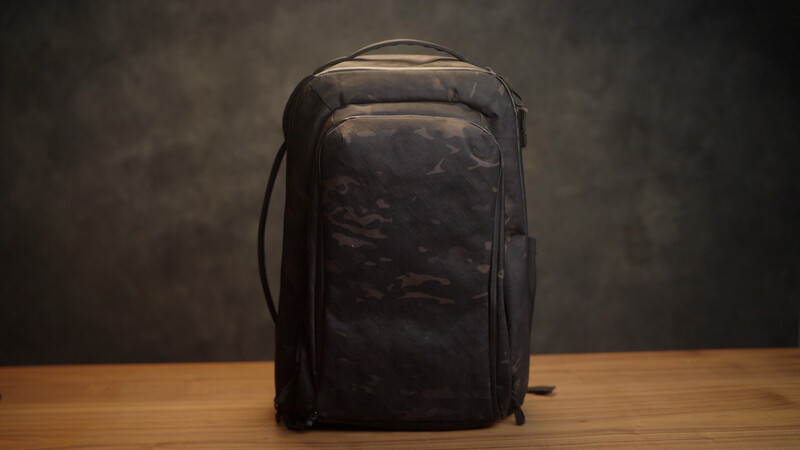
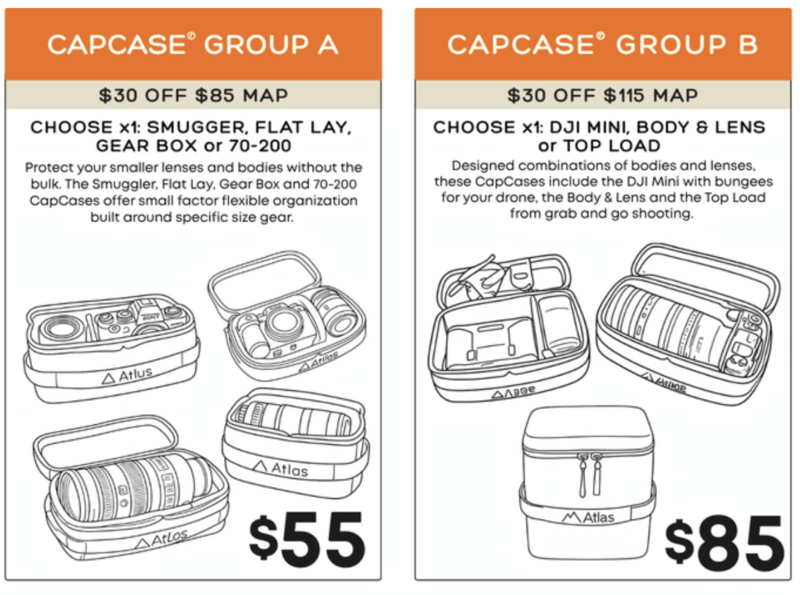
The key to how this works is a system Atlas calls cap cases. These are modular camera cases that come in different sizes and configurations. You pick the combination that matches your gear load for a given trip, drop them into the bag, and the rest of the space becomes available for clothes, a sweatshirt, snacks, or whatever else you're bringing. Take the cases out entirely and you have a clean, good-looking travel backpack.
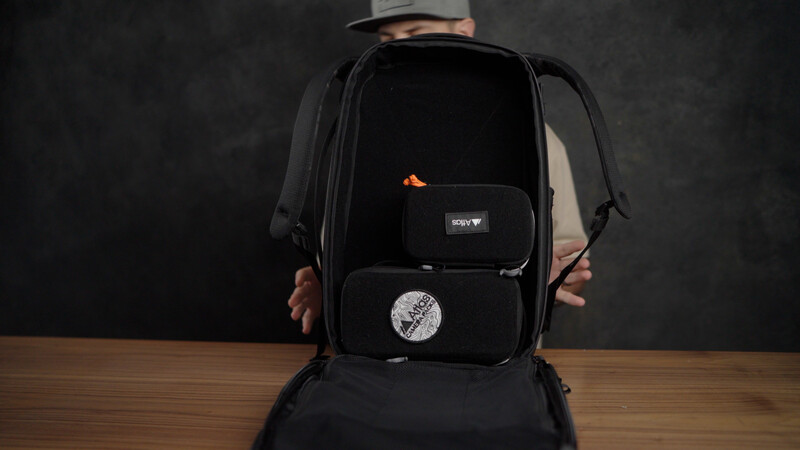
The Cap Case System Changes Everything
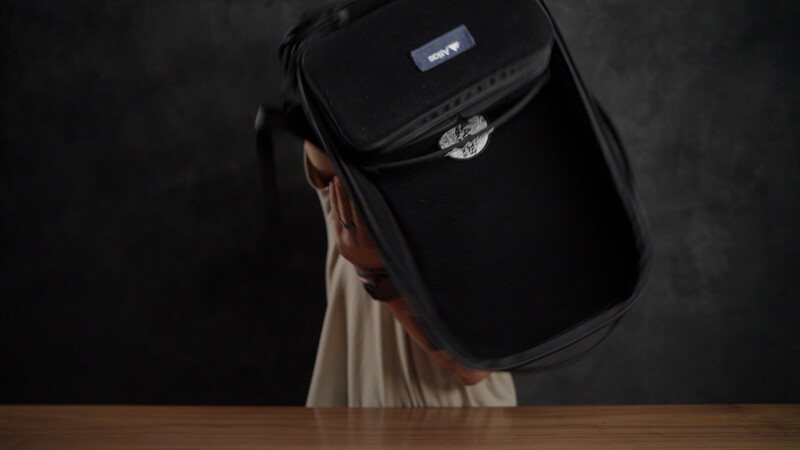
What makes the cap cases more than just a standard cube system is the way they're designed to be used quickly. Each case can be zipped shut, but they also have a magnet closure system that holds everything in place without zipping. And these aren't weak magnets. They're strong enough that your gear stays put even when the bag gets thrown around or flipped upside down, but easy enough to pop open one-handed when you need something fast. Honestly, I've never once felt the need to use the zipper. The magnets are that good.
The real value of this system shows up when you're mid-trip. I've been in situations where I've traveled with a full gear load but then wanted to spend a day walking around a city without hauling everything. Instead of packing a second bag or just dealing with the weight, I could leave the larger case in the hotel room and drop the smaller case into the bag. Five seconds of work and I had a bag configured for a casual day out with just enough gear and room for a sweatshirt.
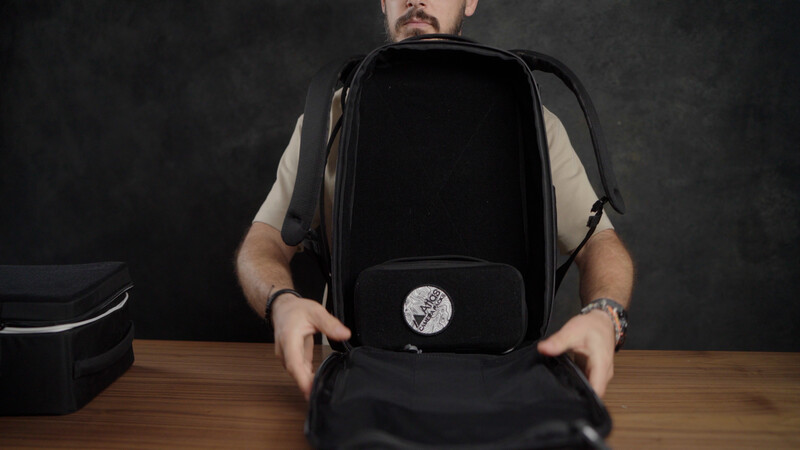
That kind of flexibility isn't something you can get with a traditional camera bag. Most of them either have fixed dividers or a removable insert that still takes up the same amount of space whether it's full or not.
Build Quality and Materials
Atlas put a lot of thought into what this bag is made of, and it shows once you start handling it. The outer shell is made from Challenge Sailcloth. I had no idea what this was when I first got the bag, but it's essentially the premium end of lightweight outdoor materials. It's extremely durable and surprisingly light. The owner of Atlas has a video showing that the entire bag weighs less than a 1.5-liter bottle of water, which sounds like a marketing claim until you actually pick the thing up.
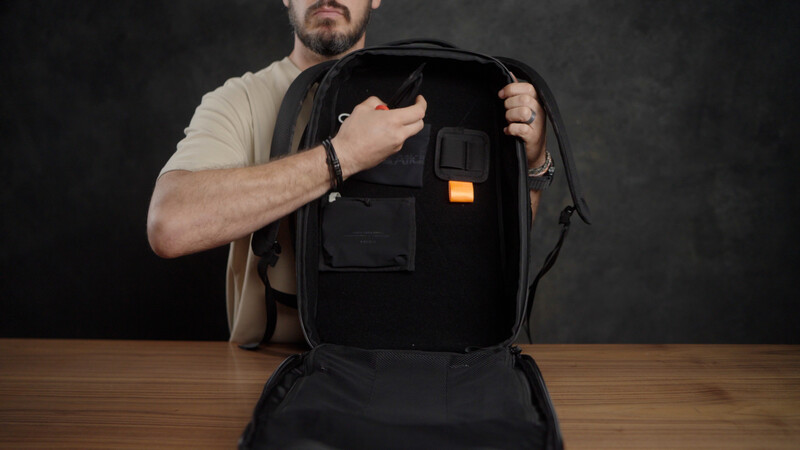
The interior is lined with Velex throughout. If you've ever reached into a high-end camera bag and felt that soft, grippy fabric that lets dividers attach and stay put, that's Velex. Atlas uses it across the entire bottom and sides of the main compartment, inside every main pocket, and on the inside and outside of all the cap cases. This means you can attach the cases to the inside of the bag to keep them from shifting around, and you can add small accessories and pouches wherever makes sense for your setup.
Every Pocket Has a Purpose
Beyond the main compartment, the rest of the bag is well thought out. There's a pass-through pocket that can be accessed from both the outside of the bag and from the interior flap of the main compartment. There's a front compartment for additional storage. The laptop and tablet sleeve is paired with a section specifically for cables and hard drives, which is a small detail that makes a real difference when you're digging around for something at an airport.
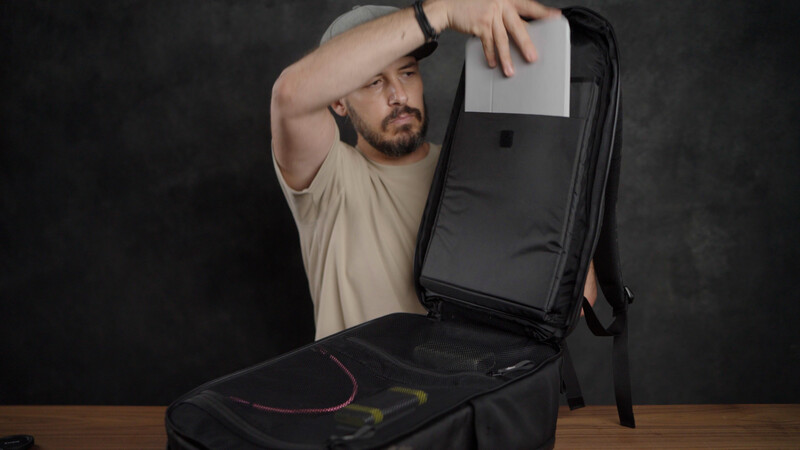
Grab handles are positioned around the top and sides of the bag, which sounds minor but is genuinely useful when you're pulling the bag out of an overhead bin or passing it to someone. There's a water bottle pocket on the side, and a laser-cut MOLLE panel for attaching accessories and storing pens.
The Pant Pockets
One of my favorite features on this bag is what Atlas calls the pant pockets. These are essentially hidden pockets on the back of the bag, and the idea is that before you go through airport security, you transfer whatever is normally in your pockets into these. Your phone, passport, wallet, and headphone case all go in there, nothing falls out, and you walk through the scanner without having to think about it.
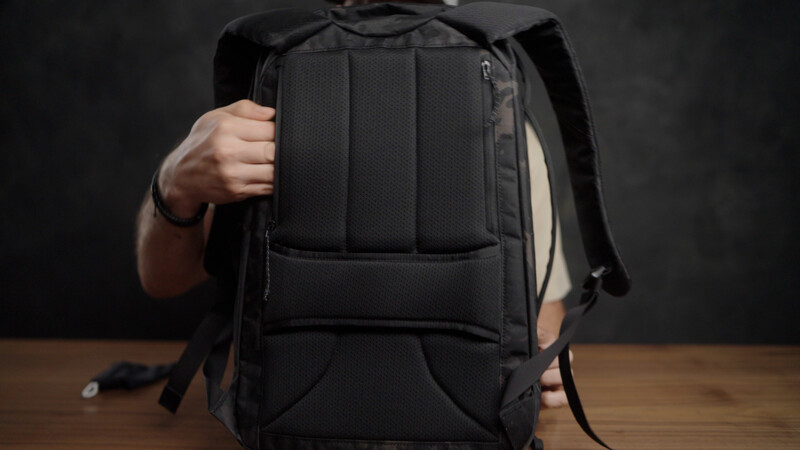
Beyond the security use case, I also just like having my passport and cash in there when I'm out walking around a city. They're less obvious than a front zipper pocket and feel a lot more secure. I also had my headphone battery case fall out of my pocket on a flight once, and I haven't had that problem since using this system.
Attention to Detail That Actually Matters
One thing that stands out about Atlas is that they iterate on problems rather than ignoring them. I have an earlier version of the Getaway, and in that version, the luggage pass-through strap sat on top of the back padding. It wasn't uncomfortable for me, but it did create a slight bulge against your back if you wore the bag for a long time. In the current version, they added a groove in the back padding so the pass-through sits flush inside it. Nothing sticks out past the padding. It's a small change, but it's the kind of thing a company only does if they're actually paying attention to how people use the product.
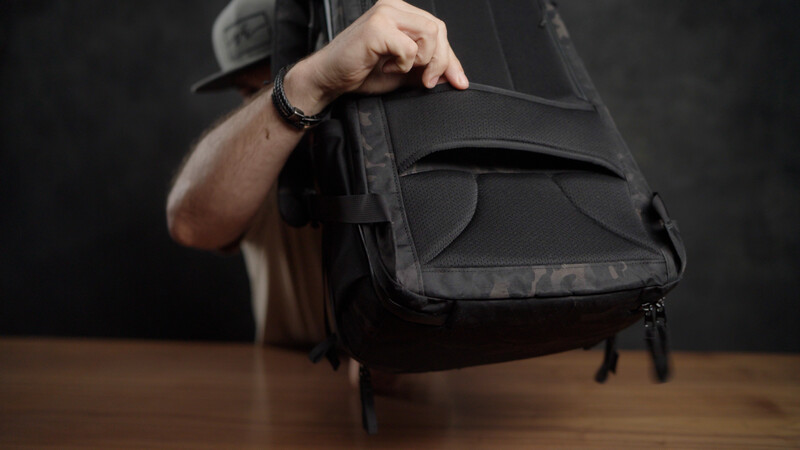
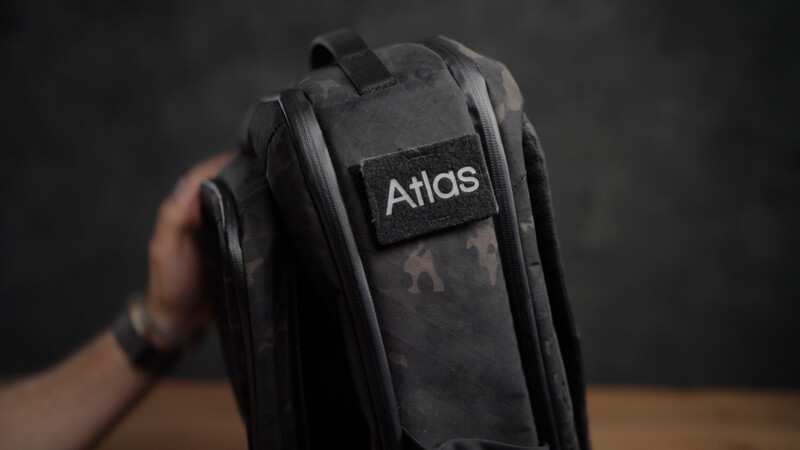
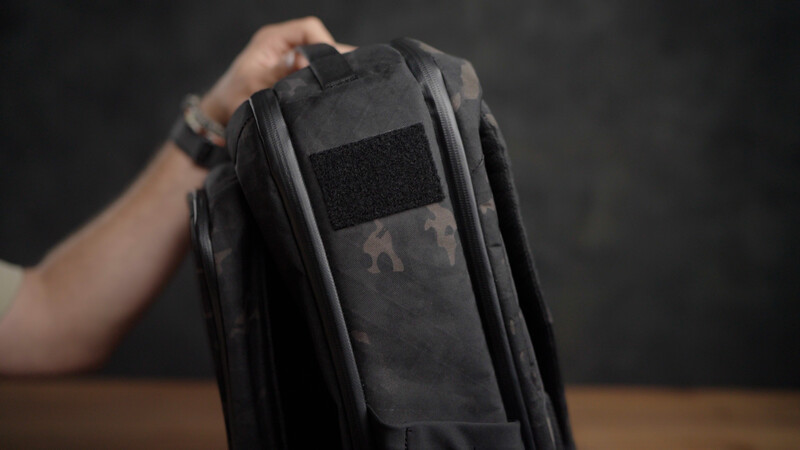
The bag also has no real camera branding on it. The only visible logo is a small one on the side, and even that is removable. This matters more than people give it credit for. Walking around a city with tens of thousands of dollars of camera gear on your back, the last thing you want is a bag that announces itself as a camera bag. The Atlas One simply looks like a premium travel bag with no hints to its camera-carrying abilities.
Pricing and Value
This is the only area where there's anything to push back on, and even then it's relative. The price of the bag is the same regardless of which size you choose. Whether you go with the Day, the Getaway, or the Mission, the cost is determined by the fabric tier you select. Tier one fabric starts at $285 and goes up incrementally, with the tier six fabric coming in at $399. From there, cap cases and accessories are priced separately.
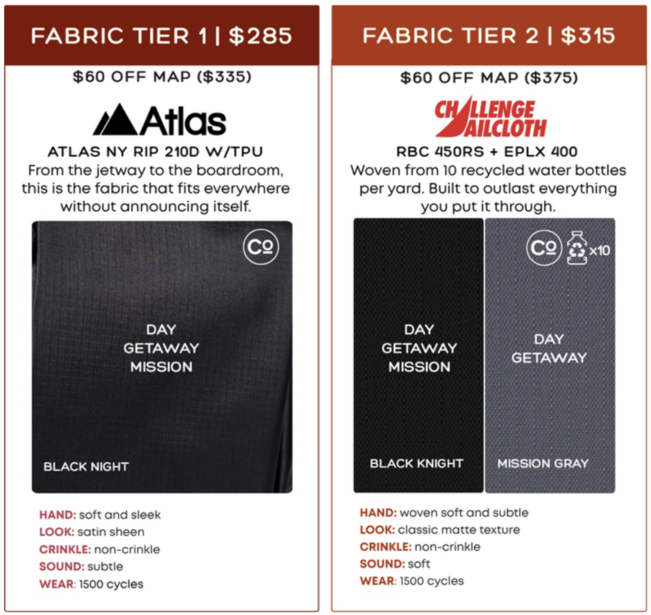
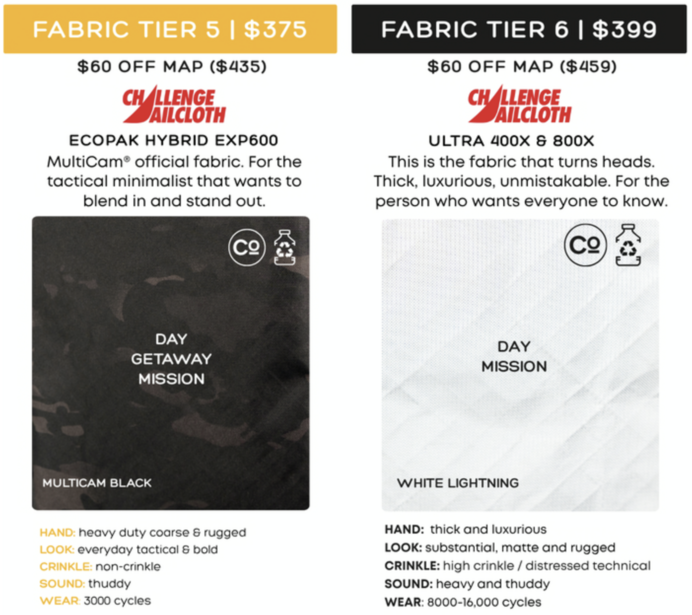
At first glance, that can add up. But it's actually a more honest pricing model than most bag companies offer. You're not paying for a configuration that includes accessories you don't need. If you already own camera cubes that work for you, you don't have to buy the cap cases at all. And if you want to keep the cost down, the lower fabric tiers are a legitimate option. For what you're getting with the materials, construction, and design flexibility, the price is fair. It just requires a bit of upfront thought about how you want to configure it.
What I Liked
- The cap case system is genuinely flexible and works exactly as advertised
- Magnet closures on the cases are strong, reliable, and faster to use than zippers
- Velex lining throughout means attachments and accessories go exactly where you want them
- Challenge Sailcloth keeps the bag light without sacrificing durability
- No camera branding means it doesn't draw attention when you're carrying expensive gear
- The pant pockets are a legitimately great travel feature
- The luggage pass-through redesign shows Atlas actually listens to feedback
What I Didn't Like
- The price can climb once you factor in cap cases and accessories, though the base pricing is fair and you can keep costs down by sticking to lower fabric tiers and using cubes you already own
Conclusion
The Atlas One Getaway has replaced several bags I used to rotate through for different travel situations. Whether it makes sense for you depends on how you travel and what you're carrying, but if you've ever stood in front of your bag collection trying to figure out which one to bring for a specific trip, the Atlas One is the bag that removes that problem entirely.

Join the Fstoppers community for free
-
Post comments and join in the discussions
-
Browse the site ad-free
-
Share your work and get featured in the community
-
Compete in the photo contests for fun and prizes
2 Comments
There's no mention of a tripod attachment point. I checked and there is one but for light tripods only.
Ya good call. I don't use a tripod ever so not something that crosses my mind. But definitely useful information to know!