Hasselblad just made the medium format question harder in a good way, with the Hasselblad X2D II 100C landing as a real-world tool instead of a studio-only trophy. If you’ve been eyeing medium format but keep hesitating over speed, handling, and file pain, this video circles the exact pressure points you actually deal with.
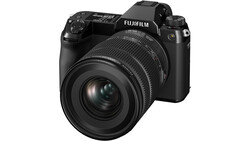
Coming to you from Benj Haisch, this practical video walks through why the Hasselblad X2D II 100C feels like the version Haisch has been waiting on after years inside the X system. He’s direct about the relationship with Hasselblad and what that does and doesn’t mean, then moves straight into what changed from the earlier Hasselblad X2D 100C. Price comes up early, framed against the kind of cross-shopping people actually do with the Fujifilm GFX100 II. If you’ve dismissed Hasselblad as “expensive on purpose,” he pushes back with specifics, but he doesn’t pretend it’s cheap. The useful part is how he talks about what the new price tier changes about who can realistically consider the system.
The handling notes are where the video starts getting honest in a way spec sheets never are. Haisch likes the big viewfinder experience, but calls out a eye sensor issue when wearing glasses. He contrasts that with the rear display, which he describes as the best screen he’s used on a camera, and he ties that to client-facing reality: showing images on-site without apologizing for what the back screen looks like. Then he gets into the camera’s end-to-end HDR viewing and capture approach, more like a phone workflow but applied to high-end files, and he explains how it changes what you see when reviewing images. That matters if you rely on quick decisions in the field, especially when highlight detail and shadow detail can fool you on a typical display. He also hints at leaving that mode on even when you are not planning an HDR deliverable, which raises a question you’ll want answered before you copy the habit.
Once he switches to files and storage, the tradeoffs get sharper. He’s talking about 16-bit, 100-megapixel raw files, and he describes the latitude in a way that will either tempt you or annoy you depending on how much time you spend fixing color. The numbers are blunt: files over 200 MB, with a few shots turning into about 1 GB fast, so you need a plan that’s more than “buy a bigger card.” He points out the built-in 1 TB SSD and the option to shoot to CFexpress Type B, including the Lexar CFexpress Type B cards he’s using. Then he hits a key design constraint: no shutter in the body, so the system leans on leaf shutters in the lenses, and adapting other glass pushes you into electronic shutter behavior and sensor readout limits. He shares a practical workaround by switching from 16-bit to 14-bit for faster readout when motion and rolling shutter risk show up, which is the sort of setting you either bake into a custom profile now or regret later on a paid shoot.
The flash and stabilization section is where the camera stops sounding like a slow, precious object and starts sounding like something you’d actually bring into mixed conditions. Leaf shutters mean flash sync at any shutter speed, compared to the usual 1/250 s or slower limits. If you’ve ever chosen between freezing ambient and keeping flash within sync limits, you already know what that unlocks, and he keeps it grounded in shoot scenarios instead of theory. He also talks about in-body image stabilization as something you lean on when you’re not bringing a tripod, including handheld exposures up to about a second. The biggest shift, though, is autofocus: he describes older X bodies as effectively single-point focus even with face detection moving the point, then frames continuous autofocus with face and eye detect and LiDAR assist as the reason this model finally clears his personal “can I use this when people move toward me” test. He doesn’t claim it’s a sports camera, but he does describe tracking kids running around as a tougher test than parts of a wedding day, and he leaves enough unsaid that you’ll want to see what he shows and what he avoids claiming. Check out the video above for the full rundown from Haisch.




Join the Fstoppers community for free
-
Post comments and join in the discussions
-
Browse the site ad-free
-
Share your work and get featured in the community
-
Compete in the photo contests for fun and prizes
3 Comments
This is not, as your title implies, a comparison of the hassie and the Fuji. It is a sponsored video about the hassie. The x2d is a wonderful piece of engineering but it has a limited range of longer lenses and the leaf shutter restricts adapted lenses to use with ES. I could not possibly shift to a system that can’t accommodate lenses longer than a FF equivalent of about 80mm. So, I chose the GFX system. But that’s just me
I photographed cycling in the 80's with Hasselblads and no one thought they were made for capturing sport. Put one of these in my hands and I'll prove that for certain sports in the right hands it is indeed a sports camera.
What 'Decision Points'??
Hasselblad doesn't even sell the 1.7x Tele as a stand alone accessory, or a lens longer than 135mm.