The promise is simple: one lens, fewer swaps, more shots. The reality is messier, and this video shows if it's worth it.
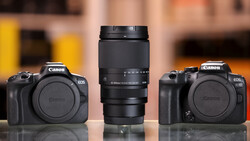
Coming to you from Mads Peter Iversen, this practical video takes a hard look at the Tamron 25-200mm f/2.8-5.6 Di III VXD G2 lens. You’ll hear why Iversen leaned on the earlier 28-200mm for years and what he wanted fixed this time around. He starts with the non-glamorous changes that matter once the lens is on a body all day, including how the new build handles and what the extra controls mean in real use. He also explains why he’s calling this an early take, not a final verdict, since he’s only had the lens for a few days. That framing is useful because it keeps the focus on what you can learn right now versus what still needs more time.
One of the most useful sections is the discussion around handling and stability, because it’s the part people skip until a trip goes sideways. None of these lenses have built-in stabilization, so your results lean heavily on your camera’s IBIS, and Iversen calls out how much harder it gets as you zoom longer. He shows why extending barrels shift the balance forward and how even mild wind can spoil sharpness, even on a sturdy tripod, especially on high-resolution bodies like the Sony a7R V. He also touches on the practical trade: these are travel and all-round lenses first, not purpose-built landscape tools, which changes how you should expect them to behave when you start stacking filters or pushing long exposures. If you shoot wildlife or sports, he flags a less obvious limitation with third-party lenses on Sony bodies: burst rate caps that can change what “fast enough” feels like in the field.
In the middle of the video, the comparison widens to include Sigma’s competing option, and that’s where you’ll want to pay attention to what’s being measured versus what’s being assumed. Iversen compares the new Tamron against the older Tamron and the Sigma 20-200mm f/3.5-6.3 DG Contemporary. He does point to a few trends worth tracking, like fringing behavior in corners and how stopping down changes what you see at the wide end. He also gives a straightforward take on background blur: you can get plenty of separation past roughly 150mm, but none of these lenses are built to make creamy, smooth bokeh the main event.
Key Specs
-
Focal length: 25 to 200mm
-
Maximum aperture: f/2.8 to 5.6
-
Minimum aperture: f/16 to 32
-
Mount: Sony E
-
Format coverage: full frame
-
Minimum focus distance (from camera sensor): 6.3" / 16 cm (wide) to 2.6' / 80 cm (tele)
-
Maximum magnification: 0.53x (1:1.9)
-
Optical design: 18 elements in 14 groups
-
Diaphragm blades: 9 (rounded)
-
Focus: autofocus
-
Image stabilization: none
-
Filter size: 67 mm
-
Weight: 1.3 lb / 575 g
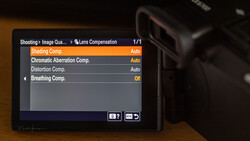
Past the spec sheet, what you’re really getting is Iversen’s field-minded testing approach: real scenes, real contrast, and the kind of edge cases that expose weaknesses fast. He shows vignetting behavior and how profile corrections change the look, then moves into corner behavior where fringing can spike against bright sky and branches. Later, he suggests an alternative path if you want cleaner results and don’t mind swapping lenses: pairing the Sony FE 20-70mm f/4 G with the Sony FE 70-200mm F4 Macro G OSS II, which shifts you away from convenience and toward consistency, especially when conditions get touchy. Check out the video above for the full rundown from Iversen.


Join the Fstoppers community for free
-
Post comments and join in the discussions
-
Browse the site ad-free
-
Share your work and get featured in the community
-
Compete in the photo contests for fun and prizes
1 Comment
An advertisement for the photographers web sites. Sigma back in the very early days of digital cameras 2001, 2003, 2006, had the Sigma 50-500mm f/4-6.3 DG lens and the 60-600mm F4.5-6.3 DG DN OS and had advertisements in magazines showing the close and far captures and when I got my first digital with changeable lenses the T2i, 2009, I would dream of them. Why? One lens for anything and not a bag full and as a just a hobbyist less dollars spent.
Through the many, many years or many decades in camera years a main subject of sells has been individual MM lenses just like the old film days but if one was to look at them even today few have IS or OSS.
What the author has missed with the mention of the mention of the A7RV meaning he is a Sony user and with a high megapixel camera. In 2015 when the Sony A7 cameras was getting its starts there was a low cost telephoto lens the FE 24-240mm F3.5-6.3 OSS that could be used in APS-C mode as 36-360mm a simple button assignment to APS-C on any Sony camera that most users would assign a button to. I will confess this lens lives on my many Sony cameras that I have grown with over the many years since i went Sony in 2014 with the A7SM1 that has no IBIS and the lens with OSS was a happy combo stating in 2015.
The reason for a good telephoto lens is like mentioned before less to carry. The average hobbyist photographer, which there are more of than all the pros as is shown with the use of the cameras on phones that most everyone including even many kids have. A lens that can have a range from 24mm to 360mm (at the press of a button) is good to have on a walk or drive about in a discreet sling bag. I will also mention a lens of the 2013 year made for Sony's APS-C cameras before the full frame cameras is the APS-C E 10-18mm f/4 OSS (a OSS lens) (15-27mm in 35mm) BUT was found it could be used in Full Frame Mode at 12-18mm (18mm if you remove the rear light shied) found in a test in 2015 by Trey Ratciff a landscape photographer who went from Nikon to Sony. Now this lens found it way into by bag and was the first 12mm vs Fisheye lenses of the time and was perfect for the new astro Milky Way genre that Rokinon's 14mm f/2.8 sold that no editing program had a lens correction for for a year or two. Today I have in my night bag and in may day bag but mainly for Panorama Milky Way Arch capture. Why? It is so small and tiny and mostly light weight where as the 2017 FE 12-24mm F4 G is big and heavy as well as the 2020 FE 12-24mm f/2.8 GM both require a mountable filter holder using large plate glass filters that being on top of a pano rig require super tightness of all knobs and when a need of firm ground due to shifting from a 200 degree swing needed for level capture and Sony even came out with the 14mm f/1.8 but still needed the external filter mount and glass filters (extra expenses). The 10-18 yes has threads up front for filters (if needed) and today there are filters for the rear of lenses. I mention filters because before the LED lights there was orange vaper lights that made capture of night astro not colorful. The E 10-18mm as stayed in many photo bags since the discovery, Yes now we have the 10mm f/2.8 just recently. The reason for a 12mm or 10mm for the Astro Milky Way genre is the arc of stars during the end period of July and August is that it will be way over head and some what behind also you want the whole period (Feb-Aug) to have more stars above the arc so when all images are merged you will have an image that can be edited to be more 3:2 vs a a narrow pano looking image. I have found also the fast glass rush really does not matter on Sony or mirrorless cameras for even f/5.6 will be bright in post or even the MP high or low. The only plus of a f/1.4 and a 60MP is the faster the shutter speed needed and the mix makes for a faster panorama just pick what you want not really a need.
An ADD: there was a review of the FE 24-240mm and showed it was not so good BUT a failure to mention that Software makes most all lenses great anyways with LC's and editing extra things over the years added like better NR, masking and upsizing etc....
Basically know your camera and lens and play a lot. and if you have some old Film lenses a $20 adapter can be used and require no LC's for they just work and are fast glass to boot.
1. Solar Eclipse Ring at 240mm with the FE 24-240mm
2. Solar Eclipse at 24mm with the FE 24-240mm zooming in and out over just 2 minutes many image gotten and hand held!
3. Birding while on a drive in a park with the FE 24-240mm at 360mm
4. Astro MW E 10-18mm f/4 at 12mm in 2015 2 years before Sony 12-24mm f/4